Skip to content
Psi & Hose

Guides

Running an air compressor in cold weather

An unheated garage in February is harder on a compressor than any job you will give it. Two of the three cold-weather failures are preventable in a minute; the third is a purchase.

By Ryder M.Last updated Published
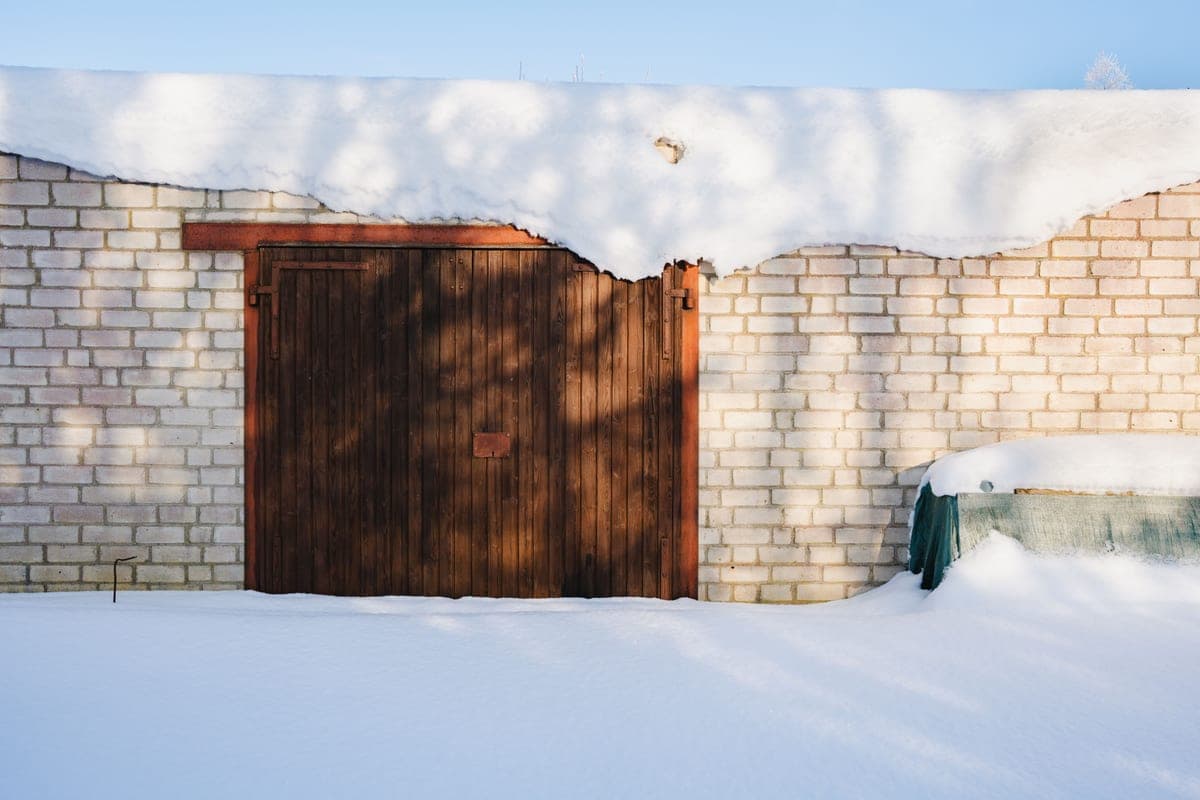
A cold unheated garage workshop with frost visible outside the door

Some links on this page are affiliate links. If you buy through one, Magoo Media Group earns a commission from the retailer at no extra cost to you. It never changes which product we rank first - how this site is funded.

Read this first

The three cold-weather problems

Cold does not stop a compressor working, but it changes three things and all three have simple answers. Oil in an oil-lubricated pump thickens, which makes the motor work hard at startup. Condensate in the tank and lines freezes, which blocks the drain and can block the line. And the hose goes rigid, which is the problem you notice first and the one most likely to make you give up and go inside.

The direct answer for most garages: leave the compressor indoors if you have any choice, start it with the drain cracked open and no load for a minute before you use it, drain the tank while it is still warm every single time, and own a hose rated for the temperature. That covers all three failures without spending much.

What cold does not do is reduce your compressor's capability. Cold air is denser, which is marginally in a compressor's favor rather than against it. If a tool feels weak in a cold garage, the hose is the first suspect and the tool's own lubrication is the second - not the pump.

Startup

Oil viscosity, and why oil-free wins in the cold

An oil-lubricated pump relies on oil both to lubricate and to carry heat out of the cylinder. Cold oil is thicker, so at startup it resists, the motor draws harder for longer, and the oil takes time to reach everything it should. This is the mechanism behind the common complaint that a compressor will not start on a cold morning - the motor is being asked to turn a stiffer pump than it was on a warm one.

An oil-free pump does not have this problem at all. There is no oil bath to thicken, so a cold start is mechanically the same as a warm one. On the rest of this site we are even-handed about oil-free against oil-lubricated, because oil-lubricated pumps run cooler under load and last longer. In an unheated garage, oil-free is the design that simply does not care.

If you do own an oil-lubricated machine in a cold space, two habits help. Start it unloaded - with the tank drain cracked or the regulator backed off - and let it turn for a minute before you ask it for pressure. And check the manual for a cold-weather oil grade; a lighter oil at the manufacturer's recommendation is a legitimate change, and guessing a grade is not.

Water

Frozen condensate is the failure that does damage

Compressing air condenses the moisture in it, and that water collects in the bottom of the tank. Below freezing it turns to ice, and a frozen drain valve is a drain valve you cannot open - which means the water stays in the tank through the whole winter, rusting the pressure vessel from the inside. This is the cold-weather problem that costs you a machine rather than an afternoon.

The prevention is the same habit as the rest of the year, done more carefully: drain the tank at the end of every session while it is still warm. Warm air holds moisture in suspension and it leaves with the air. A cold tank drained cold leaves a film behind, and a cold tank not drained at all accumulates.

Ice in the line is the other symptom and it shows up as a tool that stutters or a blow gun that spits. A filter and water separator between the compressor and the hose removes the water before it can reach the cold part of the run, which is the correct place for it in any season and matters more in winter. Fit it at the compressor, not at the tool.

What to look for

What to look for in cold-weather gear

For a compressor in an unheated space, look for an oil-free pump and a published duty cycle. Oil-free removes the cold-start problem entirely. A published duty cycle matters because a cold garage tempts you into long continuous runs to warm up a job, and knowing the limit is the only way to stay inside it - the 8-gallon unit below publishes a 30 to 60 minute maximum continuous run, which almost nobody else does.

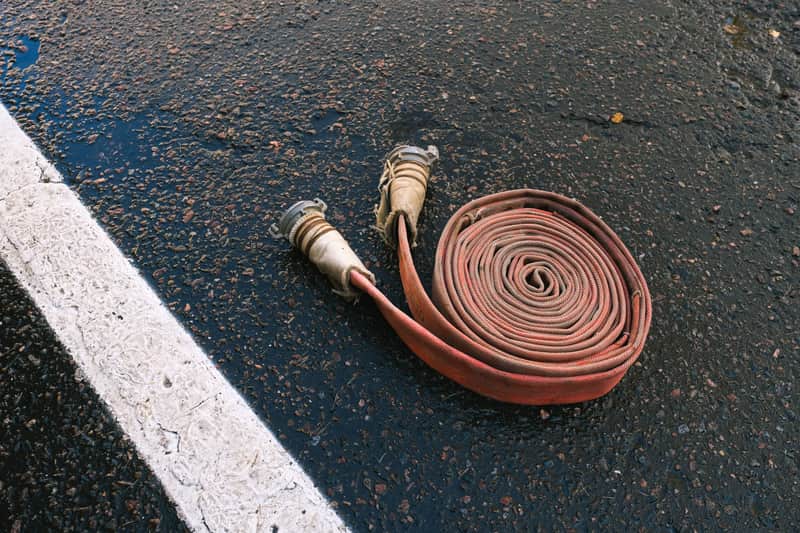
For a hose, the published temperature range is the specification and it is the only one that matters here. A hybrid polymer hose rated -40F to 140F still uncoils in February; a PVC hose becomes a coiled spring you fight for the whole job. If a hose listing does not state a low-temperature figure, assume it has nothing good to say.

Rubber is the alternative and it is published even colder - one EPDM hose in our registry states -50F to 190F with a 250 PSI working pressure and a 1,070 PSI burst rating. The trade is weight and coil memory, which is real work to drag around. Rubber makes most sense on a reel, where it lives permanently and the reel does the carrying.

For the line itself, a filter and regulator with a metal bowl and flow capacity above your compressor's output. Plastic bowls and winter are a poor combination, and the water this removes is the water that would otherwise freeze downstream.

Ranked

The cold-weather picks

Quick picks

#ProductBest forScorePrice
1
An ultra-quiet oil-free compressor with an aluminum tank and wheels
California Air Tools 8010A2.2 CFM @ 90 / 8 gal / 120 PSI / 60 dBA60 dBA with 8 gallons and a published 30-60 minute continuous run limit. The honest quiet middle ground.
A garage where the compressor runs while you are standing next to it4.9/10★★☆☆☆

#ad Disclosure - we do not publish prices we cannot verify

2
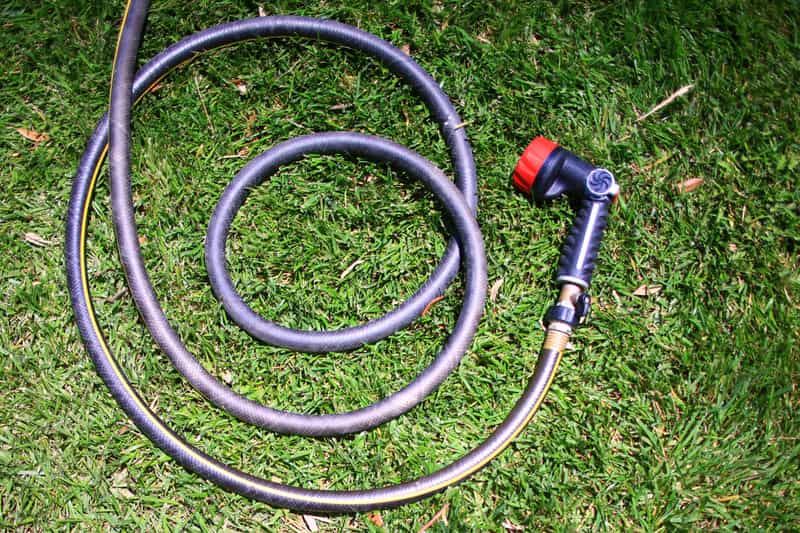
A coiled hybrid polymer air hose lying flat on a garage floor
Flexzilla HFZ3850YW23/8" / 50 ft / 300 PSI at 70F300 PSI hybrid polymer that lies flat from -40F to 140F. The upgrade that makes a cheap compressor feel expensive.
The one hose to own in a cold or unheated garage8.0/10★★★★☆

#ad Disclosure - we do not publish prices we cannot verify

3
A wall-mounted compressed air filter and regulator with a pressure gauge
PneumaticPlus SAW300 filter / regulator3/8" NPT / 53 SCFM / 10 micron53 SCFM, 10 micron, with a real gauge and a metal bowl. The single most useful small purchase in a garage air system.
One combined water trap and regulator at the wall5.3/10★★★☆☆

#ad Disclosure - we do not publish prices we cannot verify

4
A red rubber air hose with brass fittings on a workbench
Goodyear 12674 rubber air hose3/8" / 50 ft / 250 PSI250 PSI working, 1,070 PSI burst, EPDM rubber and brass ends. The hose that outlives the compressor.
A permanent hose that stays on the reel and never gets dragged into the cold7.3/10★★★★☆

#ad Disclosure - we do not publish prices we cannot verify

Scores are computed from manufacturer-published specs by the rubric on our methodology page. Nothing here has been bench-tested, and we do not publish prices we cannot verify.

Pick 1 - California Air Tools 8010A

4.9/10★★☆☆☆

California Air Tools 8010A

Best for: A garage where the compressor runs while you are standing next to it

Verdict

60 dBA with 8 gallons and a published 30-60 minute continuous run limit. The honest quiet middle ground.

What it does well

  • 60 dBA published at 8 gallons - you can hold a conversation over it
  • Aluminum tank at 37.25 lb with a wheel kit, so it moves easily and will not rust out
  • California Air Tools publishes fill, recovery and continuous-run figures, which most brands do not

What it will not do

  • 2.2 CFM at 90 PSI is LESS than a 2.6 CFM pancake - you pay for quiet, not for air
  • 120 PSI max is the lowest ceiling in the 6-gallon-and-up group, so storage is modest
How this 4.9 was calculated
MetricScoreWeightBasis
Air flow2.840%2.2 CFM at 90 PSI, on a 0.7-6 CFM scale
Stored air2.525%8 gal x 120 PSI = 960, on a 125-3,500 scale
Noise9.315%60 dBA, on a 58-85 dBA scale
Portability7.510%37.25 lb, on a 20-90 lb scale
Spec transparency10.010%6 of 6 useful figures published (CFM at 90, CFM at 40, dBA, duty cycle, recovery, weight)
An ultra-quiet oil-free compressor with an aluminum tank and wheels

Licensed stock photo - illustrative of the category, not a photo of this unit

#ad Disclosure - we do not publish prices we cannot verify

Published specs

California Air Tools 8010A published specifications
CFM @ 90 PSI2.2
CFM @ 40 PSI3.1
Tank8 gal
Max pressure120 PSI
Noise60 dBA
Duty cycleMax continuous running time 30-60 minutes (manufacturer-published)
Recovery165 s empty to full; 60 s recovery 90 to 120 PSI
PumpOil-free
Motor1.0 running / 2.0 peak
Weight37.25 lb
Power110V

Source: California Air Tools 8010A - product specifications

Pick 2 - Flexzilla HFZ3850YW2

8.0/10★★★★☆

Flexzilla HFZ3850YW2

Best for: The one hose to own in a cold or unheated garage

Verdict

300 PSI hybrid polymer that lies flat from -40F to 140F. The upgrade that makes a cheap compressor feel expensive.

What it does well

  • 300 PSI maximum working pressure at 70F - higher than any compressor on this site produces
  • -40F to 140F flexibility: it still uncoils in an unheated garage in February
  • Zero-memory construction means it lies flat instead of fighting you, and 3/8" ID does not throttle an impact

What it will not do

  • Costs multiples of the PVC hose bundled in a compressor kit
  • The bright green is not subtle, which matters to precisely nobody using it
How this 8.0 was calculated
MetricScoreWeightBasis
Pressure headroom10.040%30070 PSI rating, on a 125-300 PSI scale
Flow capacity6.040%Flow not published for this class - scored a 6, which is what a correctly sized hose or fitting does not restrict
Spec transparency8.020%6 published specification figures
A coiled hybrid polymer air hose lying flat on a garage floor

Licensed stock photo - illustrative of the category, not a photo of this unit

#ad Disclosure - we do not publish prices we cannot verify

Published specs

Flexzilla HFZ3850YW2 published specifications
Inside diameter3/8"
Length50 ft
Max working pressure300 PSI at 70F
Temperature range-40F to 140F
Fittings1/4" MNPT, anodized aluminum ends
MaterialHybrid polymer

Source: Flexzilla HFZ3850YW2 air hose - distributor specification listing

Pick 3 - PneumaticPlus SAW300-N03BG-MEP

5.3/10★★★☆☆

PneumaticPlus SAW300 filter / regulator

Best for: One combined water trap and regulator at the wall

Verdict

53 SCFM, 10 micron, with a real gauge and a metal bowl. The single most useful small purchase in a garage air system.

What it does well

  • 53 SCFM at 3/8-inch NPT - it will not restrict any compressor on this site
  • 10 micron element plus a regulator in one piggyback body, so one mount does both jobs
  • Metal bowl and a 0-150 PSI gauge, with bracket included

What it will not do

  • 10 micron catches water and rust, NOT oil aerosol - it is not enough on its own for paint
  • Max operating pressure is 150 PSI, so it cannot sit upstream of a 175 PSI tank outlet
How this 5.3 was calculated
MetricScoreWeightBasis
Pressure headroom7.140%250 PSI rating, on a 125-300 PSI scale
Flow capacity2.240%53 SCFM, on a 40-100 SCFM scale
Spec transparency8.020%6 published specification figures
A wall-mounted compressed air filter and regulator with a pressure gauge

Licensed stock photo - illustrative of the category, not a photo of this unit

#ad Disclosure - we do not publish prices we cannot verify

Published specs

PneumaticPlus SAW300 filter / regulator published specifications
Port size3/8" NPT
Flow53 SCFM
Filtration10 micron
Max supply pressure250 PSI
Max operating pressure150 PSI
Gauge0-150 PSI, bracket included

Source: PneumaticPlus SAW300 filter/regulator - product specifications

Pick 4 - Goodyear 12674

7.3/10★★★★☆

Goodyear 12674 rubber air hose

Best for: A permanent hose that stays on the reel and never gets dragged into the cold

Verdict

250 PSI working, 1,070 PSI burst, EPDM rubber and brass ends. The hose that outlives the compressor.

What it does well

  • 250 PSI working pressure with a 1,070 PSI burst rating - a 4:1 margin
  • -50F to 190F range and a Class C oil, weather and solvent resistant EPDM cover
  • Machined brass ends seal better and corrode less than aluminum or zinc

What it will not do

  • Rubber is heavy and it holds a coil memory - dragging 50 ft of it around is real work
  • Stiffer than hybrid polymer when the garage is cold
How this 7.3 was calculated
MetricScoreWeightBasis
Pressure headroom7.140%250 PSI rating, on a 125-300 PSI scale
Flow capacity6.040%Flow not published for this class - scored a 6, which is what a correctly sized hose or fitting does not restrict
Spec transparency10.020%7 published specification figures
A red rubber air hose with brass fittings on a workbench

Licensed stock photo - illustrative of the category, not a photo of this unit

#ad Disclosure - we do not publish prices we cannot verify

Published specs

Goodyear 12674 rubber air hose published specifications
Inside diameter3/8"
Length50 ft
Working pressure250 PSI
Burst pressure1,070 PSI
Temperature range-50F to 190F
Fittings1/4" MNPT machined brass
CoverClass C oil, weather and solvent resistant EPDM

Source: Goodyear 12674 red rubber air hose - distributor specification listing

Once a year

Storage, and what to do before the first freeze

  1. 01Drain the tank completely while it is warm, before the first hard freeze. If you do nothing else on this list, do this - a tank entering winter with water in it will not be drainable until spring.
  2. 02Bring the hose indoors if it is PVC. Cold-cycling a PVC hose is what cracks it, and a hose stored coiled in the cold takes the shape permanently.
  3. 03Check the drain valve works freely and leave it closed but not overtightened. A seized drain in January is a tank you cannot empty.
  4. 04Move the compressor inside if you have anywhere to put it. A basement, a utility room or a corner of a heated space removes every problem on this page at once, and the hose can run out to where you work.
  5. 05If it has to live outside the heated envelope, run it unloaded for a minute before each use and accept slower fills. A cold pump reaching cut-out slowly is working correctly, not failing.

FAQ

Questions people actually ask

Can you run an air compressor in cold weather?

Yes. Cold air is denser, which is marginally in a compressor's favor. What cold changes is three things: oil in an oil-lubricated pump thickens and makes startup harder, condensate in the tank and lines can freeze, and the hose goes rigid. All three have simple answers.

Is it bad to leave an air compressor in an unheated garage?

It is workable but it asks more of you. The real risk is a frozen drain valve, because a tank you cannot drain keeps its water all winter and rusts from the inside. Drain it completely before the first hard freeze and keep draining it warm after each session.

Why won't my air compressor start in the cold?

Most often because thickened oil in an oil-lubricated pump resists turning, so the motor draws harder for longer. Start it unloaded - drain cracked or regulator backed off - and let it turn for a minute first. Check the manual for a cold-weather oil grade rather than guessing one.

Should I use an oil-free compressor in a cold garage?

If you are choosing, yes. An oil-free pump has no oil bath to thicken, so a cold start is mechanically the same as a warm one. The usual trade - oil-lubricated pumps run cooler under load and last longer - matters less than a machine that simply starts.

What temperature can an air hose handle?

Check the published range rather than the material name. A hybrid polymer hose in our registry publishes -40F to 140F and still uncoils in February; a rubber EPDM hose publishes -50F to 190F. PVC publishes nothing useful and becomes a coiled spring you fight.

Will cold weather damage my air compressor?

Cold alone will not. Water left in the tank over a winter will, because it freezes, cannot be drained and rusts the pressure vessel from the inside. The damage is from the undrained condensate, not from the temperature.

Sources

Where these numbers come from

Accessed September 2026. If a figure on this page does not match the manufacturer's current sheet, tell us at contact@psiandhose.com and we will correct and date the change - see our editorial policy.

Read next