Skip to content
Psi & Hose

Hub

Guides

The questions that come before and after choosing a compressor: whether to buy one at all, how to set it up, why it is misbehaving, and what to give someone who has one.

By Ryder M.Last updated
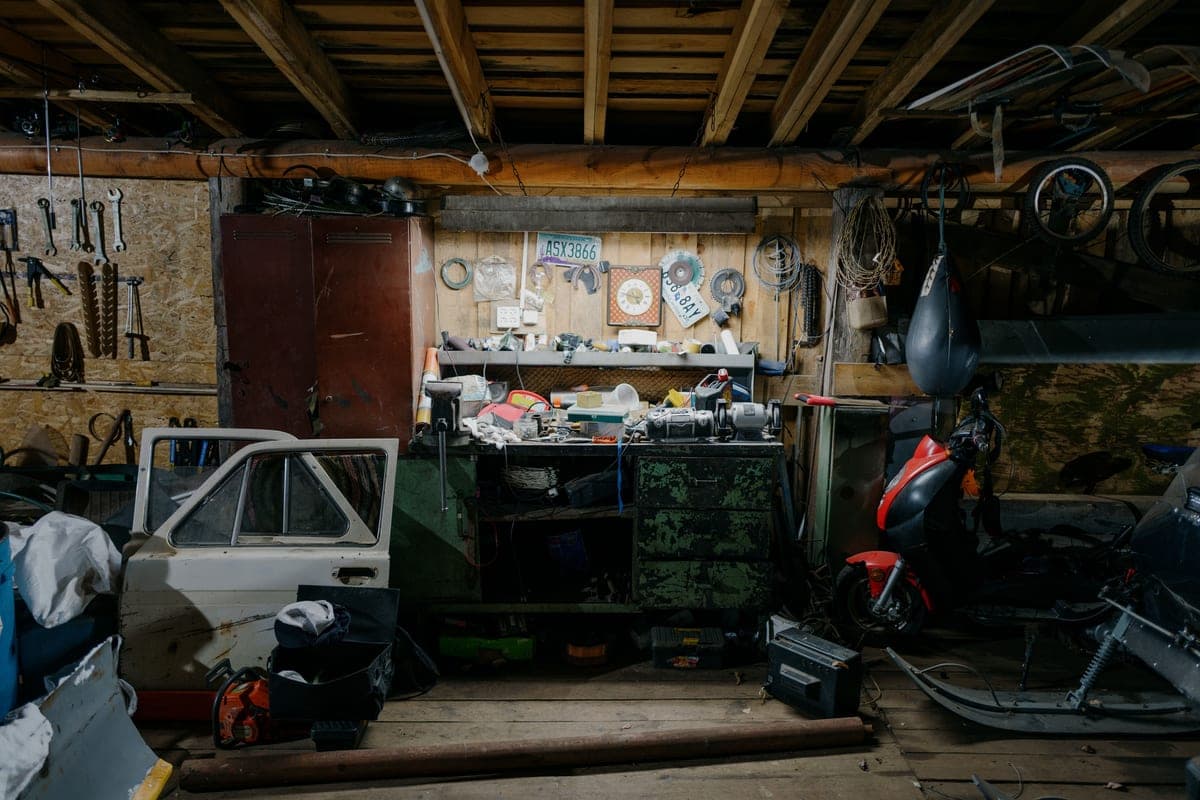
Someone working in a home garage workshop

Some links on this page are affiliate links. If you buy through one, Magoo Media Group earns a commission from the retailer at no extra cost to you. It never changes which product we rank first - how this site is funded.

Everything in this hub

15 pages

Orientation

What is in here

Four kinds of guide. Value questions - whether a compressor is worth owning at all, whether budget brands are any good, how brands compare on what they publish. Setup - where to put it, what order to plumb it, what electrical draw it needs. Troubleshooting - why it keeps running, how to tell an undersized pump from a restriction, how to measure your real CFM. And job guides for the work that stretches a garage compressor: painting, detailing, sandblasting, winterizing sprinklers.

There are also two gift guides, written for the person buying rather than the person receiving. Air tools are not universally compatible with air compressors, which makes them an unusually easy gift to get wrong, and the guides exist mostly to prevent that.

Nearly every guide here reaches a conclusion that involves spending less rather than more. That is not a pose - it is what the arithmetic produces when you start from published demand figures instead of from a product range.

Before the purchase

Start here if you have not bought yet

Is an air compressor worth it? The honest answer is yes if you will own two or more air tools, probably not for one tool with a good cordless equivalent, and almost certainly not if the only job is tires. The compressor is a fixed cost that only pays back across several tools.

Are budget brands any good? In the under-$200 band, five of the six 6-gallon pancakes we catalog publish identical 2.6 CFM at 150 PSI. So the cheapest one is not a compromise on air, and the differences worth paying for are noise, pressure ceiling and parts availability.

Which brand? We will not rank on reliability because we have no long-term data, and we would rather say that than repackage forum sentiment. We do rank on documentation completeness, which is checkable - and the spread is wide enough to be genuinely useful.

After the purchase

Start here if something is wrong

If the compressor never shuts off, the order to check is: tank drain valve fully closed, then leaks with soapy water, then the check valve, then the pressure switch, then the pump. The drain valve is the most common single cause and the one people check last.

If a tool feels weak, three different problems produce that one symptom and only one of them needs a new compressor. A restriction means the tool never feels right even on a full tank. A CFM shortfall means strong for seconds then faded. A duty-cycle wall means fine for minutes, then a thermal cutout.

And if you want to know what your compressor actually delivers rather than what the sticker claims, the pump-up test estimates it with a stopwatch and the tank's own gauge. We publish the formula, its assumptions and a worked check against two manufacturers' published fill times.

Where a garage compressor stops

The job guides, and their honest ceilings

Painting cars. A touch-up gun needs 4 CFM published and a production gun 8. But spraying is the last step, and the 6-inch DA sander that prep requires needs 6 to 10 CFM continuously - so the sander, not the gun, is what a budget compressor cannot support. Our advice is to sand electrically, which takes the hardest load off the system entirely.

Detailing. Mostly blow gun work at 2.5 to 3 CFM, which makes it one of the very few jobs where the cheapest useful compressor is the right answer with no caveats. The exception is a pneumatic polisher at 20 CFM, which is not a garage tool.

Sandblasting. Published demand runs 6 to 400 CFM because the nozzle orifice sets it, not the cabinet. Small parts in a cabinet with a small siphon nozzle are workable; a panel is not.

Sprinklers. A high-volume low-pressure job, which is the opposite of what a garage compressor is good at. Workable zone by zone on a 20-gallon unit, and worth hiring out on a large system - which we say rather than selling you a compressor that technically can.

FAQ

Guides: common questions

Is an air compressor worth it for a home garage?

Yes if you will own two or more air tools, or want a blow gun - there is no cordless equivalent to one. Probably not for a single tool with a good cordless version, and almost certainly not if the only job is tires.

Why does my air compressor keep running?

In order of likelihood: the tank drain valve is not fully closed, a leak in the fittings or hose, a failed check valve letting tank air bleed back, a pressure switch not tripping, or a tool drawing more than the pump produces.

How do I know if my compressor is too small?

Compare your tool's published CFM at 90 PSI against your compressor's, allowing 25%. But check hose diameter, adapter count and regulator setting first - a restriction produces identical symptoms and is far cheaper to fix.

Can I paint a car with a budget compressor?

You can spray a small repair with a touch-up gun at 4 CFM. You cannot run the 6 to 10 CFM DA sander that prep requires. Sand electrically and small spray jobs become realistic; a whole car does not.

What is a good gift for someone with an air compressor?

A 50-foot 3/8-inch hose. It fits every compressor, most people are still using the thin one from the box, and the improvement is immediate. Air tools need their compressor's CFM checked first, which makes them risky as gifts.