Skip to content
Psi & Hose

Compare

Flexzilla vs Goodyear air hose

The two hoses everybody actually shortlists. One is hybrid polymer at 300 PSI, one is rubber at 250 with a far wider temperature range.

By Ryder M.Last updated Published
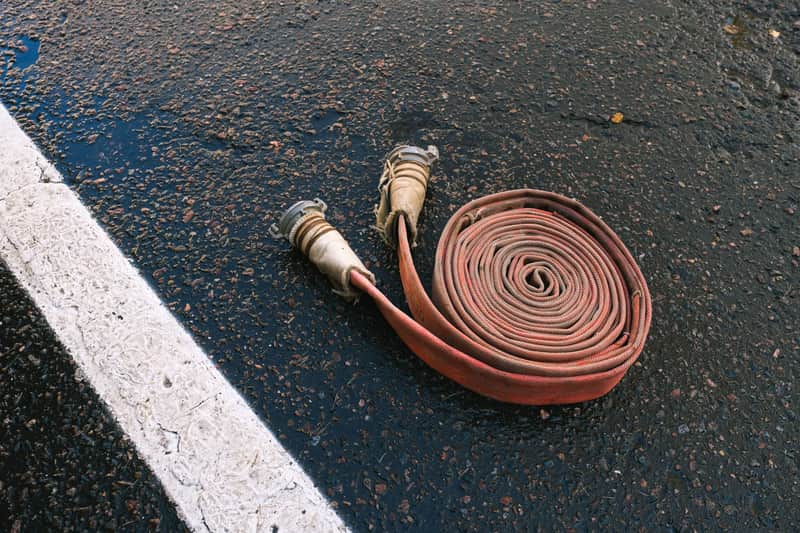
A coiled rubber air hose and a hybrid polymer air hose side by side on a shop floor

Some links on this page are affiliate links. If you buy through one, Magoo Media Group earns a commission from the retailer at no extra cost to you. It never changes which product we rank first - how this site is funded.

Read this first

The short answer

Buy the Flexzilla HFZ3850YW2 if you drag the hose around a garage. It is 3/8-inch ID by 50 feet of hybrid polymer rated 300 PSI at 70F, with anodized aluminum 1/4-inch MNPT ends and a usable range of -40F to 140F. Hybrid polymer has essentially no coil memory, which is the practical difference: it lies flat where you put it instead of trying to return to the shape it was shipped in.

Buy the Goodyear 12674 if the hose lives in a hot or oily environment. It is 3/8-inch by 50 feet of rubber with a Class C oil, weather and solvent resistant EPDM cover, machined brass 1/4-inch MNPT ends, a 250 PSI working pressure and a published 1,070 PSI burst - and a temperature range of -50F to 190F, which is 50 degrees more headroom at the top than the Flexzilla has.

Neither choice affects how much air reaches your tool, as long as both are 3/8-inch. Inside diameter sets flow; the material sets how the hose behaves in your hands and how long it survives what you spill on it. If you have been agonising over this pair, that is the honest resolution: it is a handling and environment decision, not a performance one.

Both hoses, on published specifications
MaterialID / lengthWorking pressureTemperature rangeFittings
Flexzilla HFZ3850YW2Hybrid polymer3/8" x 50 ft300 PSI at 70F-40F to 140F1/4" MNPT anodized aluminum
Goodyear 12674Rubber, EPDM cover3/8" x 50 ft250 PSI (1,070 PSI burst)-50F to 190F1/4" MNPT machined brass
Flexzilla Pro HFZP3850YW2Hybrid polymer3/8" x 50 ft300 PSI at 70F-40F to 140F1/4" MNPT reusable aircraft aluminum, field repairable

Manufacturer-published figures only, linked in the sources block. Goodyear publishes a burst pressure; Flexzilla publishes working pressure at a stated temperature instead. Those are different measurements and should not be compared directly against each other.

Both ratings are far beyond your compressor

A garage compressor caps at 120 to 200 PSI. Both of these hoses are rated for more than any of them can produce, so pressure rating is not a deciding factor between them - it is a reason not to buy the unrated hardware-store PVC hose sitting next to them.

The materials

Where the materials actually differ

Hybrid polymer is the newer construction and it is built around one property: no memory. A hybrid hose uncoils and stays uncoiled, does not kink into a permanent crease, and stays flexible at low temperature - Flexzilla publishes usability down to -40F. On a concrete floor at 35 degrees in February that is the difference between a hose and a spring.

Rubber is the old answer and it is still the right one in two places. First, heat: the Goodyear's published 190F ceiling is 50 degrees above the Flexzilla's, which matters if the hose runs near an exhaust, a heater or a welding bench. Second, abrasion and chemistry: an EPDM cover rated Class C for oil, weather and solvent resistance survives a floor covered in brake cleaner and bar oil better than a polymer jacket does.

Rubber's cost is weight and memory. A 50-foot rubber hose is heavier to drag and it keeps a coil, so it fights you across a floor and wants to be hung rather than piled. That is exactly the complaint that hybrid polymer was designed to answer, and it is why Flexzilla took the garage market.

The fittings are the quiet difference and worth looking at. The Flexzilla uses anodized aluminum ends - light, corrosion-resistant, and on the Pro version reusable and field-repairable, meaning you can cut a damaged end off and refit rather than replace 50 feet of hose. The Goodyear uses machined brass, which is heavier, tougher and the traditional choice. Both are 1/4-inch MNPT, so they interchange with any standard coupler.

  • Hybrid polymer: no coil memory, flexible to -40F, lighter to drag
  • Rubber EPDM: 190F ceiling, Class C oil and solvent resistance, more abrasion tolerance
  • Aluminum ends are lighter and corrosion-resistant; brass ends are tougher
  • Both are 3/8-inch ID, so both deliver the same air to the tool

The picks

Both hoses, ranked

Quick picks

#ProductBest forScorePrice
1
Flexzilla HFZ3850YW2-D product photo
Flexzilla HFZ3850YW2-D3/8" / 50 ft / 300 PSI at 70F300 PSI hybrid polymer that lies flat from -40F to 140F. The upgrade that makes a cheap compressor feel expensive.
The one hose to own in a cold or unheated garage8.0/10★★★★☆

#ad Disclosure - price as of November 14, 2026

2
Goodyear 12674 rubber air hose product photo
Goodyear 12674 rubber air hose3/8" / 50 ft / 250 PSI250 PSI working, 1,070 PSI burst, EPDM rubber and brass ends. The hose that outlives the compressor.
A permanent hose that stays on the reel and never gets dragged into the cold7.3/10★★★★☆

#ad Disclosure - price as of November 14, 2026

3
Flexzilla Pro HFZP3850YW2 product photo
Flexzilla Pro HFZP3850YW23/8" / 50 ft / 300 PSI at 70FThe same 300 PSI hybrid polymer hose as the standard Flexzilla, with field-repairable reusable fittings.
A hose that gets cut on a job site and has to keep working8.0/10★★★★☆

#ad Disclosure - price as of November 14, 2026

Scores are computed from manufacturer-published specs by the rubric on our methodology page. Nothing here has been bench-tested. Prices are Amazon's own, refreshed daily, and never shown when we cannot verify them.

Pick 1 - Flexzilla HFZ3850YW2-D

8.0/10★★★★☆

Flexzilla HFZ3850YW2-D

Best for: The one hose to own in a cold or unheated garage

Verdict

300 PSI hybrid polymer that lies flat from -40F to 140F. The upgrade that makes a cheap compressor feel expensive.

What it does well

  • 300 PSI maximum working pressure at 70F - higher than any compressor on this site produces
  • -40F to 140F flexibility: it still uncoils in an unheated garage in February
  • Zero-memory construction means it lies flat instead of fighting you, and 3/8" ID does not throttle an impact
  • Ships with a ColorConnex Industrial Type D coupler and plug fitted, so it is usable out of the box

What it will not do

  • Costs multiples of the PVC hose bundled in a compressor kit
  • The bright green is not subtle, which matters to precisely nobody using it
How this 8.0 was calculated
MetricScoreWeightBasis
Pressure headroom10.040%30070 PSI rating, on a 125-300 PSI scale
Flow capacity6.040%Flow not published for this class - scored a 6, which is what a correctly sized hose or fitting does not restrict
Spec transparency8.020%6 published specification figures
Flexzilla HFZ3850YW2-D product photo

Product image from the Amazon listing for this model

#ad Disclosure - price as of November 14, 2026

Published specs

Flexzilla HFZ3850YW2-D published specifications
Inside diameter3/8"
Length50 ft
Max working pressure300 PSI at 70F
Temperature range-40F to 140F
Fittings1/4" MNPT, anodized aluminum ends
MaterialHybrid polymer

Source: Flexzilla HFZ3850YW2 air hose - distributor specification listing

Pick 2 - Goodyear 12674

7.3/10★★★★☆

Goodyear 12674 rubber air hose

Best for: A permanent hose that stays on the reel and never gets dragged into the cold

Verdict

250 PSI working, 1,070 PSI burst, EPDM rubber and brass ends. The hose that outlives the compressor.

What it does well

  • 250 PSI working pressure with a 1,070 PSI burst rating - a 4:1 margin
  • -50F to 190F range and a Class C oil, weather and solvent resistant EPDM cover
  • Machined brass ends seal better and corrode less than aluminum or zinc

What it will not do

  • Rubber is heavy and it holds a coil memory - dragging 50 ft of it around is real work
  • Stiffer than hybrid polymer when the garage is cold
How this 7.3 was calculated
MetricScoreWeightBasis
Pressure headroom7.140%250 PSI rating, on a 125-300 PSI scale
Flow capacity6.040%Flow not published for this class - scored a 6, which is what a correctly sized hose or fitting does not restrict
Spec transparency10.020%7 published specification figures
Goodyear 12674 rubber air hose product photo

Product image from the Amazon listing for this model

#ad Disclosure - price as of November 14, 2026

Published specs

Goodyear 12674 rubber air hose published specifications
Inside diameter3/8"
Length50 ft
Working pressure250 PSI
Burst pressure1,070 PSI
Temperature range-50F to 190F
Fittings1/4" MNPT machined brass
CoverClass C oil, weather and solvent resistant EPDM

Source: Goodyear 12674 red rubber air hose - distributor specification listing

Pick 3 - Flexzilla HFZP3850YW2

8.0/10★★★★☆

Flexzilla Pro HFZP3850YW2

Best for: A hose that gets cut on a job site and has to keep working

Verdict

The same 300 PSI hybrid polymer hose as the standard Flexzilla, with field-repairable reusable fittings.

What it does well

  • Reusable anodized aircraft aluminum compression fittings - a cut hose is repaired with two wrenches, no special tooling
  • 300 PSI working pressure at 70F and the same -40F to 140F all-weather flexibility
  • Lays flat with no memory and will not kink under pressure

What it will not do

  • The hose itself is identical to the standard Flexzilla - you are paying only for the repairable ends
  • If your hose lives on a reel in a garage and never gets damaged, the Pro premium buys you nothing
How this 8.0 was calculated
MetricScoreWeightBasis
Pressure headroom10.040%30070 PSI rating, on a 125-300 PSI scale
Flow capacity6.040%Flow not published for this class - scored a 6, which is what a correctly sized hose or fitting does not restrict
Spec transparency8.020%6 published specification figures
Flexzilla Pro HFZP3850YW2 product photo

Product image from the Amazon listing for this model

#ad Disclosure - price as of November 14, 2026

Published specs

Flexzilla Pro HFZP3850YW2 published specifications
Inside diameter3/8"
Length50 ft
Working pressure300 PSI at 70F
Temperature range-40F to 140F
Fittings1/4" MNPT reusable anodized aircraft aluminum, field repairable
MaterialHybrid polymer

Source: Flexzilla Pro Air Hose - product specifications

The flow question

Why the diameter matters more than the brand

Before you spend time on this comparison, make sure you are comparing the right thing. Inside diameter sets how much air a hose can pass; brand and material do not. A 1/4-inch hose and a 3/8-inch hose of the same brand are further apart in delivered performance than a Flexzilla and a Goodyear of the same size.

Both hoses on this page are 3/8-inch, which is the correct size for any garage compressor. Go to 1/4-inch and you are choking the line on anything above a brad nailer; a 50-foot quarter-inch run on a 4 CFM machine loses enough pressure that tools feel underpowered and you blame the compressor.

There is one more restriction people miss, and it is usually the real one: the coupler. A standard 1/4-inch M-style coupler passes a published 40 SCFM, a high-flow V-style up to 74, and a 1/2-inch G-style up to 99. Those are the numbers that decide whether an impact wrench gets fed, and no hose upgrade fixes a coupler bottleneck. Fit the hose and the couplers as one decision.

The verdict

Which one to buy

For a home garage, buy the Flexzilla. The no-memory behavior is the single biggest day-to-day quality-of-life difference in an air setup, and the 300 PSI rating and -40F low-temperature flexibility cover every realistic garage condition. If the hose gets dragged, stepped on and wound onto a reel, this is the one.

For a hot shop, a welding bay or anywhere the floor is permanently oily, buy the Goodyear. 190F and a Class C oil-resistant EPDM cover are real specifications and the Flexzilla does not match either. It is heavier and it keeps a coil, so hang it rather than pile it.

If the hose is going to get damaged - site work, a shop where other people use it - buy the Flexzilla Pro instead of the standard Flexzilla. Same 300 PSI hybrid polymer, but the ends are reusable anodized aircraft aluminum and field-repairable, so a crushed fitting is a ten-minute fix rather than a new hose. That is the cheapest insurance in the whole category.

And if the hose is going on a reel, check the reel's pressure rating against the hose rather than assuming. Most quality reels are rated 300 PSI, which matches both of these, but a mismatch there is the kind of thing nobody notices until it matters.

  1. 01Home garage, dragged around: Flexzilla HFZ3850YW2
  2. 02Hot or oily shop floor: Goodyear 12674
  3. 03Shared or jobsite use: Flexzilla Pro, for the field-repairable ends
  4. 04Either way: 3/8-inch ID, and upgrade the couplers at the same time

FAQ

Questions people actually ask

Is Flexzilla better than Goodyear air hose?

For handling, yes - hybrid polymer has essentially no coil memory and stays flexible to a published -40F, so it lies flat instead of fighting you. Goodyear rubber wins on heat and chemistry: a published -50F to 190F range and a Class C oil, weather and solvent resistant EPDM cover. Pick on environment, not brand.

What is the pressure rating of Flexzilla vs Goodyear?

Flexzilla publishes 300 PSI working pressure at 70F. Goodyear publishes a 250 PSI working pressure with a 1,070 PSI burst. Both are far above what any garage compressor produces - the highest ceiling in our registry is 200 PSI - so pressure rating should not decide between them.

Does a rubber air hose deliver more air than hybrid?

No. Air delivery is set by inside diameter, not material. Both of these are 3/8-inch ID, so they pass the same air. The restriction in most garages is the coupler: a standard M-style passes a published 40 SCFM against up to 74 for a high-flow V-style.

Which air hose is best for cold weather?

Goodyear publishes the lower limit at -50F against Flexzilla's -40F, but the practical winner in cold is the hybrid polymer, because rubber stiffens and coils as it cools while hybrid stays limp. On a 35-degree concrete floor the Flexzilla is noticeably easier to work with.

Are Flexzilla fittings as strong as brass?

They are different rather than weaker. Flexzilla uses anodized aluminum - lighter and corrosion-resistant - and the Pro version uses reusable aircraft aluminum that is field repairable, so a damaged end can be refitted. Goodyear's machined brass is heavier and more impact tolerant. Both are 1/4-inch MNPT and interchange freely.

Should I buy 50 feet or two 25-foot hoses?

One 50-foot hose, if you can. Every coupler in the line is a restriction and a potential leak, so joining two 25-foot lengths costs you flow and adds a failure point. Buy the length you need in one piece and use 3/8-inch rather than 1/4-inch.

Sources

Where these numbers come from

Accessed September 2026. If a figure on this page does not match the manufacturer's current sheet, tell us at contact@psiandhose.com and we will correct and date the change - see our editorial policy.

Read next