
Skip to content
Psi & Hose

Compare

15 gauge vs 18 gauge nailer

The gauge number is the nail's thickness, and it decides three things at once: how much the joint holds, how big a hole you fill afterwards, and how much air your compressor has to find. They point in opposite directions, which is why most trim carpenters own both.

By Ryder M.Last updated Published
Interior trim being fastened with a pneumatic nailer

Some links on this page are affiliate links. If you buy through one, Magoo Media Group earns a commission from the retailer at no extra cost to you. It never changes which product we rank first - how this site is funded.

Read this first

The short answer

Buy 18 gauge first. An 18-gauge brad nailer leaves a hole small enough to ignore on painted work, draws a published 0.5 CFM per our cited reference, and runs on any compressor on this site including a 0.7 CFM one-gallon trim unit. It is the tool that does most interior trim acceptably and nothing badly.

Buy 15 gauge when the joint has to hold. A 15-gauge angled finish nailer drives a far thicker nail with real shear and withdrawal resistance - door casing, jambs, heavy baseboard, stair skirts - and that is work an 18-gauge brad will not hold on its own. The Bostitch BTFP72155 publishes 1.8 CFM of free air at 80 PSI at 60 fasteners a minute, which is the most honestly documented nailer figure we found anywhere, and it needs a 2.6 CFM pancake rather than a trim compressor.

16 gauge sits between the two and we are not going to pretend it does not exist, but it is not what this query is asking. The genuine decision here is small-hole-and-light versus holds-the-door-on, and if you only buy one tool the answer depends on which of those two jobs you have.

The two gauges, side by side
18 gauge (brad)15 gauge (finish)
Published air demand0.5 CFM at about 90 PSI1.8 CFM at about 90 PSI
Example tool figure1.15 CFM free air at 80 PSI at 60 nails/min1.8 CFM free air at 80 PSI at 60 nails/min
Typical nail length range5/8 to 2-1/8 in1-1/4 to 2-1/2 in
Hole left behindSmall - often needs no filler on paint gradeVisible - fills and sands
Holding powerLight; good with glueHigh; structural for trim
Operating pressure70-120 PSI (60-115 on one tool here)70-120 PSI
Tool weight in this roster2.2 to 3.1 lbNot published
Minimum compressorA 0.7 CFM one-gallon unit copesA 2.6 CFM six-gallon pancake

Class demand figures are from Ingersoll Rand's and Engineering ToolBox's published consumption tables. Tool figures are each manufacturer's own, quoted on the basis they published them.

One of each, plus two alternatives

The picks

Quick picks

#ProductBest forScorePrice
1
A 15-gauge angled finish nailer next to trim molding
Bostitch BTFP721551.8 CFM free air at 80 PSI at 60 fasteners/min; 70-120 PSI operating range1.8 CFM of free air at 80 PSI at 60 nails a minute - the most honestly documented nailer figure we found.
Casing, baseboard and door trim4.3/10★★☆☆☆

#ad Disclosure - we do not publish prices we cannot verify

2
A length of white crown molding held up against an interior wall before fastening
Bostitch BTFP12233 Smart Point3.1 lbThe only brad nailer whose manual tells you what to size a compressor against: 1.15 CFM at 60 nails a minute, 0.58 CFM at 30.
Trim and casing work where you want the longest 18-gauge brad available5.3/10★★★☆☆

#ad Disclosure - we do not publish prices we cannot verify

3
A worker holding a pneumatic nail gun against a wooden assembly
Metabo HPT NT50AE22.2 lb2.2 lb and a five-year warranty. The lightest tool here, and the one that publishes no air figure at all.
Overhead and ladder work where every ounce is in your wrist5.6/10★★★☆☆

#ad Disclosure - we do not publish prices we cannot verify

4
Hand tools and planed wooden boards laid out on a cabinetmaker's bench
Makita AF5062.9 lbThe only one that answers the actual question: a minimum recommended air delivery of 1.5 SCFM at 90 PSI.
Buyers sizing the compressor and the nailer in the same purchase5.4/10★★★☆☆

#ad Disclosure - we do not publish prices we cannot verify

Scores are computed from manufacturer-published specs by the rubric on our methodology page. Nothing here has been bench-tested, and we do not publish prices we cannot verify.

Pick 1 - Bostitch BTFP72155

4.3/10★★☆☆☆

Bostitch BTFP72155

Best for: Casing, baseboard and door trim

Verdict

1.8 CFM of free air at 80 PSI at 60 nails a minute - the most honestly documented nailer figure we found.

What it does well

  • Bostitch publishes the demand AND the firing rate it was measured at, which almost no brand does
  • Drives 1-1/4 to 2-1/2 inch DA-style angled nails
  • 70-120 PSI operating range, with 70 PSI enough for softwood trim

What it will not do

  • 15 gauge leaves a bigger hole than an 18-gauge brad nailer - wrong tool for delicate work
  • Angled magazines cost more per nail than straight 16-gauge
How this 4.3 was calculated
MetricScoreWeightBasis
Air economy5.040%No average CFM published - scored a neutral 5
Handling5.025%No weight published - scored a neutral 5
Noise5.020%No dBA published - scored a neutral 5
Spec transparency0.015%0 of 5 useful figures published (average CFM, CFM at load, dBA, weight, minimum hose)
A 15-gauge angled finish nailer next to trim molding

Licensed stock photo - illustrative of the category, not a photo of this unit

#ad Disclosure - we do not publish prices we cannot verify

Published specs

Bostitch BTFP72155 published specifications
Average air @ 90 PSINot published as a CFM figure
Performance1.8 CFM free air at 80 PSI at 60 fasteners/min; 70-120 PSI operating range
NoiseNot published
WeightNot published
Minimum hoseNot published

Source: Bostitch BTFP72155 finish nailer - operation and maintenance manual

Pick 2 - Bostitch BTFP12233

5.3/10★★★☆☆

Bostitch BTFP12233 Smart Point

Best for: Trim and casing work where you want the longest 18-gauge brad available

Verdict

The only brad nailer whose manual tells you what to size a compressor against: 1.15 CFM at 60 nails a minute, 0.58 CFM at 30.

What it does well

  • Publishes 1.15 CFM of free air at 80 PSI AND the firing rate it was measured at - 60 fasteners per minute
  • Takes 2-1/8 inch brads, the longest range in this group; everything else stops at 2 inches
  • Seven-year limited warranty on the pneumatic tool, the longest published here
  • 70 to 120 PSI operating range, so it runs on every compressor in our roster

What it will not do

  • 3.1 lb (1.4 kg) is the heaviest of the five, and you feel it overhead on crown
  • At a sustained 60 nails a minute its 1.15 CFM exceeds what a 0.7 CFM one-gallon trim compressor delivers
  • Costs noticeably more than the budget end of this class for the same 18-gauge hole
How this 5.3 was calculated
MetricScoreWeightBasis
Air economy5.040%No average CFM published - scored a neutral 5
Handling7.925%3.1 lb, on a 1.8-8 lb scale
Noise5.020%No dBA published - scored a neutral 5
Spec transparency2.015%1 of 5 useful figures published (average CFM, CFM at load, dBA, weight, minimum hose)
A length of white crown molding held up against an interior wall before fastening

Licensed stock photo - illustrative of the category, not a photo of this unit

#ad Disclosure - we do not publish prices we cannot verify

Published specs

Bostitch BTFP12233 Smart Point published specifications
Average air @ 90 PSINot published as a CFM figure
Performance1.15 CFM free air at 80 PSI at 60 fasteners/min (0.58 CFM at 30/min); 70-120 PSI; 5/8-2-1/8 in brads; 100-nail magazine
NoiseNot published
Weight3.1 lb
Minimum hoseNot published

Source: Bostitch BTFP12233 brad nailer - operation and maintenance manual, tool specifications

Pick 3 - Metabo HPT NT50AE2

5.6/10★★★☆☆

Metabo HPT NT50AE2

Best for: Overhead and ladder work where every ounce is in your wrist

Verdict

2.2 lb and a five-year warranty. The lightest tool here, and the one that publishes no air figure at all.

What it does well

  • 2.2 lb published - almost a pound lighter than the top pick, which is the whole argument for it
  • Five-year professional tool warranty
  • Selective actuation switch for bump or sequential firing, chosen on the tool
  • 70 to 120 PSI range and a 100-brad magazine, matching the class

What it will not do

  • Metabo HPT publishes no air consumption figure in any form, so you cannot size a compressor from its own data
  • 2 inch maximum brad length
  • No published noise figure, which is true of every nailer in this group
How this 5.6 was calculated
MetricScoreWeightBasis
Air economy5.040%No average CFM published - scored a neutral 5
Handling9.425%2.2 lb, on a 1.8-8 lb scale
Noise5.020%No dBA published - scored a neutral 5
Spec transparency2.015%1 of 5 useful figures published (average CFM, CFM at load, dBA, weight, minimum hose)
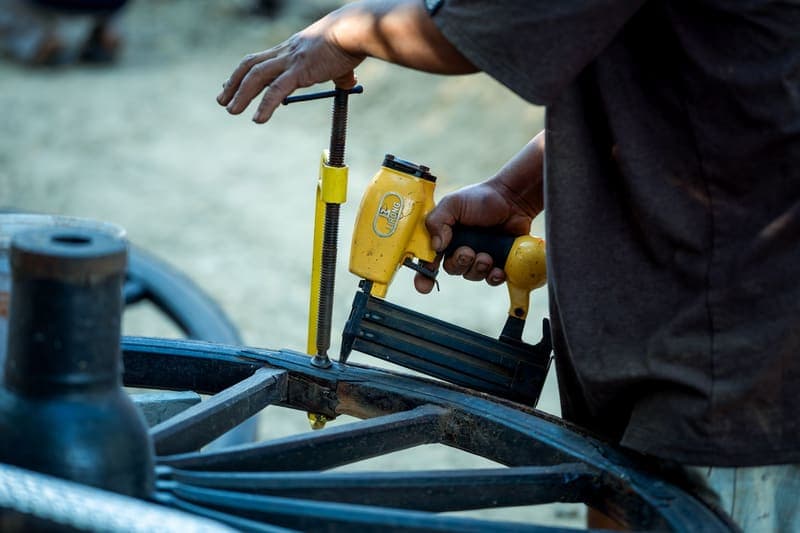
A worker holding a pneumatic nail gun against a wooden assembly

Licensed stock photo - illustrative of the category, not a photo of this unit

#ad Disclosure - we do not publish prices we cannot verify

Published specs

Metabo HPT NT50AE2 published specifications
Average air @ 90 PSINot published as a CFM figure
PerformanceNo air consumption published; 70-120 PSI; 5/8-2 in brads; 100-nail magazine; 10 x 9-3/16 in
NoiseNot published
Weight2.2 lb
Minimum hoseNot published

Source: Metabo HPT NT50AE2 2-inch 18-gauge brad nailer - product specifications

Pick 4 - Makita AF506

5.4/10★★★☆☆

Makita AF506

Best for: Buyers sizing the compressor and the nailer in the same purchase

Verdict

The only one that answers the actual question: a minimum recommended air delivery of 1.5 SCFM at 90 PSI.

What it does well

  • Publishes a minimum recommended air delivery - 1.5 SCFM at 90 PSI - which is a compressor-sizing figure, not a consumption trivia figure
  • 2.9 lb net with a 1/4 inch NPT inlet and a 100-brad magazine
  • 70 to 120 PSI operating range
  • Current production: it replaced the AF505N, which Makita now lists as discontinued

What it will not do

  • 2.9 lb is heavier than the Metabo HPT and DeWalt tools for no published advantage in air demand
  • 2 inch maximum brad length
  • Three-year limited warranty, shorter than two of the cheaper tools here
How this 5.4 was calculated
MetricScoreWeightBasis
Air economy5.040%No average CFM published - scored a neutral 5
Handling8.225%2.9 lb, on a 1.8-8 lb scale
Noise5.020%No dBA published - scored a neutral 5
Spec transparency2.015%1 of 5 useful figures published (average CFM, CFM at load, dBA, weight, minimum hose)
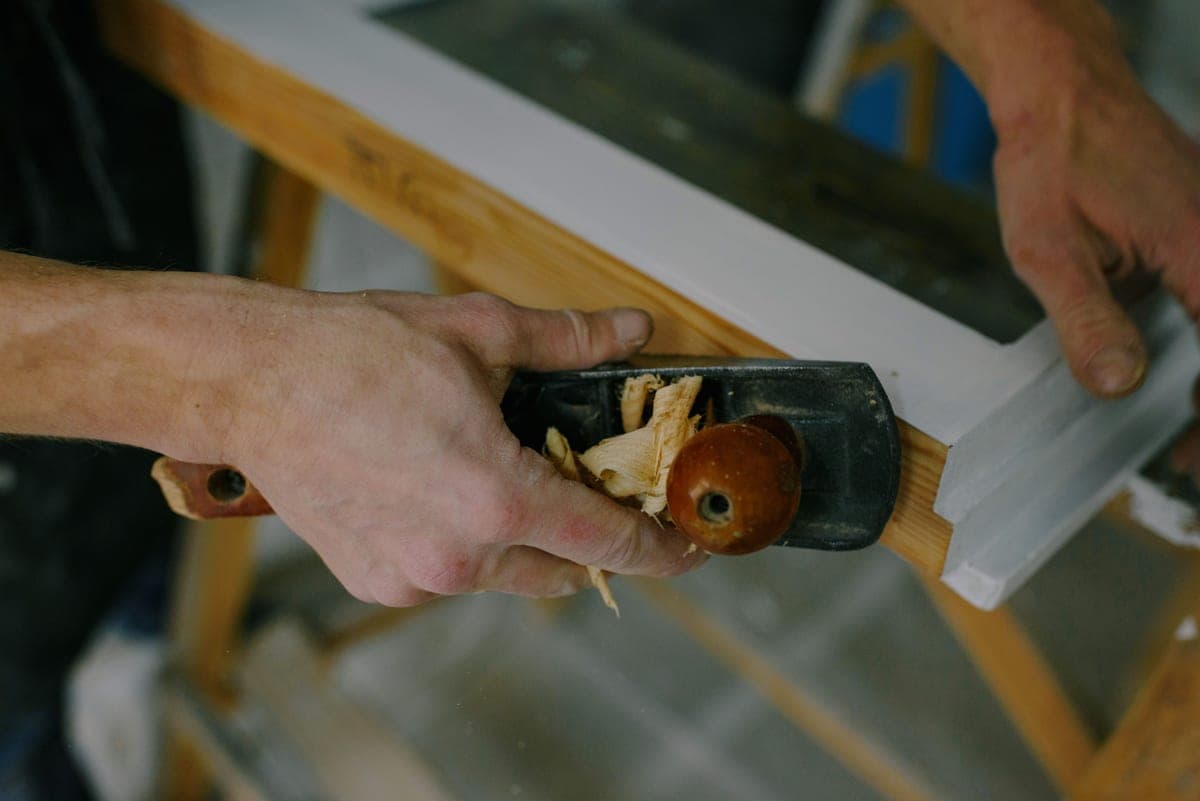
Hand tools and planed wooden boards laid out on a cabinetmaker's bench

Licensed stock photo - illustrative of the category, not a photo of this unit

#ad Disclosure - we do not publish prices we cannot verify

Published specs

Makita AF506 published specifications
Average air @ 90 PSINot published as a CFM figure
PerformanceMinimum recommended air delivery 1.5 SCFM at 90 PSI; 70-120 PSI; 5/8-2 in brads; 100-nail magazine; 1/4 in NPT
NoiseNot published
Weight2.9 lb
Minimum hoseNot published

Source: Makita AF506 2-inch 18-gauge brad nailer - product specifications

The mechanics

What the gauge number actually is

Gauge runs backwards: a higher number is a thinner nail. An 18-gauge brad is thin enough that it parts wood fibers rather than displacing them, which is why the hole is almost invisible and why the nail has very little grip. A 15-gauge nail is substantially thicker, displaces more fiber, and grips accordingly.

That one property cascades. Thin nail, small hole, little holding power, almost no splitting risk on delicate stock, and very little air needed to drive it. Thick nail, visible hole, real holding power, genuine splitting risk near an end grain, and more air per shot. There is no version of this trade you can escape by buying a better tool.

Collation matters too, and it is a running cost rather than a performance one. 15-gauge finish nailers are usually angled with DA-style collated nails, which cost more per nail than straight strips - the Bostitch here takes 1-1/4 to 2-1/2 inch DA-style angled nails. 18-gauge brads are straight strips and the cheapest fasteners in the class.

The air side

What each one asks of your compressor

Both are burst tools, which is the reason either runs on a small compressor at all. You fire, the tank covers the shot, the pump refills between shots. The published class figures - 0.5 CFM for an 18-gauge brad nailer and 1.8 CFM for a 15-gauge finish nailer - are duty-rated averages, not what the tool draws at the instant it fires.

Where the difference bites is pace. Bostitch is unusually honest about this and publishes its figures with the firing rate attached: its BTFP12233 brad nailer draws 1.15 CFM of free air at 80 PSI at 60 nails a minute, and 0.58 CFM at 30 a minute. Half the pace, half the air. That is the single most useful thing any nailer manufacturer prints, because it tells you the demand is a function of how fast you work rather than a fixed property of the tool.

Practically: a one-gallon 0.7 CFM trim compressor keeps up with 18-gauge brads at a steady trim pace and falls behind if you bump-fire. A 6-gallon 2.6 CFM pancake keeps up with a 15-gauge finish nailer at 60 nails a minute with margin. Nothing in this class needs a 20-gallon tank, and a guide that tells you otherwise is selling tank volume.

Published air demand at 90 PSI
ToolCFM @ 90 PSIAt loadDutyWhat the number means
Brad nailer, 18 gauge0.5-BurstThe most forgiving air tool there is. A nailer draws air only at the instant it fires, so almost any tank covers it. That is why a 1-gallon compressor is a genuinely complete tool for trim work rather than a compromise.
Finish nailer, 15 gauge1.8-BurstBostitch publishes 1.8 CFM of free air at 80 PSI for its BTFP72155 running 60 fasteners a minute - a fast, sustained trim pace, not casual use. At a realistic pace the draw is a fraction of that.
Framing nailer, 21 or 30 degree2.5-BurstEngineering ToolBox lists 2.5 CFM for a framing nailer on a 25% load factor. Metabo HPT publishes 0.09 SCFM at 100 PSI for the NR90AES1 on a per-cycle basis. The two describe the same tool at different firing rates, which is exactly why one CFM number for a nailer is misleading: nail pace sets the demand, not the badge on the tool.
Upholstery / crown stapler2-BurstEngineering ToolBox lists 2 CFM for an upholstery stapler, measured at 30 PSI. Low pressure means low demand, and a small tank keeps up easily.

Where two references publish different figures, both are shown rather than averaged into a number nobody published. Primary sources: Ingersoll Rand air consumption chart, Engineering ToolBox air tool consumption, and per-tool manufacturer specifications.

The decision

Which to buy for which job

  • Painted baseboard, shoe moulding, door stop, small casing - 18 gauge. The hole disappears under paint and the holding power is adequate with glue.
  • Door casing on a jamb that gets slammed, heavy 1x baseboard, stair skirt, exterior-grade trim - 15 gauge. This is where an 18-gauge brad works loose and you find out in a year.
  • Crown moulding - 18 gauge into the studs where you can, and construction adhesive doing the real work. The lighter tool matters here because you are holding it overhead.
  • Cabinet assembly and face frames - 18 gauge, and glue is the joint. The brad is a clamp that holds the parts while the glue cures.
  • Delicate or thin stock, hardwood edges, anything that splits - 18 gauge, and the tool that drives from 3/8 inch gives you the shortest available fastener.
  • If you can only own one and you do mixed interior work - 18 gauge, because the failures of an 18-gauge nail are fixable with glue and the failures of a 15-gauge nail are visible forever.

Why the numbers look odd

The documentation problem in this class

No brand in the 18-gauge class publishes an average CFM at 90 PSI. Instead each one picks its own basis: Bostitch publishes free air per minute at a stated firing rate, DeWalt publishes 2.83 CFM at 80 PSI per 100 cycles, WEN publishes 0.028 CFM per nail at 88 PSI, Makita publishes a minimum recommended air delivery of 1.5 SCFM at 90 PSI, and Metabo HPT publishes nothing at all.

Those are four different conventions and one silence. Converting between them to produce a single comparable number would mean manufacturing a figure nobody published, which is exactly what this site refuses to do - so the product cards carry each tool's figure on its own stated basis and name the basis.

The one that is actually useful for shopping is Makita's, because a minimum recommended air delivery is a compressor-sizing figure rather than a consumption trivia figure. If you are buying the nailer and the compressor in the same purchase, that is the number to size against.

FAQ

Questions people actually ask

Is a 15 gauge or 18 gauge nailer better for trim?

18 gauge for painted trim where the hole matters more than the grip, 15 gauge where the joint has to hold - door casing, heavy baseboard, stair skirts. Most trim carpenters own both, and if you can only buy one, 18 gauge covers more work acceptably.

How much air does a 15 gauge finish nailer use?

Our cited class figure is 1.8 CFM at about 90 PSI. One tool here publishes it precisely: 1.8 CFM of free air at 80 PSI at 60 fasteners a minute. A 6-gallon 2.6 CFM pancake covers that with margin.

Can I use an 18 gauge brad nailer for baseboard?

For light painted baseboard, yes, especially with construction adhesive. For heavy 1x stock or anything that takes knocks, the brad works loose over time and 15 gauge is the right tool.

Will a small compressor run a finish nailer?

A 6-gallon 2.6 CFM pancake will run a 15-gauge finish nailer comfortably at 60 nails a minute. A one-gallon 0.7 CFM trim compressor will not keep up with a 15-gauge tool, though it handles 18-gauge brads at a steady pace.

Does 15 gauge split wood more than 18 gauge?

Yes, because it displaces more fiber. The risk is highest near end grain and on narrow or delicate stock, which is one of the reasons 18 gauge is the default for anything thin.

What about 16 gauge?

It sits between the two, with straight collation that is cheaper per nail than angled 15-gauge strips and more holding power than an 18-gauge brad. It is a reasonable single-tool compromise; it is just not the choice this comparison is about.

Sources

Where these numbers come from

Accessed September 2026. If a figure on this page does not match the manufacturer's current sheet, tell us at contact@psiandhose.com and we will correct and date the change - see our editorial policy.

Read next