Skip to content
Psi & Hose

Hoses & Air Prep

Best air hoses for cold weather

Every hose has a published low-temperature rating and almost nobody reads it - right up to the first February morning in an unheated garage.

By Ryder M.Last updated Published
A cold unheated garage workshop in winter

Some links on this page are affiliate links. If you buy through one, Magoo Media Group earns a commission from the retailer at no extra cost to you. It never changes which product we rank first - how this site is funded.

The problem

What cold actually does to a hose

Hose materials stiffen as temperature drops. A hose that lies flat at 70F becomes a coiled spring at 20F - it holds whatever shape it was wound in, fights being pulled straight, and drags tools off the bench when it snaps back.

This is not a durability issue so much as a usability one. The hose still carries air perfectly; it just becomes unpleasant enough that people stop using the compressor in winter, which is the same outcome as not owning one.

The good news is that it is a published spec. Every hose we list states a temperature range, and the spread across this page is wide enough to matter: -30F, -40F and -50F are genuinely different machines in January.

Published temperature ranges
HoseMaterialTemperature rangeWorking pressure
Goodyear 12674EPDM rubber-50F to 190F250 PSI
Flexzilla HFZ3850YW2Hybrid polymer-40F to 140F300 PSI at 70F
Flexzilla Pro HFZP3850YW2Hybrid polymer-40F to 140F300 PSI at 70F
Amflo 13-50AEPolyurethane-30F to 150F300 PSI

Cheap PVC hose frequently publishes no temperature range at all, which is itself the answer about how it behaves in the cold.

Ranked

The picks

Quick picks

#ProductBest forScorePrice
1
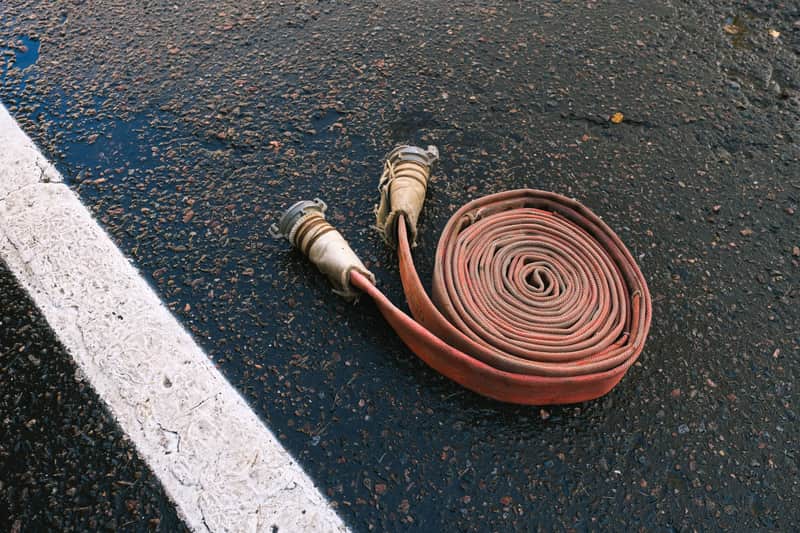
A red rubber air hose with brass fittings on a workbench
Goodyear 12674 rubber air hose3/8" / 50 ft / 250 PSI250 PSI working, 1,070 PSI burst, EPDM rubber and brass ends. The hose that outlives the compressor.
A permanent hose that stays on the reel and never gets dragged into the cold7.3/10★★★★☆

#ad Disclosure - we do not publish prices we cannot verify

2
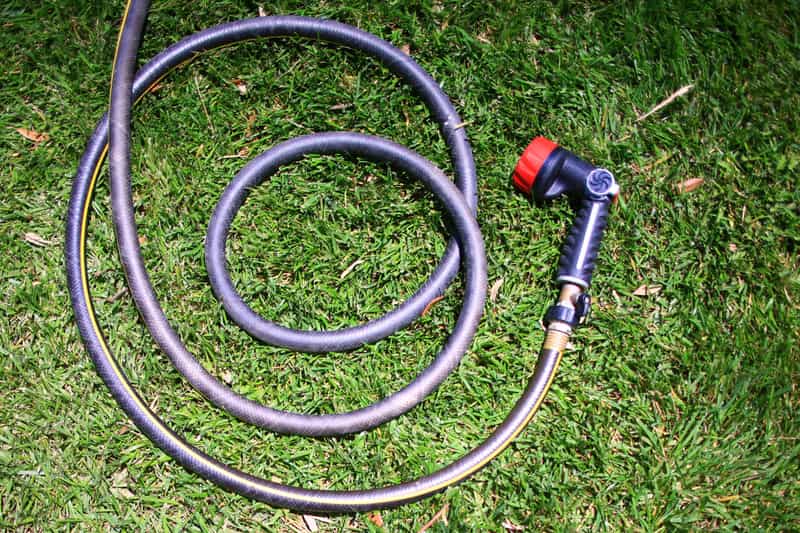
A coiled hybrid polymer air hose lying flat on a garage floor
Flexzilla HFZ3850YW23/8" / 50 ft / 300 PSI at 70F300 PSI hybrid polymer that lies flat from -40F to 140F. The upgrade that makes a cheap compressor feel expensive.
The one hose to own in a cold or unheated garage8.0/10★★★★☆

#ad Disclosure - we do not publish prices we cannot verify

3
A hybrid polymer air hose with reusable machined aluminum end fittings
Flexzilla Pro HFZP3850YW23/8" / 50 ft / 300 PSI at 70FThe same 300 PSI hybrid polymer hose as the standard Flexzilla, with field-repairable reusable fittings.
A hose that gets cut on a job site and has to keep working8.0/10★★★★☆

#ad Disclosure - we do not publish prices we cannot verify

4
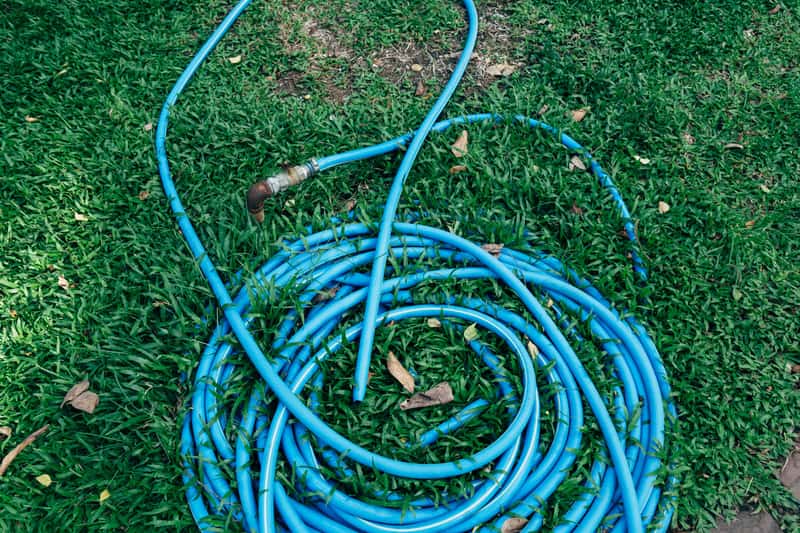
A blue polyurethane air hose coiled on a clean workshop floor
Amflo 13-50AE polyurethane hose3/8" / 50 ft / 300 PSI3.5 pounds for 50 feet of 300 PSI hose, in a non-marring cover. The lightest way to move air.
Roofing, ladders, and anywhere the hose drags across finished surfaces8.4/10★★★★☆

#ad Disclosure - we do not publish prices we cannot verify

Scores are computed from manufacturer-published specs by the rubric on our methodology page. Nothing here has been bench-tested, and we do not publish prices we cannot verify.

Pick 1 - Goodyear 12674

7.3/10★★★★☆

Goodyear 12674 rubber air hose

Best for: A permanent hose that stays on the reel and never gets dragged into the cold

Verdict

250 PSI working, 1,070 PSI burst, EPDM rubber and brass ends. The hose that outlives the compressor.

What it does well

  • 250 PSI working pressure with a 1,070 PSI burst rating - a 4:1 margin
  • -50F to 190F range and a Class C oil, weather and solvent resistant EPDM cover
  • Machined brass ends seal better and corrode less than aluminum or zinc

What it will not do

  • Rubber is heavy and it holds a coil memory - dragging 50 ft of it around is real work
  • Stiffer than hybrid polymer when the garage is cold
How this 7.3 was calculated
MetricScoreWeightBasis
Pressure headroom7.140%250 PSI rating, on a 125-300 PSI scale
Flow capacity6.040%Flow not published for this class - scored a 6, which is what a correctly sized hose or fitting does not restrict
Spec transparency10.020%7 published specification figures
A red rubber air hose with brass fittings on a workbench

Licensed stock photo - illustrative of the category, not a photo of this unit

#ad Disclosure - we do not publish prices we cannot verify

Published specs

Goodyear 12674 rubber air hose published specifications
Inside diameter3/8"
Length50 ft
Working pressure250 PSI
Burst pressure1,070 PSI
Temperature range-50F to 190F
Fittings1/4" MNPT machined brass
CoverClass C oil, weather and solvent resistant EPDM

Source: Goodyear 12674 red rubber air hose - distributor specification listing

Pick 2 - Flexzilla HFZ3850YW2

8.0/10★★★★☆

Flexzilla HFZ3850YW2

Best for: The one hose to own in a cold or unheated garage

Verdict

300 PSI hybrid polymer that lies flat from -40F to 140F. The upgrade that makes a cheap compressor feel expensive.

What it does well

  • 300 PSI maximum working pressure at 70F - higher than any compressor on this site produces
  • -40F to 140F flexibility: it still uncoils in an unheated garage in February
  • Zero-memory construction means it lies flat instead of fighting you, and 3/8" ID does not throttle an impact

What it will not do

  • Costs multiples of the PVC hose bundled in a compressor kit
  • The bright green is not subtle, which matters to precisely nobody using it
How this 8.0 was calculated
MetricScoreWeightBasis
Pressure headroom10.040%30070 PSI rating, on a 125-300 PSI scale
Flow capacity6.040%Flow not published for this class - scored a 6, which is what a correctly sized hose or fitting does not restrict
Spec transparency8.020%6 published specification figures
A coiled hybrid polymer air hose lying flat on a garage floor

Licensed stock photo - illustrative of the category, not a photo of this unit

#ad Disclosure - we do not publish prices we cannot verify

Published specs

Flexzilla HFZ3850YW2 published specifications
Inside diameter3/8"
Length50 ft
Max working pressure300 PSI at 70F
Temperature range-40F to 140F
Fittings1/4" MNPT, anodized aluminum ends
MaterialHybrid polymer

Source: Flexzilla HFZ3850YW2 air hose - distributor specification listing

Pick 3 - Flexzilla HFZP3850YW2

8.0/10★★★★☆

Flexzilla Pro HFZP3850YW2

Best for: A hose that gets cut on a job site and has to keep working

Verdict

The same 300 PSI hybrid polymer hose as the standard Flexzilla, with field-repairable reusable fittings.

What it does well

  • Reusable anodized aircraft aluminum compression fittings - a cut hose is repaired with two wrenches, no special tooling
  • 300 PSI working pressure at 70F and the same -40F to 140F all-weather flexibility
  • Lays flat with no memory and will not kink under pressure

What it will not do

  • The hose itself is identical to the standard Flexzilla - you are paying only for the repairable ends
  • If your hose lives on a reel in a garage and never gets damaged, the Pro premium buys you nothing
How this 8.0 was calculated
MetricScoreWeightBasis
Pressure headroom10.040%30070 PSI rating, on a 125-300 PSI scale
Flow capacity6.040%Flow not published for this class - scored a 6, which is what a correctly sized hose or fitting does not restrict
Spec transparency8.020%6 published specification figures
A hybrid polymer air hose with reusable machined aluminum end fittings

Licensed stock photo - illustrative of the category, not a photo of this unit

#ad Disclosure - we do not publish prices we cannot verify

Published specs

Flexzilla Pro HFZP3850YW2 published specifications
Inside diameter3/8"
Length50 ft
Working pressure300 PSI at 70F
Temperature range-40F to 140F
Fittings1/4" MNPT reusable anodized aircraft aluminum, field repairable
MaterialHybrid polymer

Source: Flexzilla Pro Air Hose - product specifications

Pick 4 - Amflo 13-50AE

8.4/10★★★★☆

Amflo 13-50AE polyurethane hose

Best for: Roofing, ladders, and anywhere the hose drags across finished surfaces

Verdict

3.5 pounds for 50 feet of 300 PSI hose, in a non-marring cover. The lightest way to move air.

What it does well

  • 3.5 lb for 50 ft - a fraction of the weight of rubber, which is the whole reason roofers use it
  • 300 PSI working pressure with a nylon braid reinforcement, and a -30F to +150F range
  • Non-marring cover that resists weathering, abrasion, oil and kinks, so it will not scuff finished trim

What it will not do

  • Polyurethane is less abrasion-tolerant than rubber when dragged over concrete and sharp edges
  • Lighter hose is easier to pull off a bench or out of position by accident
How this 8.4 was calculated
MetricScoreWeightBasis
Pressure headroom10.040%300 PSI rating, on a 125-300 PSI scale
Flow capacity6.040%Flow not published for this class - scored a 6, which is what a correctly sized hose or fitting does not restrict
Spec transparency10.020%7 published specification figures
A blue polyurethane air hose coiled on a clean workshop floor

Licensed stock photo - illustrative of the category, not a photo of this unit

#ad Disclosure - we do not publish prices we cannot verify

Published specs

Amflo 13-50AE polyurethane hose published specifications
Inside diameter3/8"
Length50 ft
Working pressure300 PSI
Weight3.5 lb
Temperature range-30F to +150F
Fittings3/8" MNPT brass swivel with bend restrictors
MaterialPolyurethane with nylon braid reinforcement

Source: Amflo 13-50AE polyurethane air hose - retailer specification listing

Read the whole spec

The lowest number is not automatically the best hose

Rubber wins on raw range - a published -50F to 190F, the widest span on this page, plus a 1,070 PSI burst rating and machined brass ends. If a hose lives on a reel in a cold garage and rarely moves, it is the one that will outlive the compressor.

But cold flexibility and cold handling are different things. Rubber is heavy and holds a coil; hybrid polymer publishes -40F with zero memory and lays flat, which in practice is the one you will actually enjoy dragging around in February.

So the honest ranking depends on whether the hose moves. A hose that stays on a reel: buy rubber for the range and the durability. A hose you handle every session in an unheated space: buy hybrid for the -40F flexibility and accept the slightly narrower span.

What the cold rating does not cover

Condensation. Cold air holds less moisture, so water drops out of the line faster in winter, and a tank that is never drained rusts regardless of what the hose is rated to. The hose spec has nothing to do with it - that is a filter and drain-valve problem.

Beyond the hose

Practical cold-garage habits

  • Uncoil the hose before you need it rather than fighting it mid-job - a stiff hose straightens faster once air is in it.
  • Drain the tank more often in winter, not less. Cold air drops more water out of the line, and a drain valve left shut is how a tank rusts from the inside.
  • Keep the hose off a cold concrete floor if you can. Concrete pulls heat out of it faster than the air does.
  • Do not store a hose tightly coiled in the cold - it sets the memory harder. A reel or a wide wall hook is better than a tight loop.

FAQ

Questions people actually ask

What is the best air hose for cold weather?

For the widest published range, an EPDM rubber hose rated -50F to 190F. For the best cold handling, a hybrid polymer hose rated -40F with zero memory, which lays flat instead of coiling. Choose on whether the hose moves or stays on a reel.

At what temperature do air hoses get stiff?

It depends entirely on the material, which is why the published range matters. Polyurethane is rated to -30F, hybrid polymer to -40F and EPDM rubber to -50F. Cheap PVC often publishes no rating at all and stiffens well above freezing.

Does cold weather damage an air hose?

Using a hose below its rated temperature risks cracking the cover, particularly if you force a stiff hose straight. Within its published range it is a handling nuisance rather than damage.

Why does my air hose coil up in winter?

The material has stiffened and is holding the shape it was stored in - coil memory. Hybrid polymer hoses are specifically built with zero memory to avoid this, which is their main practical advantage in a cold garage.

Do I need to drain my compressor more in winter?

Yes. Cold air holds less moisture, so more water drops out into the tank and lines. That is a drain-valve and filtration issue rather than anything to do with the hose rating.

Sources

Where these numbers come from

Accessed September 2026. If a figure on this page does not match the manufacturer's current sheet, tell us at contact@psiandhose.com and we will correct and date the change - see our editorial policy.

Read next