Skip to content
Psi & Hose

Air Tools

Best crown staplers

A crown stapler holds sheet material the way no nail can. Crown width decides which tool you need, and two of these three publish the air figure you size a compressor against.

By Ryder M.Last updated Published
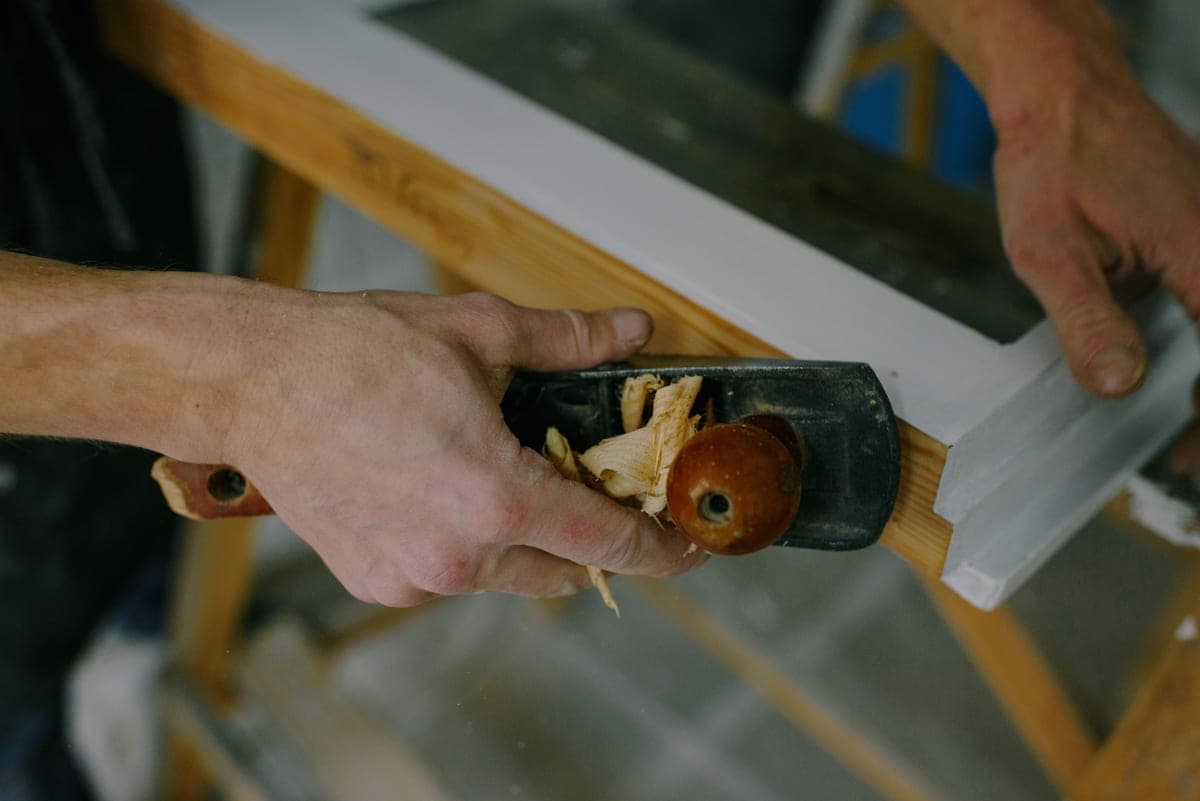
A pneumatic stapler being used on interior trim and sheet stock

Some links on this page are affiliate links. If you buy through one, Magoo Media Group earns a commission from the retailer at no extra cost to you. It never changes which product we rank first - how this site is funded.

Read this first

The verdict, before the specs

For cabinet backs, drawer boxes and trim, buy the Makita AT638A: 18 gauge on a 1/4-inch crown, 1/2 to 1-1/2 inch legs, a 100-staple magazine, 70 to 120 PSI, and 2.7 pounds. It wins on one thing that sounds dull and is not: Makita publishes a minimum recommended air delivery of 1.7 SCFM at 90 PSI. That is the only air figure anyone in this category prints, and it is the figure you size a compressor against. The budget pick is the Metabo HPT N3804A5 - the same 18 gauge, the same 1/4-inch crown, the same 100 staples, the same 2.7 pounds, two extra years of warranty, and the lowest live price of the three at the last check.

If your work is sheathing, underlayment or lath rather than cabinetry, neither narrow crown tool is the right buy. The Makita AT1150A is a different tool: 16 gauge on a 7/16-inch crown, legs up to 2 inches, a 140-staple magazine, and a published 3.7 SCFM at 90 PSI. A wide crown holds sheet goods down in a way a narrow crown staple cannot, and the price of that is a visible fastener and a bigger compressor.

Every price on this page is read live from our price layer in the buy buttons and stamped with the date it was checked. We do not type prices into the text.

The one spec that sorts this category

Crown width. A 1/4-inch crown disappears into trim and holds almost nothing; a 7/16-inch crown holds housewrap and lath and shows. Gauge and length follow from the crown, not the other way round.

Why own one

What a crown stapler does that a nailer cannot

A nail holds by friction along its shank and presents a head the size of a pinhead. A staple holds by two legs with a bridge between them, and that bridge - the crown - spreads the clamping force across a span instead of concentrating it at one point. That is the whole difference, and it decides everything a stapler is good for.

The practical consequence: anywhere you are fastening something thin to something solid, a staple beats a nail. Cabinet backs are the textbook case. A 1/4-inch plywood back pinned with 18-gauge brads will pull over the brad heads the first time the carcass racks; the same back stapled on a 1/4-inch crown stays put, because each fastener grips across a span of material rather than through a single hole. Drawer bottoms, glue blocks, chair webbing and upholstery are the same problem in different sizes.

Scale the crown up and the job changes with it. A 7/16-inch crown on 16-gauge wire through 1-inch legs is what holds housewrap against wind, lath against studs and underlayment against a subfloor. You are no longer fastening trim; you are stopping sheet material from lifting over a large area, and a wide crown is the only fastener shape that does it without washers.

What a stapler is not good for is anything that has to be invisible. Even a 1/4-inch crown leaves a mark twice the width of a brad hole, and no amount of filler makes a staple read like a pin. For face frames, casing, crown moulding and anything that gets painted and inspected, a brad or finish nailer is the correct tool and our pages on those cover the choice.

The criteria

How we ranked these three

Every figure on this page is the manufacturer's own, taken from its own product page and linked in the sources block below. We have not tested these staplers, we do not own them, and we are not going to pretend otherwise. What we did do is read the three spec sheets side by side, which in this category is more than the retail listings let you do - most stapler listings publish a crown width, a photograph and nothing else.

The ranking runs on four criteria, in this order of importance to someone buying one pneumatic stapler for a home shop.

  1. 01A published air figure. Whether the maker tells you how much air the tool wants, at a stated pressure. Makita publishes a minimum recommended air delivery for both of its staplers; Metabo HPT publishes none for the N3804A5. A tool with a stated figure can be matched to a compressor before you buy; one without it is a guess, and guessing is how people end up with a tool that stalls.
  2. 02Crown width against the actual job. This is the spec that decides whether the tool is right at all, and it is not a quality ranking - a 1/4-inch crown and a 7/16-inch crown are different tools that happen to share a name.
  3. 03Weight, because a stapler gets used inside a carcass, overhead, and at arm's length. The narrow crown pair are 2.7 pounds; the medium crown tool is 5.1 pounds in Makita's spec table. Both figures are published, and the difference is felt within the first hour.
  4. 04Magazine capacity and operating pressure range, which together decide how often you stop. 140 staples beats 100 on a repetitive run, and a range that starts at 65 PSI rather than 70 gives you a little more room on a small compressor.
The three, on their manufacturers' published figures
Gauge / crownLeg lengthAir deliveryMagazinePressureWeight
Makita AT638A18 ga / 1/4"1/2" to 1-1/2"1.7 SCFM at 90 PSI10070-120 PSI2.7 lb
Metabo HPT N3804A518 ga / 1/4"1/2" to 1-1/2"Not published10070-120 PSI2.7 lb
Makita AT1150A16 ga / 7/16"1" to 2"3.7 SCFM at 90 PSI14065-120 PSI5.1 lb

Manufacturer-published figures only, each attributed in the sources block below. Makita's figure is a minimum recommended air DELIVERY at 90 PSI, not a consumption-per-cycle figure - no maker in this category publishes per-cycle air use. Note also that Makita's own About copy for the AT1150A says 4.9 lb while its spec table says 5.1 lb; we quote the spec table. Prices move daily and live in the buy buttons rather than in this table.

Published air demand at 90 PSI
ToolCFM @ 90 PSIAt loadDutyWhat the number means
Upholstery / crown stapler2-BurstEngineering ToolBox lists 2 CFM for an upholstery stapler, measured at 30 PSI. Low pressure means low demand, and a small tank keeps up easily.

Where two references publish different figures, both are shown rather than averaged into a number nobody published. Primary sources: Ingersoll Rand air consumption chart, Engineering ToolBox air tool consumption, and per-tool manufacturer specifications.

Ranked

The picks

Quick picks

#ProductBest forScorePrice
1
Makita AT638A product photo
Makita AT638A1.7 CFM avg / 2.7 lbThe only stapler in this roster whose maker publishes an air figure: 1.7 SCFM at 90 PSI. That is a number you can size a compressor against, and nobody else in the category gives you one.
Cabinet backs, drawer boxes and trim where a 1/4-inch crown has to disappear7.7/10★★★★☆

#ad Disclosure - price as of November 14, 2026

2
Metabo HPT N3804A5 product photo
Metabo HPT N3804A52.7 lbIdentical on paper to the Makita narrow crown stapler - same gauge, same crown, same 100-staple magazine, same 2.7 lb - with two more years of warranty and no published air figure.
The same cabinet and trim work, if you would rather have the longer warranty5.4/10★★★☆☆

#ad Disclosure - price as of November 14, 2026

3
Makita AT1150A product photo
Makita AT1150A3.7 CFM avg / 5.1 lbA different tool from the narrow crown pair: 16 gauge on a 7/16-inch crown, up to 2-inch legs, and a published 3.7 SCFM at 90 PSI. Sheathing, housewrap, lath and underlayment rather than cabinet backs.
Sheathing, underlayment and lath, where a wide crown has to hold sheet material down5.0/10★★★☆☆

#ad Disclosure - price as of November 14, 2026

Scores are computed from manufacturer-published specs by the rubric on our methodology page. Nothing here has been bench-tested. Prices are Amazon's own, refreshed daily, and never shown when we cannot verify them.

Pick 1 - Makita AT638A

7.7/10★★★★☆

Makita AT638A

Best for: Cabinet backs, drawer boxes and trim where a 1/4-inch crown has to disappear

Verdict

The only stapler in this roster whose maker publishes an air figure: 1.7 SCFM at 90 PSI. That is a number you can size a compressor against, and nobody else in the category gives you one.

What it does well

  • Publishes a minimum recommended air delivery of 1.7 SCFM at 90 PSI - the figure this whole site sizes compressors on
  • 2.7 lb net weight, the lightest stapler here, which matters on overhead cabinet work
  • 70-120 PSI operating range, so it runs on every compressor in our roster
  • 100-staple magazine and a 1/4 in NPT industrial fitting in the box

What it will not do

  • 1.7 SCFM at 90 PSI is more than a 0.7 CFM one-gallon trim compressor delivers at a sustained pace
  • 3-year limited warranty, against 5 years on the Metabo HPT
  • Does not publish air consumption per cycle, so a shots-per-minute calculation is not possible
How this 7.7 was calculated
MetricScoreWeightBasis
Air economy10.040%1.7 CFM average at 90 PSI, on a 1.8-6 CFM scale (lower is better)
Handling8.525%2.7 lb, on a 1.8-8 lb scale
Noise5.020%No dBA published - scored a neutral 5
Spec transparency4.015%2 of 5 useful figures published (average CFM, CFM at load, dBA, weight, minimum hose)
Makita AT638A product photo

Product image from the Amazon listing for this model

#ad Disclosure - price as of November 14, 2026

Published specs

Makita AT638A published specifications
Average air @ 90 PSI1.7 CFM
Performance18 ga, 1/4" crown, 1/2-1-1/2 in legs; 100-staple magazine; 70-120 PSI; 1.7 SCFM minimum recommended air delivery at 90 PSI
NoiseNot published
Weight2.7 lb
Minimum hoseNot published

Source: Makita AT638A 1/4 in. crown 18-gauge narrow crown stapler - product specifications

Pick 2 - Metabo HPT N3804A5

5.4/10★★★☆☆

Metabo HPT N3804A5

Best for: The same cabinet and trim work, if you would rather have the longer warranty

Verdict

Identical on paper to the Makita narrow crown stapler - same gauge, same crown, same 100-staple magazine, same 2.7 lb - with two more years of warranty and no published air figure.

What it does well

  • 5-year warranty, the longest published on any stapler here
  • Same 2.7 lb as the lightest tool in the group, at 10.3 x 3 x 9.25 in
  • 18 ga, 1/4" crown, 1/2 to 1-1/2 in staples and a 100-staple capacity - the standard narrow crown spread
  • 70-120 PSI operating range covers every compressor in our roster

What it will not do

  • Metabo HPT publishes NO air consumption or delivery figure for this tool, so you are sizing blind
  • Nothing on the spec sheet beats the Makita except the warranty
  • The Canadian product page is the one that carries the full spec table, which is an odd place to have to look
How this 5.4 was calculated
MetricScoreWeightBasis
Air economy5.040%No average CFM published - scored a neutral 5
Handling8.525%2.7 lb, on a 1.8-8 lb scale
Noise5.020%No dBA published - scored a neutral 5
Spec transparency2.015%1 of 5 useful figures published (average CFM, CFM at load, dBA, weight, minimum hose)
Metabo HPT N3804A5 product photo

Product image from the Amazon listing for this model

#ad Disclosure - price as of November 14, 2026

Published specs

Metabo HPT N3804A5 published specifications
Average air @ 90 PSINot published as a CFM figure
Performance18 ga, 1/4" crown, 1/2-1-1/2 in staples; 100-staple capacity; 70-120 PSI; 10.3 x 3 x 9.25 in; 5-year warranty
NoiseNot published
Weight2.7 lb
Minimum hoseNot published

Source: Metabo HPT N3804A5 18-gauge narrow crown pro finish stapler - product specifications

Pick 3 - Makita AT1150A

5.0/10★★★☆☆

Makita AT1150A

Best for: Sheathing, underlayment and lath, where a wide crown has to hold sheet material down

Verdict

A different tool from the narrow crown pair: 16 gauge on a 7/16-inch crown, up to 2-inch legs, and a published 3.7 SCFM at 90 PSI. Sheathing, housewrap, lath and underlayment rather than cabinet backs.

What it does well

  • Publishes 3.7 SCFM minimum recommended air delivery at 90 PSI - again, a real sizing figure
  • 16 ga on a 7/16" crown with 1 to 2 in legs: far more holding power than a narrow crown staple
  • 140-staple magazine, the largest here, which is what you want on a repetitive sheet-goods run
  • 65-120 PSI operating range, the widest in the group at the low end

What it will not do

  • 3.7 SCFM at 90 PSI is above what a 2.6 CFM six-gallon pancake delivers continuously - this one wants a bigger machine
  • 5.1 lb in the spec table and nearly twice the length of the narrow crown tools
  • A 7/16" crown is visible on finish work; this is not a trim tool
  • Makita's own page gives two different weights - 4.9 lb in the copy, 5.1 lb in the spec table
How this 5.0 was calculated
MetricScoreWeightBasis
Air economy5.540%3.7 CFM average at 90 PSI, on a 1.8-6 CFM scale (lower is better)
Handling4.725%5.1 lb, on a 1.8-8 lb scale
Noise5.020%No dBA published - scored a neutral 5
Spec transparency4.015%2 of 5 useful figures published (average CFM, CFM at load, dBA, weight, minimum hose)
Makita AT1150A product photo

Product image from the Amazon listing for this model

#ad Disclosure - price as of November 14, 2026

Published specs

Makita AT1150A published specifications
Average air @ 90 PSI3.7 CFM
Performance16 ga, 7/16" crown, 1-2 in legs; 140-staple magazine; 65-120 PSI; 3.7 SCFM minimum recommended air delivery at 90 PSI
NoiseNot published
Weight5.1 lb
Minimum hoseNot published

Source: Makita AT1150A 7/16 in. crown 16-gauge medium crown stapler - product specifications

Match it to the work

Narrow crown or medium crown - decide this first

The two narrow crown staplers here are interchangeable on paper, and both are the right answer for the same list of jobs: cabinet backs, drawer bottoms, glue blocks, thin panel work, light trim where the fastener will be filled. An 18-gauge wire on a 1/4-inch crown through legs up to 1-1/2 inches is the standard shop stapler, and it is the one most people should own if they only own one.

Choosing between them is almost entirely about which specification you weight. The Makita AT638A publishes 1.7 SCFM at 90 PSI, which means you can check it against your compressor before you buy. The Metabo HPT N3804A5 publishes a 5-year warranty against Makita's 3, and typically costs less. Both are 2.7 pounds with a 100-staple magazine and a 70 to 120 PSI range. If you already own a small compressor and want to know it will keep up, take the Makita. If you want the longest cover and the lowest price, take the Metabo HPT and accept that you are sizing by analogy.

The medium crown AT1150A is not competing with either of them. 16-gauge wire on a 7/16-inch crown with legs to 2 inches is a construction fastener, and the tool is built to match: 140 staples, 5.1 pounds, 14-1/2 inches long. You buy it for sheathing, housewrap, roofing felt, lath and underlayment - jobs where the fastener's visibility is irrelevant and its holding area is the point.

If you are torn, the honest test is to look at what you fastened last. If the answer is plywood thinner than half an inch to a frame, buy narrow crown. If the answer is sheet goods to studs or a subfloor, buy medium crown. If the answer is casing and baseboard, buy a finish nailer instead and come back to staplers later.

Sizing the air

The compressor each one actually needs

Here is where the published figures earn their keep. The AT638A asks for a minimum recommended air delivery of 1.7 SCFM at 90 PSI. A six-gallon pancake compressor in our roster delivers 2.6 CFM at 90 PSI, so the narrow crown stapler sits comfortably inside that machine's output with room spare - you can staple a kitchen's worth of cabinet backs without ever waiting on the pump.

A one-gallon trim compressor is a different story. The quietest machines in our roster deliver 0.7 CFM at 90 PSI, which is less than half of what the AT638A asks for as a delivery rate. In short bursts - a dozen staples, then a pause - that works, because the tank covers the gap. At a sustained pace it does not, and the tool will start driving staples proud while the pump runs flat out. That is not a tool fault; it is the arithmetic.

The AT1150A at 3.7 SCFM at 90 PSI is above what any six-gallon pancake delivers continuously. For occasional sheathing you will get away with it in bursts off a 150 PSI tank; for a day of underlayment you want a 20-gallon machine at 4.0 CFM or better. Our 20-gallon roundup and our heavy-duty portable page both cover that step up.

The Metabo HPT publishes nothing, so we size it by its twin: it is the same gauge, crown, leg range, magazine and weight as the AT638A, so treating it as a roughly 1.7 SCFM tool is a reasonable working assumption. We are flagging that it is an assumption rather than a published figure, because that distinction is the entire point of this site.

The practical part

Setting one up so it does not jam or blow through

Start the regulator low. Every stapler here has a wide operating range - 70 to 120 PSI on the narrow crown pair, 65 to 120 on the medium crown - and the range exists because different materials want different pressure. Set it at the bottom of the range, drive a test staple into an offcut of the actual material, and raise the pressure until the crown sits flush. Starting at 120 PSI is how you blow a staple straight through a cabinet back and out the other side.

Set it under flow, not at rest. A regulator reads high when nothing is drawing air and drops the moment the tool fires, so a gauge set to 90 PSI with the trigger untouched is not delivering 90 PSI in use. Our regulator guide walks through the procedure; it takes thirty seconds and it is the difference between consistent depth and a surface you have to fill.

Keep the air dry. Staplers are small-bore tools with light internals, and water carried down the hose from the tank rusts the driver and gums the feed. A filter and regulator between the compressor and the hose is the correct fix, and on a tool used for finish work it also keeps water off the workpiece. Our air-prep pages cover the hardware.

Finally, match the staple to the tool, not to the bin. Crown width, gauge and leg length are all tool-specific, and the single most common cause of a jam in this category is a staple strip that is nearly right. Buy the crown your tool states, in the leg length the job needs, and keep the half-used strips labeled.

Being straight about the gaps

What this category does not publish, and what to do about it

Three gaps are worth naming before you buy. First, nobody in this category publishes air consumption per cycle. Makita's 1.7 and 3.7 SCFM figures are delivery recommendations at 90 PSI, which is useful for matching a compressor but does not let you calculate staples per tank the way a nailer manual sometimes does. Our brad nailer page covers the one manual we have found that does both.

Second, nobody publishes a noise figure for a pneumatic stapler. Expect it to be loud in the way all pneumatic fastening tools are loud - a sharp report rather than a sustained noise - and wear hearing protection. An absent figure is unknown, not quiet.

Third, the narrow crown market is full of tools that look identical because many of them substantially are, and the ones that publish nothing at all are not necessarily worse. They are simply unrankable by our method, which only uses figures a manufacturer has committed to in writing. If a tool you are considering is not on this page, the question to ask is not whether we rejected it but whether its maker publishes a crown, a leg range, a magazine capacity, a pressure range and an air figure. Most do not get past the third.

What we will not do is invent a test. There are no star ratings, no awards and no measured results on this page, because we have measured nothing. The ranking is a reading of three spec sheets plus the sizing arithmetic our CFM chart supports, and that is exactly what it claims to be.

FAQ

Questions people actually ask

What is the best crown stapler?

For cabinets and trim, the Makita AT638A: 18 gauge on a 1/4-inch crown, 1/2 to 1-1/2 inch legs, a 100-staple magazine, 2.7 lb, and a published minimum recommended air delivery of 1.7 SCFM at 90 PSI - the only air figure anyone in this category prints. The Metabo HPT N3804A5 matches it on every spec except that figure, adds a 5-year warranty, and was the cheapest of the three at the last price check.

What is the difference between a narrow crown and a medium crown stapler?

Crown width and what it holds. A 1/4-inch narrow crown on 18-gauge wire is for cabinet backs, drawer bottoms and light trim - it nearly disappears and holds thin material to a frame. A 7/16-inch medium crown on 16-gauge wire with legs to 2 inches is for sheathing, housewrap, lath and underlayment, where holding area matters and the fastener does not need to be hidden.

What size air compressor do I need for a crown stapler?

Makita publishes 1.7 SCFM at 90 PSI as the minimum recommended delivery for the narrow crown AT638A, which a six-gallon pancake at 2.6 CFM covers with room spare. The medium crown AT1150A asks for 3.7 SCFM at 90 PSI, which is above what a pancake delivers continuously - that one wants a 20-gallon machine for sustained work.

Can I use a crown stapler instead of a brad nailer?

For anything hidden, yes, and often better: a staple's crown spreads clamping force across a span, so a thin cabinet back stays put where brads would pull through. For anything visible it is the wrong tool - even a 1/4-inch crown leaves a mark twice the width of a brad hole and no filler makes it read like a pin.

What PSI should I set for a crown stapler?

Start at the bottom of the tool's range - 70 PSI on the narrow crown pair, 65 on the medium crown - drive a test staple into an offcut of the real material, and raise the pressure until the crown sits flush. Set the regulator while the tool is drawing air, not at rest, because a regulator reads high with nothing flowing.

Why do so few staplers publish an air consumption figure?

We do not know, but the pattern is consistent: most listings in this category publish a crown width and little else. Makita publishes a minimum recommended air delivery for both of its staplers and Metabo HPT publishes none for the N3804A5, which is why the Makita ranks first here. An unpublished figure is unknown rather than bad, but it cannot be ranked.

Sources

Where these numbers come from

  • Makita AT638A 1/4 in. crown 18-gauge narrow crown stapler - product specifications

    Fetched 2026-11-13. Makita publishes 18 gauge, 1/4 in crown, 1/2 in to 1-1/2 in leg length, a 100-staple maximum magazine capacity, 70-120 PSI operating air pressure (4.9-8.3 bar), a MINIMUM RECOMMENDED AIR DELIVERY of 1.7 SCFM at 90 PSI, 2.7 lb net weight, 9 x 2-15/16 x 9-7/8 in, a 1/4 in NPT inlet with an industrial fitting included, and a 3-year limited warranty. Air consumption per cycle is not published - the 1.7 SCFM figure is a delivery rate, which is the figure a compressor is sized against.

  • Metabo HPT N3804A5 18-gauge narrow crown pro finish stapler - product specifications

    Fetched 2026-11-13. Metabo HPT publishes 18 gauge, 1/4 in crown, a 1/2 in to 1-1/2 in staple range, a 100-staple capacity, 70-120 PSI operating pressure, 2.7 lb, 10.3 x 3 x 9.25 in and a 5-year warranty. Air consumption is NOT published for this tool, which is why it is ranked below the two Makita staplers that publish a delivery figure.

  • Makita AT1150A 7/16 in. crown 16-gauge medium crown stapler - product specifications

    Fetched 2026-11-13. Makita publishes 16 gauge, 7/16 in crown, 1 in to 2 in leg length, a 140-staple maximum magazine capacity, 65-120 PSI operating air pressure (4.4-8.3 bar), a MINIMUM RECOMMENDED AIR DELIVERY of 3.7 SCFM at 90 PSI, 5.1 lb net weight in the spec table, 14-1/2 x 3-7/16 x 11-3/8 in, a 1/4 in NPT inlet, and a 3-year limited warranty. Note that Makita's own About copy on the same page says the tool 'weighs in at only 4.9 lbs.' while the spec table says 5.1 lb; we quote the spec table.

  • Engineering ToolBox - Air Tools, Air Consumption

    Tool-class consumption at roughly 90 psi. The table states its own basis: "The ratings are based on 25% load factor - or tools running 25% of the time. Full performance requires 4 times the volume."

  • Ingersoll Rand - Air Consumption Chart for Automotive Service Shops

    Figures are for average service-shop usage. The chart carries its own caveat: "Always check with tool manufactures for actual air consumption of tools being used. The above is based on averages and should not be considered accurate for any particular make of tool."

  • Bostitch BTFP12233 brad nailer - operation and maintenance manual, tool specifications

    The only nailer manual we found that states its own basis AND works the arithmetic out for the reader: "The BTFP12233 requires 1.15 cubic feet per minute or C.F.M. ... of free air at 80PSI ... to operate at a rate of 60 fasteners per minute", then "if your fastener usage averages 30 fasteners per minute ... be sure that your air compressor can deliver a minimum of 0.58 C.F.M. ... at 80 PSI".

Accessed September 2026. If a figure on this page does not match the manufacturer's current sheet, tell us at contact@psiandhose.com and we will correct and date the change - see our editorial policy.

Read next