Skip to content
Psi & Hose

Compare

150 PSI vs 200 PSI pancake air compressor

Two 6-gallon pancakes, one rated 150 PSI and one 200 PSI. The tank is the same size; the amount of air in it is not, and neither is the price.

By Ryder M.Last updated Published
A high-capacity pancake air compressor with a roll cage

Some links on this page are affiliate links. If you buy through one, Magoo Media Group earns a commission from the retailer at no extra cost to you. It never changes which product we rank first - how this site is funded.

Published specs

The two machines, side by side

Almost every 6-gallon pancake compressor sold in America is rated 150 PSI and delivers 2.6 CFM at 90 PSI. That is not a coincidence or a copied spec sheet - it is what a single-stage oil-free pump on a household circuit does, and Porter-Cable, Bostitch, Craftsman and WEN all land on the same two numbers. The Porter-Cable C2002-WK in this comparison is that machine, and it is the baseline the whole budget class is measured against.

The Metabo HPT EC914S is the exception. Same 6-gallon footprint, same 120V plug, but Metabo HPT publishes 200 PSI maximum and 4.0 CFM at 90 PSI. Those are the only two figures that differ in any way that matters, and they are the entire argument for spending more.

What follows is what those two numbers buy, what they cost, and the specific case where the answer flips. Every figure below is the manufacturer's own; where a manufacturer publishes nothing - and both of these skip the noise figure - we say so rather than filling the gap.

Published specifications, manufacturer figures only
Metabo HPT EC914SPorter-Cable C2002-WK
Tank6 gallons6 gallons
Maximum pressure200 PSI150 PSI
CFM at 90 PSI4.02.6
CFM at 40 PSINot published3.7
PumpOil-freeOil-free
Voltage120V120V
Weight41 lbNot published
NoiseNot publishedNot published
HorsepowerNot published0.8

From Metabo HPT's and Porter-Cable's own product pages, linked in the sources at the foot of this page. Neither manufacturer publishes a dBA figure for these models; the single-stage oil-free pancake class generally sits in the high 70s to low 80s.

The physics, briefly

What 200 PSI actually buys: more air in the same tank

A tank's gallons describe its physical volume, not how much air it holds. How much air it holds depends on how hard that air is squeezed. Fill 6 gallons to 150 PSI and you are storing roughly eleven times atmospheric pressure worth of air in it; fill the same 6 gallons to 200 PSI and you are storing roughly fourteen and a half times. The difference is about a third more usable air out of an identical-looking tank.

That matters because of how a pancake compressor actually works with a tool. The pump cannot feed an impact wrench directly - nothing on a household circuit can. The tank feeds the tool and the pump refills the tank in the gaps. So the practical question for burst work is never "what is the CFM" on its own; it is "how many seconds of trigger do I get before the tank falls to cut-in pressure and I am down to pump output." A third more stored air is a third more trigger time per cycle.

The second number compounds it. The EC914S publishes 4.0 CFM at 90 PSI against 2.6 for the Porter-Cable, which is 54% more pump output. So the higher-pressure machine both holds more and refills faster. Those two advantages point the same way, and on paper it is not a close contest.

What 200 PSI does not buy is the ability to run a continuous-draw tool. A die grinder, an orbital sander or an air ratchet held down for twenty seconds will exhaust either machine, because the limit there is pump output rather than storage, and 4.0 CFM is still well below what those tools draw. If your plan involves continuous air, both of these are the wrong purchase and the honest answer is a 20-gallon machine or larger.

The sentence that explains the whole comparison

A higher PSI rating does not make air come out faster. It means more air fits in the tank before the pump shuts off, which means more seconds of trigger time before the pump has to catch up. For burst tools that is a real advantage. For continuous tools it changes nothing.

The honest downside

What it costs you: weight, and a regulator you have to respect

Metabo HPT publishes 41 lb for the EC914S, which makes it the heaviest 6-gallon unit in our roster. Porter-Cable does not publish a weight for the C2002-WK, but the standard 150 PSI pancake class runs in the low 30s. Eight or nine pounds does not sound like much written down; it is the difference between carrying a compressor up a ladder one-handed and not. A 200 PSI tank is built to hold 200 PSI, and the steel that does that weighs what it weighs.

The second cost is procedural and it is the one people get caught by. Every tool downstream of the tank has its own pressure ceiling, and most of them are well under 200 PSI. A brad nailer typically wants 70 to 120 PSI. A blow gun might be rated 90 PSI maximum. The quick couplers on the hose have their own limit. On a 150 PSI machine a mistake with the regulator is usually survivable; on a 200 PSI machine the gap between tank pressure and tool rating is much wider, and the regulator is the only thing standing in it.

Neither manufacturer publishes a noise figure for these two models, which is worth flagging because a high-pressure pump is not a quiet one. If noise is near the top of your list, neither of these is the machine - the quiet-series units publish 58 to 60 dBA and the honest trade is that they deliver far less air. That is a different comparison and we have written it.

The last cost is simply money. The EC914S sits meaningfully above the standard pancake class, and the standard pancake class is where the budget-buying sweet spot of this entire category lives. Whether the extra is worth it depends entirely on the next section.

The decision

Which one you should actually buy

Buy the 150 PSI Porter-Cable if your tool list is nailers, inflation and the occasional wheel. That is most people, and on that list the two machines are indistinguishable in use. A brad nailer draws hundredths of a cubic foot per nail. A tire takes a small volume at 35 PSI. A lug nut is a one-second trigger pull. For all three, 2.6 CFM out of 6 gallons at 150 PSI is not a compromise - it is enough, and the extra money is better spent on a 3/8 inch hose and a matched set of couplers, which will do more for how the setup feels than the pressure rating ever does.

Buy the 200 PSI Metabo HPT if the thing you do most is impact work in sequence. Four wheels of lug nuts, a suspension job, a run of seized bolts - anywhere you are pulling the trigger repeatedly over several minutes rather than once. That is exactly the case where stored air runs out and the refill rate decides your pace, and on that job the EC914S is not marginally better, it is a different experience. It is also the right answer if two people are working off one compressor, because two tools draw the tank down twice as fast and the 4.0 CFM refill is what keeps up.

Buy neither if your list includes a die grinder, an air sander, a cut-off tool or a ratchet you hold down. Those are continuous-draw tools and neither machine supplies them. 4.0 CFM is better than 2.6 and both are below the floor. Go to 20 gallons, accept that it does not travel, and buy the right thing once.

And if you are torn, there is a cheap tiebreaker nobody mentions: the standard 150 PSI pancake has three or four competing models at near-identical specs, which means the class is routinely discounted. The 200 PSI unit is close to unique, which means it rarely is. Check both current prices before you decide, because the gap between them moves and the decision above is only valid at a sane price difference.

Metabo HPT EC914S (THE TANK): what it runs

Delivered flow: 4 CFM at 90 PSI. We call a tool covered when delivered flow clears its highest published demand plus a 25% margin.

Runs it (4)

  • Brad nailer, 18 gaugeYes - needs 0.5 CFM, burst duty
  • Framing nailer, 21 or 30 degreeYes - needs 2.5 CFM, burst duty
  • Tire inflationYes - needs 2 CFM, intermittent duty
  • Impact wrench, 1/2"In bursts only - needs 5 CFM, burst duty

Does not run it (2)

  • Air ratchet, 3/8"No - needs 4 CFM, intermittent duty
  • Die grinder, 1/4"No - needs 6 CFM, continuous duty

Demand figures from the air tool CFM chart, which cites every one of them.

Both machines in full

The picks

Quick picks

#ProductBest forScorePrice
1
Metabo HPT EC914S (THE TANK) product photo
Metabo HPT EC914S (THE TANK)4 CFM @ 90 / 6 gal / 200 PSI4.0 CFM at 90 PSI and 200 PSI max - the only 6-gallon unit here that breaks the 2.6 CFM ceiling.
Getting real CFM without moving up to a 20-gallon footprint5.1/10★★★☆☆

#ad Disclosure - price as of November 14, 2026

2
Porter-Cable C2002-WK product photo
Porter-Cable C2002-WK2.6 CFM @ 90 / 6 gal / 150 PSIThe default 6-gallon pancake: 2.6 CFM, 150 PSI, the same machine for years, now sold as the C2002-WK with its accessory kit.
A first compressor for nailing, inflation and burst automotive work3.6/10★★☆☆☆

#ad Disclosure - price as of November 14, 2026

Scores are computed from manufacturer-published specs by the rubric on our methodology page. Nothing here has been bench-tested. Prices are Amazon's own, refreshed daily, and never shown when we cannot verify them.

Pick 1 - Metabo HPT EC914S

5.1/10★★★☆☆

Metabo HPT EC914S (THE TANK)

Best for: Getting real CFM without moving up to a 20-gallon footprint

Verdict

4.0 CFM at 90 PSI and 200 PSI max - the only 6-gallon unit here that breaks the 2.6 CFM ceiling.

What it does well

  • 4.0 CFM at 90 PSI is 54% more air than the rest of the 6-gallon class
  • 200 PSI max means the same 6 gallons holds far more usable air
  • Clears the published average demand for a 1/2-inch impact and a 3/8-inch ratchet

What it will not do

  • 41 lb, the heaviest 6-gallon unit in the roster
  • Metabo HPT does not publish a noise figure, and high-pressure pumps are not quiet
How this 5.1 was calculated
MetricScoreWeightBasis
Air flow6.240%4 CFM at 90 PSI, on a 0.7-6 CFM scale
Stored air3.225%6 gal x 200 PSI = 1200, on a 125-3,500 scale
Noise5.015%Manufacturer publishes no dBA figure - scored a neutral 5, not a guess
Portability7.010%41 lb, on a 20-90 lb scale
Spec transparency3.310%2 of 6 useful figures published (CFM at 90, CFM at 40, dBA, duty cycle, recovery, weight)
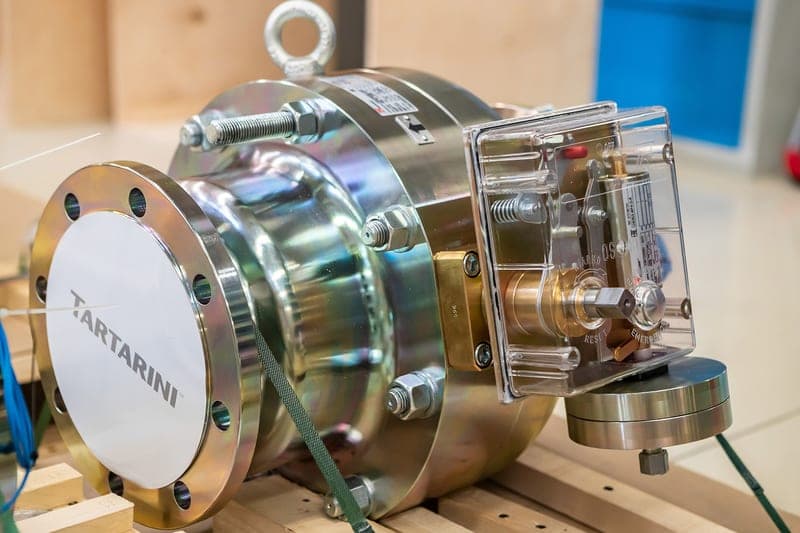
Metabo HPT EC914S (THE TANK) product photo

Product image from the Amazon listing for this model

#ad Disclosure - price as of November 14, 2026

Published specs

Metabo HPT EC914S (THE TANK) published specifications
CFM @ 90 PSI4
CFM @ 40 PSINot published
Tank6 gal
Max pressure200 PSI
NoiseNot published
Duty cycleNot published
RecoveryNot published
PumpOil-free
MotorNot published
Weight41 lb
Power120V

Source: Metabo HPT EC914S THE TANK - product specifications

Pick 2 - Porter-Cable C2002-WK

3.6/10★★☆☆☆

Porter-Cable C2002-WK

Best for: A first compressor for nailing, inflation and burst automotive work

Verdict

The default 6-gallon pancake: 2.6 CFM, 150 PSI, the same machine for years, now sold as the C2002-WK with its accessory kit.

What it does well

  • 2.6 CFM at 90 PSI and 3.7 at 40 - the most common spec in the budget class for a reason
  • 6-gallon tank at 150 PSI stores enough air for real bursts of impact work
  • Two couplers, so two people or two tools without swapping

What it will not do

  • Porter-Cable does not publish a noise figure for it; the class sits in the high 70s to low 80s dBA
  • 2.6 CFM will not run a ratchet, die grinder or sander continuously
How this 3.6 was calculated
MetricScoreWeightBasis
Air flow3.640%2.6 CFM at 90 PSI, on a 0.7-6 CFM scale
Stored air2.325%6 gal x 150 PSI = 900, on a 125-3,500 scale
Noise5.015%Manufacturer publishes no dBA figure - scored a neutral 5, not a guess
Portability5.010%No weight published - scored a neutral 5
Spec transparency3.310%2 of 6 useful figures published (CFM at 90, CFM at 40, dBA, duty cycle, recovery, weight)
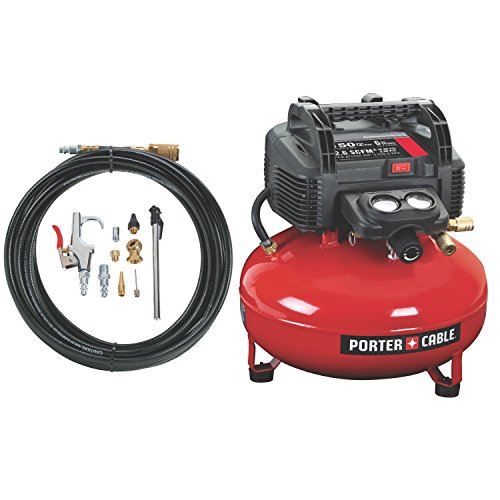
Porter-Cable C2002-WK product photo

Product image from the Amazon listing for this model

#ad Disclosure - price as of November 14, 2026

Published specs

Porter-Cable C2002-WK published specifications
CFM @ 90 PSI2.6
CFM @ 40 PSI3.7
Tank6 gal
Max pressure150 PSI
NoiseNot published
Duty cycleNot published
RecoveryNot published
PumpOil-free
Motor0.8
WeightNot published
Power120V

Source: Porter-Cable C2002 - product specifications

Marketing versus use

Where a 200 PSI rating gets oversold

The phrase on the box is usually some version of "more air in the same space," and that part is true. What gets left off is that the extra air only exists above 150 PSI - the top third of the tank's range. If your pressure switch is set to cut out at 150 because that is what your old compressor did, or because a tool on the line is rated for less, the 200 PSI machine is a heavy 150 PSI machine with a better pump.

It is also worth being clear that the maximum rating is a ceiling, not a working pressure. Nothing you own runs at 200 PSI. The regulator steps it down to 90 or 100 for a tool, and the air arriving at the nozzle is identical whichever tank it came out of. The rating buys duration between pump cycles and nothing else - not more torque, not faster nailing, not a better finish.

Finally, do not let a PSI rating substitute for a CFM figure when you compare machines. A 200 PSI compressor delivering 2.0 CFM would be worse than a 150 PSI machine delivering 2.6 for almost every job on this site, and the rating on the front would still be the bigger number. In this particular pairing the higher-pressure machine also has the higher CFM, which is why it wins on paper. That is a property of these two models, not a rule.

FAQ

Questions people actually ask

Is a 200 PSI air compressor better than a 150 PSI one?

For burst tools, yes - the same tank holds about a third more air at 200 PSI, so you get more trigger time before the pump has to catch up. For continuous-draw tools it makes no difference, because the limit there is pump output. And it costs weight: the 200 PSI unit here publishes 41 lb.

Does higher PSI mean more powerful air tools?

No. Tools run at a regulated 90 to 100 PSI regardless of what the tank is rated for, so the air arriving at the tool is identical. A higher tank rating buys duration between pump cycles, not torque or speed.

How much more air does 200 PSI hold in a 6 gallon tank?

Roughly a third more than the same tank at 150 PSI, because stored air scales with absolute pressure rather than tank volume. The extra only exists in the range above 150 PSI, so a pressure switch set lower gives it back.

Which 6 gallon pancake compressor has the most CFM?

Of the units in our registry, the Metabo HPT EC914S at a published 4.0 CFM at 90 PSI. The rest of the 6-gallon class - Porter-Cable, Bostitch, Craftsman, WEN - publish 2.6 CFM at 90 PSI.

Can a 200 PSI pancake compressor run an air ratchet?

Not continuously. A 3/8 inch ratchet draws a published 3.0 CFM average and you hold its trigger for ten to thirty seconds at a time, so 4.0 CFM out of 6 gallons falls behind. A 20-gallon machine is the honest answer for ratchet work.

Sources

Where these numbers come from

Accessed September 2026. If a figure on this page does not match the manufacturer's current sheet, tell us at contact@psiandhose.com and we will correct and date the change - see our editorial policy.

Read next