Skip to content
Psi & Hose

Air Compressors

Best air compressor for a home garage

A home garage is a specific set of jobs done in bursts by one person. Sized for that reality, the right answer is smaller and cheaper than most guides suggest.

By Ryder M.Last updated Published
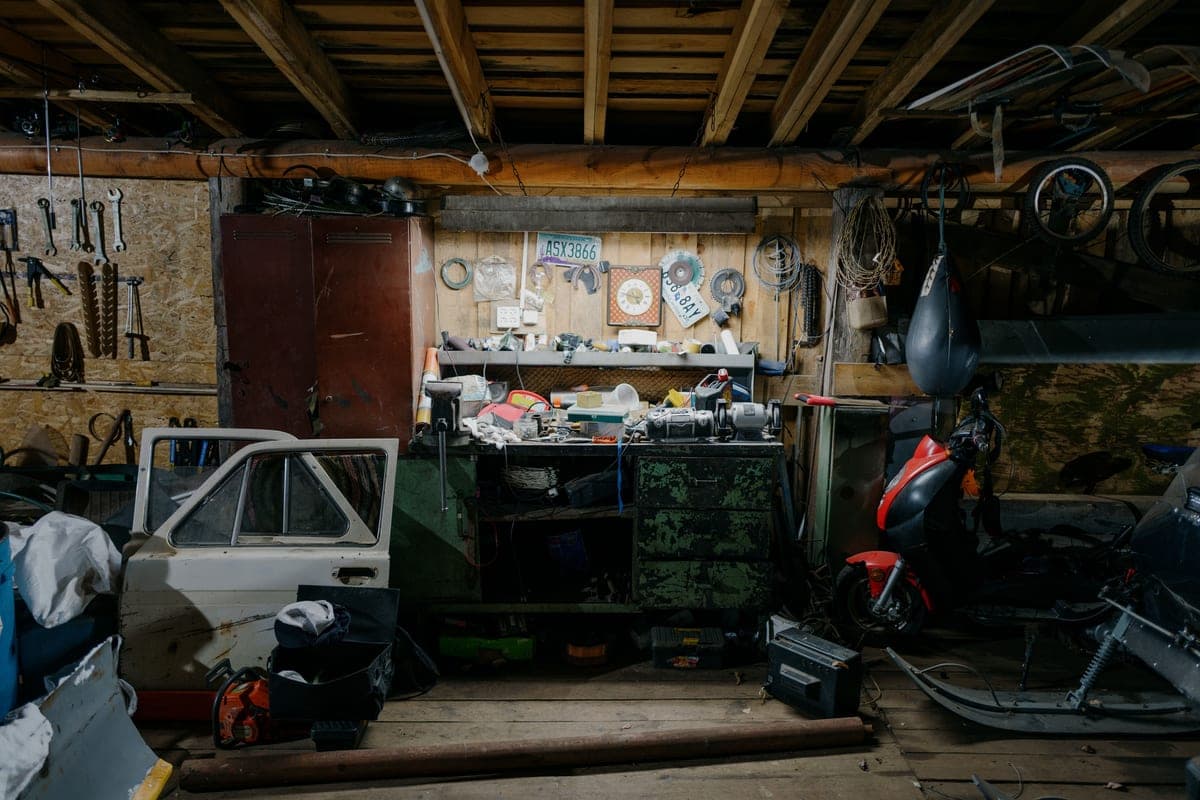
The interior of a home garage workshop with tools along the wall

Some links on this page are affiliate links. If you buy through one, Magoo Media Group earns a commission from the retailer at no extra cost to you. It never changes which product we rank first - how this site is funded.

Sizing from reality

What a home garage actually does

One person. One tool at a time. Bursts separated by minutes of doing something else with your hands. Nobody in a home garage holds a die grinder down for four minutes, and if they do, they know it and they are not reading a buying guide.

That pattern is why home garages need far less compressor than shop sizing suggests. Industrial sizing sums simultaneous loads and applies a 50 to 100% margin for continuous shift work. Apply that method to a one-person garage and you arrive at a 60-gallon machine for a job a 6-gallon one does.

The genuinely useful questions for a garage are: what is the thirstiest tool you own, will the compressor fit where you want it, and will you be willing to switch it on at 8pm. Flow, footprint, noise. In that order.

The three-question shortlist

Thirstiest tool under 3 CFM? Buy a pancake. Between 3 and 5 CFM and you work in bursts? Buy a 20-gallon. Over 5 CFM, or you hold a trigger down? Buy flow, not tank - and check your electrical circuit before you order.

Ranked

The picks

Quick picks

#ProductBest forScorePrice
1
A red six-gallon pancake air compressor on a garage floor
Porter-Cable C20022.6 CFM @ 90 / 6 gal / 150 PSIThe default answer to 'cheapest useful compressor'. 6 gallons, 2.6 CFM, 150 PSI, and it has been the same machine for years.
A first compressor for nailing, inflation and burst automotive work3.6/10★★☆☆☆
Check price on Amazon

#ad Disclosure - we do not publish prices we cannot verify

2
A high-capacity pancake air compressor with a roll cage
Metabo HPT EC914S (THE TANK)4 CFM @ 90 / 6 gal / 200 PSI4.0 CFM at 90 PSI and 200 PSI max - the only 6-gallon unit here that breaks the 2.6 CFM ceiling.
Getting real CFM without moving up to a 20-gallon footprint5.1/10★★★☆☆
Check price on Amazon

#ad Disclosure - we do not publish prices we cannot verify

3
A twenty-gallon vertical air compressor standing against a garage wall
Husky C201H 20-gallon4 CFM @ 90 / 20 gal / 175 PSI / 83 dBA4.0 CFM with 20 gallons at 175 PSI. The cheapest way to buy STORAGE rather than flow.
Burst automotive work where tank volume, not CFM, is the limit6.3/10★★★☆☆
Check price on Amazon

#ad Disclosure - we do not publish prices we cannot verify

4
An ultra-quiet oil-free compressor with an aluminum tank and wheels
California Air Tools 8010A2.2 CFM @ 90 / 8 gal / 120 PSI / 60 dBA60 dBA with 8 gallons and a published 30-60 minute continuous run limit. The honest quiet middle ground.
A garage where the compressor runs while you are standing next to it4.9/10★★☆☆☆
Check price on Amazon

#ad Disclosure - we do not publish prices we cannot verify

5
A ten-gallon vertical oil-free air compressor on wheels in a workshop
California Air Tools 10020C5.3 CFM @ 90 / 10 gal / 125 PSI / 70 dBA5.3 CFM at 70 dBA with a published 70/30 duty cycle. The first unit here that runs a continuous-duty tool.
Running a ratchet, die grinder or touch-up gun without waiting6.2/10★★★☆☆
Check price on Amazon

#ad Disclosure - we do not publish prices we cannot verify

Scores are computed from manufacturer-published specs by the rubric on our methodology page. Nothing here has been bench-tested, and we do not publish prices we cannot verify.

Pick 1 - Porter-Cable C2002

3.6/10★★☆☆☆

Porter-Cable C2002

Best for: A first compressor for nailing, inflation and burst automotive work

Verdict

The default answer to 'cheapest useful compressor'. 6 gallons, 2.6 CFM, 150 PSI, and it has been the same machine for years.

What it does well

  • 2.6 CFM at 90 PSI and 3.7 at 40 - the most common spec in the budget class for a reason
  • 6-gallon tank at 150 PSI stores enough air for real bursts of impact work
  • Two couplers, so two people or two tools without swapping

What it will not do

  • Porter-Cable does not publish a noise figure for it; the class sits in the high 70s to low 80s dBA
  • 2.6 CFM will not run a ratchet, die grinder or sander continuously
How this 3.6 was calculated
MetricScoreWeightBasis
Air flow3.640%2.6 CFM at 90 PSI, on a 0.7-6 CFM scale
Stored air2.325%6 gal x 150 PSI = 900, on a 125-3,500 scale
Noise5.015%Manufacturer publishes no dBA figure - scored a neutral 5, not a guess
Portability5.010%No weight published - scored a neutral 5
Spec transparency3.310%2 of 6 useful figures published (CFM at 90, CFM at 40, dBA, duty cycle, recovery, weight)
A red six-gallon pancake air compressor on a garage floor

Licensed stock photo - illustrative of the category, not a photo of this unit

Check price on Amazon

#ad Disclosure - we do not publish prices we cannot verify

Published specs

Porter-Cable C2002 published specifications
CFM @ 90 PSI2.6
CFM @ 40 PSI3.7
Tank6 gal
Max pressure150 PSI
NoiseNot published
Duty cycleNot published
RecoveryNot published
PumpOil-free
Motor0.8
WeightNot published
Power120V

Source: Porter-Cable C2002 - product specifications

Pick 2 - Metabo HPT EC914S

5.1/10★★★☆☆

Metabo HPT EC914S (THE TANK)

Best for: Getting real CFM without moving up to a 20-gallon footprint

Verdict

4.0 CFM at 90 PSI and 200 PSI max - the only 6-gallon unit here that breaks the 2.6 CFM ceiling.

What it does well

  • 4.0 CFM at 90 PSI is 54% more air than the rest of the 6-gallon class
  • 200 PSI max means the same 6 gallons holds far more usable air
  • Clears the published average demand for a 1/2-inch impact and a 3/8-inch ratchet

What it will not do

  • 41 lb, the heaviest 6-gallon unit in the roster
  • Metabo HPT does not publish a noise figure, and high-pressure pumps are not quiet
How this 5.1 was calculated
MetricScoreWeightBasis
Air flow6.240%4 CFM at 90 PSI, on a 0.7-6 CFM scale
Stored air3.225%6 gal x 200 PSI = 1200, on a 125-3,500 scale
Noise5.015%Manufacturer publishes no dBA figure - scored a neutral 5, not a guess
Portability7.010%41 lb, on a 20-90 lb scale
Spec transparency3.310%2 of 6 useful figures published (CFM at 90, CFM at 40, dBA, duty cycle, recovery, weight)
A high-capacity pancake air compressor with a roll cage

Licensed stock photo - illustrative of the category, not a photo of this unit

Check price on Amazon

#ad Disclosure - we do not publish prices we cannot verify

Published specs

Metabo HPT EC914S (THE TANK) published specifications
CFM @ 90 PSI4
CFM @ 40 PSINot published
Tank6 gal
Max pressure200 PSI
NoiseNot published
Duty cycleNot published
RecoveryNot published
PumpOil-free
MotorNot published
Weight41 lb
Power120V

Source: Metabo HPT EC914S THE TANK - product specifications

Pick 3 - Husky C201H

6.3/10★★★☆☆

Husky C201H 20-gallon

Best for: Burst automotive work where tank volume, not CFM, is the limit

Verdict

4.0 CFM with 20 gallons at 175 PSI. The cheapest way to buy STORAGE rather than flow.

What it does well

  • 20 gallons at 175 PSI is roughly six times the stored air of a 6-gallon 150 PSI pancake
  • 4.0 CFM at 90 PSI and 5.2 at 40 - enough to recover between bursts instead of chasing you
  • Vertical footprint takes a corner instead of floor space

What it will not do

  • 83 dBA published and a 7-minute fill from empty - plan to switch it on before you start
  • Oil-free at 20 gallons means a shorter pump life than a cast-iron oil-lubricated unit
How this 6.3 was calculated
MetricScoreWeightBasis
Air flow6.240%4 CFM at 90 PSI, on a 0.7-6 CFM scale
Stored air10.025%20 gal x 175 PSI = 3500, on a 125-3,500 scale
Noise0.715%83 dBA, on a 58-85 dBA scale
Portability5.010%No weight published - scored a neutral 5
Spec transparency6.710%4 of 6 useful figures published (CFM at 90, CFM at 40, dBA, duty cycle, recovery, weight)
A twenty-gallon vertical air compressor standing against a garage wall

Licensed stock photo - illustrative of the category, not a photo of this unit

Check price on Amazon

#ad Disclosure - we do not publish prices we cannot verify

Published specs

Husky C201H 20-gallon published specifications
CFM @ 90 PSI4
CFM @ 40 PSI5.2
Tank20 gal
Max pressure175 PSI
Noise83 dBA
Duty cycleNot published
Recoveryabout 7 minutes to fill from empty
PumpOil-free
Motor1.3 running
WeightNot published
Power120V

Source: Husky C201H 20-gallon compressor - retailer specification listing

Pick 4 - California Air Tools 8010A

4.9/10★★☆☆☆

California Air Tools 8010A

Best for: A garage where the compressor runs while you are standing next to it

Verdict

60 dBA with 8 gallons and a published 30-60 minute continuous run limit. The honest quiet middle ground.

What it does well

  • 60 dBA published at 8 gallons - you can hold a conversation over it
  • Aluminum tank at 37.25 lb with a wheel kit, so it moves easily and will not rust out
  • California Air Tools publishes fill, recovery and continuous-run figures, which most brands do not

What it will not do

  • 2.2 CFM at 90 PSI is LESS than a 2.6 CFM pancake - you pay for quiet, not for air
  • 120 PSI max is the lowest ceiling in the 6-gallon-and-up group, so storage is modest
How this 4.9 was calculated
MetricScoreWeightBasis
Air flow2.840%2.2 CFM at 90 PSI, on a 0.7-6 CFM scale
Stored air2.525%8 gal x 120 PSI = 960, on a 125-3,500 scale
Noise9.315%60 dBA, on a 58-85 dBA scale
Portability7.510%37.25 lb, on a 20-90 lb scale
Spec transparency10.010%6 of 6 useful figures published (CFM at 90, CFM at 40, dBA, duty cycle, recovery, weight)
An ultra-quiet oil-free compressor with an aluminum tank and wheels

Licensed stock photo - illustrative of the category, not a photo of this unit

Check price on Amazon

#ad Disclosure - we do not publish prices we cannot verify

Published specs

California Air Tools 8010A published specifications
CFM @ 90 PSI2.2
CFM @ 40 PSI3.1
Tank8 gal
Max pressure120 PSI
Noise60 dBA
Duty cycleMax continuous running time 30-60 minutes (manufacturer-published)
Recovery165 s empty to full; 60 s recovery 90 to 120 PSI
PumpOil-free
Motor1.0 running / 2.0 peak
Weight37.25 lb
Power110V

Source: California Air Tools 8010A - product specifications

Pick 5 - California Air Tools 10020C

6.2/10★★★☆☆

California Air Tools 10020C

Best for: Running a ratchet, die grinder or touch-up gun without waiting

Verdict

5.3 CFM at 70 dBA with a published 70/30 duty cycle. The first unit here that runs a continuous-duty tool.

What it does well

  • 5.3 CFM at 90 PSI clears every published figure for ratchets, die grinders and touch-up spraying
  • 70 dBA at that output is unusual - most 5+ CFM units are far louder
  • Publishes a real 70/30 duty cycle and a 25-second recovery from 95 to 125 PSI

What it will not do

  • 82.5 lb and 14 A - it needs its own circuit and it is not a carry-it-upstairs machine
  • 125 PSI max, so a bigger tank at higher pressure still stores more per fill
How this 6.2 was calculated
MetricScoreWeightBasis
Air flow8.740%5.3 CFM at 90 PSI, on a 0.7-6 CFM scale
Stored air3.325%10 gal x 125 PSI = 1250, on a 125-3,500 scale
Noise5.615%70 dBA, on a 58-85 dBA scale
Portability1.110%82.5 lb, on a 20-90 lb scale
Spec transparency10.010%6 of 6 useful figures published (CFM at 90, CFM at 40, dBA, duty cycle, recovery, weight)
A ten-gallon vertical oil-free air compressor on wheels in a workshop

Licensed stock photo - illustrative of the category, not a photo of this unit

Check price on Amazon

#ad Disclosure - we do not publish prices we cannot verify

Published specs

California Air Tools 10020C published specifications
CFM @ 90 PSI5.3
CFM @ 40 PSI6.4
Tank10 gal
Max pressure125 PSI
Noise70 dBA
Duty cycle70/30 (manufacturer-published)
Recovery120 s empty to full; 25 s recovery 95 to 125 PSI
PumpOil-free
Motor2.0
Weight82.5 lb
Power110V, 14 A

Source: California Air Tools 10020C - product specifications

The practical constraint

Footprint, and where it will actually live

A pancake compressor lives on the floor under a bench and weighs 30 pounds, which means it moves out of the way and travels to a job. A 20-gallon vertical takes a corner permanently and does not move casually. A 30-gallon belt-drive unit is furniture.

This matters more than people expect, because a compressor you have to move before you can use it is a compressor you use less. The 6-gallon pancake's real advantage over a 20-gallon vertical is not price - it is that you will actually reach for it to inflate a bicycle tire.

The counter-argument is real too. A vertical tank in a corner with a hose reel on the wall is a permanent air system rather than a tool you get out, and a permanent air system gets used for small jobs a portable one does not. Both arguments are correct; they just describe different garages.

The spec most people underweight

Noise, and the neighbor problem

Published figures across our roster run from 58 dBA to 83 dBA. That range is not a matter of preference - decibels are logarithmic, and the top of the range is genuinely loud enough that you will not run it in an attached garage in the evening.

The frustrating part is that several manufacturers do not publish a noise figure at all. Of the sixteen compressors we catalog, seven publish nothing on noise. Where that is the case we score them a neutral 5 rather than guessing, and we say the figure is unpublished rather than implying it is good.

The practical advice: if your garage shares a wall with a bedroom, treat the dBA figure as a hard filter and shop only among units that publish one. If your garage is detached, spend the money on flow instead. It is one of the few genuinely binary decisions in the category.

Published noise figures across our roster
CompressordBACFM @ 90
Makita MAC100Q580.7
Makita MAC210Q602.0
California Air Tools 8010A602.2
Senco PC1010680.7
California Air Tools 10020C705.3
DEWALT DWFP5512675.52.6
Bostitch BTFP0201278.52.6
Craftsman CMEC6150K822.6
Husky C201H834.0

Nine of sixteen compressors in our roster publish a noise figure. The other seven publish none.

Named limits

What a garage compressor will not do

It will not run a 6-inch orbital sander. That needs 6 to 10 CFM continuously and no portable garage compressor delivers it. Bodywork is a different purchase and a different electrical supply.

It will not spray a whole car. A touch-up gun at 4 CFM is reachable; a production gun at 8 CFM is marginal even on the best unit in this band; an undercoat gun at 19 CFM is out of the question. And spraying needs clean dry air, which means a filter chain you have not budgeted for yet.

It will not run a 1-inch impact or a sandblasting cabinet of any real size. Both are in the 10 to 20-plus CFM continuous range. We have written separate guides for sandblasting and painting that give the actual numbers rather than encouraging you.

FAQ

Questions people actually ask

What size air compressor is best for a home garage?

For most home garages, a 6-gallon pancake at 2.6 CFM. Add a 20-gallon tank if you do sustained burst automotive work, or move to a 5-plus CFM unit if you use a ratchet or die grinder for more than a few seconds at a time.

Is a 6 gallon compressor enough for a garage?

For nailing, tire inflation, blowing dust and breaking lug nuts loose, yes. It will not run a ratchet, die grinder or sander continuously, and no tank size fixes that - the limit is the 2.6 CFM pump.

How loud is too loud for an attached garage?

Anything past about 80 dBA becomes genuinely disruptive through a shared wall, and the loudest units in our roster publish 82 to 83 dBA. If your garage adjoins a bedroom, filter on published dBA and only consider models that publish one.

Should my garage compressor be portable or stationary?

Portable if you also want to inflate bike tires and carry it to a job, because a compressor you have to move before using gets used less. Stationary with a wall-mounted hose reel if you want a permanent air system, which gets used for small jobs a portable one does not.

Do I need a dedicated circuit for a garage compressor?

Not for the 10-amp pancake class. A 2 HP unit drawing 14 amps uses most of a 15-amp circuit and will trip it if anything else is on the same run. Adding a circuit is licensed electrical work under the National Electrical Code, not a DIY step.

Sources

Where these numbers come from

Accessed September 2026. If a figure on this page does not match the manufacturer's current sheet, tell us at contact@psiandhose.com and we will correct and date the change - see our editorial policy.

Read next