Skip to content
Psi & Hose

By Job

Best air compressor for an impact wrench

An impact wrench is a burst tool, which is why a 2.6 CFM pancake genuinely breaks lug nuts. Whether that is enough depends entirely on how long your job lasts.

By Ryder M.Last updated Published
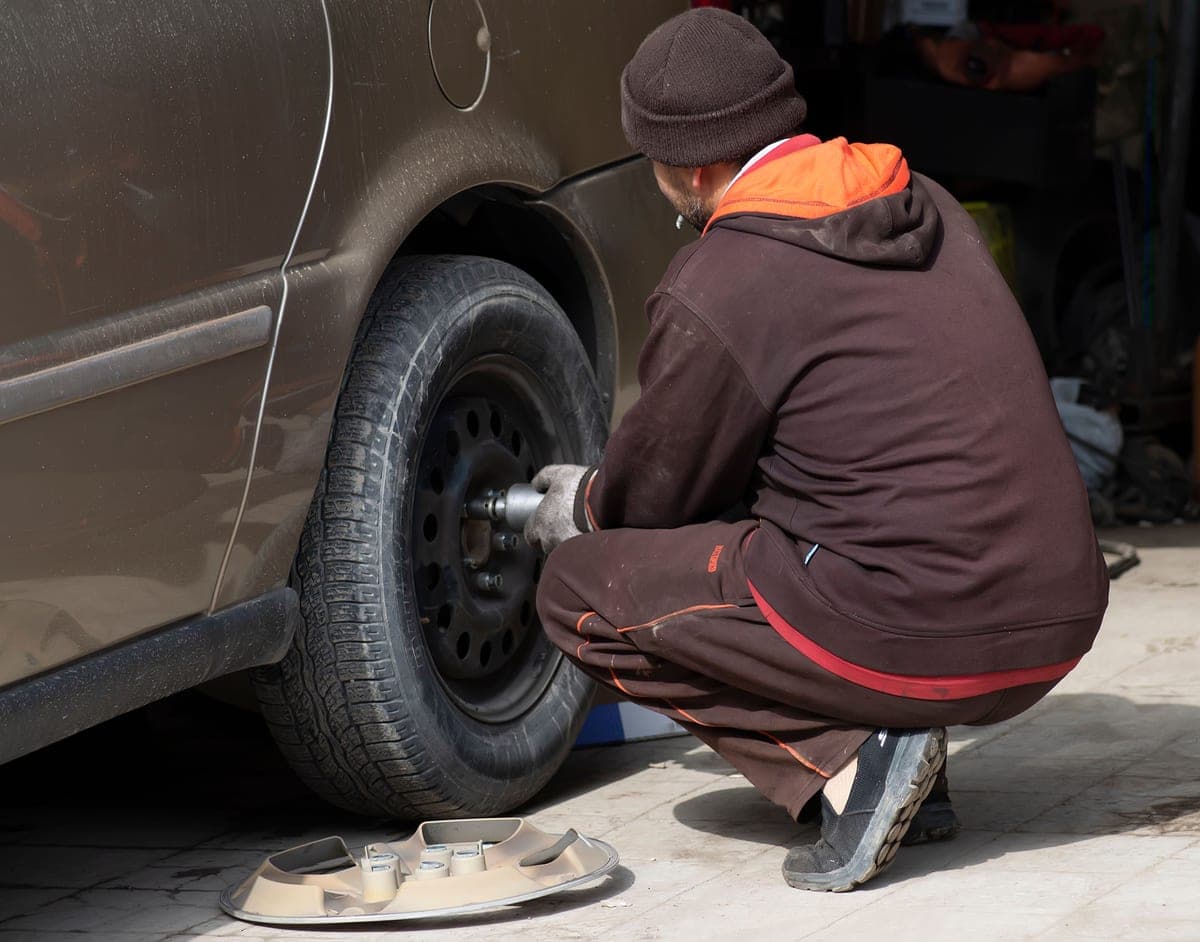
Changing a car wheel with tools laid out on the ground

Some links on this page are affiliate links. If you buy through one, Magoo Media Group earns a commission from the retailer at no extra cost to you. It never changes which product we rank first - how this site is funded.

Start here

The number to size against

Ingersoll Rand publishes 4.2 CFM average and 22 CFM at load for its 231C 1/2-inch impact wrench. Engineering ToolBox gives 4 to 5 CFM for the class. Size against 5 CFM, add our 25% margin, and you get 6.25 CFM.

Almost nothing in the garage compressor market delivers 6.25 CFM on a 120V circuit. That is not a reason to give up - it is the reason the tank matters. An impact wrench pulls its 22 CFM for about a second per fastener, and a 6-gallon tank at 165 PSI has plenty of stored air for that.

So the real question is not whether a compressor runs an impact wrench. It is how many fasteners you get before the pump becomes your pace, and whether that number is bigger than your job.

Published air demand at 90 PSI
ToolCFM @ 90 PSIAt loadDutyWhat the number means
Impact wrench, 3/8"3 - 5-BurstIngersoll Rand's service-shop chart says 3 CFM; Engineering ToolBox gives a 2-5 CFM band. Both describe short bursts on fasteners, not continuous running.
Impact wrench, 1/2"4 - 522BurstThe most misunderstood number on this chart. Ingersoll Rand publishes 4.2 CFM average for the 231C and 22 CFM at load. The average assumes you hold the trigger for a second or two at a time. A 6-gallon pancake at 2.6 CFM does break lug nuts; it simply cannot keep the trigger down.
Impact wrench, 3/4"6-BurstPast the point where a portable garage compressor is the right answer. If you genuinely need 3/4-inch drive, budget for the compressor before the wrench.
Impact wrench, 1"12 - 10-IntermittentTruck and heavy-equipment territory. 12 CFM average is more than most 30-gallon single-stage compressors produce, let alone anything portable.

Where two references publish different figures, both are shown rather than averaged into a number nobody published. Primary sources: Ingersoll Rand air consumption chart, Engineering ToolBox air tool consumption, and per-tool manufacturer specifications.

Ranked

The picks

Quick picks

#ProductBest forScorePrice
1
A high-capacity pancake air compressor with a roll cage
Metabo HPT EC914S (THE TANK)4 CFM @ 90 / 6 gal / 200 PSI4.0 CFM at 90 PSI and 200 PSI max - the only 6-gallon unit here that breaks the 2.6 CFM ceiling.
Getting real CFM without moving up to a 20-gallon footprint5.1/10★★★☆☆
Check price on Amazon

#ad Disclosure - we do not publish prices we cannot verify

2
A twenty-gallon vertical air compressor standing against a garage wall
Husky C201H 20-gallon4 CFM @ 90 / 20 gal / 175 PSI / 83 dBA4.0 CFM with 20 gallons at 175 PSI. The cheapest way to buy STORAGE rather than flow.
Burst automotive work where tank volume, not CFM, is the limit6.3/10★★★☆☆
Check price on Amazon

#ad Disclosure - we do not publish prices we cannot verify

3
A ten-gallon vertical oil-free air compressor on wheels in a workshop
California Air Tools 10020C5.3 CFM @ 90 / 10 gal / 125 PSI / 70 dBA5.3 CFM at 70 dBA with a published 70/30 duty cycle. The first unit here that runs a continuous-duty tool.
Running a ratchet, die grinder or touch-up gun without waiting6.2/10★★★☆☆
Check price on Amazon

#ad Disclosure - we do not publish prices we cannot verify

4
A red six-gallon pancake air compressor on a garage floor
Porter-Cable C20022.6 CFM @ 90 / 6 gal / 150 PSIThe default answer to 'cheapest useful compressor'. 6 gallons, 2.6 CFM, 150 PSI, and it has been the same machine for years.
A first compressor for nailing, inflation and burst automotive work3.6/10★★☆☆☆
Check price on Amazon

#ad Disclosure - we do not publish prices we cannot verify

Scores are computed from manufacturer-published specs by the rubric on our methodology page. Nothing here has been bench-tested, and we do not publish prices we cannot verify.

Pick 1 - Metabo HPT EC914S

5.1/10★★★☆☆

Metabo HPT EC914S (THE TANK)

Best for: Getting real CFM without moving up to a 20-gallon footprint

Verdict

4.0 CFM at 90 PSI and 200 PSI max - the only 6-gallon unit here that breaks the 2.6 CFM ceiling.

What it does well

  • 4.0 CFM at 90 PSI is 54% more air than the rest of the 6-gallon class
  • 200 PSI max means the same 6 gallons holds far more usable air
  • Clears the published average demand for a 1/2-inch impact and a 3/8-inch ratchet

What it will not do

  • 41 lb, the heaviest 6-gallon unit in the roster
  • Metabo HPT does not publish a noise figure, and high-pressure pumps are not quiet
How this 5.1 was calculated
MetricScoreWeightBasis
Air flow6.240%4 CFM at 90 PSI, on a 0.7-6 CFM scale
Stored air3.225%6 gal x 200 PSI = 1200, on a 125-3,500 scale
Noise5.015%Manufacturer publishes no dBA figure - scored a neutral 5, not a guess
Portability7.010%41 lb, on a 20-90 lb scale
Spec transparency3.310%2 of 6 useful figures published (CFM at 90, CFM at 40, dBA, duty cycle, recovery, weight)
A high-capacity pancake air compressor with a roll cage

Licensed stock photo - illustrative of the category, not a photo of this unit

Check price on Amazon

#ad Disclosure - we do not publish prices we cannot verify

Published specs

Metabo HPT EC914S (THE TANK) published specifications
CFM @ 90 PSI4
CFM @ 40 PSINot published
Tank6 gal
Max pressure200 PSI
NoiseNot published
Duty cycleNot published
RecoveryNot published
PumpOil-free
MotorNot published
Weight41 lb
Power120V

Source: Metabo HPT EC914S THE TANK - product specifications

Pick 2 - Husky C201H

6.3/10★★★☆☆

Husky C201H 20-gallon

Best for: Burst automotive work where tank volume, not CFM, is the limit

Verdict

4.0 CFM with 20 gallons at 175 PSI. The cheapest way to buy STORAGE rather than flow.

What it does well

  • 20 gallons at 175 PSI is roughly six times the stored air of a 6-gallon 150 PSI pancake
  • 4.0 CFM at 90 PSI and 5.2 at 40 - enough to recover between bursts instead of chasing you
  • Vertical footprint takes a corner instead of floor space

What it will not do

  • 83 dBA published and a 7-minute fill from empty - plan to switch it on before you start
  • Oil-free at 20 gallons means a shorter pump life than a cast-iron oil-lubricated unit
How this 6.3 was calculated
MetricScoreWeightBasis
Air flow6.240%4 CFM at 90 PSI, on a 0.7-6 CFM scale
Stored air10.025%20 gal x 175 PSI = 3500, on a 125-3,500 scale
Noise0.715%83 dBA, on a 58-85 dBA scale
Portability5.010%No weight published - scored a neutral 5
Spec transparency6.710%4 of 6 useful figures published (CFM at 90, CFM at 40, dBA, duty cycle, recovery, weight)
A twenty-gallon vertical air compressor standing against a garage wall

Licensed stock photo - illustrative of the category, not a photo of this unit

Check price on Amazon

#ad Disclosure - we do not publish prices we cannot verify

Published specs

Husky C201H 20-gallon published specifications
CFM @ 90 PSI4
CFM @ 40 PSI5.2
Tank20 gal
Max pressure175 PSI
Noise83 dBA
Duty cycleNot published
Recoveryabout 7 minutes to fill from empty
PumpOil-free
Motor1.3 running
WeightNot published
Power120V

Source: Husky C201H 20-gallon compressor - retailer specification listing

Pick 3 - California Air Tools 10020C

6.2/10★★★☆☆

California Air Tools 10020C

Best for: Running a ratchet, die grinder or touch-up gun without waiting

Verdict

5.3 CFM at 70 dBA with a published 70/30 duty cycle. The first unit here that runs a continuous-duty tool.

What it does well

  • 5.3 CFM at 90 PSI clears every published figure for ratchets, die grinders and touch-up spraying
  • 70 dBA at that output is unusual - most 5+ CFM units are far louder
  • Publishes a real 70/30 duty cycle and a 25-second recovery from 95 to 125 PSI

What it will not do

  • 82.5 lb and 14 A - it needs its own circuit and it is not a carry-it-upstairs machine
  • 125 PSI max, so a bigger tank at higher pressure still stores more per fill
How this 6.2 was calculated
MetricScoreWeightBasis
Air flow8.740%5.3 CFM at 90 PSI, on a 0.7-6 CFM scale
Stored air3.325%10 gal x 125 PSI = 1250, on a 125-3,500 scale
Noise5.615%70 dBA, on a 58-85 dBA scale
Portability1.110%82.5 lb, on a 20-90 lb scale
Spec transparency10.010%6 of 6 useful figures published (CFM at 90, CFM at 40, dBA, duty cycle, recovery, weight)
A ten-gallon vertical oil-free air compressor on wheels in a workshop

Licensed stock photo - illustrative of the category, not a photo of this unit

Check price on Amazon

#ad Disclosure - we do not publish prices we cannot verify

Published specs

California Air Tools 10020C published specifications
CFM @ 90 PSI5.3
CFM @ 40 PSI6.4
Tank10 gal
Max pressure125 PSI
Noise70 dBA
Duty cycle70/30 (manufacturer-published)
Recovery120 s empty to full; 25 s recovery 95 to 125 PSI
PumpOil-free
Motor2.0
Weight82.5 lb
Power110V, 14 A

Source: California Air Tools 10020C - product specifications

Pick 4 - Porter-Cable C2002

3.6/10★★☆☆☆

Porter-Cable C2002

Best for: A first compressor for nailing, inflation and burst automotive work

Verdict

The default answer to 'cheapest useful compressor'. 6 gallons, 2.6 CFM, 150 PSI, and it has been the same machine for years.

What it does well

  • 2.6 CFM at 90 PSI and 3.7 at 40 - the most common spec in the budget class for a reason
  • 6-gallon tank at 150 PSI stores enough air for real bursts of impact work
  • Two couplers, so two people or two tools without swapping

What it will not do

  • Porter-Cable does not publish a noise figure for it; the class sits in the high 70s to low 80s dBA
  • 2.6 CFM will not run a ratchet, die grinder or sander continuously
How this 3.6 was calculated
MetricScoreWeightBasis
Air flow3.640%2.6 CFM at 90 PSI, on a 0.7-6 CFM scale
Stored air2.325%6 gal x 150 PSI = 900, on a 125-3,500 scale
Noise5.015%Manufacturer publishes no dBA figure - scored a neutral 5, not a guess
Portability5.010%No weight published - scored a neutral 5
Spec transparency3.310%2 of 6 useful figures published (CFM at 90, CFM at 40, dBA, duty cycle, recovery, weight)
A red six-gallon pancake air compressor on a garage floor

Licensed stock photo - illustrative of the category, not a photo of this unit

Check price on Amazon

#ad Disclosure - we do not publish prices we cannot verify

Published specs

Porter-Cable C2002 published specifications
CFM @ 90 PSI2.6
CFM @ 40 PSI3.7
Tank6 gal
Max pressure150 PSI
NoiseNot published
Duty cycleNot published
RecoveryNot published
PumpOil-free
Motor0.8
WeightNot published
Power120V

Source: Porter-Cable C2002 - product specifications

Which one you need

Matched to the job, not the tool

Four wheels, twice a year. A standard 6-gallon pancake at 2.6 CFM. You will wait a few seconds between the last couple of nuts and it will not matter. Anyone telling you this needs a 20-gallon compressor is selling you one.

Seasonal tire swaps plus occasional suspension work. A 6-gallon 200 PSI unit at 4.0 CFM. Same footprint, 54% more flow, a third more stored air - it removes almost all the waiting for the cost of eleven extra pounds.

A full brake job, or a day of working on a car. A 20-gallon vertical at 4.0 CFM and 175 PSI. Four times the stored air means the compressor stops appearing in your workflow at all. This is the point where the upgrade is genuinely about capability rather than comfort.

An impact wrench plus a ratchet and a die grinder. Now you have a continuous-duty tool on the list and the tank stops being the answer. A 10-gallon 2 HP unit at 5.3 CFM with a published 70/30 duty cycle is the smallest thing that genuinely covers this.

Husky C201H 20-gallon: what it runs

Delivered flow: 4 CFM at 90 PSI. We call a tool covered when delivered flow clears its highest published demand plus a 25% margin.

Runs it (4)

  • Tire inflationYes - needs 2 CFM, intermittent duty
  • Impact wrench, 3/8"In bursts only - needs 5 CFM, burst duty
  • Impact wrench, 1/2"In bursts only - needs 5 CFM, burst duty
  • Impact wrench, 3/4"In bursts only - needs 6 CFM, burst duty

Does not run it (3)

  • Air ratchet, 3/8"No - needs 4 CFM, intermittent duty
  • Air hammer / chiselNo - needs 4 CFM, intermittent duty
  • Impact wrench, 1"No - needs 12 CFM, intermittent duty

Demand figures from the air tool CFM chart, which cites every one of them.

Fix this first

The hose is doing more damage than the compressor

Ingersoll Rand specifies a 3/8-inch minimum hose ID for the 231C. Compressor accessory kits almost universally ship a 1/4-inch hose. Running a 1/2-inch impact wrench on a 1/4-inch hose starves it, and the symptom is indistinguishable from an undersized compressor.

This is the cheapest upgrade in the garage and the one most people skip. A 50-foot 3/8-inch hose rated to 250 or 300 PSI, plus one matched pair of quality couplers, often makes the compressor upgrade unnecessary.

If you have already upgraded the compressor and the wrench still feels soft, work backwards: hose diameter, then coupler flow, then hose length, then regulator setting. Only then the pump.

FAQ

Questions people actually ask

What size air compressor do I need for an impact wrench?

Size against 5 CFM at 90 PSI plus a 25% margin, which is 6.25 CFM. In practice, because an impact is a burst tool, a 4.0 CFM compressor with a 6 to 20 gallon tank covers real use comfortably and a 2.6 CFM pancake handles occasional wheel work.

Will a 6 gallon compressor run a 1/2 impact wrench?

Yes for breaking fasteners loose. The 22 CFM at-load draw comes from stored air, and 6 gallons has enough for several fasteners. After that you are on 2.6 CFM of pump output and waiting between nuts. Fine for four wheels, limiting on a full job.

Is a 20 gallon compressor enough for an impact wrench?

Comfortably. Four times the stored air of a 6-gallon pancake at the same or better flow means the compressor stops setting your pace. It is the point where an impact wrench feels like a tool rather than a negotiation.

Why does my impact wrench lose power after a few bolts?

Tank pressure has dropped to the cut-in point and you are now living on pump output, which is far below the tool's at-load demand. Check the hose diameter first though - a 1/4-inch hose produces the same symptom on a perfectly adequate compressor.

Do I need a bigger compressor or a bigger impact wrench?

Almost always neither. Both wrenches in our air tools roundup produce 500 to 600 ft-lb, which is far more than any lug nut needs. If the tool feels weak, the problem is air delivery - hose, couplers, or pump - not torque.

Sources

Where these numbers come from

Accessed September 2026. If a figure on this page does not match the manufacturer's current sheet, tell us at contact@psiandhose.com and we will correct and date the change - see our editorial policy.

Read next