Skip to content
Psi & Hose

Guides

Air compressor overheating

A compressor that shuts off mid-job is usually doing exactly what it was designed to do. The question is whether you are asking too much of it, or whether something is actually wrong.

By Ryder M.Last updated Published
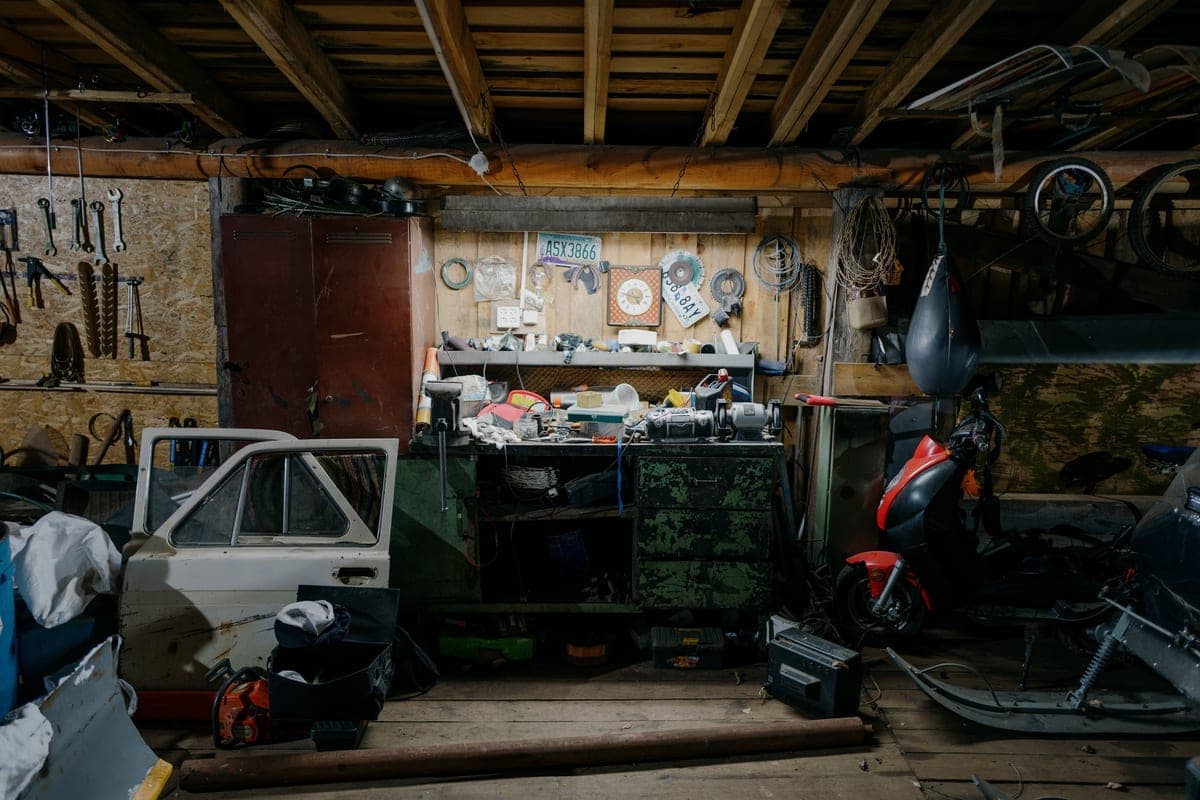
A workshop corner with tools and equipment along the wall

Some links on this page are affiliate links. If you buy through one, Magoo Media Group earns a commission from the retailer at no extra cost to you. It never changes which product we rank first - how this site is funded.

Read this first

The short answer

If your compressor runs hot and then shuts itself off, the thermal overload protector has tripped - and in most cases that is the machine protecting itself from a duty cycle you have exceeded, not a fault. Let it cool for twenty to thirty minutes and it will reset. The real question is why it got there, and there are only five answers worth checking: duty cycle, ventilation, intake restriction, oil level or grade on a lubricated pump, and electrical supply.

Duty cycle is the most common, and it is the one people do not realize they are breaking because most consumer compressors never publish one. The honest exceptions matter here: California Air Tools publishes 70/30 for the 10020C and a maximum continuous running time of 30 to 60 minutes for the 8010A. Those are the machines telling you where the line is. On a machine that publishes nothing, you find the line by tripping the overload.

A compressor being hot to the touch, on the other hand, is normal and not a fault. Compression generates heat - that is unavoidable thermodynamics, not inefficiency - and the head, the discharge tube and the top of the tank all get genuinely hot in normal operation. Hot enough to be uncomfortable to touch is expected. Shutting off, smelling of hot varnish, or tripping the breaker rather than the thermal overload are the symptoms that mean something.

Cause, symptom and fix
CauseHow you recognize itFix
Duty cycle exceededTrips after sustained tool use, resets fine after cooling, repeats predictablyWork in cycles, or move to a machine with the CFM to keep up
Poor ventilationTrips sooner in a closed cabinet, a hot corner, or against a wallGive it clearance on all sides and keep it out of direct sun
Blocked intake filterGradual onset over weeks; also fills slowlyClean or replace the filter - it costs almost nothing
Low or wrong oil (lubricated pumps)Runs hotter than it used to; may be noisierCheck level and use the grade the manual specifies, not motor oil
Undersized extension cord or low voltageMotor labors, may hum on start, cord warm along its lengthShorter, heavier cord or a dedicated outlet
Cooling fins packed with dustChronic, worse in a woodshopBlow out the fins and flywheel shroud as routine maintenance

Diagnostic guidance from the standard behavior of single-stage reciprocating compressors and the manufacturer duty figures cited in the sources block. Your machine's own manual is the authoritative source for its oil grade, clearances and reset procedure.

The distinction that matters

Thermal overload tripping and the circuit breaker tripping are different faults. The overload is on the motor and resets itself after cooling - that is heat. The breaker is in your panel and trips on current - that is an electrical problem: cord length, voltage drop, a failing capacitor or a seizing pump. Do not treat one as the other.

The arithmetic

Duty cycle: the cause most people are actually hitting

Duty cycle is the fraction of time a pump is rated to run. A 70/30 rating means seventy percent running, thirty percent resting, measured over a representative period - so roughly seven minutes on and three off, or equivalently about forty-two minutes of running in any hour. California Air Tools publishes 70/30 for the 10020C, which is unusually transparent for a consumer machine and is a large part of why we recommend it.

Here is why exceeding it is so easy without noticing. You do not control the pump directly - you control the tool, and the pump runs whenever tank pressure falls below cut-in. If your tool draws more CFM than the pump delivers, the pump runs continuously for as long as you hold the trigger, at 100% duty, regardless of what it is rated for. A die grinder at about 5 CFM on a machine delivering 2.6 CFM does not mean slow work; it means a pump running flat out until the overload stops it.

That connects overheating directly to sizing, and it is why the fix for chronic thermal trips is usually a bigger compressor rather than a repair. If you are tripping the overload regularly on sustained work, the machine is not faulty - it is undersized for that work, and it is telling you so in the only way it can. Our sizing pages exist to let you work that out before the overload does.

Published air demand at 90 PSI
ToolCFM @ 90 PSIAt loadDutyWhat the number means
Die grinder, 1/4"5 - 6-ContinuousIngersoll Rand lists 5 CFM; Engineering ToolBox gives a 4-6 CFM band. Continuous duty, so a 6-gallon pancake gives you a handful of seconds before pressure drops and the tool slows.
Orbital / DA sander, 6 inch10 - 9-ContinuousIngersoll Rand lists 10 CFM for a body orbital sander; Engineering ToolBox gives 6-9 CFM for the class. A sander runs continuously by nature, so there is no burst allowance to hide behind. This is the job that genuinely needs a big compressor.
Impact wrench, 1/2"4 - 522BurstThe most misunderstood number on this chart. Ingersoll Rand publishes 4.2 CFM average for the 231C and 22 CFM at load. The average assumes you hold the trigger for a second or two at a time. A 6-gallon pancake at 2.6 CFM does break lug nuts; it simply cannot keep the trigger down.
Air ratchet, 3/8"3 - 4-IntermittentIngersoll Rand publishes 3 CFM average at 90 PSI for the 105-D3; Engineering ToolBox lists 4 CFM for the class. A ratchet is the sneaky one: you hold the trigger far longer than with an impact, so it punishes a small tank harder despite the lower headline number.
Paint spray gun, production / HVLP8 - 7-ContinuousIngersoll Rand lists 8 CFM for production spraying; Engineering ToolBox gives 3-7 CFM for small hand-operated sprayers. Check the gun's own spec sheet - HVLP demand varies more than any other tool class on this chart.

Where two references publish different figures, both are shown rather than averaged into a number nobody published. Primary sources: Ingersoll Rand air consumption chart, Engineering ToolBox air tool consumption, and per-tool manufacturer specifications.

The picks

Machines that publish a duty figure

If chronic overheating is your problem, the useful response is to buy a machine that tells you its limits and has the output to stay inside them. The three below are the ones in our registry with either a published duty statement or enough delivered CFM that sustained work does not pin the pump at 100%.

The California Air Tools 8010A publishes a maximum continuous running time of 30 to 60 minutes and 2.2 CFM at 90 PSI at 60 dBA - a modest machine, but an honest one. The 10020C publishes 70/30 and 5.3 CFM at 90 PSI at 70 dBA, which is the combination that actually solves a thermal problem on continuous tools. The DEWALT 30-gallon publishes 5.7 CFM at 90 PSI, and its larger tank means fewer pump starts for the same work, which is a different route to the same result.

Two honest caveats. First, a published duty cycle is a statement about the pump, not a promise about your garage - heat, ventilation and dust all move the real limit. Second, a bigger tank reduces how often the pump runs but does not raise its duty rating; if your tool out-draws the pump, a bigger tank buys you minutes, not immunity.

Quick picks

#ProductBest forScorePrice
1
An ultra-quiet oil-free compressor with an aluminum tank and wheels
California Air Tools 8010A2.2 CFM @ 90 / 8 gal / 120 PSI / 60 dBA60 dBA with 8 gallons and a published 30-60 minute continuous run limit. The honest quiet middle ground.
A garage where the compressor runs while you are standing next to it4.9/10★★☆☆☆

#ad Disclosure - we do not publish prices we cannot verify

2
A ten-gallon vertical oil-free air compressor on wheels in a workshop
California Air Tools 10020C5.3 CFM @ 90 / 10 gal / 125 PSI / 70 dBA5.3 CFM at 70 dBA with a published 70/30 duty cycle. The first unit here that runs a continuous-duty tool.
Running a ratchet, die grinder or touch-up gun without waiting6.2/10★★★☆☆

#ad Disclosure - we do not publish prices we cannot verify

3
A thirty-gallon belt-drive air compressor with a cast iron pump
DEWALT DXCMLA1983054 30-gallon5.7 CFM @ 90 / 30 gal / 155 PSI5.7 CFM, 30 gallons, oil-lubricated cast iron and belt drive. Where a garage compressor stops being disposable.
A permanent garage compressor you expect to keep for a decade7.9/10★★★★☆

#ad Disclosure - we do not publish prices we cannot verify

Scores are computed from manufacturer-published specs by the rubric on our methodology page. Nothing here has been bench-tested, and we do not publish prices we cannot verify.

Pick 1 - California Air Tools 8010A

4.9/10★★☆☆☆

California Air Tools 8010A

Best for: A garage where the compressor runs while you are standing next to it

Verdict

60 dBA with 8 gallons and a published 30-60 minute continuous run limit. The honest quiet middle ground.

What it does well

  • 60 dBA published at 8 gallons - you can hold a conversation over it
  • Aluminum tank at 37.25 lb with a wheel kit, so it moves easily and will not rust out
  • California Air Tools publishes fill, recovery and continuous-run figures, which most brands do not

What it will not do

  • 2.2 CFM at 90 PSI is LESS than a 2.6 CFM pancake - you pay for quiet, not for air
  • 120 PSI max is the lowest ceiling in the 6-gallon-and-up group, so storage is modest
How this 4.9 was calculated
MetricScoreWeightBasis
Air flow2.840%2.2 CFM at 90 PSI, on a 0.7-6 CFM scale
Stored air2.525%8 gal x 120 PSI = 960, on a 125-3,500 scale
Noise9.315%60 dBA, on a 58-85 dBA scale
Portability7.510%37.25 lb, on a 20-90 lb scale
Spec transparency10.010%6 of 6 useful figures published (CFM at 90, CFM at 40, dBA, duty cycle, recovery, weight)
An ultra-quiet oil-free compressor with an aluminum tank and wheels

Licensed stock photo - illustrative of the category, not a photo of this unit

#ad Disclosure - we do not publish prices we cannot verify

Published specs

California Air Tools 8010A published specifications
CFM @ 90 PSI2.2
CFM @ 40 PSI3.1
Tank8 gal
Max pressure120 PSI
Noise60 dBA
Duty cycleMax continuous running time 30-60 minutes (manufacturer-published)
Recovery165 s empty to full; 60 s recovery 90 to 120 PSI
PumpOil-free
Motor1.0 running / 2.0 peak
Weight37.25 lb
Power110V

Source: California Air Tools 8010A - product specifications

Pick 2 - California Air Tools 10020C

6.2/10★★★☆☆

California Air Tools 10020C

Best for: Running a ratchet, die grinder or touch-up gun without waiting

Verdict

5.3 CFM at 70 dBA with a published 70/30 duty cycle. The first unit here that runs a continuous-duty tool.

What it does well

  • 5.3 CFM at 90 PSI clears every published figure for ratchets, die grinders and touch-up spraying
  • 70 dBA at that output is unusual - most 5+ CFM units are far louder
  • Publishes a real 70/30 duty cycle and a 25-second recovery from 95 to 125 PSI

What it will not do

  • 82.5 lb and 14 A - it needs its own circuit and it is not a carry-it-upstairs machine
  • 125 PSI max, so a bigger tank at higher pressure still stores more per fill
How this 6.2 was calculated
MetricScoreWeightBasis
Air flow8.740%5.3 CFM at 90 PSI, on a 0.7-6 CFM scale
Stored air3.325%10 gal x 125 PSI = 1250, on a 125-3,500 scale
Noise5.615%70 dBA, on a 58-85 dBA scale
Portability1.110%82.5 lb, on a 20-90 lb scale
Spec transparency10.010%6 of 6 useful figures published (CFM at 90, CFM at 40, dBA, duty cycle, recovery, weight)
A ten-gallon vertical oil-free air compressor on wheels in a workshop

Licensed stock photo - illustrative of the category, not a photo of this unit

#ad Disclosure - we do not publish prices we cannot verify

Published specs

California Air Tools 10020C published specifications
CFM @ 90 PSI5.3
CFM @ 40 PSI6.4
Tank10 gal
Max pressure125 PSI
Noise70 dBA
Duty cycle70/30 (manufacturer-published)
Recovery120 s empty to full; 25 s recovery 95 to 125 PSI
PumpOil-free
Motor2.0
Weight82.5 lb
Power110V, 14 A

Source: California Air Tools 10020C - product specifications

Pick 3 - DEWALT DXCMLA1983054

7.9/10★★★★☆

DEWALT DXCMLA1983054 30-gallon

Best for: A permanent garage compressor you expect to keep for a decade

Verdict

5.7 CFM, 30 gallons, oil-lubricated cast iron and belt drive. Where a garage compressor stops being disposable.

What it does well

  • 5.7 CFM at 90 PSI and 7.0 at 40 - clears ratchets, die grinders and touch-up spraying
  • Oil-lubricated belt drive runs cooler and slower than a direct-drive oil-free pump
  • 120/240V, so it can move to a 240V circuit later

What it will not do

  • Oil-lubricated means an actual maintenance routine: check and change the oil
  • 155 PSI on 30 gallons stores less than 175 PSI on 20 in some comparisons - check the math, not the tank
How this 7.9 was calculated
MetricScoreWeightBasis
Air flow9.440%5.7 CFM at 90 PSI, on a 0.7-6 CFM scale
Stored air10.025%30 gal x 155 PSI = 4650, on a 125-3,500 scale
Noise5.015%Manufacturer publishes no dBA figure - scored a neutral 5, not a guess
Portability5.010%No weight published - scored a neutral 5
Spec transparency3.310%2 of 6 useful figures published (CFM at 90, CFM at 40, dBA, duty cycle, recovery, weight)
A thirty-gallon belt-drive air compressor with a cast iron pump

Licensed stock photo - illustrative of the category, not a photo of this unit

#ad Disclosure - we do not publish prices we cannot verify

Published specs

DEWALT DXCMLA1983054 30-gallon published specifications
CFM @ 90 PSI5.7
CFM @ 40 PSI7
Tank30 gal
Max pressure155 PSI
NoiseNot published
Duty cycleNot published
RecoveryNot published
PumpOil-lubricated
Motor1.9
WeightNot published
Power120/240V

Source: DEWALT DXCMLA1983054 30-gallon compressor - product specifications

The cheap fixes

Ventilation, dust and the things you can fix for free

The cord item is worth its own mention because it produces symptoms that look mechanical. A motor fed low voltage draws more current to make the same power, runs hotter, and labors on start. People diagnose a failing motor when they have a 100-foot 16-gauge cord. Compressors have a high inrush on start and are among the least cord-tolerant tools in a garage.

The ventilation item is the one with the best ratio of effect to effort. Moving a compressor out of a cupboard and giving it clear air on all sides costs nothing and can move the thermal trip point substantially - particularly on a machine whose duty cycle you are already close to. If you are tripping the overload only in summer, start here before anything else.

  1. 01Give it clearance. A compressor against a wall in a closed cabinet or a hot corner of the garage has nowhere to shed heat. Air has to move across the cooling fins and the motor, and a few inches of clearance on each side genuinely changes the trip point.
  2. 02Keep it out of direct sun and off hot concrete in summer. Ambient temperature adds directly to the problem - a machine that runs all day in February will trip in August doing the same work.
  3. 03Blow out the cooling fins and the flywheel shroud. In a woodshop these pack with dust and the machine loses its ability to cool while looking perfectly normal from the outside.
  4. 04Clean or replace the intake filter. A restricted intake makes the pump work harder for less air, which is both a heat problem and a pressure problem - and it is the cheapest part on the machine.
  5. 05On an oil-lubricated pump, check the oil level and confirm the grade against the manual. Oil carries heat away as well as reducing friction, and the wrong viscosity or a low level raises operating temperature measurably. Do not substitute motor oil for a specified compressor oil.
  6. 06Check the extension cord. A long, thin cord drops voltage, which makes the motor draw more current and run hotter. Use the shortest, heaviest cord you can, or better, a dedicated outlet.

Knowing when to stop

When heat is a real fault

Most thermal trips are duty-cycle events. A few are not, and the signatures are distinct enough to recognize. If the machine trips the overload within a minute or two of starting from cold, that is not heat accumulation - that is a motor drawing excessive current, usually a failing start capacitor or a pump with a bearing or piston beginning to seize. Cooling and restarting will not help, and continuing to try will finish the motor.

A smell of hot varnish or burning insulation means motor windings, and at that point the machine should be unplugged and not restarted. The same goes for a motor that will spin freely by hand with the belt off but hums and trips under load. These are not maintenance items on a budget compressor, and the replacement-versus-repair arithmetic rarely favors repair.

The last signature worth knowing: a machine that has always been fine and is now running hot and filling slowly has usually developed one of two things - a worn pump passing air back past the rings or reed valves, or a leak making it run far more than you think. Both show up as heat because both mean more running time for the same work. The pressure-fault page covers the diagnosis, and it is worth doing before concluding the machine is cooked.

FAQ

Questions people actually ask

Why does my air compressor keep shutting off when it gets hot?

The thermal overload protector on the motor has tripped, which is the machine protecting itself. It resets after twenty to thirty minutes of cooling. In most cases the cause is exceeding the duty cycle - your tool draws more CFM than the pump delivers, so the pump runs at 100% until it overheats.

Is it normal for an air compressor to be hot to the touch?

Yes. Compression generates heat as a matter of physics, so the head, discharge tube and top of the tank all get genuinely hot in normal use. Hot enough to be uncomfortable to touch is expected. Shutting off, smelling of hot varnish, or tripping the breaker are the symptoms that mean something.

What is a 70/30 duty cycle?

Seventy percent running, thirty percent resting - roughly seven minutes on and three off, or about forty-two minutes of running per hour. California Air Tools publishes 70/30 for the 10020C, which is unusually transparent for a consumer machine.

Is the thermal overload the same as the circuit breaker?

No, and the distinction matters. The thermal overload is on the motor, trips on heat, and resets itself after cooling. The breaker is in your panel and trips on current, which points at an electrical cause - cord length, voltage drop, a failing capacitor or a seizing pump.

Will a bigger tank stop my compressor overheating?

It helps but does not fix it. A bigger tank means fewer pump starts for the same work, which reduces heat accumulation. It does not raise the pump's duty rating, so if your tool out-draws the pump you are still heading for a trip - just later.

Can an extension cord cause overheating?

Yes, and it is often misdiagnosed as a failing motor. A long or thin cord drops voltage, so the motor draws more current to make the same power and runs hotter. Compressors have high inrush on start and are among the least cord-tolerant tools in a garage.

Sources

Where these numbers come from

Accessed September 2026. If a figure on this page does not match the manufacturer's current sheet, tell us at contact@psiandhose.com and we will correct and date the change - see our editorial policy.

Read next