
Skip to content
Psi & Hose

Hub

Choose by job

Most people know the job before they know the machine. These four pages start from the work and end at the cheapest compressor that genuinely covers it.

By Ryder M.Last updated
A mechanic working underneath a car with tools laid out

Some links on this page are affiliate links. If you buy through one, Magoo Media Group earns a commission from the retailer at no extra cost to you. It never changes which product we rank first - how this site is funded.

Everything in this hub

4 pages

Orientation

Why sort by job

When we researched the competitive landscape for this site, nobody had a job-based silo. Every competitor sorts by price band or by tank size, which are shopping categories rather than problems people have. Nobody wakes up wanting 20 gallons; they want to break lug nuts, or trim a room, or stop the tire warning light coming on.

Starting from the job is also the only route that reliably prevents overbuying, because the job has a published air demand and that demand is usually smaller than the internet implies. Framing needs 2.5 CFM. Tires need 2. A brad nailer needs 0.5. Those numbers point at cheap compressors, and they are the numbers the roundups skip over.

Each page in this section names the published demand, applies our 25% margin, and then tells you what the cheapest unit that clears it is. It also names what that unit cannot do, which is the half of the information most guides omit.

At a glance

The four jobs, and what they need

Impact wrench work. Published demand 4 to 5 CFM average and 22 CFM at load. A burst tool, so a 6-gallon tank genuinely breaks lug nuts at 2.6 CFM. Whether that is enough depends entirely on whether your job is four wheels or a full brake job - and the page works through both.

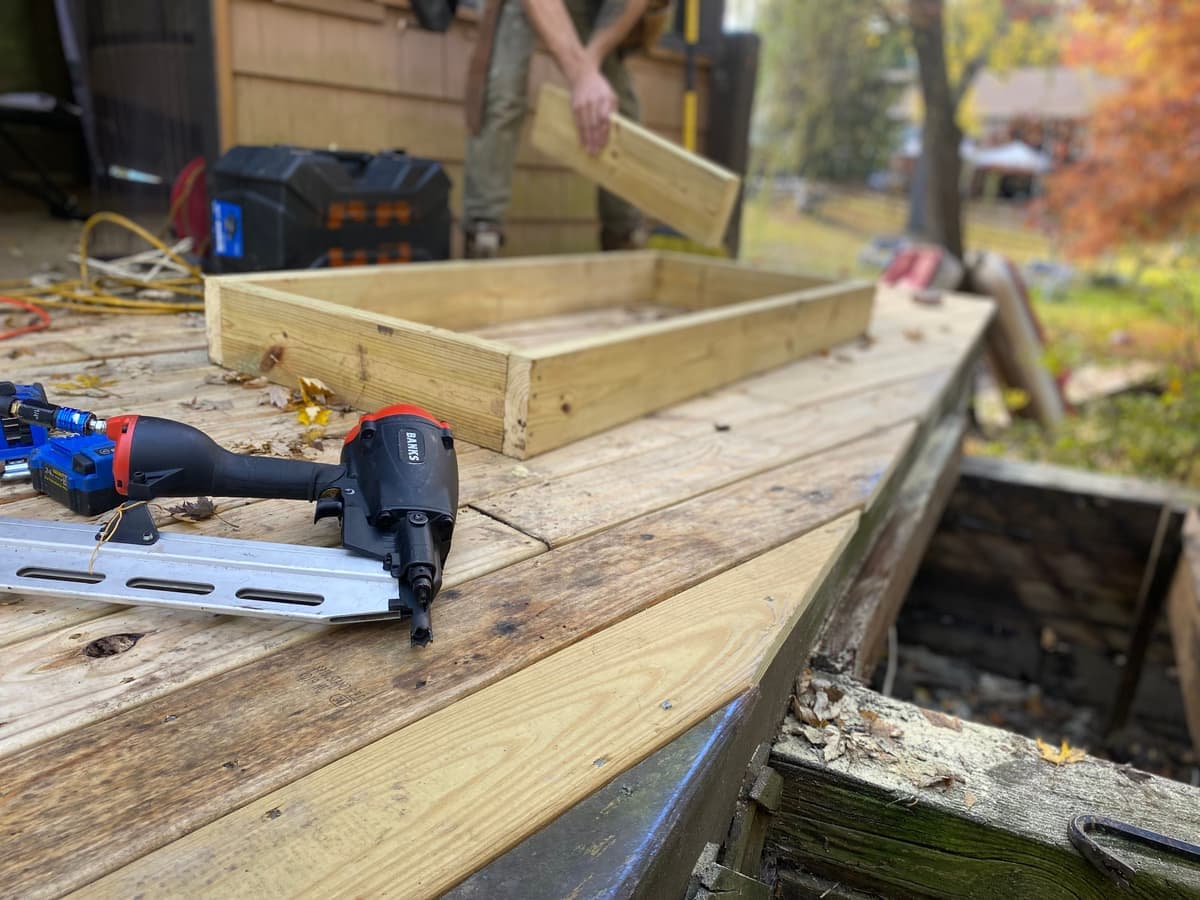
Nailing. 0.5 CFM for a brad nailer, 1.8 for a 15-gauge finish nailer at 60 nails a minute, 2.5 for framing. This is the one job where the cheapest compressor on the shelf is the correct answer, which means you should choose on weight and noise instead.

Framing and roofing. Framing is published at 2.5 CFM. Roofing is published nowhere we could find, and rather than invent a figure we explain how to size for pace instead of peak. That gap in the data is real and we would rather name it.

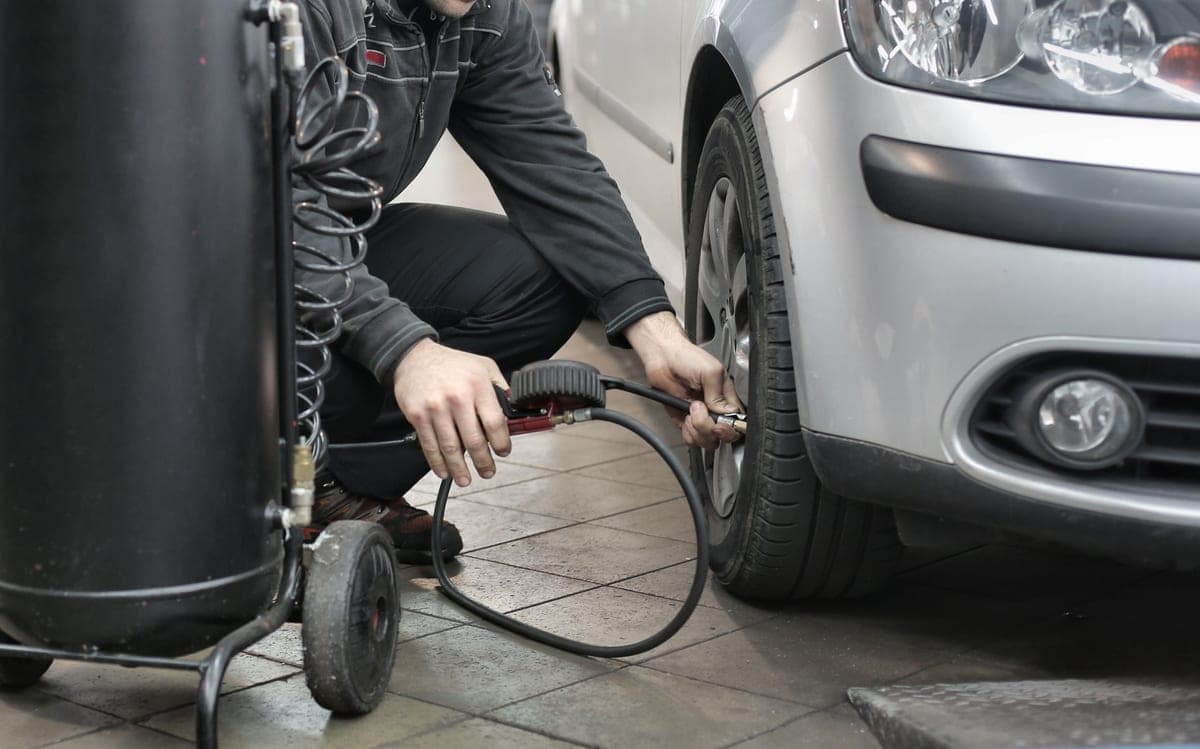
Car tires. 2 CFM at 30 to 60 PSI - the easiest air job there is. Which is why the top pick on that page is not a compressor at all but a 4.75-pound 12V pump that lives in the car, because tires are rarely low next to your garage.

Read this on every page

The plumbing does more than the compressor

One theme runs through all four of these pages, and it is the thing that most often makes a correctly sized compressor feel inadequate. Ingersoll Rand specifies a 3/8-inch minimum hose internal diameter for its 1/2-inch impact wrench. Compressor accessory kits almost universally ship a 1/4-inch hose.

A tool starved by its hose behaves exactly like a tool starved by its pump: strong for a second, then soft. People spend several hundred dollars on a larger compressor to fix a problem a decent hose would have solved, and the upgrade does not fully fix it because the restriction is still there.

So before any job page tells you to buy a bigger compressor, it tells you to check the hose, the coupler chain and the regulator setting. That order is deliberate, it is cheapest-first, and it is frequently where the problem actually is.

Honest limits

What these pages will not do

They will not claim we have done the job. We have not timed a brake job on any of these compressors or framed a wall with any of these nailers. Every figure is a manufacturer-published specification or a published engineering reference, both linked, with the arithmetic shown.

They will not print a price. No live price feed exists for this site, and a stale number is worse than none - so every buy control sends you to check the current price at the retailer.

And they will tell you when the honest answer is not a compressor. On the tire page the top pick is a 12V inflator. On several pages we point at an electric tool instead. If the best answer to your job is something we do not rank, saying so is the job.

FAQ

By Job: common questions

What size compressor do I need for an impact wrench?

Size against 5 CFM plus a 25% margin, so 6.25 CFM. In practice, because an impact is a burst tool, a 4.0 CFM compressor with a 6 to 20 gallon tank covers real use and a 2.6 CFM pancake handles occasional wheel work.

What size compressor for a nail gun?

Any of them. A brad nailer needs 0.5 CFM published and the smallest unit we list delivers 0.7 from a 1-gallon tank. Since flow is never the constraint for nailing, choose on weight and noise instead.

What size compressor for car tires?

Almost anything. Tire inflation needs 2 CFM at 30 to 60 PSI, far below what every compressor produces. If tires are your only job, a 12V pump in the vehicle is more useful than any garage compressor.

Why does my tool feel weak on a correctly sized compressor?

Check the hose internal diameter first. Ingersoll Rand specifies 3/8-inch minimum for a 1/2-inch impact wrench and most kit hoses are 1/4-inch. A restriction produces exactly the symptoms of an undersized pump.

Can one compressor cover all these jobs?

A 6-gallon pancake at 2.6 CFM covers nailing, tires, dusting and burst impact work - which is most of what home garages do. It does not cover ratchets held down, die grinders or sanders, and that is a pump limit rather than a tank one.