Skip to content
Psi & Hose

Hoses & Air Prep

Does hose length affect air pressure?

Yes, but not the way most people assume. Doubling the length is a far smaller penalty than halving the diameter, and the coupler is usually worse than both.

By Ryder M.Last updated Published
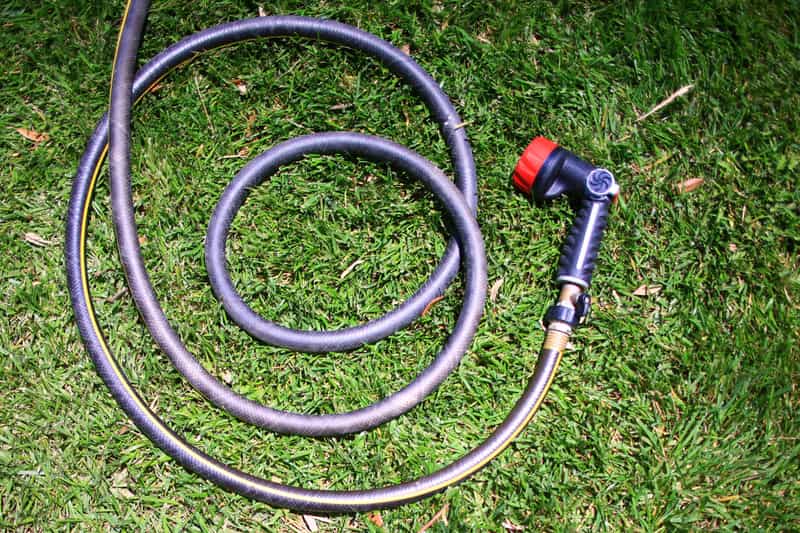
A long coiled air hose laid out across a garage floor

Some links on this page are affiliate links. If you buy through one, Magoo Media Group earns a commission from the retailer at no extra cost to you. It never changes which product we rank first - how this site is funded.

Read this first

The direct answer

Yes. Air loses pressure as it travels along a hose, the loss grows with length, and it grows much faster as diameter shrinks. But length is the smallest of the three variables that matter. In rough order of impact: inside diameter first, fittings and couplers second, length a distant third.

The physical reason is friction between the moving air and the hose wall, and the amount of wall the air has to rub against depends on the hose's internal surface relative to its cross-sectional area. Halve the diameter and you dramatically reduce the area while barely reducing the wall - which is why a 1/4-inch hose is so much worse than a 3/8-inch hose of the same length, rather than a bit worse.

The practical consequence is that adding 25 feet of 3/8-inch hose to an existing 3/8-inch run costs you very little, while swapping that run for 1/4-inch costs you a lot. If a tool feels weak, check the diameter and the couplers before you shorten the hose.

And one thing that never changes: pressure loss only happens while air is flowing. With the trigger released, the gauge at the end of a 100-foot hose reads the same as the gauge at the tank. That is why a regulator set at rest reads high the moment you pull the trigger, and why you must always set working pressure under flow.

The order of blame

Inside diameter, then fittings, then length. A 50-foot 3/8-inch hose on a high-flow coupler outperforms a 25-foot 1/4-inch hose on a worn M-style coupler, every time. Shortening the hose is the last fix to reach for, not the first.

The consequence

What this costs your tools

Pressure loss matters in proportion to how much air the tool moves, which means it is almost irrelevant for some tools and decisive for others.

Burst tools barely notice. An 18-gauge brad nailer consumes a published fraction of a CFM per shot - roughly 0.028 CFM per nail on a WEN 61721, or about 1.15 CFM at a sustained 60 fasteners a minute on a Bostitch BTFP12233. At that flow, even a long quarter-inch hose delivers acceptable pressure, which is why trim carpenters get away with thin hose for years.

High-flow tools notice immediately. An Ingersoll Rand 231C impact wrench publishes a 4.2 CFM average at 90 PSI and up to 22 CFM on load, and Ingersoll Rand specifies a 3/8-inch minimum hose ID for it. That specification exists precisely because of this effect: on an undersized line, the surge flow cannot be delivered and the missing pressure shows up as missing torque.

Continuous tools are the worst case because the loss never gets a chance to recover. A die grinder at a published 4 to 6 CFM continuous or an orbital sander at 9 to 10 holds the line at full flow the whole time, so every foot of undersized hose is subtracted from the tool's working pressure for as long as the trigger is down.

Spray guns are the one case where this becomes a quality problem rather than a speed problem. Atomisation depends on pressure at the gun, so pressure lost in the line changes the finish rather than just slowing you down. Set a spray gun's pressure at the gun with air flowing, not at the tank.

Published air demand at 90 PSI
ToolCFM @ 90 PSIAt loadDutyWhat the number means
Brad nailer, 18 gauge0.5-BurstThe most forgiving air tool there is. A nailer draws air only at the instant it fires, so almost any tank covers it. That is why a 1-gallon compressor is a genuinely complete tool for trim work rather than a compromise.
Framing nailer, 21 or 30 degree2.5-BurstEngineering ToolBox lists 2.5 CFM for a framing nailer on a 25% load factor. Metabo HPT publishes 0.09 SCFM at 100 PSI for the NR90AES1 on a per-cycle basis. The two describe the same tool at different firing rates, which is exactly why one CFM number for a nailer is misleading: nail pace sets the demand, not the badge on the tool.
Impact wrench, 1/2"4 - 522BurstThe most misunderstood number on this chart. Ingersoll Rand publishes 4.2 CFM average for the 231C and 22 CFM at load. The average assumes you hold the trigger for a second or two at a time. A 6-gallon pancake at 2.6 CFM does break lug nuts; it simply cannot keep the trigger down.
Air ratchet, 3/8"3 - 4-IntermittentIngersoll Rand publishes 3 CFM average at 90 PSI for the 105-D3; Engineering ToolBox lists 4 CFM for the class. A ratchet is the sneaky one: you hold the trigger far longer than with an impact, so it punishes a small tank harder despite the lower headline number.
Die grinder, 1/4"5 - 6-ContinuousIngersoll Rand lists 5 CFM; Engineering ToolBox gives a 4-6 CFM band. Continuous duty, so a 6-gallon pancake gives you a handful of seconds before pressure drops and the tool slows.
Orbital / DA sander, 6 inch10 - 9-ContinuousIngersoll Rand lists 10 CFM for a body orbital sander; Engineering ToolBox gives 6-9 CFM for the class. A sander runs continuously by nature, so there is no burst allowance to hide behind. This is the job that genuinely needs a big compressor.
Paint spray gun, production / HVLP8 - 7-ContinuousIngersoll Rand lists 8 CFM for production spraying; Engineering ToolBox gives 3-7 CFM for small hand-operated sprayers. Check the gun's own spec sheet - HVLP demand varies more than any other tool class on this chart.
Blow gun / dusting gun2.5 - 3-IntermittentIngersoll Rand lists 2.5 CFM, Engineering ToolBox 3. Held open continuously - clearing a sprinkler line, blowing out a filter - a blow gun empties a 6-gallon tank surprisingly fast.

Where two references publish different figures, both are shown rather than averaged into a number nobody published. Primary sources: Ingersoll Rand air consumption chart, Engineering ToolBox air tool consumption, and per-tool manufacturer specifications.

The picks

What to buy if your line is costing you pressure

Quick picks

#ProductBest forScorePrice
1
Flexzilla HFZ3850YW2-D product photo
Flexzilla HFZ3850YW2-D3/8" / 50 ft / 300 PSI at 70F300 PSI hybrid polymer that lies flat from -40F to 140F. The upgrade that makes a cheap compressor feel expensive.
The one hose to own in a cold or unheated garage8.0/10★★★★☆

#ad Disclosure - price as of November 14, 2026

2
Amflo 13-50AE polyurethane hose product photo
Amflo 13-50AE polyurethane hose3/8" / 50 ft / 300 PSI3.5 pounds for 50 feet of 300 PSI hose, in a non-marring cover. The lightest way to move air.
Roofing, ladders, and anywhere the hose drags across finished surfaces8.4/10★★★★☆

#ad Disclosure - price as of November 14, 2026

3
Milton ColorFit HighFlowPro V-Style set product photo
Milton ColorFit HighFlowPro V-Style set1/4" NPT / V-Style (HighFlowPro) / Up to 74 SCFMUp to 74 SCFM through a 1/4-inch body, and color-coded so you cannot cross-connect two patterns.
High-volume, low-pressure work: spray guns, blast cabinets, big blow guns7.5/10★★★★☆

#ad Disclosure - price as of November 14, 2026

Scores are computed from manufacturer-published specs by the rubric on our methodology page. Nothing here has been bench-tested. Prices are Amazon's own, refreshed daily, and never shown when we cannot verify them.

Pick 1 - Flexzilla HFZ3850YW2-D

8.0/10★★★★☆

Flexzilla HFZ3850YW2-D

Best for: The one hose to own in a cold or unheated garage

Verdict

300 PSI hybrid polymer that lies flat from -40F to 140F. The upgrade that makes a cheap compressor feel expensive.

What it does well

  • 300 PSI maximum working pressure at 70F - higher than any compressor on this site produces
  • -40F to 140F flexibility: it still uncoils in an unheated garage in February
  • Zero-memory construction means it lies flat instead of fighting you, and 3/8" ID does not throttle an impact
  • Ships with a ColorConnex Industrial Type D coupler and plug fitted, so it is usable out of the box

What it will not do

  • Costs multiples of the PVC hose bundled in a compressor kit
  • The bright green is not subtle, which matters to precisely nobody using it
How this 8.0 was calculated
MetricScoreWeightBasis
Pressure headroom10.040%30070 PSI rating, on a 125-300 PSI scale
Flow capacity6.040%Flow not published for this class - scored a 6, which is what a correctly sized hose or fitting does not restrict
Spec transparency8.020%6 published specification figures
Flexzilla HFZ3850YW2-D product photo

Product image from the Amazon listing for this model

#ad Disclosure - price as of November 14, 2026

Published specs

Flexzilla HFZ3850YW2-D published specifications
Inside diameter3/8"
Length50 ft
Max working pressure300 PSI at 70F
Temperature range-40F to 140F
Fittings1/4" MNPT, anodized aluminum ends
MaterialHybrid polymer

Source: Flexzilla HFZ3850YW2 air hose - distributor specification listing

Pick 2 - Amflo 13-50AE

8.4/10★★★★☆

Amflo 13-50AE polyurethane hose

Best for: Roofing, ladders, and anywhere the hose drags across finished surfaces

Verdict

3.5 pounds for 50 feet of 300 PSI hose, in a non-marring cover. The lightest way to move air.

What it does well

  • 3.5 lb for 50 ft - a fraction of the weight of rubber, which is the whole reason roofers use it
  • 300 PSI working pressure with a nylon braid reinforcement, and a -30F to +150F range
  • Non-marring cover that resists weathering, abrasion, oil and kinks, so it will not scuff finished trim

What it will not do

  • Polyurethane is less abrasion-tolerant than rubber when dragged over concrete and sharp edges
  • Lighter hose is easier to pull off a bench or out of position by accident
How this 8.4 was calculated
MetricScoreWeightBasis
Pressure headroom10.040%300 PSI rating, on a 125-300 PSI scale
Flow capacity6.040%Flow not published for this class - scored a 6, which is what a correctly sized hose or fitting does not restrict
Spec transparency10.020%7 published specification figures
Amflo 13-50AE polyurethane hose product photo

Product image from the Amazon listing for this model

#ad Disclosure - price as of November 14, 2026

Published specs

Amflo 13-50AE polyurethane hose published specifications
Inside diameter3/8"
Length50 ft
Working pressure300 PSI
Weight3.5 lb
Temperature range-30F to +150F
Fittings3/8" MNPT brass swivel with bend restrictors
MaterialPolyurethane with nylon braid reinforcement

Source: Amflo 13-50AE polyurethane air hose - retailer specification listing

Pick 3 - Milton S-303VKIT (HighFlowPro V-Style)

7.5/10★★★★☆

Milton ColorFit HighFlowPro V-Style set

Best for: High-volume, low-pressure work: spray guns, blast cabinets, big blow guns

Verdict

Up to 74 SCFM through a 1/4-inch body, and color-coded so you cannot cross-connect two patterns.

What it does well

  • Up to 74 SCFM at 300 PSI maximum inlet - nearly double a standard 1/4-inch M-STYLE coupler
  • Color coding is the practical fix for the incompatible-pattern problem: you can see the pattern across the garage
  • Push-type sleeve release, and compatible with other V-style couplers and plugs

What it will not do

  • V-style is a different pattern again - adopting it means converting every tool, not mixing it in
  • The high-flow advantage only appears on tools that actually move that much air
How this 7.5 was calculated
MetricScoreWeightBasis
Pressure headroom10.040%300 PSI rating, on a 125-300 PSI scale
Flow capacity5.740%74 SCFM, on a 40-100 SCFM scale
Spec transparency6.020%5 published specification figures
Milton ColorFit HighFlowPro V-Style set product photo

Product image from the Amazon listing for this model

#ad Disclosure - price as of November 14, 2026

Published specs

Milton ColorFit HighFlowPro V-Style set published specifications
Thread1/4" NPT
PatternV-Style (HighFlowPro)
Air flowUp to 74 SCFM
Max inlet pressure300 PSI
ReleasePush-type sleeve

Source: Milton ColorFit HighFlowPro V-Style coupler and plug set - product specifications

What to do

The three fixes, in order

Work through these in order and stop as soon as the problem goes away. The first two cost less than a new compressor and solve this complaint most of the time.

Fix the diameter first. Move to 3/8-inch inside diameter if you are on 1/4-inch and running anything larger than a nailer. This is the single highest-value change in the whole air system and it is the one people skip because 1/4-inch hose is cheaper and lighter. For a garage, 3/8-inch is the correct default and 1/2-inch is only worth the weight on a long plumbed main.

Fix the fittings second. Milton publishes 40 SCFM for a standard 1/4-inch M-style coupler and up to 74 SCFM for its V-style HighFlowPro, and 99 SCFM for a 1/2-inch G-style body at the compressor outlet. Replace worn couplers, remove every adapter stacked in series, and standardize on one pattern. An adapter is a restriction, a leak and a thing to lose.

Fix the length third, and only third. Buy the shortest hose that actually reaches the work, in one continuous piece rather than two joined lengths, and keep a short 25-foot hose on the bench for close work rather than dragging 50 feet everywhere. If you genuinely need the reach, keep the 50 feet - the penalty on 3/8-inch hose is small and real convenience is worth something.

If you have done all three and the tool is still weak, the compressor is the limit. Compare published tool CFM against published compressor CFM at 90 PSI and the answer will be obvious.

  1. 01Move to 3/8-inch inside diameter - the largest single gain available
  2. 02Replace worn couplers with high-flow, remove stacked adapters, standardize the pattern
  3. 03Buy the shortest length that reaches, in one piece, and keep a 25-foot hose for bench work
  4. 04Then compare published tool CFM against published compressor CFM

Shop plumbing

Where a hard line changes the answer

Once a run gets long enough to be plumbed rather than dragged, length stops being a hose question and becomes a pipe-sizing question - and the calculation changes because pipe is cheap and large diameters are available.

The rule for a plumbed main is simple: oversize it. A larger pipe costs a little more in material and removes the pressure-loss conversation permanently, and it also acts as extra storage volume, which helps on surge tools. Then take drops off the top of the main rather than the bottom so condensate stays in the main and runs to a drain leg instead of into your tools.

Never use PVC for compressed air. It is a hard constraint, not a preference: PVC fails by shattering rather than splitting, and the failure mode in a pressurized line is fragments. Use black iron, copper, or a proper aluminum or composite compressed-air system rated for the duty.

At the point of use, fit a filter and regulator and set working pressure under flow. A plumbed system with a long main, a filter stack and several drops has multiple places to lose pressure, which is exactly why a higher-ceiling compressor is worth more in a plumbed shop than it is on a single hose.

The seasonal version

Why cold weather makes this worse

The same hose behaves differently in February, and the reason is mechanical rather than thermodynamic. A stiff, cold hose kinks, and a kink is a far bigger restriction than any length of straight hose.

This is where material choice stops being cosmetic. Flexzilla's hybrid polymer publishes usability to -40F and has essentially no coil memory, so it stays limp on cold concrete. The Amflo polyurethane publishes -30F to +150F at 3.5 pounds for 50 feet with bend restrictors at the fittings. Rubber publishes the widest range on paper - the Goodyear 12674 is rated -50F to 190F - and still stiffens and coils more than either in practice.

Two cold-weather habits worth adopting. Uncoil the hose fully before you pressurise it rather than pulling it off a reel under pressure, because a cold hose dragged against its own coil is where kinks get set permanently. And drain the tank and the filter bowl before a freeze - trapped condensate that freezes in a line or a drain cock is a different problem from pressure loss and a more expensive one.

FAQ

Questions people actually ask

Does hose length affect air pressure?

Yes. Air loses pressure to friction as it travels, and the loss grows with length. But length is the least important of the three variables - inside diameter matters far more, and fittings usually matter more than length too. Pressure loss only occurs while air is flowing; with the trigger released the gauge reads tank pressure.

How much pressure do you lose in a 50-foot air hose?

It depends entirely on diameter and flow, so no single figure is honest. The useful comparison is this: a 50-foot 3/8-inch hose on a high-flow coupler delivers more usable pressure under load than a 25-foot 1/4-inch hose on a worn standard coupler. Fix diameter and fittings before you shorten the hose.

Is it better to have one long hose or two short ones joined?

One long hose. Every coupler in the line is a restriction and a potential leak, so joining two 25-foot hoses to make 50 feet is worse than buying 50 feet in one piece. If you need both lengths, keep them as separate hoses and use the short one for bench work.

Does hose diameter matter more than length?

Much more. Halving the diameter dramatically reduces cross-sectional area while barely reducing the wall the air rubs against, so a 1/4-inch hose is far worse than a 3/8-inch hose of the same length rather than slightly worse. 3/8-inch is the correct default for any garage compressor.

Why does my tool work at the compressor but not at the end of the hose?

That is the signature of a restriction - undersized hose, a worn coupler, or adapters stacked in series. Watch the regulator gauge while the tool loads: a sudden collapse that recovers quickly points to restriction, while a slow steady fall that does not recover means the compressor is out of air.

Should I set the regulator with the tool running?

Always. Pressure loss only happens while air flows, so a regulator set at rest reads high the instant you pull the trigger. Set working pressure with air actually moving through the line, at the pressure the tool publishes - usually 90 PSI, and less for trim nailing in softwood.

Sources

Where these numbers come from

Accessed September 2026. If a figure on this page does not match the manufacturer's current sheet, tell us at contact@psiandhose.com and we will correct and date the change - see our editorial policy.

Read next