Skip to content
Psi & Hose

Compare

120V vs 240V air compressor

This is not really a voltage question. It is a question about how much air a normal household circuit can produce, and the answer sets a hard ceiling that no amount of shopping gets you past.

By Ryder M.Last updated Published
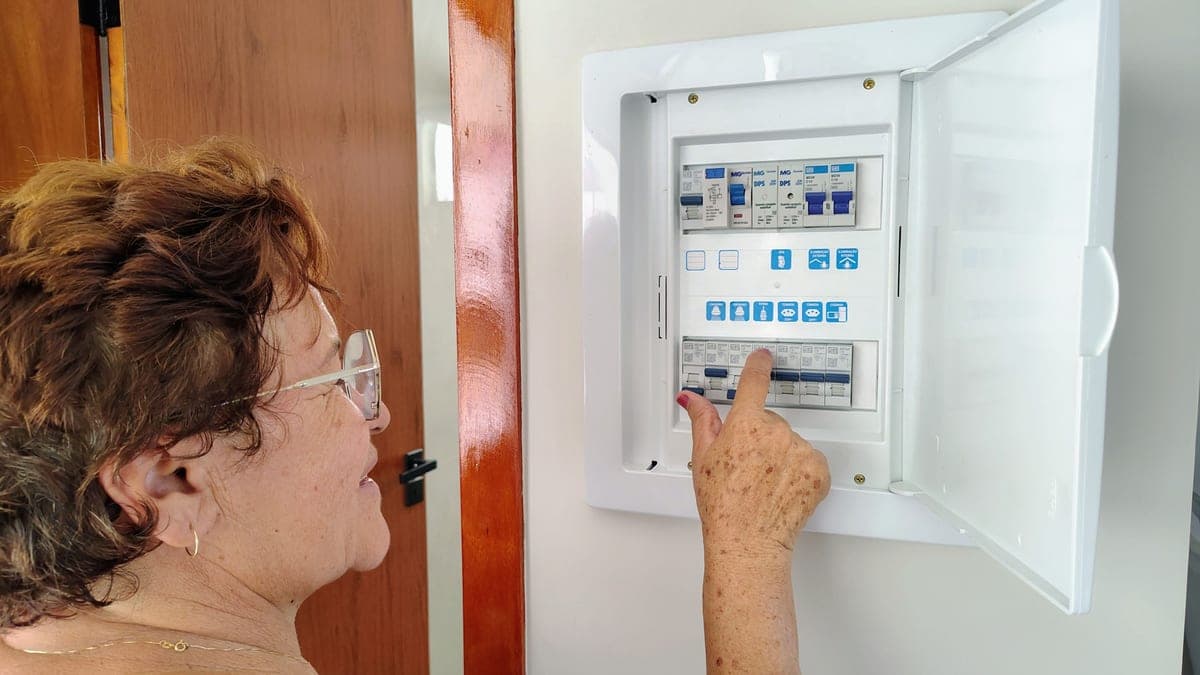
An electrical panel and outlet in a workshop

Some links on this page are affiliate links. If you buy through one, Magoo Media Group earns a commission from the retailer at no extra cost to you. It never changes which product we rank first - how this site is funded.

Read this first

The short answer

Stay on 120V if the biggest thing you run is burst work - impacts, nailers, inflation, blowing off. The best 120V machines in our roster deliver 4.0 to 5.7 CFM at 90 PSI, which covers all of that, and the 30-gallon DEWALT DXCMLA1983054 is the practical top of the class at 5.7 CFM with a dual 120/240V motor so you can move it later.

Go to 240V when you need continuous-duty flow. A 6-inch orbital sander is a published 9 to 10 CFM continuous and a production spray gun 7 to 8, and nothing on a 120V circuit meets those honestly. The 60-gallon Industrial Air ILA3606056 publishes 11.5 CFM at 90 PSI on 240V and 3.7 HP, which is the first machine in our roster that genuinely clears them.

The cost of crossing over is not the compressor, it is the circuit. A 240V machine needs a dedicated circuit run to the garage, which is electrician work. If you are already paying for that, buy once and buy the flow figure you actually need - stepping up from 5.7 to 11.5 CFM is the only upgrade in this category that changes what tools you can own.

The ceiling on each supply, from our own roster
CompressorSupplyCFM @ 90CFM @ 40TankPumpHP
Industrial Air ILA3606056240V11.513.460 galOil-lubricated3.7
DEWALT DXCMLA1983054120/240V5.77.030 galOil-lubricated1.9
California Air Tools 10020C110V, 14 A5.36.410 galOil-free2.0
Husky C201H120V4.05.220 galOil-free1.3 running
Craftsman CMXECXA0232043120V4.05.020 galOil-free1.8
Porter-Cable C2002120V2.63.76 galOil-free0.8

Manufacturer-published figures. Our whole roster sits in this table; the 120V ceiling is real, not a sampling artefact.

Both sides, ranked

The picks

Quick picks

#ProductBest forScorePrice
1
A thirty-gallon belt-drive air compressor with a cast iron pump
DEWALT DXCMLA1983054 30-gallon5.7 CFM @ 90 / 30 gal / 155 PSI5.7 CFM, 30 gallons, oil-lubricated cast iron and belt drive. Where a garage compressor stops being disposable.
A permanent garage compressor you expect to keep for a decade7.9/10★★★★☆

#ad Disclosure - we do not publish prices we cannot verify

2
A large stationary vertical sixty-gallon air compressor in a workshop
Industrial Air ILA3606056 60-gallon11.5 CFM @ 90 / 60 gal / 155 PSI11.5 CFM at 90 PSI. Included as the reference point for what continuous sanding and blasting actually costs.
Body work, blasting, or running two tools at once8.1/10★★★★☆

#ad Disclosure - we do not publish prices we cannot verify

3
A ten-gallon vertical oil-free air compressor on wheels in a workshop
California Air Tools 10020C5.3 CFM @ 90 / 10 gal / 125 PSI / 70 dBA5.3 CFM at 70 dBA with a published 70/30 duty cycle. The first unit here that runs a continuous-duty tool.
Running a ratchet, die grinder or touch-up gun without waiting6.2/10★★★☆☆

#ad Disclosure - we do not publish prices we cannot verify

4
A twenty-gallon vertical air compressor standing against a garage wall
Husky C201H 20-gallon4 CFM @ 90 / 20 gal / 175 PSI / 83 dBA4.0 CFM with 20 gallons at 175 PSI. The cheapest way to buy STORAGE rather than flow.
Burst automotive work where tank volume, not CFM, is the limit6.3/10★★★☆☆

#ad Disclosure - we do not publish prices we cannot verify

Scores are computed from manufacturer-published specs by the rubric on our methodology page. Nothing here has been bench-tested, and we do not publish prices we cannot verify.

Pick 1 - DEWALT DXCMLA1983054

7.9/10★★★★☆

DEWALT DXCMLA1983054 30-gallon

Best for: A permanent garage compressor you expect to keep for a decade

Verdict

5.7 CFM, 30 gallons, oil-lubricated cast iron and belt drive. Where a garage compressor stops being disposable.

What it does well

  • 5.7 CFM at 90 PSI and 7.0 at 40 - clears ratchets, die grinders and touch-up spraying
  • Oil-lubricated belt drive runs cooler and slower than a direct-drive oil-free pump
  • 120/240V, so it can move to a 240V circuit later

What it will not do

  • Oil-lubricated means an actual maintenance routine: check and change the oil
  • 155 PSI on 30 gallons stores less than 175 PSI on 20 in some comparisons - check the math, not the tank
How this 7.9 was calculated
MetricScoreWeightBasis
Air flow9.440%5.7 CFM at 90 PSI, on a 0.7-6 CFM scale
Stored air10.025%30 gal x 155 PSI = 4650, on a 125-3,500 scale
Noise5.015%Manufacturer publishes no dBA figure - scored a neutral 5, not a guess
Portability5.010%No weight published - scored a neutral 5
Spec transparency3.310%2 of 6 useful figures published (CFM at 90, CFM at 40, dBA, duty cycle, recovery, weight)
A thirty-gallon belt-drive air compressor with a cast iron pump

Licensed stock photo - illustrative of the category, not a photo of this unit

#ad Disclosure - we do not publish prices we cannot verify

Published specs

DEWALT DXCMLA1983054 30-gallon published specifications
CFM @ 90 PSI5.7
CFM @ 40 PSI7
Tank30 gal
Max pressure155 PSI
NoiseNot published
Duty cycleNot published
RecoveryNot published
PumpOil-lubricated
Motor1.9
WeightNot published
Power120/240V

Source: DEWALT DXCMLA1983054 30-gallon compressor - product specifications

Pick 2 - Industrial Air ILA3606056

8.1/10★★★★☆

Industrial Air ILA3606056 60-gallon

Best for: Body work, blasting, or running two tools at once

Verdict

11.5 CFM at 90 PSI. Included as the reference point for what continuous sanding and blasting actually costs.

What it does well

  • 11.5 CFM at 90 PSI and 13.4 at 40 - clears an orbital sander with margin
  • Cast-iron twin-cylinder pump on a 60-gallon vertical tank
  • 3.7 HP on 240V

What it will not do

  • 240V and stationary: this is an electrical project, not a purchase
  • Overkill for anyone whose honest tool list is nailers, tires and a 1/2-inch impact - which is most people reading this
How this 8.1 was calculated
MetricScoreWeightBasis
Air flow10.040%11.5 CFM at 90 PSI, on a 0.7-6 CFM scale
Stored air10.025%60 gal x 155 PSI = 9300, on a 125-3,500 scale
Noise5.015%Manufacturer publishes no dBA figure - scored a neutral 5, not a guess
Portability5.010%No weight published - scored a neutral 5
Spec transparency3.310%2 of 6 useful figures published (CFM at 90, CFM at 40, dBA, duty cycle, recovery, weight)
A large stationary vertical sixty-gallon air compressor in a workshop

Licensed stock photo - illustrative of the category, not a photo of this unit

#ad Disclosure - we do not publish prices we cannot verify

Published specs

Industrial Air ILA3606056 60-gallon published specifications
CFM @ 90 PSI11.5
CFM @ 40 PSI13.4
Tank60 gal
Max pressure155 PSI
NoiseNot published
Duty cycleNot published
RecoveryNot published
PumpOil-lubricated
Motor3.7
WeightNot published
Power240V

Source: Industrial Air ILA3606056 - product specifications

Pick 3 - California Air Tools 10020C

6.2/10★★★☆☆

California Air Tools 10020C

Best for: Running a ratchet, die grinder or touch-up gun without waiting

Verdict

5.3 CFM at 70 dBA with a published 70/30 duty cycle. The first unit here that runs a continuous-duty tool.

What it does well

  • 5.3 CFM at 90 PSI clears every published figure for ratchets, die grinders and touch-up spraying
  • 70 dBA at that output is unusual - most 5+ CFM units are far louder
  • Publishes a real 70/30 duty cycle and a 25-second recovery from 95 to 125 PSI

What it will not do

  • 82.5 lb and 14 A - it needs its own circuit and it is not a carry-it-upstairs machine
  • 125 PSI max, so a bigger tank at higher pressure still stores more per fill
How this 6.2 was calculated
MetricScoreWeightBasis
Air flow8.740%5.3 CFM at 90 PSI, on a 0.7-6 CFM scale
Stored air3.325%10 gal x 125 PSI = 1250, on a 125-3,500 scale
Noise5.615%70 dBA, on a 58-85 dBA scale
Portability1.110%82.5 lb, on a 20-90 lb scale
Spec transparency10.010%6 of 6 useful figures published (CFM at 90, CFM at 40, dBA, duty cycle, recovery, weight)
A ten-gallon vertical oil-free air compressor on wheels in a workshop

Licensed stock photo - illustrative of the category, not a photo of this unit

#ad Disclosure - we do not publish prices we cannot verify

Published specs

California Air Tools 10020C published specifications
CFM @ 90 PSI5.3
CFM @ 40 PSI6.4
Tank10 gal
Max pressure125 PSI
Noise70 dBA
Duty cycle70/30 (manufacturer-published)
Recovery120 s empty to full; 25 s recovery 95 to 125 PSI
PumpOil-free
Motor2.0
Weight82.5 lb
Power110V, 14 A

Source: California Air Tools 10020C - product specifications

Pick 4 - Husky C201H

6.3/10★★★☆☆

Husky C201H 20-gallon

Best for: Burst automotive work where tank volume, not CFM, is the limit

Verdict

4.0 CFM with 20 gallons at 175 PSI. The cheapest way to buy STORAGE rather than flow.

What it does well

  • 20 gallons at 175 PSI is roughly six times the stored air of a 6-gallon 150 PSI pancake
  • 4.0 CFM at 90 PSI and 5.2 at 40 - enough to recover between bursts instead of chasing you
  • Vertical footprint takes a corner instead of floor space

What it will not do

  • 83 dBA published and a 7-minute fill from empty - plan to switch it on before you start
  • Oil-free at 20 gallons means a shorter pump life than a cast-iron oil-lubricated unit
How this 6.3 was calculated
MetricScoreWeightBasis
Air flow6.240%4 CFM at 90 PSI, on a 0.7-6 CFM scale
Stored air10.025%20 gal x 175 PSI = 3500, on a 125-3,500 scale
Noise0.715%83 dBA, on a 58-85 dBA scale
Portability5.010%No weight published - scored a neutral 5
Spec transparency6.710%4 of 6 useful figures published (CFM at 90, CFM at 40, dBA, duty cycle, recovery, weight)
A twenty-gallon vertical air compressor standing against a garage wall

Licensed stock photo - illustrative of the category, not a photo of this unit

#ad Disclosure - we do not publish prices we cannot verify

Published specs

Husky C201H 20-gallon published specifications
CFM @ 90 PSI4
CFM @ 40 PSI5.2
Tank20 gal
Max pressure175 PSI
Noise83 dBA
Duty cycleNot published
Recoveryabout 7 minutes to fill from empty
PumpOil-free
Motor1.3 running
WeightNot published
Power120V

Source: Husky C201H 20-gallon compressor - retailer specification listing

The physics of the circuit

Why 120V has a ceiling at all

A compressor's output is the work its motor can do, and the work a motor can do is limited by the power available to it. A standard 15 or 20 amp 120V household circuit is a fixed budget, and the motor has to start under load within it as well as run within it - startup draw is substantially higher than running draw, which is the real constraint.

You can see the ceiling in the table. Across our entire roster the best 120V figures are 4.0, 5.3 and 5.7 CFM at 90 PSI. The 5.3 CFM machine publishes its draw as 14 amps at 110V, which is most of a 15 amp circuit on its own. There is no 120V machine delivering 9 CFM, not because manufacturers have not tried, but because the circuit will not carry it.

240V doubles the voltage for the same current, which roughly doubles the available power, and the flow figures follow: 11.5 CFM at 90 PSI from a 3.7 HP motor. That is why the step up is worth doing once rather than twice - you are buying access to a different class of tool, not a marginal improvement.

The number checked

What each side actually runs

The verdict below is the 240V 60-gallon machine at its published 11.5 CFM, generated from the same cited tool-demand dataset that drives our CFM chart. Compare it against the same tool list on a 5.7 CFM 120V machine and the difference is exactly the continuous-duty classes - sanders, grinders, production spray guns - which is the whole case for the upgrade.

Industrial Air ILA3606056 60-gallon: what it runs

Delivered flow: 11.5 CFM at 90 PSI. We call a tool covered when delivered flow clears its highest published demand plus a 25% margin.

Runs it (5)

  • Impact wrench, 1/2"Yes - needs 5 CFM, burst duty
  • Die grinder, 1/4"Yes - needs 6 CFM, continuous duty
  • Paint spray gun, production / HVLPYes - needs 8 CFM, continuous duty
  • Air ratchet, 3/8"Yes - needs 4 CFM, intermittent duty
  • Blow gun / dusting gunYes - needs 3 CFM, intermittent duty

Does not run it (3)

  • Cut-off tool, 3 inchNo - needs 10 CFM, continuous duty
  • Orbital / DA sander, 6 inchNo - needs 10 CFM, continuous duty
  • Vertical disc sander / polisherNo - needs 20 CFM, continuous duty

Demand figures from the air tool CFM chart, which cites every one of them.

If you are undecided

The dual-voltage machine is the hedge

The 30-gallon DEWALT in this comparison publishes 120/240V, which means it runs on a normal circuit now and can be rewired to 240V later. That is a genuinely useful property for someone who is going to wire the garage eventually but not this month, and it is the reason this machine ranks where it does rather than purely on its 5.7 CFM.

Be clear about what the dual rating does and does not give you. It does not give you more air on 120V - the pump is the pump. What it gives you is the option to keep the machine when the circuit arrives, rather than selling it and buying again. On a purchase this size that option has real value.

It is also the only oil-lubricated machine in our roster that runs on 120 volts, which matters if the work is leaning continuous. An oil bath carries heat out of the cylinder, and sustained running is where oil-free pumps struggle regardless of voltage.

Before you buy

What the wiring job involves

  1. 01Confirm your panel has capacity and two free adjacent slots for a double-pole breaker. This is the first thing an electrician will check and the one that occasionally ends the conversation.
  2. 02Have the circuit sized to the machine, not to a round number. The compressor's nameplate states its running current; the breaker and conductor are sized from that plus the startup characteristic, and that sizing is the electrician's job under your local code.
  3. 03Put the outlet where the compressor will live, not where it is convenient to run cable. A 60-gallon vertical machine is placed once, and it wants to be against a wall, off the ground, with clearance around the pump for cooling air.
  4. 04Do not plan to use an extension cord on 240V. Startup current meeting cord resistance is what starves motors, and on a machine this size a starved motor is an expensive failure rather than an inconvenience.
  5. 05Budget the electrician into the compressor decision from the start. The wiring frequently costs a meaningful fraction of the machine, which is exactly why buying the 11.5 CFM unit rather than a 7 CFM one is the better value - the fixed cost is the same either way.

Being honest

When 240V is the wrong answer

If your tool list is nailers, an impact, a blow gun and tires, 240 volts buys you nothing you will notice. Those are burst tools; the tank covers the shot and a 4.0 CFM 120V machine refills it faster than you can work. Spending on a circuit to run them is spending on headroom you will never reach.

If the compressor has to move - between a garage and a driveway, or into a vehicle - 240V ends that immediately, and so does 60 gallons. Portability and flow are directly opposed in this category and you have to pick.

And if you rent, the calculus changes entirely: a dedicated circuit is an improvement you leave behind. A 5.3 CFM 10-gallon machine on a normal outlet is the sensible ceiling for a garage you do not own.

FAQ

Questions people actually ask

Is a 240V air compressor better than 120V?

It is capable of more air, which only matters if you need it. Across our roster the 120V ceiling is 5.7 CFM at 90 PSI and the 240V machine delivers 11.5. For burst tools - nailers, impacts, inflation - 120V is enough. For sanders and production spray guns, it is not.

What is the biggest air compressor that runs on 120V?

In our roster, a 30-gallon oil-lubricated machine publishing 5.7 CFM at 90 PSI and 7.0 at 40, with a dual 120/240V motor. A 10-gallon oil-free unit at 5.3 CFM is close behind and publishes a 14 amp draw at 110V.

Do I need a dedicated circuit for an air compressor?

For anything above the 6-gallon pancake class, yes in practice. Startup current is much higher than running current, and sharing a circuit is how you get nuisance tripping. A 14 amp machine is most of a 15 amp circuit before anything else is plugged in.

Can I convert a 120V compressor to 240V?

Only if the machine is built dual-voltage and the manufacturer documents the change - one 30-gallon unit here publishes 120/240V for exactly this reason. A single-voltage 120V compressor is not convertible, and the pump would not produce more air even if it were.

How much CFM do I lose running a 240V compressor on 120V?

Nothing, if the machine is rated for both - the pump output is the pump output. What changes is the current drawn at the wall. A machine that is not rated for 120V should not be run on it at all.

Is 240V cheaper to run?

The work done is the same, so the energy used for a given amount of air is broadly the same. The reason to go to 240V is capability, not running cost, and anyone selling it to you on the electricity bill is selling the wrong benefit.

Sources

Where these numbers come from

Accessed September 2026. If a figure on this page does not match the manufacturer's current sheet, tell us at contact@psiandhose.com and we will correct and date the change - see our editorial policy.

Read next