Skip to content
Psi & Hose

Guides

Your first air tools

Most people buy the tools and then discover the plumbing. Here is the order that works, with the published demand for each step.

By Ryder M.Last updated Published
Pneumatic tools arranged on a workshop bench

Some links on this page are affiliate links. If you buy through one, Magoo Media Group earns a commission from the retailer at no extra cost to you. It never changes which product we rank first - how this site is funded.

Buy in this sequence

The order that works

  1. 01The compressor. A 6-gallon pancake at 2.6 CFM and 150 PSI covers every nailer, all inflation and burst impact work. Do not buy the 1-gallon unit unless you are certain nailing is all you will ever do.
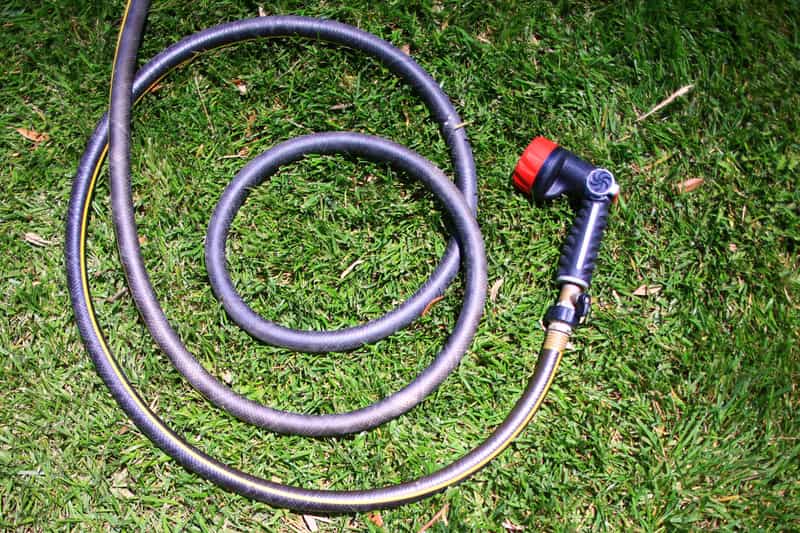
  2. 02A proper hose. 3/8-inch ID, 50 feet, rated 250 PSI or more. Not the one in the kit. This is the single item that most changes how every tool you own feels, because diameter is what decides how much of your compressor's flow arrives at the tool.
  3. 03One coupler pattern and matching plugs. Fit a plug to every tool in one sitting. M-STYLE flows a published 40 SCFM at 300 PSI and is the most common pattern in US home garages, so pick it unless you already own another.
  4. 04A filter-regulator. Every compressor makes water, and water rusts nailers and washes lubricant out of impact wrenches. A 10-micron combo unit publishing 53 SCFM does not restrict anything and outlives several tools.
  5. 05A blow gun. Cheapest useful thing you will buy, published at 2.5 to 3 CFM, and the tool you will reach for most often. There is no cordless equivalent.
  6. 06Then the tool you actually wanted. A nailer, or an impact wrench, or both. By this point the system supports them properly rather than starving them.

Why the impact wrench is last

Not because it matters least - because it is the tool most sensitive to everything above it. An impact wrench on a 1/4-inch kit hose with three adapters and no regulator set properly feels broken. The same wrench on a correct system feels like the tool it is.

The picks

The kit, itemized

Quick picks

#ProductBest forScorePrice
1
A red six-gallon pancake air compressor on a garage floor
Porter-Cable C20022.6 CFM @ 90 / 6 gal / 150 PSIThe default answer to 'cheapest useful compressor'. 6 gallons, 2.6 CFM, 150 PSI, and it has been the same machine for years.
A first compressor for nailing, inflation and burst automotive work3.6/10★★☆☆☆
Check price on Amazon

#ad Disclosure - we do not publish prices we cannot verify

2
A coiled hybrid polymer air hose lying flat on a garage floor
Flexzilla HFZ3850YW23/8" / 50 ft / 300 PSI at 70F300 PSI hybrid polymer that lies flat from -40F to 140F. The upgrade that makes a cheap compressor feel expensive.
The one hose to own in a cold or unheated garage8.0/10★★★★☆
Check price on Amazon

#ad Disclosure - we do not publish prices we cannot verify

3
Brass air fittings, couplers and plugs arranged on a bench
Milton 1/4" NPT M-STYLE coupler and plug kit1/4" NPT / M-STYLE (Industrial / Milton) / 300 PSI300 PSI, 40 SCFM, and the pattern most American garages already use. Standardize on one and stop adapting.
Making every tool in the garage fit every hose4.8/10★★☆☆☆
Check price on Amazon

#ad Disclosure - we do not publish prices we cannot verify

4
A wall-mounted compressed air filter and regulator with a pressure gauge
PneumaticPlus SAW300 filter / regulator3/8" NPT / 53 SCFM / 10 micron53 SCFM, 10 micron, with a real gauge and a metal bowl. The single most useful small purchase in a garage air system.
One combined water trap and regulator at the wall5.3/10★★★☆☆
Check price on Amazon

#ad Disclosure - we do not publish prices we cannot verify

5
A half-inch drive air impact wrench with a socket attached
Ingersoll Rand 231C4.2 CFM avg / 22 CFM at load600 ft-lb at 4.2 CFM average - and 22 CFM at load. The tool that teaches you what 'average CFM' really means.
Lug nuts and suspension bolts on a normal garage compressor4.3/10★★☆☆☆
Check price on Amazon

#ad Disclosure - we do not publish prices we cannot verify

Scores are computed from manufacturer-published specs by the rubric on our methodology page. Nothing here has been bench-tested, and we do not publish prices we cannot verify.

Pick 1 - Porter-Cable C2002

3.6/10★★☆☆☆

Porter-Cable C2002

Best for: A first compressor for nailing, inflation and burst automotive work

Verdict

The default answer to 'cheapest useful compressor'. 6 gallons, 2.6 CFM, 150 PSI, and it has been the same machine for years.

What it does well

  • 2.6 CFM at 90 PSI and 3.7 at 40 - the most common spec in the budget class for a reason
  • 6-gallon tank at 150 PSI stores enough air for real bursts of impact work
  • Two couplers, so two people or two tools without swapping

What it will not do

  • Porter-Cable does not publish a noise figure for it; the class sits in the high 70s to low 80s dBA
  • 2.6 CFM will not run a ratchet, die grinder or sander continuously
How this 3.6 was calculated
MetricScoreWeightBasis
Air flow3.640%2.6 CFM at 90 PSI, on a 0.7-6 CFM scale
Stored air2.325%6 gal x 150 PSI = 900, on a 125-3,500 scale
Noise5.015%Manufacturer publishes no dBA figure - scored a neutral 5, not a guess
Portability5.010%No weight published - scored a neutral 5
Spec transparency3.310%2 of 6 useful figures published (CFM at 90, CFM at 40, dBA, duty cycle, recovery, weight)
A red six-gallon pancake air compressor on a garage floor

Licensed stock photo - illustrative of the category, not a photo of this unit

Check price on Amazon

#ad Disclosure - we do not publish prices we cannot verify

Published specs

Porter-Cable C2002 published specifications
CFM @ 90 PSI2.6
CFM @ 40 PSI3.7
Tank6 gal
Max pressure150 PSI
NoiseNot published
Duty cycleNot published
RecoveryNot published
PumpOil-free
Motor0.8
WeightNot published
Power120V

Source: Porter-Cable C2002 - product specifications

Pick 2 - Flexzilla HFZ3850YW2

8.0/10★★★★☆

Flexzilla HFZ3850YW2

Best for: The one hose to own in a cold or unheated garage

Verdict

300 PSI hybrid polymer that lies flat from -40F to 140F. The upgrade that makes a cheap compressor feel expensive.

What it does well

  • 300 PSI maximum working pressure at 70F - higher than any compressor on this site produces
  • -40F to 140F flexibility: it still uncoils in an unheated garage in February
  • Zero-memory construction means it lies flat instead of fighting you, and 3/8" ID does not throttle an impact

What it will not do

  • Costs multiples of the PVC hose bundled in a compressor kit
  • The bright green is not subtle, which matters to precisely nobody using it
How this 8.0 was calculated
MetricScoreWeightBasis
Pressure headroom10.040%30070 PSI rating, on a 125-300 PSI scale
Flow capacity6.040%Flow not published for this class - scored a 6, which is what a correctly sized hose or fitting does not restrict
Spec transparency8.020%6 published specification figures
A coiled hybrid polymer air hose lying flat on a garage floor

Licensed stock photo - illustrative of the category, not a photo of this unit

Check price on Amazon

#ad Disclosure - we do not publish prices we cannot verify

Published specs

Flexzilla HFZ3850YW2 published specifications
Inside diameter3/8"
Length50 ft
Max working pressure300 PSI at 70F
Temperature range-40F to 140F
Fittings1/4" MNPT, anodized aluminum ends
MaterialHybrid polymer

Source: Flexzilla HFZ3850YW2 air hose - distributor specification listing

Pick 3 - Milton M-STYLE (210 / 711)

4.8/10★★☆☆☆

Milton 1/4" NPT M-STYLE coupler and plug kit

Best for: Making every tool in the garage fit every hose

Verdict

300 PSI, 40 SCFM, and the pattern most American garages already use. Standardize on one and stop adapting.

What it does well

  • 40 SCFM flow at 300 PSI max - far more than any compressor here delivers
  • M-STYLE (Industrial / Milton) is the most common pattern in US home garages, so tools match
  • Kits give you spare plugs, which is the part you actually lose

What it will not do

  • Mixing M-STYLE with the visually similar ARO or Lincoln patterns is the classic garage mistake - pick one and throw the others out
  • On a 1/2" line, 40 SCFM couplers become the restriction; step up to a G-style then
How this 4.8 was calculated
MetricScoreWeightBasis
Pressure headroom10.040%300 PSI rating, on a 125-300 PSI scale
Flow capacity0.040%40 SCFM, on a 40-100 SCFM scale
Spec transparency4.020%4 published specification figures
Brass air fittings, couplers and plugs arranged on a bench

Licensed stock photo - illustrative of the category, not a photo of this unit

Check price on Amazon

#ad Disclosure - we do not publish prices we cannot verify

Published specs

Milton 1/4" NPT M-STYLE coupler and plug kit published specifications
Thread1/4" NPT
PatternM-STYLE (Industrial / Milton)
Max pressure300 PSI
Air flow40 SCFM

Source: Milton Industries M-STYLE couplers and plugs - product specifications

Pick 4 - PneumaticPlus SAW300-N03BG-MEP

5.3/10★★★☆☆

PneumaticPlus SAW300 filter / regulator

Best for: One combined water trap and regulator at the wall

Verdict

53 SCFM, 10 micron, with a real gauge and a metal bowl. The single most useful small purchase in a garage air system.

What it does well

  • 53 SCFM at 3/8-inch NPT - it will not restrict any compressor on this site
  • 10 micron element plus a regulator in one piggyback body, so one mount does both jobs
  • Metal bowl and a 0-150 PSI gauge, with bracket included

What it will not do

  • 10 micron catches water and rust, NOT oil aerosol - it is not enough on its own for paint
  • Max operating pressure is 150 PSI, so it cannot sit upstream of a 175 PSI tank outlet
How this 5.3 was calculated
MetricScoreWeightBasis
Pressure headroom7.140%250 PSI rating, on a 125-300 PSI scale
Flow capacity2.240%53 SCFM, on a 40-100 SCFM scale
Spec transparency8.020%6 published specification figures
A wall-mounted compressed air filter and regulator with a pressure gauge

Licensed stock photo - illustrative of the category, not a photo of this unit

Check price on Amazon

#ad Disclosure - we do not publish prices we cannot verify

Published specs

PneumaticPlus SAW300 filter / regulator published specifications
Port size3/8" NPT
Flow53 SCFM
Filtration10 micron
Max supply pressure250 PSI
Max operating pressure150 PSI
Gauge0-150 PSI, bracket included

Source: PneumaticPlus SAW300 filter/regulator - product specifications

Pick 5 - Ingersoll Rand 231C

4.3/10★★☆☆☆

Ingersoll Rand 231C

Best for: Lug nuts and suspension bolts on a normal garage compressor

Verdict

600 ft-lb at 4.2 CFM average - and 22 CFM at load. The tool that teaches you what 'average CFM' really means.

What it does well

  • 600 ft-lb max torque at 8,000 RPM, which is more than any lug nut needs
  • 4.2 CFM average at 90 PSI - a 4 CFM compressor keeps up with real-world use
  • The long-running industry default, so parts and service kits are everywhere

What it will not do

  • 22 CFM at load. Hold the trigger down and no garage compressor on this site will keep up
  • 99 dBA - wear hearing protection, this is not optional
  • Wants a 3/8" minimum hose ID; a 1/4" hose will throttle it
How this 4.3 was calculated
MetricScoreWeightBasis
Air economy4.340%4.2 CFM average at 90 PSI, on a 1.8-6 CFM scale (lower is better)
Handling5.025%No weight published - scored a neutral 5
Noise0.520%99 dBA, on an 80-100 dBA scale
Spec transparency8.015%4 of 5 useful figures published (average CFM, CFM at load, dBA, weight, minimum hose)
A half-inch drive air impact wrench with a socket attached

Licensed stock photo - illustrative of the category, not a photo of this unit

Check price on Amazon

#ad Disclosure - we do not publish prices we cannot verify

Published specs

Ingersoll Rand 231C published specifications
Average air @ 90 PSI4.2 CFM
Air at load22 CFM
Performance600 ft-lb max torque, 8,000 RPM, 1,200 BPM
Noise99 dBA
WeightNot published
Minimum hose3/8" ID minimum

Source: Ingersoll Rand 231C impact wrench - product specifications

Does it all fit?

Demand for a starter set, checked

A starter set of blow gun, brad nailer, framing nailer and tire chuck has a highest published demand of 3 CFM - the blow gun. With our 25% margin that is 3.75 CFM, which a 2.6 CFM pancake technically falls short of.

In practice a 6-gallon tank covers it, because a blow gun used in the bursts a garage actually uses it in is not a continuous load. You will notice pauses if you hold it open for thirty seconds to dry a whole door shut, which is exactly the behavior we describe on our detailing guide.

Add a 1/2-inch impact wrench and the highest demand becomes 5 CFM, giving 6.25 with margin. That is where a 6-gallon pancake becomes a burst-only proposition, and where a 4.0 CFM high-pressure pancake or a 20-gallon unit starts to justify itself.

Porter-Cable C2002: what it runs

Delivered flow: 2.6 CFM at 90 PSI. We call a tool covered when delivered flow clears its highest published demand plus a 25% margin.

Runs it (3)

  • Brad nailer, 18 gaugeYes - needs 0.5 CFM, burst duty
  • Tire inflationYes - needs 2 CFM, intermittent duty
  • Framing nailer, 21 or 30 degreeIn bursts only - needs 2.5 CFM, burst duty

Does not run it (3)

  • Blow gun / dusting gunNo - needs 3 CFM, intermittent duty
  • Impact wrench, 1/2"No - needs 5 CFM, burst duty
  • Air ratchet, 3/8"No - needs 4 CFM, intermittent duty

Demand figures from the air tool CFM chart, which cites every one of them.

Do not buy these first

What to skip

An air drill. Both published references list 4 CFM for one, and a cordless drill does the job better with no compressor demand at all. There is no good reason for an air drill in a home garage.

An air sander. 6 to 10 CFM continuously for an orbital, 20 for a disc sander. No garage compressor supplies it and an electric random-orbit sander is the right tool.

An air ratchet, initially. It is a genuinely useful tool and it needs 3 to 4 CFM held for long stretches, which a starter compressor cannot sustain. Buy it when you have hit the frustration it solves and can support it.

A recoil hose for tool work. Convenient for tires, poor for tools - the small bore and constant tension work against sustained flow.

FAQ

Questions people actually ask

What air tools should I buy first?

In order: the compressor, a 3/8-inch hose, one coupler pattern with plugs for everything, a filter-regulator, a blow gun, and then the tool you actually wanted. The plumbing before the tools is what makes the tools work.

What are the best air tools for beginners?

A blow gun and a brad nailer. Both are inexpensive, both have trivially small published demand - 2.5 to 3 CFM and 0.5 CFM - and both do things that are awkward or impossible any other way.

Do I need a filter-regulator as a beginner?

Yes. Every compressor makes water, and water rusts nailers and washes lubricant out of impact wrenches. A 10-micron filter-regulator is inexpensive, publishes 53 SCFM so it restricts nothing, and outlives several tools.

Should I buy an air tool kit or individual tools?

Individual tools, and a good hose. Kits pad the count with adapters and a thin PVC hose you will replace, and a kit blow gun plus a kit nailer is not cheaper than buying the two things you will actually use.

How much should a first air setup cost?

A 6-gallon pancake plus a proper hose, one coupler set, a filter-regulator and a blow gun. The accessories are a meaningful fraction of the compressor's price, and skipping them is the most common way a first air setup disappoints.

Sources

Where these numbers come from

Accessed September 2026. If a figure on this page does not match the manufacturer's current sheet, tell us at contact@psiandhose.com and we will correct and date the change - see our editorial policy.

Read next