Skip to content
Psi & Hose

CFM & Sizing

Air compressor duty cycle explained

Duty cycle is the spec that decides whether a cheap compressor feels underpowered - and it is the one most manufacturers quietly do not publish.

By Ryder M.Last updated Published
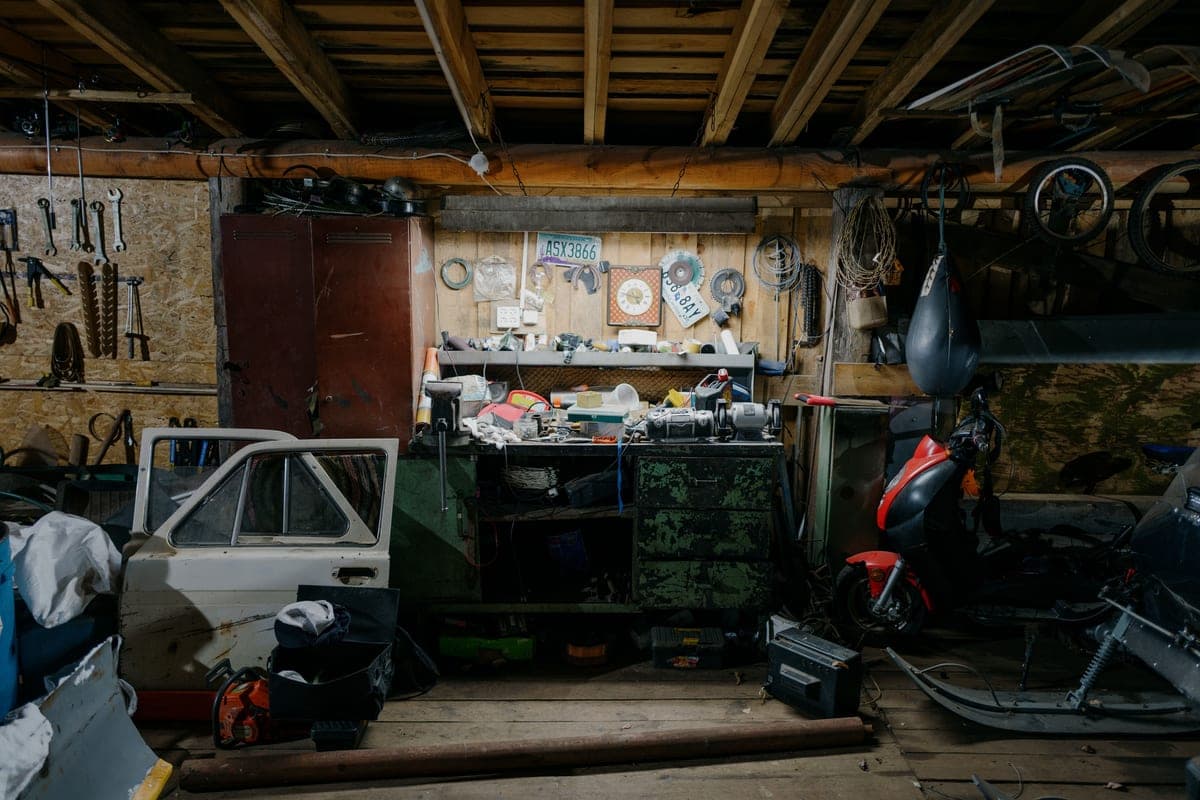
A home garage workshop with tools and equipment along the wall

Some links on this page are affiliate links. If you buy through one, Magoo Media Group earns a commission from the retailer at no extra cost to you. It never changes which product we rank first - how this site is funded.

Definition

What duty cycle actually is

Duty cycle is the proportion of a given period that a compressor's pump can run before it needs to rest. It is written as two numbers - 50/50, 70/30 - meaning the pump can run 50% or 70% of the time and must be idle for the remainder. A 100% duty cycle unit can run continuously.

The period matters as much as the ratio and is almost never stated. A 50/50 duty cycle over a 10-minute window means five minutes on, five off. Over a 60-second window it means 30 seconds on, 30 off. Manufacturers who publish a ratio without a period have told you less than they appear to.

The reason it exists is heat. A single-stage direct-drive pump gets hot fast, and oil-free pumps have no oil bath to carry heat away from the cylinder. Run one past its rating and you get thermal cutout at best, and a shortened pump life at worst.

The gap in the spec sheet

Why most brands do not publish one

Of the sixteen compressors we catalog on this site, exactly three publish anything resembling a duty cycle. California Air Tools publishes a 70/30 figure for the 10020C and a 30 to 60 minute maximum continuous run time for the 8010A. VIAIR publishes 25 minutes at 30 PSI for the 88P. Everyone else is silent.

That silence is informative. A brand that publishes a duty cycle is telling you it measured one. A brand that publishes tank gallons, MAX PSI in capital letters and nothing about how long the pump can run is choosing which questions to answer. We score compressors partly on how completely they document themselves for exactly this reason.

In the absence of a published figure, the reasonable working assumption for a consumer oil-free direct-drive unit is roughly 50% - and you should treat that as an assumption, not a fact. We will not print it as a spec for any individual model, because no manufacturer said it.

Duty cycle figures actually published by the manufacturer
CompressorPublished duty cycleAlso published
California Air Tools 10020C70/30120 s fill from empty, 25 s recovery 95 to 125 PSI
California Air Tools 8010A30-60 min max continuous run165 s fill from empty, 60 s recovery 90 to 120 PSI
VIAIR 88P (12V)25 min at 30 PSI1.47 CFM free flow at 0 PSI
Every other unit in our rosterNot publishedTank size and max PSI only

Sourced from each manufacturer's own product page - see the sources block below.

Practical effect

What it means in a garage

For burst work, duty cycle rarely bites. Filling four tires or firing a hundred brad nails puts the pump on for a couple of minutes total, well inside any rating. This is the majority of home garage use and it is why cheap compressors are genuinely adequate for most people.

For continuous work it is the binding constraint, and it arrives before the CFM constraint does. A 50% duty cycle unit running a die grinder does not slowly fade - it runs, gets hot, trips its thermal cutout, and stops until it cools. People experience this as the compressor being broken. It is the compressor being used outside its rating.

The tell is simple. If your compressor keeps up with a tool for two or three minutes and then the pressure sags and will not recover, you are past its duty cycle, not short on CFM. If it never keeps up from the first second, you are short on CFM. Different problems, different fixes.

The cheapest fix is not a bigger compressor

If you are hitting a duty-cycle wall on a compressor that otherwise has enough CFM, a larger tank plumbed in as auxiliary storage buys you more burst capacity without buying a new pump. It does nothing for genuinely continuous work, but for intermittent tools it is the cheap answer.

Our picks

Compressors with honest duty-cycle documentation

These three are the units in our roster that either publish a real duty cycle or use a pump design that sidesteps the problem. Note what you are paying for in each case - it is not always flow.

Quick picks

#ProductBest forScorePrice
1
A ten-gallon vertical oil-free air compressor on wheels in a workshop
California Air Tools 10020C5.3 CFM @ 90 / 10 gal / 125 PSI / 70 dBA5.3 CFM at 70 dBA with a published 70/30 duty cycle. The first unit here that runs a continuous-duty tool.
Running a ratchet, die grinder or touch-up gun without waiting6.2/10★★★☆☆
Check price on Amazon

#ad Disclosure - we do not publish prices we cannot verify

2
An ultra-quiet oil-free compressor with an aluminum tank and wheels
California Air Tools 8010A2.2 CFM @ 90 / 8 gal / 120 PSI / 60 dBA60 dBA with 8 gallons and a published 30-60 minute continuous run limit. The honest quiet middle ground.
A garage where the compressor runs while you are standing next to it4.9/10★★☆☆☆
Check price on Amazon

#ad Disclosure - we do not publish prices we cannot verify

3
A thirty-gallon belt-drive air compressor with a cast iron pump
DEWALT DXCMLA1983054 30-gallon5.7 CFM @ 90 / 30 gal / 155 PSI5.7 CFM, 30 gallons, oil-lubricated cast iron and belt drive. Where a garage compressor stops being disposable.
A permanent garage compressor you expect to keep for a decade7.9/10★★★★☆
Check price on Amazon

#ad Disclosure - we do not publish prices we cannot verify

Scores are computed from manufacturer-published specs by the rubric on our methodology page. Nothing here has been bench-tested, and we do not publish prices we cannot verify.

Pick 1 - California Air Tools 10020C

6.2/10★★★☆☆

California Air Tools 10020C

Best for: Running a ratchet, die grinder or touch-up gun without waiting

Verdict

5.3 CFM at 70 dBA with a published 70/30 duty cycle. The first unit here that runs a continuous-duty tool.

What it does well

  • 5.3 CFM at 90 PSI clears every published figure for ratchets, die grinders and touch-up spraying
  • 70 dBA at that output is unusual - most 5+ CFM units are far louder
  • Publishes a real 70/30 duty cycle and a 25-second recovery from 95 to 125 PSI

What it will not do

  • 82.5 lb and 14 A - it needs its own circuit and it is not a carry-it-upstairs machine
  • 125 PSI max, so a bigger tank at higher pressure still stores more per fill
How this 6.2 was calculated
MetricScoreWeightBasis
Air flow8.740%5.3 CFM at 90 PSI, on a 0.7-6 CFM scale
Stored air3.325%10 gal x 125 PSI = 1250, on a 125-3,500 scale
Noise5.615%70 dBA, on a 58-85 dBA scale
Portability1.110%82.5 lb, on a 20-90 lb scale
Spec transparency10.010%6 of 6 useful figures published (CFM at 90, CFM at 40, dBA, duty cycle, recovery, weight)
A ten-gallon vertical oil-free air compressor on wheels in a workshop

Licensed stock photo - illustrative of the category, not a photo of this unit

Check price on Amazon

#ad Disclosure - we do not publish prices we cannot verify

Published specs

California Air Tools 10020C published specifications
CFM @ 90 PSI5.3
CFM @ 40 PSI6.4
Tank10 gal
Max pressure125 PSI
Noise70 dBA
Duty cycle70/30 (manufacturer-published)
Recovery120 s empty to full; 25 s recovery 95 to 125 PSI
PumpOil-free
Motor2.0
Weight82.5 lb
Power110V, 14 A

Source: California Air Tools 10020C - product specifications

Pick 2 - California Air Tools 8010A

4.9/10★★☆☆☆

California Air Tools 8010A

Best for: A garage where the compressor runs while you are standing next to it

Verdict

60 dBA with 8 gallons and a published 30-60 minute continuous run limit. The honest quiet middle ground.

What it does well

  • 60 dBA published at 8 gallons - you can hold a conversation over it
  • Aluminum tank at 37.25 lb with a wheel kit, so it moves easily and will not rust out
  • California Air Tools publishes fill, recovery and continuous-run figures, which most brands do not

What it will not do

  • 2.2 CFM at 90 PSI is LESS than a 2.6 CFM pancake - you pay for quiet, not for air
  • 120 PSI max is the lowest ceiling in the 6-gallon-and-up group, so storage is modest
How this 4.9 was calculated
MetricScoreWeightBasis
Air flow2.840%2.2 CFM at 90 PSI, on a 0.7-6 CFM scale
Stored air2.525%8 gal x 120 PSI = 960, on a 125-3,500 scale
Noise9.315%60 dBA, on a 58-85 dBA scale
Portability7.510%37.25 lb, on a 20-90 lb scale
Spec transparency10.010%6 of 6 useful figures published (CFM at 90, CFM at 40, dBA, duty cycle, recovery, weight)
An ultra-quiet oil-free compressor with an aluminum tank and wheels

Licensed stock photo - illustrative of the category, not a photo of this unit

Check price on Amazon

#ad Disclosure - we do not publish prices we cannot verify

Published specs

California Air Tools 8010A published specifications
CFM @ 90 PSI2.2
CFM @ 40 PSI3.1
Tank8 gal
Max pressure120 PSI
Noise60 dBA
Duty cycleMax continuous running time 30-60 minutes (manufacturer-published)
Recovery165 s empty to full; 60 s recovery 90 to 120 PSI
PumpOil-free
Motor1.0 running / 2.0 peak
Weight37.25 lb
Power110V

Source: California Air Tools 8010A - product specifications

Pick 3 - DEWALT DXCMLA1983054

7.9/10★★★★☆

DEWALT DXCMLA1983054 30-gallon

Best for: A permanent garage compressor you expect to keep for a decade

Verdict

5.7 CFM, 30 gallons, oil-lubricated cast iron and belt drive. Where a garage compressor stops being disposable.

What it does well

  • 5.7 CFM at 90 PSI and 7.0 at 40 - clears ratchets, die grinders and touch-up spraying
  • Oil-lubricated belt drive runs cooler and slower than a direct-drive oil-free pump
  • 120/240V, so it can move to a 240V circuit later

What it will not do

  • Oil-lubricated means an actual maintenance routine: check and change the oil
  • 155 PSI on 30 gallons stores less than 175 PSI on 20 in some comparisons - check the math, not the tank
How this 7.9 was calculated
MetricScoreWeightBasis
Air flow9.440%5.7 CFM at 90 PSI, on a 0.7-6 CFM scale
Stored air10.025%30 gal x 155 PSI = 4650, on a 125-3,500 scale
Noise5.015%Manufacturer publishes no dBA figure - scored a neutral 5, not a guess
Portability5.010%No weight published - scored a neutral 5
Spec transparency3.310%2 of 6 useful figures published (CFM at 90, CFM at 40, dBA, duty cycle, recovery, weight)
A thirty-gallon belt-drive air compressor with a cast iron pump

Licensed stock photo - illustrative of the category, not a photo of this unit

Check price on Amazon

#ad Disclosure - we do not publish prices we cannot verify

Published specs

DEWALT DXCMLA1983054 30-gallon published specifications
CFM @ 90 PSI5.7
CFM @ 40 PSI7
Tank30 gal
Max pressure155 PSI
NoiseNot published
Duty cycleNot published
RecoveryNot published
PumpOil-lubricated
Motor1.9
WeightNot published
Power120/240V

Source: DEWALT DXCMLA1983054 30-gallon compressor - product specifications

Pump design

Oil-free versus oil-lubricated, in duty-cycle terms

An oil-lubricated pump runs in an oil bath that carries heat away from the cylinder walls and reduces friction. It runs cooler, slower and longer, and it is why every genuinely continuous-duty compressor in the world is oil-lubricated cast iron rather than oil-free aluminum.

The tradeoff is real maintenance. You check the oil, you change the oil, and you keep the unit reasonably level. An oil-free pump asks nothing of you and wears out sooner. California Air Tools is unusually honest about this, publishing a life expectancy of 3,000-plus hours before wear for its oil-free pumps.

For a home garage doing burst work, oil-free is the right answer and the maintenance-free convenience is worth more than the pump life you give up. The moment your use becomes continuous, the calculus flips entirely.

FAQ

Questions people actually ask

What does a 50/50 duty cycle mean?

The pump can run half the time and must rest the other half. Five minutes on, five minutes off over a ten-minute window. The period is as important as the ratio and is usually not stated, so treat an unstated period as a reason to be conservative.

What is a 100% duty cycle air compressor?

One whose pump can run continuously without a mandated rest period. These are almost always oil-lubricated, often two-stage, and priced accordingly. No consumer oil-free portable compressor is a genuine 100% duty cycle machine, whatever the marketing implies.

How do I know if I am exceeding my compressor's duty cycle?

The pattern is distinctive: the compressor keeps up fine for the first couple of minutes, then pressure sags and will not recover, and eventually the motor cuts out and restarts after it cools. A compressor that cannot keep up from the very first second has a CFM problem instead.

Does a bigger tank improve duty cycle?

Not directly - the pump's thermal limit is unchanged. But a bigger tank means the pump cycles less often for the same work, so in practice you spend less of your session with the pump running. For burst and intermittent tools that is a real improvement. For continuous tools it is not.

Why does my air compressor keep running and never shut off?

Usually a leak, a failed pressure switch, or a tool drawing more air than the pump produces so the cut-out pressure is never reached. It is worth diagnosing rather than living with, because a pump that never stops is a pump running far outside its duty cycle. We cover the diagnosis in a dedicated guide.

Sources

Where these numbers come from

Accessed September 2026. If a figure on this page does not match the manufacturer's current sheet, tell us at contact@psiandhose.com and we will correct and date the change - see our editorial policy.

Read next