
Skip to content
Psi & Hose

CFM & Sizing

CFM vs PSI vs SCFM

Three numbers on the same sticker, measuring three different things. Only one of them decides whether your air tool works - and it is not the one printed largest.

By Ryder M.Last updated Published
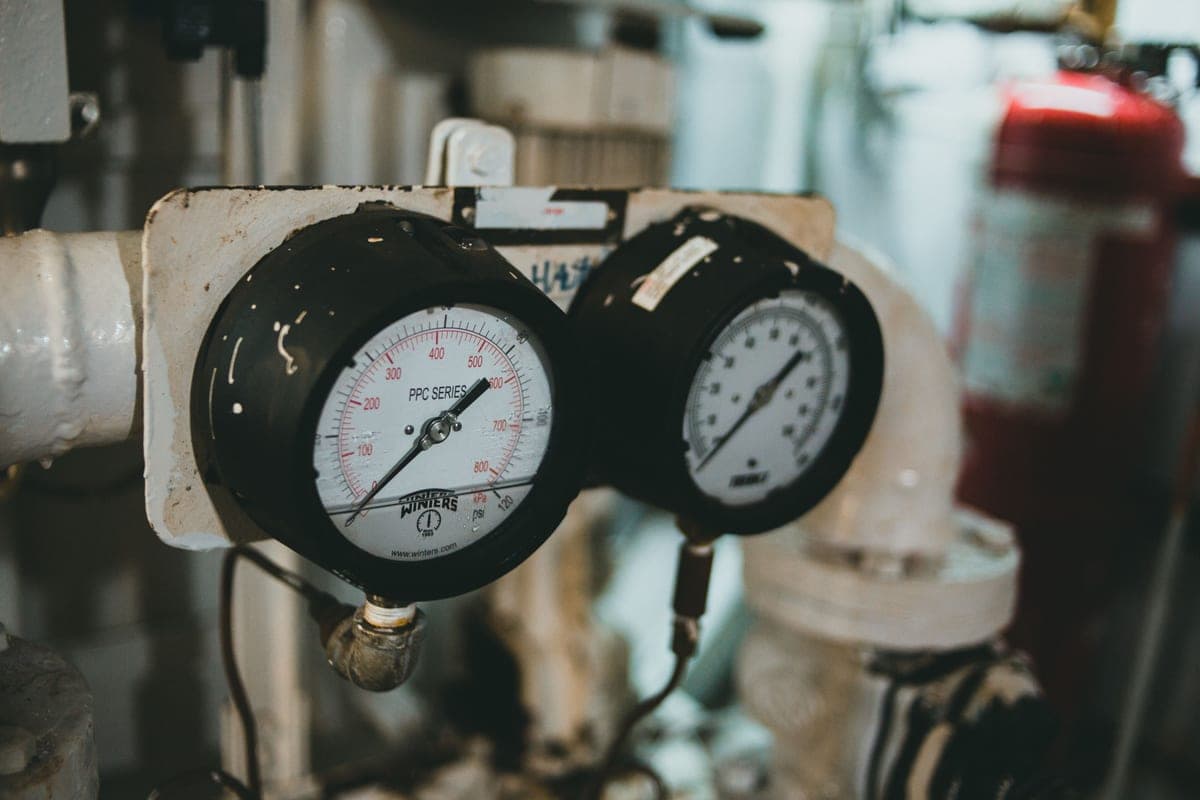
A pressure gauge on an air compressor manifold

Some links on this page are affiliate links. If you buy through one, Magoo Media Group earns a commission from the retailer at no extra cost to you. It never changes which product we rank first - how this site is funded.

Short version

The three numbers in one paragraph

PSI is pressure - how hard the air pushes. CFM is flow - how much air moves per minute. SCFM is flow corrected to a standard reference temperature, pressure and humidity, so two manufacturers' figures can be compared. Your tool needs a minimum pressure to function at all, and then it needs enough flow to keep functioning. Pressure is a threshold; flow is the constraint.

Almost every air tool in a home garage wants 90 PSI. Almost every compressor sold produces at least 120 PSI. So pressure is a solved problem for practically everyone, which is precisely why it gets printed in the largest font on the box.

The one sentence to remember

MAX PSI sells compressors. CFM at 90 PSI determines whether your tool works. If a listing shouts the first number and buries the second, that tells you something about the product.

Pressure

PSI: a threshold, not a capability

A tool has a working pressure it needs to develop its rated performance. An impact wrench is rated at 90 PSI; drop to 70 and the torque falls off sharply. A framing nailer operates across a 70 to 120 PSI range and will sink a nail anywhere in it, harder at the top.

The number on the box is MAX PSI, which is the pressure the tank can hold, not the pressure delivered to the tool. Delivered pressure is set by your regulator - you set it to 90 - and the tank pressure above that is stored energy, not extra capability.

Which is why higher MAX PSI is genuinely useful, just not for the reason the marketing implies. A 6-gallon tank at 200 PSI stores meaningfully more usable air than the same tank at 150 PSI. You still deliver 90 PSI to the tool; you just get more seconds of it.

Same tank volume, different pressure ceilings
CompressorTankMax PSIStored air index (gal x PSI)
Metabo HPT EC914S6 gal2001,200
DEWALT DWFP551266 gal165990
Porter-Cable C20026 gal150900
California Air Tools 8010A8 gal120960
Husky C201H20 gal1753,500
DEWALT DXCMLA198305430 gal1554,650

Gallons x PSI is a proxy for stored air, not a precise thermodynamic figure. It is here to show that comparing tanks by volume alone is misleading - the 8-gallon unit stores less than a 6-gallon unit at 200 PSI.

Flow

CFM: the number that actually constrains you

CFM is volumetric flow: cubic feet of air per minute. Your tool consumes air continuously while running, and if the compressor cannot supply that rate, tank pressure falls until the tool stops performing. No amount of pressure fixes a flow shortfall; it just delays it.

The important detail is that CFM is always quoted at a pressure, and it falls as pressure rises. The same pump might deliver 6.4 CFM at 40 PSI and 5.3 CFM at 90 PSI. Comparing a 40 PSI figure from one brand against a 90 PSI figure from another is the oldest apples-to-oranges trick in the category, and a surprising number of retail listings do exactly that.

Our rule on this site: every compressor is compared at 90 PSI, because 90 PSI is what tools are rated at. When a manufacturer publishes only a 40 PSI figure, we say the 90 PSI figure is not published rather than converting it ourselves.

Standardization

SCFM: CFM with the fine print removed

Air volume depends on temperature, pressure and humidity, so a raw CFM measurement taken in a cool dry lab is not the same as one taken in a hot humid one. SCFM corrects the measurement to an agreed reference condition so figures from different manufacturers can be compared.

In practice, when a consumer compressor listing says CFM and another says SCFM at the same pressure, you can compare them directly without losing anything that matters for buying decisions. The distinction is real and it matters for engineering; it does not usually change which compressor you should buy.

The Compressed Air and Gas Institute is the standards body behind the terminology, and its handbook is the reference if you want the formal definitions rather than our summary.

Our picks

Two compressors that show the tradeoff

The clearest illustration of pressure versus flow in our roster. One buys you storage through a higher ceiling; the other spends its whole engineering budget on being quiet and actually delivers less flow than a cheaper pancake. Both are good buys - for different people.

Quick picks

#ProductBest forScorePrice
1
A high-capacity pancake air compressor with a roll cage
Metabo HPT EC914S (THE TANK)4 CFM @ 90 / 6 gal / 200 PSI4.0 CFM at 90 PSI and 200 PSI max - the only 6-gallon unit here that breaks the 2.6 CFM ceiling.
Getting real CFM without moving up to a 20-gallon footprint5.1/10★★★☆☆
Check price on Amazon

#ad Disclosure - we do not publish prices we cannot verify

2
An ultra-quiet oil-free compressor with an aluminum tank and wheels
California Air Tools 8010A2.2 CFM @ 90 / 8 gal / 120 PSI / 60 dBA60 dBA with 8 gallons and a published 30-60 minute continuous run limit. The honest quiet middle ground.
A garage where the compressor runs while you are standing next to it4.9/10★★☆☆☆
Check price on Amazon

#ad Disclosure - we do not publish prices we cannot verify

Scores are computed from manufacturer-published specs by the rubric on our methodology page. Nothing here has been bench-tested, and we do not publish prices we cannot verify.

Pick 1 - Metabo HPT EC914S

5.1/10★★★☆☆

Metabo HPT EC914S (THE TANK)

Best for: Getting real CFM without moving up to a 20-gallon footprint

Verdict

4.0 CFM at 90 PSI and 200 PSI max - the only 6-gallon unit here that breaks the 2.6 CFM ceiling.

What it does well

  • 4.0 CFM at 90 PSI is 54% more air than the rest of the 6-gallon class
  • 200 PSI max means the same 6 gallons holds far more usable air
  • Clears the published average demand for a 1/2-inch impact and a 3/8-inch ratchet

What it will not do

  • 41 lb, the heaviest 6-gallon unit in the roster
  • Metabo HPT does not publish a noise figure, and high-pressure pumps are not quiet
How this 5.1 was calculated
MetricScoreWeightBasis
Air flow6.240%4 CFM at 90 PSI, on a 0.7-6 CFM scale
Stored air3.225%6 gal x 200 PSI = 1200, on a 125-3,500 scale
Noise5.015%Manufacturer publishes no dBA figure - scored a neutral 5, not a guess
Portability7.010%41 lb, on a 20-90 lb scale
Spec transparency3.310%2 of 6 useful figures published (CFM at 90, CFM at 40, dBA, duty cycle, recovery, weight)
A high-capacity pancake air compressor with a roll cage

Licensed stock photo - illustrative of the category, not a photo of this unit

Check price on Amazon

#ad Disclosure - we do not publish prices we cannot verify

Published specs

Metabo HPT EC914S (THE TANK) published specifications
CFM @ 90 PSI4
CFM @ 40 PSINot published
Tank6 gal
Max pressure200 PSI
NoiseNot published
Duty cycleNot published
RecoveryNot published
PumpOil-free
MotorNot published
Weight41 lb
Power120V

Source: Metabo HPT EC914S THE TANK - product specifications

Pick 2 - California Air Tools 8010A

4.9/10★★☆☆☆

California Air Tools 8010A

Best for: A garage where the compressor runs while you are standing next to it

Verdict

60 dBA with 8 gallons and a published 30-60 minute continuous run limit. The honest quiet middle ground.

What it does well

  • 60 dBA published at 8 gallons - you can hold a conversation over it
  • Aluminum tank at 37.25 lb with a wheel kit, so it moves easily and will not rust out
  • California Air Tools publishes fill, recovery and continuous-run figures, which most brands do not

What it will not do

  • 2.2 CFM at 90 PSI is LESS than a 2.6 CFM pancake - you pay for quiet, not for air
  • 120 PSI max is the lowest ceiling in the 6-gallon-and-up group, so storage is modest
How this 4.9 was calculated
MetricScoreWeightBasis
Air flow2.840%2.2 CFM at 90 PSI, on a 0.7-6 CFM scale
Stored air2.525%8 gal x 120 PSI = 960, on a 125-3,500 scale
Noise9.315%60 dBA, on a 58-85 dBA scale
Portability7.510%37.25 lb, on a 20-90 lb scale
Spec transparency10.010%6 of 6 useful figures published (CFM at 90, CFM at 40, dBA, duty cycle, recovery, weight)
An ultra-quiet oil-free compressor with an aluminum tank and wheels

Licensed stock photo - illustrative of the category, not a photo of this unit

Check price on Amazon

#ad Disclosure - we do not publish prices we cannot verify

Published specs

California Air Tools 8010A published specifications
CFM @ 90 PSI2.2
CFM @ 40 PSI3.1
Tank8 gal
Max pressure120 PSI
Noise60 dBA
Duty cycleMax continuous running time 30-60 minutes (manufacturer-published)
Recovery165 s empty to full; 60 s recovery 90 to 120 PSI
PumpOil-free
Motor1.0 running / 2.0 peak
Weight37.25 lb
Power110V

Source: California Air Tools 8010A - product specifications

FAQ

Questions people actually ask

What is the difference between CFM and SCFM?

CFM is a raw volumetric flow rate; SCFM is that flow corrected to a standard reference temperature, pressure and humidity so figures from different manufacturers are comparable. For choosing a home compressor, treat CFM and SCFM at the same stated pressure as interchangeable.

Is higher PSI better in an air compressor?

Only for storage. Your tools run at a regulated 90 PSI regardless, so a higher tank ceiling does not make them stronger - it means the same tank holds more usable air, so you work longer between pump cycles. A 200 PSI 6-gallon tank stores about a third more than a 150 PSI 6-gallon tank.

What does CFM mean on an air compressor?

The volume of air the pump delivers per minute, always quoted at a specific pressure. It is the number that decides which tools your compressor can actually run. Always read it at 90 PSI, because that is the pressure air tools are rated at.

Why is CFM lower at 90 PSI than at 40 PSI?

The pump has to work harder to push air against higher pressure, so it moves less of it per minute. This is normal and universal. It is also why quoting CFM at 40 PSI makes a compressor look better than it is - always compare at 90.

Sources

Where these numbers come from

Accessed September 2026. If a figure on this page does not match the manufacturer's current sheet, tell us at contact@psiandhose.com and we will correct and date the change - see our editorial policy.

Read next