Skip to content
Psi & Hose

By Job

Best air compressor for a mobile mechanic

A garage compressor is chosen on flow. A mobile one is chosen on what you can lift, what the available circuit will carry, how long the pump is rated to run, and whether you can cycle it on a driveway at half past seven in the morning.

By Ryder M.Last updated Published
A mechanic working on a vehicle with air tools laid out nearby

Some links on this page are affiliate links. If you buy through one, Magoo Media Group earns a commission from the retailer at no extra cost to you. It never changes which product we rank first - how this site is funded.

Read this first

The answer, and who it is for

For a mobile mechanic running a 1/2-inch impact, the Metabo HPT EC914S is the pick: 4.0 CFM at 90 PSI and a 200 PSI ceiling from a 6-gallon tank that weighs a published 41 lb. That combination of flow and stored pressure in something one person can lift out of a van does not exist anywhere else in our roster. If the work is lighter and you are often in someone's driveway early, the 2-gallon Makita MAC210Q at 60 dBA and 2.0 CFM is the one that does not announce you.

Mobile work inverts the usual spec priority. In a garage you buy the biggest flow figure the circuit will take and never move it again. In a van, every pound is lifted twice a day, the circuit is whatever the customer has, and a long extension lead is often the only way to reach - all of which argue for a smaller, higher-pressure, better-documented machine rather than a bigger one.

The uncomfortable truth is that no 120V portable compressor runs continuous-duty automotive tools. A 1/2-inch impact averages 4 CFM but draws a published 22 CFM at load; a die grinder is 5 to 6 CFM continuous. Burst work - lug nuts, suspension bolts, inflation, blowing off - is what a mobile compressor is for, and that covers most roadside and driveway jobs.

The three numbers to buy on

Weight, because you lift it. Published duty cycle, because a pump rated to run 70% of each hour is a different machine from one whose manufacturer prints nothing. And pressure ceiling, because stored pressure in a small tank is how you get burst capacity without buying volume you cannot carry.

The comparison

The field on published specs

Weight and duty cycle are the two columns most roundups omit, and they are the two that decide whether a machine survives mobile use. Where a manufacturer publishes no figure the cell says so.

Mobile-relevant specifications, manufacturer-published
CompressorCFM @ 90TankMax PSIWeightdBADuty cycle published
Metabo HPT EC914S4.06 gal20041 lbNot publishedNo
Makita MAC210Q2.02 gal13544 lb60No
California Air Tools 8010A2.28 gal12037.25 lb60Yes - 30 to 60 min max continuous
VIAIR 88PNot publishedNone1204.75 lbNot publishedYes - 25 min at 30 PSI
Makita MAC100Q0.71 gal13525.5 lb58No

Every figure is published by the manufacturer. See the sources block below.

Ranked

The picks

Quick picks

#ProductBest forScorePrice
1
A high-capacity pancake air compressor with a roll cage
Metabo HPT EC914S (THE TANK)4 CFM @ 90 / 6 gal / 200 PSI4.0 CFM at 90 PSI and 200 PSI max - the only 6-gallon unit here that breaks the 2.6 CFM ceiling.
Getting real CFM without moving up to a 20-gallon footprint5.1/10★★★☆☆

#ad Disclosure - we do not publish prices we cannot verify

2
A twin-stack style air compressor in a home garage
Makita MAC210Q Quiet Series2 CFM @ 90 / 2 gal / 135 PSI / 60 dBA2.0 CFM at 60 dBA. The quiet option that can actually feed a framing nailer, not just a brad gun.
Quiet nailing at a real working pace3.8/10★★☆☆☆

#ad Disclosure - we do not publish prices we cannot verify

3
An ultra-quiet oil-free compressor with an aluminum tank and wheels
California Air Tools 8010A2.2 CFM @ 90 / 8 gal / 120 PSI / 60 dBA60 dBA with 8 gallons and a published 30-60 minute continuous run limit. The honest quiet middle ground.
A garage where the compressor runs while you are standing next to it4.9/10★★☆☆☆

#ad Disclosure - we do not publish prices we cannot verify

4
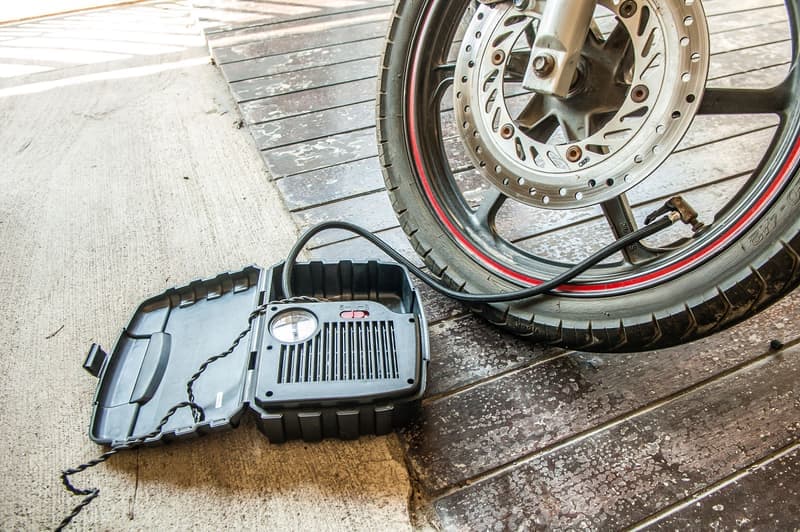
A portable 12-volt air compressor with a coiled hose beside a tire
VIAIR 88PCFM not published / no tank / 120 PSIA 12V tire inflator, not a compressor. 120 PSI max with a 25-minute duty at 30 PSI. Buy it for the car, not the garage.
Topping up and re-airing tires away from a wall outlet2.1/10★☆☆☆☆

#ad Disclosure - we do not publish prices we cannot verify

5
A compact quiet-series air compressor beside coiled air hose
Makita MAC100Q Quiet Series0.7 CFM @ 90 / 1 gal / 135 PSI / 58 dBA58 dBA published - the quietest unit in this roster. Same 0.7 CFM as the Senco, with a roll cage and a higher ceiling.
Indoor finish work where noise decides the purchase3.1/10★★☆☆☆

#ad Disclosure - we do not publish prices we cannot verify

Scores are computed from manufacturer-published specs by the rubric on our methodology page. Nothing here has been bench-tested, and we do not publish prices we cannot verify.

Pick 1 - Metabo HPT EC914S

5.1/10★★★☆☆

Metabo HPT EC914S (THE TANK)

Best for: Getting real CFM without moving up to a 20-gallon footprint

Verdict

4.0 CFM at 90 PSI and 200 PSI max - the only 6-gallon unit here that breaks the 2.6 CFM ceiling.

What it does well

  • 4.0 CFM at 90 PSI is 54% more air than the rest of the 6-gallon class
  • 200 PSI max means the same 6 gallons holds far more usable air
  • Clears the published average demand for a 1/2-inch impact and a 3/8-inch ratchet

What it will not do

  • 41 lb, the heaviest 6-gallon unit in the roster
  • Metabo HPT does not publish a noise figure, and high-pressure pumps are not quiet
How this 5.1 was calculated
MetricScoreWeightBasis
Air flow6.240%4 CFM at 90 PSI, on a 0.7-6 CFM scale
Stored air3.225%6 gal x 200 PSI = 1200, on a 125-3,500 scale
Noise5.015%Manufacturer publishes no dBA figure - scored a neutral 5, not a guess
Portability7.010%41 lb, on a 20-90 lb scale
Spec transparency3.310%2 of 6 useful figures published (CFM at 90, CFM at 40, dBA, duty cycle, recovery, weight)
A high-capacity pancake air compressor with a roll cage

Licensed stock photo - illustrative of the category, not a photo of this unit

#ad Disclosure - we do not publish prices we cannot verify

Published specs

Metabo HPT EC914S (THE TANK) published specifications
CFM @ 90 PSI4
CFM @ 40 PSINot published
Tank6 gal
Max pressure200 PSI
NoiseNot published
Duty cycleNot published
RecoveryNot published
PumpOil-free
MotorNot published
Weight41 lb
Power120V

Source: Metabo HPT EC914S THE TANK - product specifications

Pick 2 - Makita MAC210Q

3.8/10★★☆☆☆

Makita MAC210Q Quiet Series

Best for: Quiet nailing at a real working pace

Verdict

2.0 CFM at 60 dBA. The quiet option that can actually feed a framing nailer, not just a brad gun.

What it does well

  • 2.0 CFM at 90 PSI clears every nailer class on our CFM chart
  • 60 dBA published, against 78-82 dBA for the pancakes at similar output
  • Fills the 2-gallon tank from empty in about 65 seconds

What it will not do

  • 44 lb - heavier than a 6-gallon pancake with more tank
  • 2 gallons of storage means automotive burst work drains it fast
How this 3.8 was calculated
MetricScoreWeightBasis
Air flow2.540%2 CFM at 90 PSI, on a 0.7-6 CFM scale
Stored air0.425%2 gal x 135 PSI = 270, on a 125-3,500 scale
Noise9.315%60 dBA, on a 58-85 dBA scale
Portability6.610%44 lb, on a 20-90 lb scale
Spec transparency6.710%4 of 6 useful figures published (CFM at 90, CFM at 40, dBA, duty cycle, recovery, weight)
A twin-stack style air compressor in a home garage

Licensed stock photo - illustrative of the category, not a photo of this unit

#ad Disclosure - we do not publish prices we cannot verify

Published specs

Makita MAC210Q Quiet Series published specifications
CFM @ 90 PSI2
CFM @ 40 PSINot published
Tank2 gal
Max pressure135 PSI
Noise60 dBA
Duty cycleNot published
Recoveryabout 65 seconds from empty
PumpOil-free
Motor1.0
Weight44 lb
Power120V

Source: Makita MAC210Q - product specifications

Pick 3 - California Air Tools 8010A

4.9/10★★☆☆☆

California Air Tools 8010A

Best for: A garage where the compressor runs while you are standing next to it

Verdict

60 dBA with 8 gallons and a published 30-60 minute continuous run limit. The honest quiet middle ground.

What it does well

  • 60 dBA published at 8 gallons - you can hold a conversation over it
  • Aluminum tank at 37.25 lb with a wheel kit, so it moves easily and will not rust out
  • California Air Tools publishes fill, recovery and continuous-run figures, which most brands do not

What it will not do

  • 2.2 CFM at 90 PSI is LESS than a 2.6 CFM pancake - you pay for quiet, not for air
  • 120 PSI max is the lowest ceiling in the 6-gallon-and-up group, so storage is modest
How this 4.9 was calculated
MetricScoreWeightBasis
Air flow2.840%2.2 CFM at 90 PSI, on a 0.7-6 CFM scale
Stored air2.525%8 gal x 120 PSI = 960, on a 125-3,500 scale
Noise9.315%60 dBA, on a 58-85 dBA scale
Portability7.510%37.25 lb, on a 20-90 lb scale
Spec transparency10.010%6 of 6 useful figures published (CFM at 90, CFM at 40, dBA, duty cycle, recovery, weight)
An ultra-quiet oil-free compressor with an aluminum tank and wheels

Licensed stock photo - illustrative of the category, not a photo of this unit

#ad Disclosure - we do not publish prices we cannot verify

Published specs

California Air Tools 8010A published specifications
CFM @ 90 PSI2.2
CFM @ 40 PSI3.1
Tank8 gal
Max pressure120 PSI
Noise60 dBA
Duty cycleMax continuous running time 30-60 minutes (manufacturer-published)
Recovery165 s empty to full; 60 s recovery 90 to 120 PSI
PumpOil-free
Motor1.0 running / 2.0 peak
Weight37.25 lb
Power110V

Source: California Air Tools 8010A - product specifications

Pick 4 - VIAIR 88P

2.1/10★☆☆☆☆

VIAIR 88P

Best for: Topping up and re-airing tires away from a wall outlet

Verdict

A 12V tire inflator, not a compressor. 120 PSI max with a 25-minute duty at 30 PSI. Buy it for the car, not the garage.

What it does well

  • 120 PSI max working pressure covers car, truck and trailer tires
  • 1.47 CFM free flow at 0 PSI; about 1.25 CFM at 30 PSI - the pressure tires actually live at
  • 4.75 lb with a 10 ft power cord and 16 ft air hose

What it will not do

  • No tank, so it cannot run any air tool at all - not one
  • 20 A draw and a published 25-minute duty at 30 PSI: four tires, then let it cool
How this 2.1 was calculated
MetricScoreWeightBasis
Air flow0.040%No CFM at 90 PSI published - scored zero rather than guessed
Stored air0.025%0 gal x 120 PSI = 0, on a 125-3,500 scale
Noise5.015%Manufacturer publishes no dBA figure - scored a neutral 5, not a guess
Portability10.010%4.75 lb, on a 20-90 lb scale
Spec transparency3.310%2 of 6 useful figures published (CFM at 90, CFM at 40, dBA, duty cycle, recovery, weight)
A portable 12-volt air compressor with a coiled hose beside a tire

Licensed stock photo - illustrative of the category, not a photo of this unit

#ad Disclosure - we do not publish prices we cannot verify

Published specs

VIAIR 88P published specifications
CFM @ 90 PSINot published
CFM @ 40 PSINot published
TankNone (direct drive)
Max pressure120 PSI
NoiseNot published
Duty cycle25 min at 30 PSI (manufacturer-published)
RecoveryNot published
PumpOil-free
Motor12V DC, 20 A max draw
Weight4.75 lb
Power12V DC

Source: VIAIR 88P portable compressor - product specifications

Pick 5 - Makita MAC100Q

3.1/10★★☆☆☆

Makita MAC100Q Quiet Series

Best for: Indoor finish work where noise decides the purchase

Verdict

58 dBA published - the quietest unit in this roster. Same 0.7 CFM as the Senco, with a roll cage and a higher ceiling.

What it does well

  • 58 dBA is the lowest published figure of any compressor we list
  • 135 PSI max gives you more usable storage than the 125 PSI class
  • 1,750 RPM motor and roll-cage construction

What it will not do

  • 0.7 CFM at 90 PSI - nailers and inflation only
  • Costs meaningfully more than a 6-gallon pancake that moves four times the air
How this 3.1 was calculated
MetricScoreWeightBasis
Air flow0.040%0.7 CFM at 90 PSI, on a 0.7-6 CFM scale
Stored air0.025%1 gal x 135 PSI = 135, on a 125-3,500 scale
Noise10.015%58 dBA, on a 58-85 dBA scale
Portability9.210%25.5 lb, on a 20-90 lb scale
Spec transparency6.710%4 of 6 useful figures published (CFM at 90, CFM at 40, dBA, duty cycle, recovery, weight)
A compact quiet-series air compressor beside coiled air hose

Licensed stock photo - illustrative of the category, not a photo of this unit

#ad Disclosure - we do not publish prices we cannot verify

Published specs

Makita MAC100Q Quiet Series published specifications
CFM @ 90 PSI0.7
CFM @ 40 PSI1.2
Tank1 gal
Max pressure135 PSI
Noise58 dBA
Duty cycleNot published
RecoveryNot published
PumpOil-free
Motor0.5
Weight25.5 lb
Power120V

Source: Makita MAC100Q - product specifications

The number checked

What a 4.0 CFM portable actually runs

This verdict comes from the same cited tool-demand dataset as our CFM chart and calculator, run against the top pick's published 4.0 CFM. It is the part of the decision most mobile buyers find out about after the purchase.

Metabo HPT EC914S (THE TANK): what it runs

Delivered flow: 4 CFM at 90 PSI. We call a tool covered when delivered flow clears its highest published demand plus a 25% margin.

Runs it (3)

  • Tire inflationYes - needs 2 CFM, intermittent duty
  • Blow gun / dusting gunYes - needs 3 CFM, intermittent duty
  • Impact wrench, 1/2"In bursts only - needs 5 CFM, burst duty

Does not run it (4)

  • Air ratchet, 3/8"No - needs 4 CFM, intermittent duty
  • Air hammer / chiselNo - needs 4 CFM, intermittent duty
  • Die grinder, 1/4"No - needs 6 CFM, continuous duty
  • Cut-off tool, 3 inchNo - needs 10 CFM, continuous duty

Demand figures from the air tool CFM chart, which cites every one of them.

Power

The circuit problem nobody warns you about

A compressor motor draws heavily at startup, far above its running figure, and it has to do that against whatever resistance sits between it and the panel. On mobile work that resistance is usually a long extension lead on an unknown circuit, which is the single most common cause of a machine that trips breakers at one address and behaves perfectly at another.

The practical rules are short. Plug directly into the outlet where you can. Where you cannot, use the shortest and heaviest-gauge cord that will reach rather than the one already in the van. Do not chain two cords. And know your machine's draw - the California Air Tools 10020C publishes 14 amps at 110V, which is most of a 15 amp circuit before anything else is plugged in.

This is also an argument for the quiet, low-RPM machines. A 58 to 60 dBA compressor gets that figure from an induction motor turning slowly, and a motor turning slowly is a gentler startup load as well as a quieter one. On a customer's driveway both properties are worth something.

dBA

Noise, because you work where people live

The decibel spread across our roster is larger than most buyers expect: 58 dBA at the quiet end, 83 at the loud end. The quiet machines are not quiet by insulation, they are quiet because the motor turns slowly - and the loud ones are loud for the same reason in reverse. That makes the noise figure a useful proxy for how hard the machine is working.

For a mobile mechanic the figure is also a business consideration. A compressor that cycles at 83 dBA outside a house early in the morning is a conversation you will have. The Makita MAC210Q at 60 dBA and the California Air Tools 8010A at 60 dBA are the two machines here that let you start early without one.

The honest cost of quiet is flow. The 60 dBA machines here deliver 2.0 and 2.2 CFM; the 4.0 CFM machine publishes no noise figure at all, which in this category usually means it is not a selling point. You are choosing which constraint you would rather work around.

What else to pack

The hose matters more in a van than in a garage

A hose is a restriction, and the loss grows as diameter falls and length rises. In a garage you can mount a reel and forget about it. On mobile work the hose gets dragged across cold concrete, coiled wet, and thrown back in the van, which is exactly the duty cycle that kills PVC hose and exactly where hybrid polymer earns its money - 300 PSI at 70F, flexible from -40F to 140F, and effectively no coil memory.

Stay at 3/8-inch inside diameter for automotive work. Ingersoll Rand specifies a 3/8-inch minimum hose ID for its 231C impact wrench, and a 1/4-inch hose will throttle it no matter what the compressor delivers. Keep a 1/4-inch coil for trim and inflation if you want the lighter hose in hand, but do not run an impact through it.

Standardize your couplers on one pattern and throw the rest out. Mixing the visually similar M-STYLE, ARO and Lincoln patterns is the classic garage mistake, and it is worse on mobile work where the wrong plug means a trip back to the van.

FAQ

Questions people actually ask

What is the best air compressor for a mobile mechanic?

A 6-gallon 200 PSI unit delivering 4.0 CFM at 90 PSI and weighing a published 41 lb is the strongest combination of flow, stored pressure and portability in our roster. If early-morning noise is a constraint, a 60 dBA 2-gallon machine at 2.0 CFM is the better trade.

Can a portable compressor run a 1/2 inch impact wrench?

In bursts, yes. The Ingersoll Rand 231C publishes 4.2 CFM average at 90 PSI, which a 4.0 CFM portable broadly keeps up with for lug nuts and suspension bolts. It also publishes 22 CFM at load, so a held trigger will outrun any portable compressor made.

What size compressor do I need for mobile tire service?

Inflation itself is 2 CFM per both of our cited references, so flow is not the constraint - pressure ceiling and duty cycle are. For light-truck pressures choose a 150 PSI or higher machine, and if you are working away from a wall outlet entirely, a 12V inflator with a published duty cycle is the honest tool.

Why does my compressor trip the breaker at customer sites but not at home?

Startup current meeting an unknown circuit through a long extension cord. Plug directly into the outlet where possible, use the shortest heavy-gauge cord that reaches, never chain two cords, and know your machine's amp draw - 14 amps at 110V is most of a 15 amp circuit on its own.

How quiet does a mobile compressor need to be?

Quiet enough that cycling it on a residential driveway early in the morning is not an issue, which in practice means the 58 to 60 dBA class. The cost is flow: those machines publish 0.7 to 2.2 CFM, against 4.0 for the loudest machine here.

Is a tankless 12V compressor enough for mobile work?

Only for inflation. It has no tank, so it cannot run any air tool at all. It is an excellent second machine to keep in the vehicle alongside a tanked compressor, not a replacement for one.

Sources

Where these numbers come from

Accessed September 2026. If a figure on this page does not match the manufacturer's current sheet, tell us at contact@psiandhose.com and we will correct and date the change - see our editorial policy.

Read next