Skip to content
Psi & Hose

By Job

Best air compressor for truck tires

A passenger car asks for 35 PSI. A light truck or trailer tire asks for 65 to 80. That single number moves the whole decision onto the pressure ceiling and the duty cycle, and it eliminates machines that are perfectly good for cars.

By Ryder M.Last updated Published
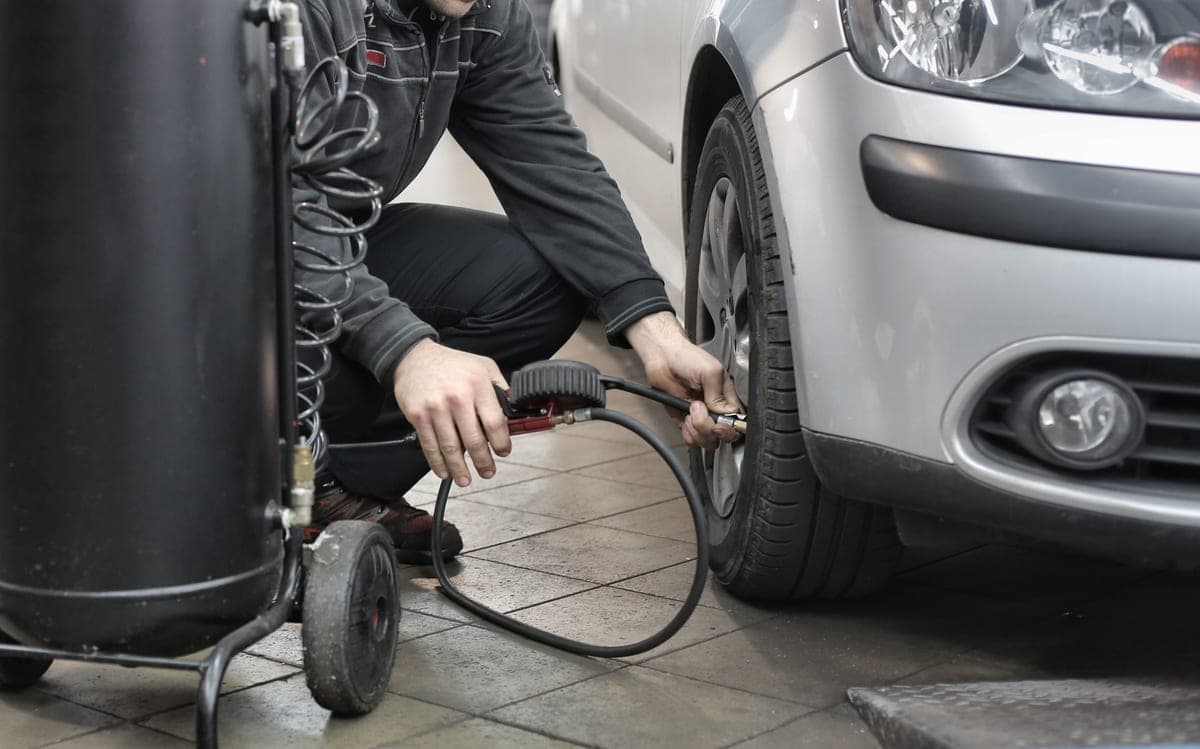
A tire being inflated with an air chuck on a garage floor

Some links on this page are affiliate links. If you buy through one, Magoo Media Group earns a commission from the retailer at no extra cost to you. It never changes which product we rank first - how this site is funded.

Read this first

The answer, and who it is for

For truck tires in a garage, the 20-gallon Husky C201H is the pick: 175 PSI maximum and 4.0 CFM at 90 PSI, which means it stores air well above anything a tire needs and refills four of them without stalling. If you want the same job done at the roadside instead of at home, the VIAIR 88P is the answer - 120 PSI maximum, 12V, 4.75 lb, and it lives in the truck rather than in the garage.

The reason this is a different page from our car-tire roundup is one number. Passenger tires run around 35 PSI. Light-truck and trailer tires commonly run 65 to 80 PSI, and some LT load ranges go higher - check the sidewall and the door-jamb placard on your own vehicle, because the tire's maximum and the vehicle's recommendation are two different figures. At 80 PSI you are asking a compressor to work much closer to its cut-out pressure, and a machine with a 120 PSI ceiling has far less usable headroom than its spec sheet suggests.

Air volume, for once, is not the problem. Both of our cited references put tire inflation at 2 CFM, and almost every compressor on this site beats that comfortably. What bites is pressure headroom and how long the pump can keep running.

Why the pressure ceiling matters more than CFM here

A compressor's tank pressure falls as you draw air out, and it stops delivering usefully once tank pressure approaches the pressure you are trying to reach. A 175 PSI tank filling an 80 PSI tire has 95 PSI of working margin. A 120 PSI tank filling the same tire has 40 - so the pump cycles back on almost immediately and you spend the job waiting on it.

The comparison

The field on published specs

Everything below is the manufacturer's own published figure. Nothing on this page has been bench-tested by us, and where a brand publishes no number the cell says so rather than carrying a guess.

Truck-tire relevant specifications, manufacturer-published
CompressorMax PSICFM @ 90TankDuty cycle publishedWeight
Husky C201H1754.020 galNoNot published
Metabo HPT EC914S2004.06 galNo41 lb
VIAIR 88P120Not publishedNoneYes - 25 min at 30 PSI4.75 lb
California Air Tools 10020C1255.310 galYes - 70/3082.5 lb
Porter-Cable C20021502.66 galNoNot published

Every figure is published by the manufacturer. See the sources block below.

Ranked

The picks

Quick picks

#ProductBest forScorePrice
1
A twenty-gallon vertical air compressor standing against a garage wall
Husky C201H 20-gallon4 CFM @ 90 / 20 gal / 175 PSI / 83 dBA4.0 CFM with 20 gallons at 175 PSI. The cheapest way to buy STORAGE rather than flow.
Burst automotive work where tank volume, not CFM, is the limit6.3/10★★★☆☆

#ad Disclosure - we do not publish prices we cannot verify

2
A high-capacity pancake air compressor with a roll cage
Metabo HPT EC914S (THE TANK)4 CFM @ 90 / 6 gal / 200 PSI4.0 CFM at 90 PSI and 200 PSI max - the only 6-gallon unit here that breaks the 2.6 CFM ceiling.
Getting real CFM without moving up to a 20-gallon footprint5.1/10★★★☆☆

#ad Disclosure - we do not publish prices we cannot verify

3
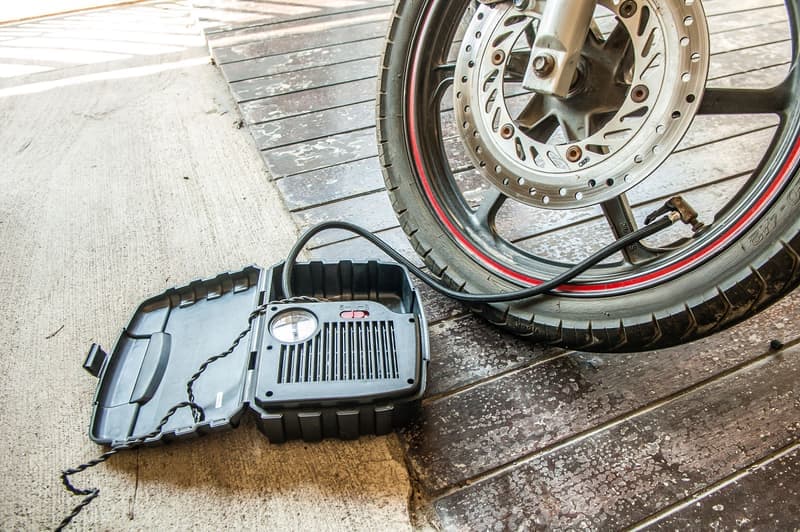
A portable 12-volt air compressor with a coiled hose beside a tire
VIAIR 88PCFM not published / no tank / 120 PSIA 12V tire inflator, not a compressor. 120 PSI max with a 25-minute duty at 30 PSI. Buy it for the car, not the garage.
Topping up and re-airing tires away from a wall outlet2.1/10★☆☆☆☆

#ad Disclosure - we do not publish prices we cannot verify

4
A ten-gallon vertical oil-free air compressor on wheels in a workshop
California Air Tools 10020C5.3 CFM @ 90 / 10 gal / 125 PSI / 70 dBA5.3 CFM at 70 dBA with a published 70/30 duty cycle. The first unit here that runs a continuous-duty tool.
Running a ratchet, die grinder or touch-up gun without waiting6.2/10★★★☆☆

#ad Disclosure - we do not publish prices we cannot verify

5
A red six-gallon pancake air compressor on a garage floor
Porter-Cable C20022.6 CFM @ 90 / 6 gal / 150 PSIThe default answer to 'cheapest useful compressor'. 6 gallons, 2.6 CFM, 150 PSI, and it has been the same machine for years.
A first compressor for nailing, inflation and burst automotive work3.6/10★★☆☆☆

#ad Disclosure - we do not publish prices we cannot verify

Scores are computed from manufacturer-published specs by the rubric on our methodology page. Nothing here has been bench-tested, and we do not publish prices we cannot verify.

Pick 1 - Husky C201H

6.3/10★★★☆☆

Husky C201H 20-gallon

Best for: Burst automotive work where tank volume, not CFM, is the limit

Verdict

4.0 CFM with 20 gallons at 175 PSI. The cheapest way to buy STORAGE rather than flow.

What it does well

  • 20 gallons at 175 PSI is roughly six times the stored air of a 6-gallon 150 PSI pancake
  • 4.0 CFM at 90 PSI and 5.2 at 40 - enough to recover between bursts instead of chasing you
  • Vertical footprint takes a corner instead of floor space

What it will not do

  • 83 dBA published and a 7-minute fill from empty - plan to switch it on before you start
  • Oil-free at 20 gallons means a shorter pump life than a cast-iron oil-lubricated unit
How this 6.3 was calculated
MetricScoreWeightBasis
Air flow6.240%4 CFM at 90 PSI, on a 0.7-6 CFM scale
Stored air10.025%20 gal x 175 PSI = 3500, on a 125-3,500 scale
Noise0.715%83 dBA, on a 58-85 dBA scale
Portability5.010%No weight published - scored a neutral 5
Spec transparency6.710%4 of 6 useful figures published (CFM at 90, CFM at 40, dBA, duty cycle, recovery, weight)
A twenty-gallon vertical air compressor standing against a garage wall

Licensed stock photo - illustrative of the category, not a photo of this unit

#ad Disclosure - we do not publish prices we cannot verify

Published specs

Husky C201H 20-gallon published specifications
CFM @ 90 PSI4
CFM @ 40 PSI5.2
Tank20 gal
Max pressure175 PSI
Noise83 dBA
Duty cycleNot published
Recoveryabout 7 minutes to fill from empty
PumpOil-free
Motor1.3 running
WeightNot published
Power120V

Source: Husky C201H 20-gallon compressor - retailer specification listing

Pick 2 - Metabo HPT EC914S

5.1/10★★★☆☆

Metabo HPT EC914S (THE TANK)

Best for: Getting real CFM without moving up to a 20-gallon footprint

Verdict

4.0 CFM at 90 PSI and 200 PSI max - the only 6-gallon unit here that breaks the 2.6 CFM ceiling.

What it does well

  • 4.0 CFM at 90 PSI is 54% more air than the rest of the 6-gallon class
  • 200 PSI max means the same 6 gallons holds far more usable air
  • Clears the published average demand for a 1/2-inch impact and a 3/8-inch ratchet

What it will not do

  • 41 lb, the heaviest 6-gallon unit in the roster
  • Metabo HPT does not publish a noise figure, and high-pressure pumps are not quiet
How this 5.1 was calculated
MetricScoreWeightBasis
Air flow6.240%4 CFM at 90 PSI, on a 0.7-6 CFM scale
Stored air3.225%6 gal x 200 PSI = 1200, on a 125-3,500 scale
Noise5.015%Manufacturer publishes no dBA figure - scored a neutral 5, not a guess
Portability7.010%41 lb, on a 20-90 lb scale
Spec transparency3.310%2 of 6 useful figures published (CFM at 90, CFM at 40, dBA, duty cycle, recovery, weight)
A high-capacity pancake air compressor with a roll cage

Licensed stock photo - illustrative of the category, not a photo of this unit

#ad Disclosure - we do not publish prices we cannot verify

Published specs

Metabo HPT EC914S (THE TANK) published specifications
CFM @ 90 PSI4
CFM @ 40 PSINot published
Tank6 gal
Max pressure200 PSI
NoiseNot published
Duty cycleNot published
RecoveryNot published
PumpOil-free
MotorNot published
Weight41 lb
Power120V

Source: Metabo HPT EC914S THE TANK - product specifications

Pick 3 - VIAIR 88P

2.1/10★☆☆☆☆

VIAIR 88P

Best for: Topping up and re-airing tires away from a wall outlet

Verdict

A 12V tire inflator, not a compressor. 120 PSI max with a 25-minute duty at 30 PSI. Buy it for the car, not the garage.

What it does well

  • 120 PSI max working pressure covers car, truck and trailer tires
  • 1.47 CFM free flow at 0 PSI; about 1.25 CFM at 30 PSI - the pressure tires actually live at
  • 4.75 lb with a 10 ft power cord and 16 ft air hose

What it will not do

  • No tank, so it cannot run any air tool at all - not one
  • 20 A draw and a published 25-minute duty at 30 PSI: four tires, then let it cool
How this 2.1 was calculated
MetricScoreWeightBasis
Air flow0.040%No CFM at 90 PSI published - scored zero rather than guessed
Stored air0.025%0 gal x 120 PSI = 0, on a 125-3,500 scale
Noise5.015%Manufacturer publishes no dBA figure - scored a neutral 5, not a guess
Portability10.010%4.75 lb, on a 20-90 lb scale
Spec transparency3.310%2 of 6 useful figures published (CFM at 90, CFM at 40, dBA, duty cycle, recovery, weight)
A portable 12-volt air compressor with a coiled hose beside a tire

Licensed stock photo - illustrative of the category, not a photo of this unit

#ad Disclosure - we do not publish prices we cannot verify

Published specs

VIAIR 88P published specifications
CFM @ 90 PSINot published
CFM @ 40 PSINot published
TankNone (direct drive)
Max pressure120 PSI
NoiseNot published
Duty cycle25 min at 30 PSI (manufacturer-published)
RecoveryNot published
PumpOil-free
Motor12V DC, 20 A max draw
Weight4.75 lb
Power12V DC

Source: VIAIR 88P portable compressor - product specifications

Pick 4 - California Air Tools 10020C

6.2/10★★★☆☆

California Air Tools 10020C

Best for: Running a ratchet, die grinder or touch-up gun without waiting

Verdict

5.3 CFM at 70 dBA with a published 70/30 duty cycle. The first unit here that runs a continuous-duty tool.

What it does well

  • 5.3 CFM at 90 PSI clears every published figure for ratchets, die grinders and touch-up spraying
  • 70 dBA at that output is unusual - most 5+ CFM units are far louder
  • Publishes a real 70/30 duty cycle and a 25-second recovery from 95 to 125 PSI

What it will not do

  • 82.5 lb and 14 A - it needs its own circuit and it is not a carry-it-upstairs machine
  • 125 PSI max, so a bigger tank at higher pressure still stores more per fill
How this 6.2 was calculated
MetricScoreWeightBasis
Air flow8.740%5.3 CFM at 90 PSI, on a 0.7-6 CFM scale
Stored air3.325%10 gal x 125 PSI = 1250, on a 125-3,500 scale
Noise5.615%70 dBA, on a 58-85 dBA scale
Portability1.110%82.5 lb, on a 20-90 lb scale
Spec transparency10.010%6 of 6 useful figures published (CFM at 90, CFM at 40, dBA, duty cycle, recovery, weight)
A ten-gallon vertical oil-free air compressor on wheels in a workshop

Licensed stock photo - illustrative of the category, not a photo of this unit

#ad Disclosure - we do not publish prices we cannot verify

Published specs

California Air Tools 10020C published specifications
CFM @ 90 PSI5.3
CFM @ 40 PSI6.4
Tank10 gal
Max pressure125 PSI
Noise70 dBA
Duty cycle70/30 (manufacturer-published)
Recovery120 s empty to full; 25 s recovery 95 to 125 PSI
PumpOil-free
Motor2.0
Weight82.5 lb
Power110V, 14 A

Source: California Air Tools 10020C - product specifications

Pick 5 - Porter-Cable C2002

3.6/10★★☆☆☆

Porter-Cable C2002

Best for: A first compressor for nailing, inflation and burst automotive work

Verdict

The default answer to 'cheapest useful compressor'. 6 gallons, 2.6 CFM, 150 PSI, and it has been the same machine for years.

What it does well

  • 2.6 CFM at 90 PSI and 3.7 at 40 - the most common spec in the budget class for a reason
  • 6-gallon tank at 150 PSI stores enough air for real bursts of impact work
  • Two couplers, so two people or two tools without swapping

What it will not do

  • Porter-Cable does not publish a noise figure for it; the class sits in the high 70s to low 80s dBA
  • 2.6 CFM will not run a ratchet, die grinder or sander continuously
How this 3.6 was calculated
MetricScoreWeightBasis
Air flow3.640%2.6 CFM at 90 PSI, on a 0.7-6 CFM scale
Stored air2.325%6 gal x 150 PSI = 900, on a 125-3,500 scale
Noise5.015%Manufacturer publishes no dBA figure - scored a neutral 5, not a guess
Portability5.010%No weight published - scored a neutral 5
Spec transparency3.310%2 of 6 useful figures published (CFM at 90, CFM at 40, dBA, duty cycle, recovery, weight)
A red six-gallon pancake air compressor on a garage floor

Licensed stock photo - illustrative of the category, not a photo of this unit

#ad Disclosure - we do not publish prices we cannot verify

Published specs

Porter-Cable C2002 published specifications
CFM @ 90 PSI2.6
CFM @ 40 PSI3.7
Tank6 gal
Max pressure150 PSI
NoiseNot published
Duty cycleNot published
RecoveryNot published
PumpOil-free
Motor0.8
WeightNot published
Power120V

Source: Porter-Cable C2002 - product specifications

Pressure vs volume

Why the 200 PSI six-gallon is the dark horse

The Metabo HPT EC914S publishes 200 PSI from a 6-gallon tank, which is the highest ceiling in our whole roster and 25 PSI above the 20-gallon Husky. Stored energy in a tank is a function of volume and pressure together, so a small tank at a very high pressure holds far more usable air than its gallon figure implies - and when the job is inflation, usable air above 80 PSI is exactly what you need.

It also delivers 4.0 CFM at 90 PSI, matching the 20-gallon machine, from a unit that weighs a published 41 lb. For someone who inflates truck tires occasionally and wants a compressor they can also carry to a job, this is the most interesting machine on the page.

What it will not do is cover sustained demand the way a bigger tank does. Six gallons is six gallons; once you have drawn it down the pump is your pace. For four truck tires that is fine. For four truck tires plus a trailer plus an air tool afterwards, the 20-gallon is the one that does not make you wait.

Away from the wall

The 12V option, and its honest limit

The VIAIR 88P is not a compressor in the garage sense and we are not going to describe it as one. It has no tank, so it cannot run any air tool at all. What it has is 120 PSI maximum working pressure, a published 1.47 CFM of free flow at 0 PSI and about 1.25 CFM at 30 PSI, a 10 ft power cord and a 16 ft air hose, in a 4.75 lb package that runs off the vehicle's own electrical system.

VIAIR publishes its duty cycle, which almost nothing else in this class does: 25 minutes at 30 PSI, with a 20 amp maximum draw. Read that as a working instruction rather than a flaw. Inflating at 65 to 80 PSI is harder work than inflating at 30, so the honest expectation is a few tires and then a cooling break - which is exactly what re-airing after a trail run or topping up a trailer actually looks like.

If your entire reason for wanting a compressor is truck tires, this is the machine to buy and we would rather say so than sell you a garage unit you have to drive the truck to. If you also want to run an impact to rotate those tires, it cannot help you and you want a tank.

The number checked

What these machines run besides tires

Nobody buys a 20-gallon compressor only for tires. The verdict below is generated from the same cited tool-demand dataset that drives our CFM chart and calculator, so it agrees with every other page on this site. It is a verdict on the 20-gallon Husky at its published 4.0 CFM.

Husky C201H 20-gallon: what it runs

Delivered flow: 4 CFM at 90 PSI. We call a tool covered when delivered flow clears its highest published demand plus a 25% margin.

Runs it (3)

  • Tire inflationYes - needs 2 CFM, intermittent duty
  • Blow gun / dusting gunYes - needs 3 CFM, intermittent duty
  • Impact wrench, 1/2"In bursts only - needs 5 CFM, burst duty

Does not run it (4)

  • Air ratchet, 3/8"No - needs 4 CFM, intermittent duty
  • Air hammer / chiselNo - needs 4 CFM, intermittent duty
  • Die grinder, 1/4"No - needs 6 CFM, continuous duty
  • Orbital / DA sander, 6 inchNo - needs 10 CFM, continuous duty

Demand figures from the air tool CFM chart, which cites every one of them.

Practical

How to actually do the job

  1. 01Find the right number before you touch the compressor. The pressure stamped on the tire sidewall is that tire's maximum, not your target. The figure on the driver's door jamb placard is the vehicle manufacturer's recommendation, and that is the one to inflate to - loaded and unloaded figures for light trucks are often listed separately.
  2. 02Check pressure cold. Tires warm up as you drive and the reading rises with them, so a tire checked after a highway run reads high and you will under-inflate it. First thing in the morning, before the vehicle moves, is the honest reading.
  3. 03Set the regulator above your target, not at it. The regulator is what the hose sees, and you want the compressor delivering comfortably above 80 PSI so the fill does not crawl at the end. Your gauge at the chuck is what decides when to stop.
  4. 04Use a 3/8-inch hose if you have one. A 1/4-inch hose is not a disaster on an inflation job because the volumes are low, but 3/8-inch fills faster and is the diameter you want for everything else you will do with the machine.
  5. 05Drain the tank afterwards. Compressing air condenses the water in it, and that water sits in the bottom of the tank and rusts it from the inside. This is the maintenance step that decides whether the machine lasts, and it takes ten seconds.

Being honest

What we would not buy for this job

A one-gallon trim compressor. The Senco PC1010 and Makita MAC100Q are excellent machines for brad nailing and both publish 0.7 CFM at 90 PSI with ceilings of 125 and 135 PSI. They will inflate a truck tire eventually, in the sense that a bicycle pump will. They are not the tool for it.

A 120 PSI machine, if truck tires are the main job. The California Air Tools 10020C is the strongest compressor on this page on raw flow at 5.3 CFM and its 70/30 duty cycle is the only full duty statement in the group - but its 125 PSI ceiling leaves 45 PSI of margin over an 80 PSI tire, and at 82.5 lb it is not moving. Buy it because you want a quiet 10-gallon shop compressor that also does tires, not because tires are the reason.

Anything sold on peak horsepower with no published CFM at 90 PSI. Across this whole category, a listing that shouts about horsepower or maximum PSI while staying silent on delivered flow is optimizing for the number that sells rather than the number that works.

FAQ

Questions people actually ask

What size air compressor do I need for truck tires?

Volume is not the constraint - both of our cited references put tire inflation at 2 CFM, which almost every compressor beats. Pressure ceiling is the constraint. For 65 to 80 PSI truck tires, buy a machine with a 150 PSI or higher cut-out so you keep real working margin; a 175 PSI 20-gallon unit is the comfortable answer.

Can a pancake compressor inflate truck tires?

Yes. A 6-gallon 150 PSI pancake at 2.6 CFM has enough pressure headroom and far more flow than inflation needs. It will cycle more than a 20-gallon unit will on a four-tire job, and that is the only practical difference.

Is a 12V compressor enough for truck tires?

For topping up and re-airing, yes - and it has the advantage of being in the truck. The VIAIR 88P publishes 120 PSI maximum and a 25-minute duty cycle at 30 PSI, so expect to work in stints. It has no tank, so it cannot run any air tool.

What PSI should truck tires be?

Use the figure on the driver's door jamb placard, not the maximum stamped on the tire sidewall. Light trucks often have separate loaded and unloaded recommendations. Check the pressure cold, before the vehicle has been driven, because warm tires read high.

Do I need a 20-gallon compressor just for tires?

No. You need it if you also want to run air tools without waiting on the pump. For inflation alone, a 150 PSI pancake or a 12V inflator does the job, and the 20-gallon buys you headroom for the next thing rather than better tires.

Why does my compressor struggle at 80 PSI when it is rated to 120?

Because tank pressure falls as you draw air, and the delivery rate collapses as tank pressure closes on the pressure you want at the tire. A 120 PSI machine filling an 80 PSI tire is working in the last third of its range, so the pump restarts almost immediately and the fill crawls.

Sources

Where these numbers come from

Accessed September 2026. If a figure on this page does not match the manufacturer's current sheet, tell us at contact@psiandhose.com and we will correct and date the change - see our editorial policy.

Read next