Skip to content
Psi & Hose

Compare

Single stage vs two stage air compressor

Two-stage is genuinely better engineering and almost never the right purchase for a home garage. Here is where the line actually falls.

By Ryder M.Last updated Published
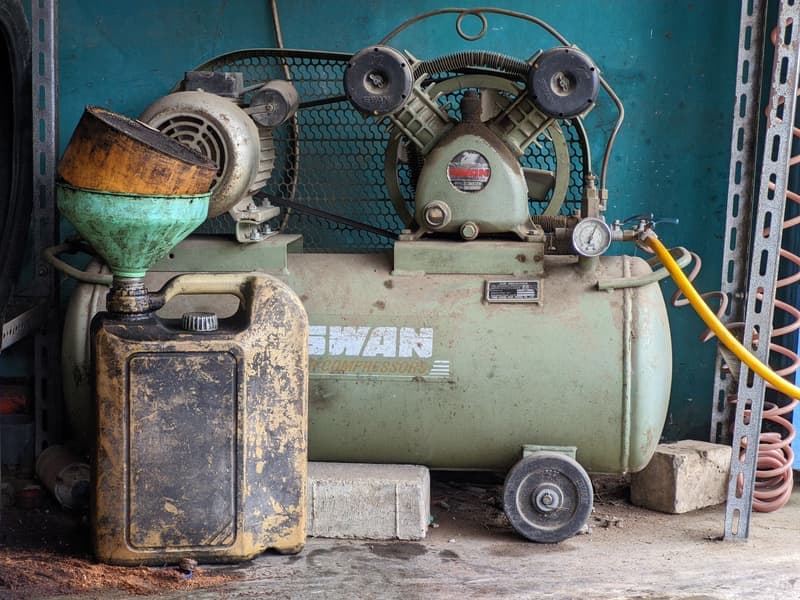
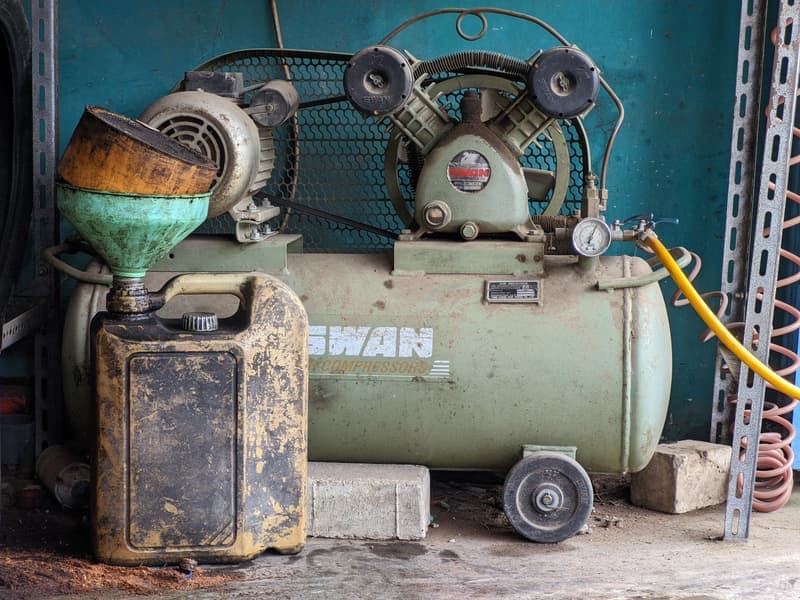
A large stationary air compressor with a cast iron two-cylinder pump

Some links on this page are affiliate links. If you buy through one, Magoo Media Group earns a commission from the retailer at no extra cost to you. It never changes which product we rank first - how this site is funded.

The mechanics

What the stages are

A single-stage pump compresses air once, from atmospheric pressure to tank pressure, in one cylinder stroke. A two-stage pump compresses it twice: a large low-pressure cylinder does the first stage, the air passes through an intercooler, and a smaller high-pressure cylinder finishes the job.

The intercooler is the point. Compressing air heats it, and hot air is harder to compress further. Cooling it between stages means the second stage does its work on denser, cooler air, which is more efficient and allows much higher final pressures - typically 175 PSI and above rather than 125 to 155.

Two-stage pumps are also, without exception in any market we know of, oil-lubricated cast iron. You do not find a two-stage oil-free portable, because the whole point of the design is sustained high-output work that an oil-free pump cannot thermally support.

Design comparison
Single stageTwo stage
CompressionOnce, atmospheric to tank pressureTwice, with an intercooler between
Typical max pressure125 to 175 PSI175 PSI and above
Efficiency at high outputLowerHigher - the intercooler is the reason
Pump typeOil-free or oil-lubricatedAlways oil-lubricated cast iron
Typical size1 to 30 gallons60 gallons and up
Voltage120V or 120/240V240V
Realistic settingHome garage, job siteShop, body shop, small industrial

The comparison

Where the line falls, with products

Quick picks

#ProductBest forScorePrice
1
A thirty-gallon belt-drive air compressor with a cast iron pump
DEWALT DXCMLA1983054 30-gallon5.7 CFM @ 90 / 30 gal / 155 PSI5.7 CFM, 30 gallons, oil-lubricated cast iron and belt drive. Where a garage compressor stops being disposable.
A permanent garage compressor you expect to keep for a decade7.9/10★★★★☆
Check price on Amazon

#ad Disclosure - we do not publish prices we cannot verify

2
A large stationary vertical sixty-gallon air compressor in a workshop
Industrial Air ILA3606056 60-gallon11.5 CFM @ 90 / 60 gal / 155 PSI11.5 CFM at 90 PSI. Included as the reference point for what continuous sanding and blasting actually costs.
Body work, blasting, or running two tools at once8.1/10★★★★☆
Check price on Amazon

#ad Disclosure - we do not publish prices we cannot verify

3
A ten-gallon vertical oil-free air compressor on wheels in a workshop
California Air Tools 10020C5.3 CFM @ 90 / 10 gal / 125 PSI / 70 dBA5.3 CFM at 70 dBA with a published 70/30 duty cycle. The first unit here that runs a continuous-duty tool.
Running a ratchet, die grinder or touch-up gun without waiting6.2/10★★★☆☆
Check price on Amazon

#ad Disclosure - we do not publish prices we cannot verify

Scores are computed from manufacturer-published specs by the rubric on our methodology page. Nothing here has been bench-tested, and we do not publish prices we cannot verify.

Pick 1 - DEWALT DXCMLA1983054

7.9/10★★★★☆

DEWALT DXCMLA1983054 30-gallon

Best for: A permanent garage compressor you expect to keep for a decade

Verdict

5.7 CFM, 30 gallons, oil-lubricated cast iron and belt drive. Where a garage compressor stops being disposable.

What it does well

  • 5.7 CFM at 90 PSI and 7.0 at 40 - clears ratchets, die grinders and touch-up spraying
  • Oil-lubricated belt drive runs cooler and slower than a direct-drive oil-free pump
  • 120/240V, so it can move to a 240V circuit later

What it will not do

  • Oil-lubricated means an actual maintenance routine: check and change the oil
  • 155 PSI on 30 gallons stores less than 175 PSI on 20 in some comparisons - check the math, not the tank
How this 7.9 was calculated
MetricScoreWeightBasis
Air flow9.440%5.7 CFM at 90 PSI, on a 0.7-6 CFM scale
Stored air10.025%30 gal x 155 PSI = 4650, on a 125-3,500 scale
Noise5.015%Manufacturer publishes no dBA figure - scored a neutral 5, not a guess
Portability5.010%No weight published - scored a neutral 5
Spec transparency3.310%2 of 6 useful figures published (CFM at 90, CFM at 40, dBA, duty cycle, recovery, weight)
A thirty-gallon belt-drive air compressor with a cast iron pump

Licensed stock photo - illustrative of the category, not a photo of this unit

Check price on Amazon

#ad Disclosure - we do not publish prices we cannot verify

Published specs

DEWALT DXCMLA1983054 30-gallon published specifications
CFM @ 90 PSI5.7
CFM @ 40 PSI7
Tank30 gal
Max pressure155 PSI
NoiseNot published
Duty cycleNot published
RecoveryNot published
PumpOil-lubricated
Motor1.9
WeightNot published
Power120/240V

Source: DEWALT DXCMLA1983054 30-gallon compressor - product specifications

Pick 2 - Industrial Air ILA3606056

8.1/10★★★★☆

Industrial Air ILA3606056 60-gallon

Best for: Body work, blasting, or running two tools at once

Verdict

11.5 CFM at 90 PSI. Included as the reference point for what continuous sanding and blasting actually costs.

What it does well

  • 11.5 CFM at 90 PSI and 13.4 at 40 - clears an orbital sander with margin
  • Cast-iron twin-cylinder pump on a 60-gallon vertical tank
  • 3.7 HP on 240V

What it will not do

  • 240V and stationary: this is an electrical project, not a purchase
  • Overkill for anyone whose honest tool list is nailers, tires and a 1/2-inch impact - which is most people reading this
How this 8.1 was calculated
MetricScoreWeightBasis
Air flow10.040%11.5 CFM at 90 PSI, on a 0.7-6 CFM scale
Stored air10.025%60 gal x 155 PSI = 9300, on a 125-3,500 scale
Noise5.015%Manufacturer publishes no dBA figure - scored a neutral 5, not a guess
Portability5.010%No weight published - scored a neutral 5
Spec transparency3.310%2 of 6 useful figures published (CFM at 90, CFM at 40, dBA, duty cycle, recovery, weight)
A large stationary vertical sixty-gallon air compressor in a workshop

Licensed stock photo - illustrative of the category, not a photo of this unit

Check price on Amazon

#ad Disclosure - we do not publish prices we cannot verify

Published specs

Industrial Air ILA3606056 60-gallon published specifications
CFM @ 90 PSI11.5
CFM @ 40 PSI13.4
Tank60 gal
Max pressure155 PSI
NoiseNot published
Duty cycleNot published
RecoveryNot published
PumpOil-lubricated
Motor3.7
WeightNot published
Power240V

Source: Industrial Air ILA3606056 - product specifications

Pick 3 - California Air Tools 10020C

6.2/10★★★☆☆

California Air Tools 10020C

Best for: Running a ratchet, die grinder or touch-up gun without waiting

Verdict

5.3 CFM at 70 dBA with a published 70/30 duty cycle. The first unit here that runs a continuous-duty tool.

What it does well

  • 5.3 CFM at 90 PSI clears every published figure for ratchets, die grinders and touch-up spraying
  • 70 dBA at that output is unusual - most 5+ CFM units are far louder
  • Publishes a real 70/30 duty cycle and a 25-second recovery from 95 to 125 PSI

What it will not do

  • 82.5 lb and 14 A - it needs its own circuit and it is not a carry-it-upstairs machine
  • 125 PSI max, so a bigger tank at higher pressure still stores more per fill
How this 6.2 was calculated
MetricScoreWeightBasis
Air flow8.740%5.3 CFM at 90 PSI, on a 0.7-6 CFM scale
Stored air3.325%10 gal x 125 PSI = 1250, on a 125-3,500 scale
Noise5.615%70 dBA, on a 58-85 dBA scale
Portability1.110%82.5 lb, on a 20-90 lb scale
Spec transparency10.010%6 of 6 useful figures published (CFM at 90, CFM at 40, dBA, duty cycle, recovery, weight)
A ten-gallon vertical oil-free air compressor on wheels in a workshop

Licensed stock photo - illustrative of the category, not a photo of this unit

Check price on Amazon

#ad Disclosure - we do not publish prices we cannot verify

Published specs

California Air Tools 10020C published specifications
CFM @ 90 PSI5.3
CFM @ 40 PSI6.4
Tank10 gal
Max pressure125 PSI
Noise70 dBA
Duty cycle70/30 (manufacturer-published)
Recovery120 s empty to full; 25 s recovery 95 to 125 PSI
PumpOil-free
Motor2.0
Weight82.5 lb
Power110V, 14 A

Source: California Air Tools 10020C - product specifications

The honest threshold

When a home garage genuinely needs two stage

When you are running a continuous 10-plus CFM tool. A 6-inch orbital sander at 6 to 10 CFM, a vertical disc sander at 20, a production spray gun at 8, or a sandblasting setup where the nozzle sets the demand. These are the jobs where single-stage output runs out and no tank size helps.

When you are running two tools at once. Two people working off one compressor doubles the demand in a way home sizing never accounts for, and it is the situation where shop sizing methods start to apply.

When the compressor runs for hours. A two-stage oil-lubricated pump at a lower RPM is built for that; a single-stage direct-drive unit is not, and the failure mode is thermal rather than gradual.

If none of those describe you - and for most people reading a home-garage buying guide, none do - a single-stage compressor is the right purchase and a two-stage one is a 240V electrical project you do not need.

Industrial Air ILA3606056 60-gallon: what it runs

Delivered flow: 11.5 CFM at 90 PSI. We call a tool covered when delivered flow clears its highest published demand plus a 25% margin.

Runs it (2)

  • Die grinder, 1/4"Yes - needs 6 CFM, continuous duty
  • Paint spray gun, production / HVLPYes - needs 8 CFM, continuous duty

Does not run it (4)

  • Orbital / DA sander, 6 inchNo - needs 10 CFM, continuous duty
  • Vertical disc sander / polisherNo - needs 20 CFM, continuous duty
  • Impact wrench, 1"No - needs 12 CFM, intermittent duty
  • Cut-off tool, 3 inchNo - needs 10 CFM, continuous duty

Demand figures from the air tool CFM chart, which cites every one of them.

Clearing up the marketing

What two stage does not buy you

It does not make your impact wrench stronger. Torque follows regulated pressure at the tool, and you regulate to 90 PSI regardless of whether the tank holds 155 or 175. A higher tank ceiling means more stored air, not more torque.

It does not make a small tool run better. A brad nailer on a two-stage 60-gallon compressor performs exactly as it does on a 1-gallon trim unit, because the nailer's demand is 0.5 CFM and both clear it several times over.

It does not solve air quality. A two-stage compressor still puts water into the line, and spraying still needs the same filtration chain. If anything, the higher output moves more air and therefore more water per minute.

FAQ

Questions people actually ask

Do I need a two stage air compressor for my garage?

Almost certainly not. Two-stage makes sense when you run a continuous 10-plus CFM tool, run two tools at once, or run for hours at a time. For nailing, tires, impacts and occasional grinding, a single-stage unit is the correct purchase.

What is the difference between single stage and two stage?

A single-stage pump compresses air once; a two-stage pump compresses it twice with an intercooler between, which is more efficient at high output and reaches higher pressures. Two-stage pumps are always oil-lubricated cast iron and almost always 240V.

Is two stage worth the extra money?

Only if your work is continuous and high-demand. Otherwise you are paying for efficiency at an output level you never reach, plus a 240V circuit you may not have. Buying two-stage for burst tools is the most expensive form of overbuying in this category.

Can a single stage compressor reach 175 PSI?

Yes - several single-stage units do, and one 6-gallon pancake in our roster publishes 200 PSI. Maximum pressure and stage count are related but not the same thing; two-stage designs make high pressure efficient rather than merely possible.

Will a two stage compressor run a DA sander?

A 60-gallon two-stage machine at 11.5 CFM will, yes, with margin over the sander's 6 to 10 CFM continuous demand. That is genuinely the entry point for bodywork, and it is a 240V stationary installation rather than a purchase you wheel home.

Sources

Where these numbers come from

Accessed September 2026. If a figure on this page does not match the manufacturer's current sheet, tell us at contact@psiandhose.com and we will correct and date the change - see our editorial policy.

Read next