Skip to content
Psi & Hose

Hoses & Air Prep

Air compressor accessories: what to buy first

A compressor out of the box has a tank, a regulator and a quarter-inch hole. Here is the short list that turns it into a working air system.

By Ryder M.Last updated Published
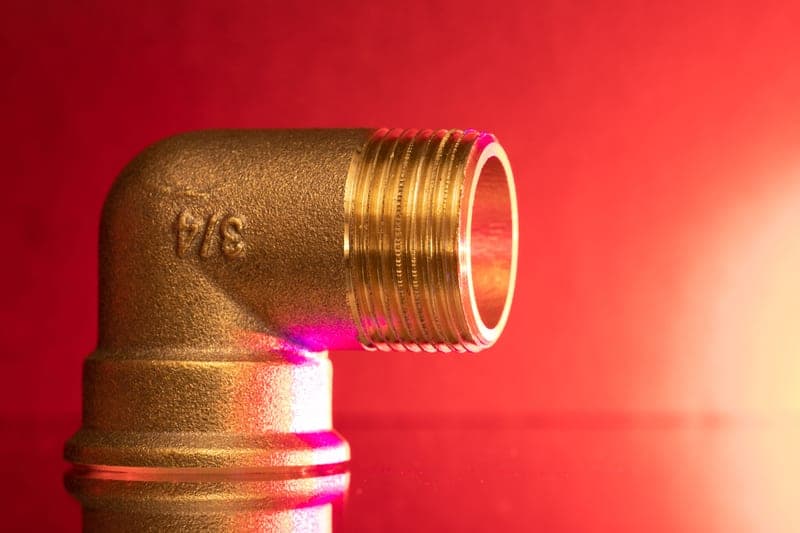
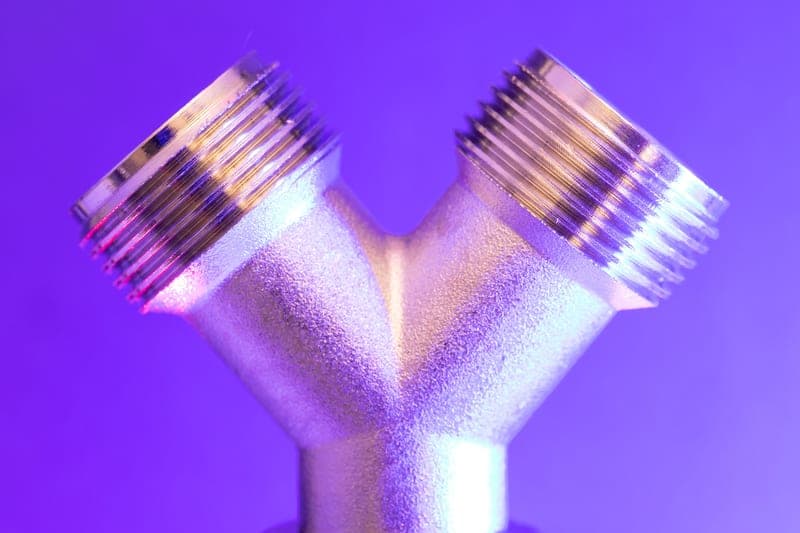
Brass air fittings and couplers arranged on a workshop bench

Some links on this page are affiliate links. If you buy through one, Magoo Media Group earns a commission from the retailer at no extra cost to you. It never changes which product we rank first - how this site is funded.

Read this first

The short answer

Buy the coupler and plug kit first, before the hose, before anything. A Milton M-STYLE set in 1/4-inch NPT - 40 SCFM, 300 PSI max - is the single purchase that makes every tool in the garage fit every hose, and until you own one you cannot connect a tool to a compressor at all. It is also the cheapest item on this page, which is why so many people skip it and then make a second trip to the store.

The full day-one list is five items and it does not get longer: one coupler-and-plug kit in a single pattern, one 3/8-inch hose of 25 or 50 feet, one filter-regulator at the wall, one safety coupler for anything you disconnect under pressure, and - only if you are running a high-demand tool off a 1/2-inch line - a high-flow coupler at that drop. Everything else sold as a compressor accessory is either job-specific or a bundled afterthought.

The most common mistake is not buying the wrong accessory, it is buying three coupler patterns. M-STYLE, ARO and Lincoln bodies look near-identical and do not mate with each other. A garage with a mix of patterns means every tool change becomes a hunt for the right adapter, and adapters add restriction. Pick one pattern, buy a kit with spare plugs, and throw the odd ones out.

Published flow and pressure figures for each pick
ThreadPattern or typePublished flowMax pressure
Milton M-STYLE kit1/4" NPTM-STYLE (Industrial / Milton)40 SCFM300 PSI
Flexzilla HFZ3850YW21/4" MNPT ends3/8" ID x 50 ft hybrid polymerHose, not a fitting300 PSI at 70F
PneumaticPlus SAW3003/8" NPT10 micron filter + regulator53 SCFM150 PSI operating
Prevost safety coupler1/4" FNPTARO-style safety34 SCFM at 100 PSI174 PSI
Milton S-18151/2" FNPTG-STYLE high flow99 SCFM300 PSI

Every figure is the manufacturer's published specification; the sources block links each one. Compare these against your compressor: the largest machine on this site publishes 11.5 CFM at 90 PSI, so a 40 SCFM coupler is not the restriction in a home garage - but a stack of adapters can be.

What the bundled kit gets wrong

Compressor kits bundle a short PVC or vinyl hose and whichever coupler pattern was cheapest that quarter. Both work and both get replaced within a year. If you buy a kit, treat the hose and fittings as a loan rather than a purchase - the compressor is what you paid for.

The picks

The five, in buying order

Quick picks

#ProductBest forScorePrice
1
Brass air fittings, couplers and plugs arranged on a bench
Milton 1/4" NPT M-STYLE coupler and plug kit1/4" NPT / M-STYLE (Industrial / Milton) / 300 PSI300 PSI, 40 SCFM, and the pattern most American garages already use. Standardize on one and stop adapting.
Making every tool in the garage fit every hose4.8/10★★☆☆☆

#ad Disclosure - we do not publish prices we cannot verify

2
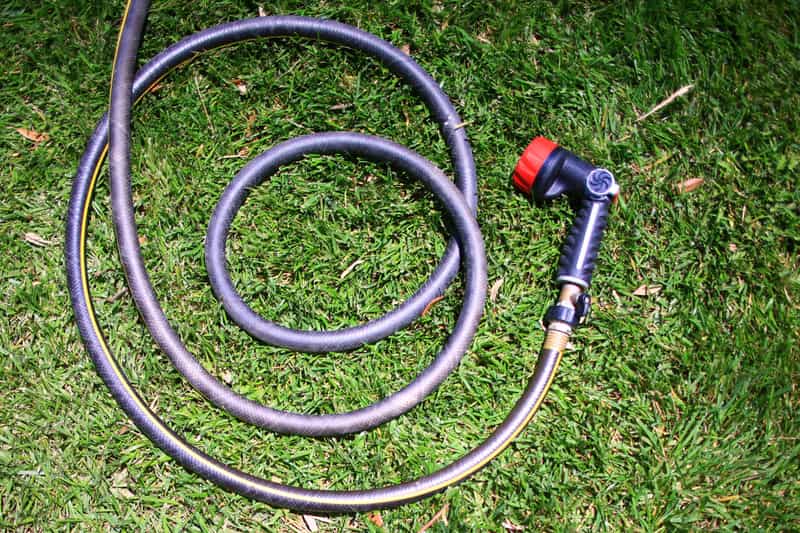
A coiled hybrid polymer air hose lying flat on a garage floor
Flexzilla HFZ3850YW23/8" / 50 ft / 300 PSI at 70F300 PSI hybrid polymer that lies flat from -40F to 140F. The upgrade that makes a cheap compressor feel expensive.
The one hose to own in a cold or unheated garage8.0/10★★★★☆

#ad Disclosure - we do not publish prices we cannot verify

3
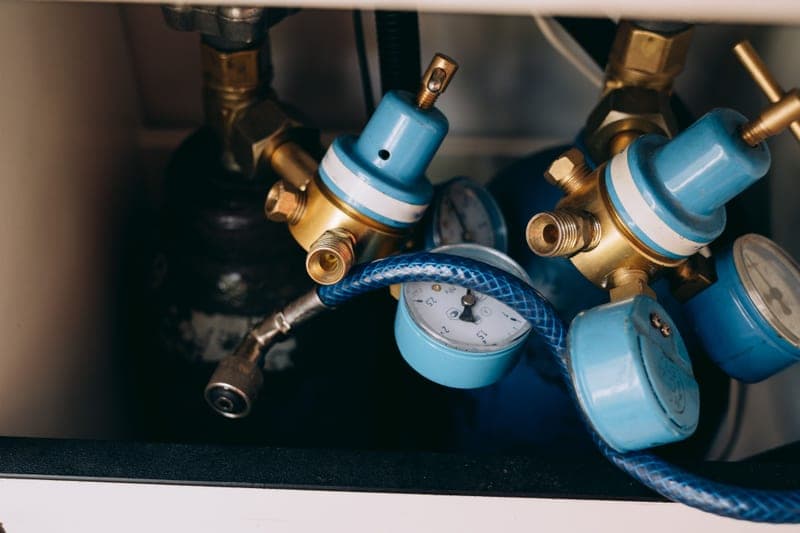
A wall-mounted compressed air filter and regulator with a pressure gauge
PneumaticPlus SAW300 filter / regulator3/8" NPT / 53 SCFM / 10 micron53 SCFM, 10 micron, with a real gauge and a metal bowl. The single most useful small purchase in a garage air system.
One combined water trap and regulator at the wall5.3/10★★★☆☆

#ad Disclosure - we do not publish prices we cannot verify

4
A composite-bodied safety quick-connect air coupler held in a hand
Prevost ARO-style safety coupler1/4" FNPT / ARO-style safety / 34 SCFM at 100 PSIVents the downstream line before it releases the plug, so the hose cannot whip. 34 SCFM at 100 PSI.
Any hose you disconnect while it is still pressurized6.7/10★★★☆☆

#ad Disclosure - we do not publish prices we cannot verify

5
A large brass quick-connect air coupler on a length of pipe
Milton S-1815 1/2" G-STYLE coupler1/2" FNPT / G-STYLE / 300 PSI99 SCFM through a 1/2-inch body. The fitting you fit when the fittings became the bottleneck.
A 1/2" drop leg feeding a high-demand tool9.1/10★★★★★

#ad Disclosure - we do not publish prices we cannot verify

Scores are computed from manufacturer-published specs by the rubric on our methodology page. Nothing here has been bench-tested, and we do not publish prices we cannot verify.

Pick 1 - Milton M-STYLE (210 / 711)

4.8/10★★☆☆☆

Milton 1/4" NPT M-STYLE coupler and plug kit

Best for: Making every tool in the garage fit every hose

Verdict

300 PSI, 40 SCFM, and the pattern most American garages already use. Standardize on one and stop adapting.

What it does well

  • 40 SCFM flow at 300 PSI max - far more than any compressor here delivers
  • M-STYLE (Industrial / Milton) is the most common pattern in US home garages, so tools match
  • Kits give you spare plugs, which is the part you actually lose

What it will not do

  • Mixing M-STYLE with the visually similar ARO or Lincoln patterns is the classic garage mistake - pick one and throw the others out
  • On a 1/2" line, 40 SCFM couplers become the restriction; step up to a G-style then
How this 4.8 was calculated
MetricScoreWeightBasis
Pressure headroom10.040%300 PSI rating, on a 125-300 PSI scale
Flow capacity0.040%40 SCFM, on a 40-100 SCFM scale
Spec transparency4.020%4 published specification figures
Brass air fittings, couplers and plugs arranged on a bench

Licensed stock photo - illustrative of the category, not a photo of this unit

#ad Disclosure - we do not publish prices we cannot verify

Published specs

Milton 1/4" NPT M-STYLE coupler and plug kit published specifications
Thread1/4" NPT
PatternM-STYLE (Industrial / Milton)
Max pressure300 PSI
Air flow40 SCFM

Source: Milton Industries M-STYLE couplers and plugs - product specifications

Pick 2 - Flexzilla HFZ3850YW2

8.0/10★★★★☆

Flexzilla HFZ3850YW2

Best for: The one hose to own in a cold or unheated garage

Verdict

300 PSI hybrid polymer that lies flat from -40F to 140F. The upgrade that makes a cheap compressor feel expensive.

What it does well

  • 300 PSI maximum working pressure at 70F - higher than any compressor on this site produces
  • -40F to 140F flexibility: it still uncoils in an unheated garage in February
  • Zero-memory construction means it lies flat instead of fighting you, and 3/8" ID does not throttle an impact

What it will not do

  • Costs multiples of the PVC hose bundled in a compressor kit
  • The bright green is not subtle, which matters to precisely nobody using it
How this 8.0 was calculated
MetricScoreWeightBasis
Pressure headroom10.040%30070 PSI rating, on a 125-300 PSI scale
Flow capacity6.040%Flow not published for this class - scored a 6, which is what a correctly sized hose or fitting does not restrict
Spec transparency8.020%6 published specification figures
A coiled hybrid polymer air hose lying flat on a garage floor

Licensed stock photo - illustrative of the category, not a photo of this unit

#ad Disclosure - we do not publish prices we cannot verify

Published specs

Flexzilla HFZ3850YW2 published specifications
Inside diameter3/8"
Length50 ft
Max working pressure300 PSI at 70F
Temperature range-40F to 140F
Fittings1/4" MNPT, anodized aluminum ends
MaterialHybrid polymer

Source: Flexzilla HFZ3850YW2 air hose - distributor specification listing

Pick 3 - PneumaticPlus SAW300-N03BG-MEP

5.3/10★★★☆☆

PneumaticPlus SAW300 filter / regulator

Best for: One combined water trap and regulator at the wall

Verdict

53 SCFM, 10 micron, with a real gauge and a metal bowl. The single most useful small purchase in a garage air system.

What it does well

  • 53 SCFM at 3/8-inch NPT - it will not restrict any compressor on this site
  • 10 micron element plus a regulator in one piggyback body, so one mount does both jobs
  • Metal bowl and a 0-150 PSI gauge, with bracket included

What it will not do

  • 10 micron catches water and rust, NOT oil aerosol - it is not enough on its own for paint
  • Max operating pressure is 150 PSI, so it cannot sit upstream of a 175 PSI tank outlet
How this 5.3 was calculated
MetricScoreWeightBasis
Pressure headroom7.140%250 PSI rating, on a 125-300 PSI scale
Flow capacity2.240%53 SCFM, on a 40-100 SCFM scale
Spec transparency8.020%6 published specification figures
A wall-mounted compressed air filter and regulator with a pressure gauge

Licensed stock photo - illustrative of the category, not a photo of this unit

#ad Disclosure - we do not publish prices we cannot verify

Published specs

PneumaticPlus SAW300 filter / regulator published specifications
Port size3/8" NPT
Flow53 SCFM
Filtration10 micron
Max supply pressure250 PSI
Max operating pressure150 PSI
Gauge0-150 PSI, bracket included

Source: PneumaticPlus SAW300 filter/regulator - product specifications

Pick 4 - Prevost 081201 (ARO-style, 1/4 in FNPT)

6.7/10★★★☆☆

Prevost ARO-style safety coupler

Best for: Any hose you disconnect while it is still pressurized

Verdict

Vents the downstream line before it releases the plug, so the hose cannot whip. 34 SCFM at 100 PSI.

What it does well

  • Two-stage push-button purges air from the hose and tool before disconnection - no hose whip
  • 34 SCFM at 100 PSI, so the safety mechanism does not cost you flow
  • Non-marring impact-resistant composite body with a 3-year manufacturer warranty

What it will not do

  • 174 PSI maximum operating pressure - it belongs downstream of the regulator, not on a 175 PSI tank outlet
  • Costs several times a plain brass coupler, for a benefit you only notice the day it matters
How this 6.7 was calculated
MetricScoreWeightBasis
Pressure headroom2.840%174 PSI rating, on a 125-300 PSI scale
Flow capacity10.040%34100 SCFM, on a 40-100 SCFM scale
Spec transparency8.020%6 published specification figures
A composite-bodied safety quick-connect air coupler held in a hand

Licensed stock photo - illustrative of the category, not a photo of this unit

#ad Disclosure - we do not publish prices we cannot verify

Published specs

Prevost ARO-style safety coupler published specifications
Thread1/4" FNPT
PatternARO-style safety
Air flow34 SCFM at 100 PSI
Max operating pressure174 PSI
BodyNon-marring impact-resistant composite
Warranty3 years (manufacturer)

Source: Prevost ARO-style safety coupler (081201) - distributor specification listing

Pick 5 - Milton S-1815

9.1/10★★★★★

Milton S-1815 1/2" G-STYLE coupler

Best for: A 1/2" drop leg feeding a high-demand tool

Verdict

99 SCFM through a 1/2-inch body. The fitting you fit when the fittings became the bottleneck.

What it does well

  • 99 SCFM - more than double a standard 1/4-inch M-STYLE coupler
  • 300 PSI max inlet and a 250F temperature ceiling
  • Removes the coupler from the restriction list on a 1/2" line

What it will not do

  • Only worth fitting if your line and tool are genuinely 1/2 inch; on a 3/8-inch setup it changes nothing
  • G-STYLE plugs are a second pattern to stock
How this 9.1 was calculated
MetricScoreWeightBasis
Pressure headroom10.040%300 PSI rating, on a 125-300 PSI scale
Flow capacity9.840%99 SCFM, on a 40-100 SCFM scale
Spec transparency6.020%5 published specification figures
A large brass quick-connect air coupler on a length of pipe

Licensed stock photo - illustrative of the category, not a photo of this unit

#ad Disclosure - we do not publish prices we cannot verify

Published specs

Milton S-1815 1/2" G-STYLE coupler published specifications
Thread1/2" FNPT
PatternG-STYLE
Max inlet pressure300 PSI
Air flow99 SCFM
Max temperature250F

Source: Milton Industries M-STYLE couplers and plugs - product specifications

The decision you make once

Why the coupler pattern decision comes first

A quick-connect coupler is a two-part system: the female coupler on the hose and the male plug on the tool. Both have to be the same pattern, and there are several in common use in the United States. M-STYLE - also sold as Industrial or Milton pattern - is the most common in American home garages, which is the practical reason to standardize on it: tools you buy will more often than not already have a matching plug, and replacement plugs are on every shelf.

The reason this is a one-time decision rather than a running one is that mixing patterns compounds. One ARO-plugged tool in an M-STYLE garage means one adapter. Three odd tools means three adapters, which live in a drawer, which means the one you need is never the one you can find. Each adapter is also an extra joint that can leak and an extra restriction in the line. Buying a kit with spare plugs and re-plugging every tool to one pattern is an afternoon that pays back permanently.

The one legitimate reason to run a second pattern is a genuine high-flow drop, and that is why the Milton S-1815 is on this page. It is a 1/2-inch G-STYLE body publishing 99 SCFM, against 40 SCFM for a standard 1/4-inch M-STYLE. If you have a 1/2-inch line feeding a sander or a production spray gun, a 40 SCFM coupler really can become the bottleneck. On a 3/8-inch garage setup it changes nothing, and Milton's own spec sheet is the reason we say so rather than selling it to everyone.

Buying the obvious thing well

The hose: one size, one length, done

For a first hose, 3/8-inch ID at 50 feet is the answer for nearly everyone, and the Flexzilla HFZ3850YW2 is the one we would buy. It publishes 300 PSI working pressure at 70F and a -40F to 140F temperature range, which is the figure that matters in an unheated garage - a hybrid polymer hose stays flexible at temperatures where PVC turns into a coil of pipe that fights you.

The temptation is to buy 1/4-inch because it is lighter and cheaper, and for a brad nailer that is genuinely the right call. The problem is that your hose outlives your tool list. A 1/4-inch hose is fine until the day you buy an impact wrench, and Ingersoll Rand publishes a 3/8-inch minimum hose ID for the 231C specifically because a 1/4-inch hose throttles it. Buying 3/8-inch first means the hose is never the thing you have to replace to use a new tool.

On length: 50 feet is the useful default for a two-car garage because it reaches the far corner and the driveway. Do not solve a reach problem by chaining two hoses with a coupler in the middle unless you have to - every joint is a potential leak and a small restriction. If you need 100 feet occasionally, buy a second 50-foot hose and couple them when the job demands it, rather than living with 100 feet of hose on the floor for the 90% of jobs that need 30.

Where the real upgrade is

Air prep: the accessory that improves every job

The filter-regulator is the purchase that changes the character of the whole system, and it is the one first-time buyers are least likely to make. Compressed air leaves the pump hot and wet, condenses as it cools, and arrives at the tool carrying water and rust flakes from the inside of the tank. A tool fed wet air runs rough, rusts internally, and in a nailer gives you inconsistent drive depth.

The PneumaticPlus SAW300 handles both halves of the problem in one body: a 10-micron element and a regulator with a 0-150 PSI gauge, at 53 SCFM through 3/8-inch NPT - which is more flow than any compressor on this site produces, so it is not a restriction. The gauge is the underrated part. Setting tool pressure from the tank gauge is guesswork; setting it at a regulator you can read is how you get repeatable nail depth and a spray pattern that does not change halfway down a panel.

Two honest limits from the spec sheet. First, 10 microns catches water and particulate, not oil aerosol - it is not sufficient on its own ahead of paint, which is what the three-stage units and sub-micronic filters elsewhere on this site are for. Second, its maximum operating pressure is 150 PSI, so on a 175 PSI or 200 PSI machine it mounts downstream of the tank regulator rather than directly on the tank outlet. Getting that backwards destroys the filter.

The one nobody asks for

The safety coupler, and why it is not an upsell

A standard quick-connect coupler releases in one motion, which means a pressurized hose disconnects with the full line pressure behind it. The hose whips. Most of the time this is startling and nothing more; occasionally the end of a hose at 120 PSI hits something it should not, and the something is sometimes a face. It is the most common genuinely dangerous thing that happens in a home air system.

A safety coupler like the Prevost ARO-style unit solves it mechanically with a two-stage release: the first motion vents the downstream pressure, the second releases the plug. You do not have to remember anything or do anything differently - the behavior is built into the body. Prevost publishes 34 SCFM at 100 PSI through it and a 174 PSI maximum operating pressure, with a non-marring composite body.

The honest trade is flow: 34 SCFM is below the 40 SCFM of a standard M-STYLE body. On a home garage that difference is academic, because the largest compressor on this site publishes 11.5 CFM at 90 PSI and most publish under 5. If you only fit one safety coupler, fit it at the end of the hose - the connection you break most often while the line is still live - and keep standard bodies at the fixed points you rarely touch.

Saving your money

What not to buy on day one

The pattern in that list is worth naming: almost every accessory people regret buying was bought to solve a problem they had not had yet. The five picks on this page are different because each one solves a problem you have the first time you plug a tool in - no connection, no reach, wet air, a whipping hose, or a restriction at a high-flow drop.

Buy those five, use the compressor for a season, and then buy the sixth thing when a specific job tells you what it is. That is the whole method, and it is the same method we apply to compressors themselves: buy for the jobs you have, upgrade against a demand you have actually met.

  • The 20-piece blow-gun-and-adapter bubble pack. You will use the blow gun and the tire chuck. The rest is a drawer of plastic tips and the wrong thread adapters.
  • A hose reel, until you know where the compressor lives permanently. A reel mounted in the wrong place is worse than a hose on a hook, and the right place is obvious only after a few months of use.
  • An inline oiler, unless a tool's manual specifically calls for lubricated air. Oil-free nailers and most modern tools do not want it, and it contaminates the line for anything you later want to spray.
  • A second regulator at the tool end, before you have a filter-regulator at the wall. Two regulators in series just means two places where the pressure is wrong.
  • A desiccant dryer, until a filter-regulator has demonstrably failed to keep up. For nailing, inflation and automotive work a 10-micron trap is enough; desiccant is a paint-booth answer to a paint-booth problem.

FAQ

Questions people actually ask

What accessories do I need with a new air compressor?

Five things: a coupler-and-plug kit in one pattern, a 3/8-inch hose of 25 or 50 feet, a filter-regulator at the wall, a safety coupler for the hose end, and a high-flow coupler only if you run a 1/2-inch line. A bare compressor cannot connect to a tool without the first two.

Which air coupler pattern should I use?

M-STYLE, also sold as Industrial or Milton pattern, is the most common in US home garages, so tools you buy will usually already match. The important thing is picking one and converting every tool to it - mixed patterns mean a drawer of adapters, each one a potential leak and a restriction.

Is the accessory kit that comes with the compressor any good?

It gets you working on day one, which has real value, but the bundled hose is usually short PVC and the fittings are whichever pattern was cheapest. Both get replaced. Treat a bundled kit as time saved rather than quality bought.

Do I need a filter-regulator for a home garage?

It is the single best small purchase in the system. Compressed air arrives wet and carrying rust from the tank, which runs tools rough and gives nailers inconsistent drive depth. The PneumaticPlus SAW300 adds 10-micron filtration and a readable 0-150 PSI gauge at 53 SCFM, which is more flow than any compressor here produces.

What is a safety coupler and do I need one?

It releases in two stages - vent first, then release - so a pressurized hose cannot whip when you disconnect it. The Prevost ARO-style unit publishes 34 SCFM at 100 PSI, slightly below a standard body's 40 SCFM, which is academic on a home compressor. Fit one at the hose end, the joint you break most often while live.

Should I buy a hose reel straight away?

Wait. A reel is a permanent mount and the right location only becomes obvious after a few months of actually using the compressor. A reel in the wrong place is more annoying than a hose on a hook.

Sources

Where these numbers come from

Accessed September 2026. If a figure on this page does not match the manufacturer's current sheet, tell us at contact@psiandhose.com and we will correct and date the change - see our editorial policy.

Read next