Skip to content
Psi & Hose

Guides

Air compressor not building pressure

The motor runs, the gauge barely moves. Four of the five causes cost under twenty dollars to fix, and there is a sequence that finds them fastest.

By Ryder M.Last updated Published
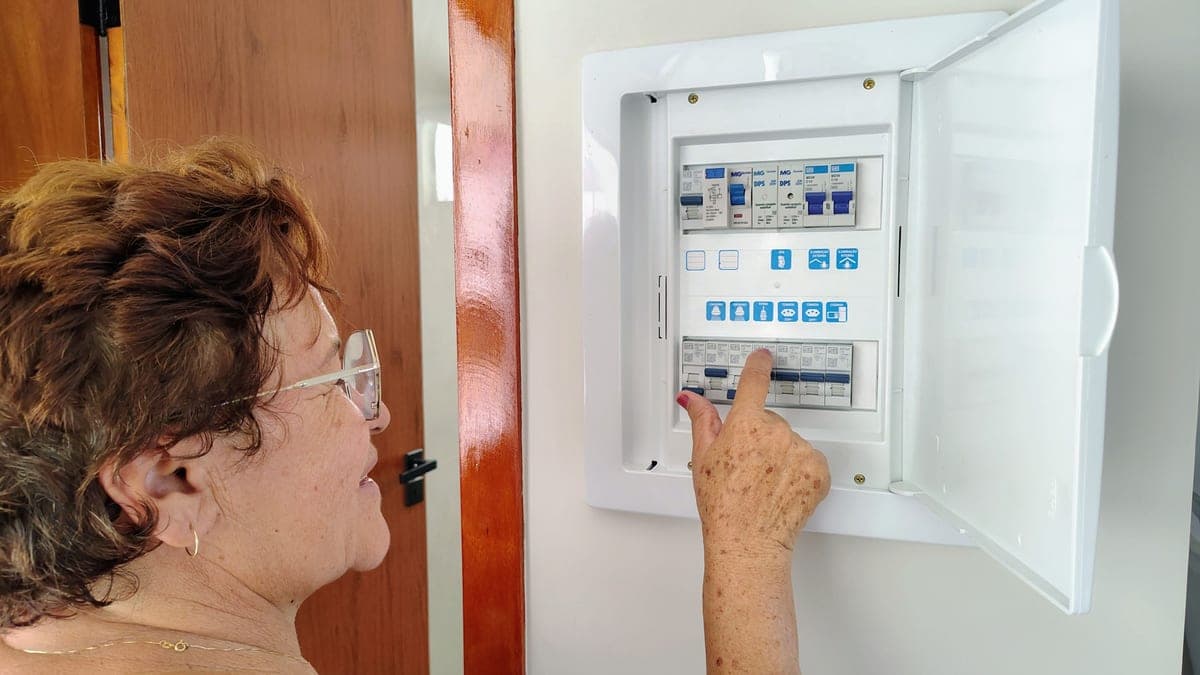
An electrical panel and power connections in a garage workshop

Some links on this page are affiliate links. If you buy through one, Magoo Media Group earns a commission from the retailer at no extra cost to you. It never changes which product we rank first - how this site is funded.

Read this first

The short answer

If the motor runs and the tank gauge climbs slowly or stalls part-way, work the causes in this order: a leak you can hear, the tank drain left open, the check valve stuck or carboned, the intake filter blocked, then the pump itself - reed valves, gaskets or rings. That order is deliberate. It runs from free to cheap to expensive, and in our experience the first four account for the large majority of cases.

The single most common cause is the simplest: a leak. Soapy water sprayed on every joint from the pump outlet to the tank, around the pressure switch, the safety valve, the regulator and the hose fitting will find it in about five minutes. An audible hiss at the tank fittings is often a loose compression nut that needs a quarter turn, not a part.

If the gauge climbs to some intermediate pressure and then simply stops - say 60 or 70 PSI on a machine rated to 150 - that pattern points at the pump rather than a leak, because a leak large enough to hold pressure there would be loud. Blown head gaskets and broken reed valves produce exactly this signature: the pump compresses air and then pushes most of it back out rather than into the tank.

Symptom to cause
What you observeMost likely causeCost to fix
Audible hiss, gauge falls when motor stopsLeak at a fitting, the drain, or the safety valveFree to a few dollars
Gauge rises then falls back when motor stopsCheck valve not holding - air returning to the pumpLow - a replacement part
Gauge never rises, air blows from the unloader constantlyCheck valve stuck open or unloader valve failedLow
Climbs very slowly but does eventually reach cut-outBlocked intake filter, or a worn but functional pumpFree to low
Climbs to an intermediate pressure and stalls thereHead gasket or reed valves - the pump is not sealingModerate - a gasket and valve kit
Motor hums or trips the breaker without starting properlyCapacitor, or the pump seized - this is a different faultModerate to replacement

This table is diagnostic guidance built from the standard failure modes of a single-stage reciprocating compressor, not a measured dataset. Always consult your machine's own manual for the part numbers and torque figures - it is the only authoritative document for your compressor.

Before anything else

Unplug the compressor and drain the tank completely. Every check below is done on a depressurized, disconnected machine. A pressurized tank and a live motor circuit are the two things in a garage that genuinely hurt people, and neither is necessary for any step on this page.

The sequence

Work it in this order

The reason for this order is economics, not thoroughness. Steps one through three are free and take ten minutes between them. Steps four and five are a few dollars of parts. Step six is the only one that involves real work or real money, and if you go straight to it - as people tend to, because a stalling gauge feels like a serious mechanical fault - you will sometimes strip a head to find a clogged air filter.

One honest note on step six and budget machines. A head gasket and reed valve kit on a mainstream pancake is a reasonable repair with widely available parts. On the cheapest machines, the parts may cost a meaningful fraction of the compressor and may not be available at all. At that point the decision is not mechanical, it is arithmetic, and we would rather tell you that than talk you into a rebuild that does not pay.

  1. 01Check the tank drain valve. It is at the bottom of the tank, it is easy to leave cracked open after draining, and a partly open drain is the single most embarrassing cause of this fault. Close it fully.
  2. 02Spray soapy water on every joint with the tank at whatever pressure it will hold: pump outlet line, tank fittings, pressure switch, safety valve, regulator, gauges, and the outlet coupler. Bubbles mark the leak. Tighten or re-seal with PTFE tape, and retest.
  3. 03Pull and inspect the intake filter. A filter clogged with sawdust strangles the pump at the intake, which looks exactly like a weak pump. Clean or replace it - they cost almost nothing - and retest before going further.
  4. 04Test the check valve. With the tank drained, remove the line from pump to tank and check that the valve allows flow one way only and seats cleanly. Carbon build-up here is common on oil-lubricated pumps. Many are a cheap screw-in part.
  5. 05Check the unloader. If air blows continuously from the small vent on the pressure switch while the motor runs, the unloader is dumping your output. It is usually part of the pressure switch assembly and is a routine replacement.
  6. 06Only now suspect the pump. Pull the head, inspect the reed valves for cracks or debris and the gasket for a blown section. A gasket and reed kit for a common pancake is inexpensive; a seized or scored pump on a budget machine usually is not worth rebuilding.

The picks

When replacing beats repairing

There is a point where this stops being a repair question. If the pump is scored, the tank has rust pitting around the drain, or the machine is a decade-old budget unit whose parts are no longer listed, the money goes further on a new compressor - and on a budget site we think saying so is the useful answer rather than the lazy one.

The tank is the part that genuinely retires a compressor. A pump is a serviceable assembly; a tank with corrosion around the drain boss is a pressure vessel with a thinning wall, and there is no sensible repair. If you drain water out of the bottom of the tank and it comes out rust-colored and flaky year after year, factor that into the decision regardless of what the pump is doing.

The three machines below are the sensible replacement band for someone whose 6-gallon pancake has died: the cheapest route back to the same spec, the long-standing default, and the one that upgrades you to real CFM for a modest step up. All three publish their figures, which is the first thing to look for in a replacement.

Quick picks

#ProductBest forScorePrice
1
A compact oil-free pancake compressor with two gauges
WEN AP60922.6 CFM @ 90 / 6 gal / 150 PSIThe cheapest way to get the standard 2.6 CFM / 150 PSI pancake spec. That is the whole pitch.
Spending the least possible to reach the useful 6-gallon spec3.6/10★★☆☆☆

#ad Disclosure - we do not publish prices we cannot verify

2
A red six-gallon pancake air compressor on a garage floor
Porter-Cable C20022.6 CFM @ 90 / 6 gal / 150 PSIThe default answer to 'cheapest useful compressor'. 6 gallons, 2.6 CFM, 150 PSI, and it has been the same machine for years.
A first compressor for nailing, inflation and burst automotive work3.6/10★★☆☆☆

#ad Disclosure - we do not publish prices we cannot verify

3
A high-capacity pancake air compressor with a roll cage
Metabo HPT EC914S (THE TANK)4 CFM @ 90 / 6 gal / 200 PSI4.0 CFM at 90 PSI and 200 PSI max - the only 6-gallon unit here that breaks the 2.6 CFM ceiling.
Getting real CFM without moving up to a 20-gallon footprint5.1/10★★★☆☆

#ad Disclosure - we do not publish prices we cannot verify

Scores are computed from manufacturer-published specs by the rubric on our methodology page. Nothing here has been bench-tested, and we do not publish prices we cannot verify.

Pick 1 - WEN AP6092

3.6/10★★☆☆☆

WEN AP6092

Best for: Spending the least possible to reach the useful 6-gallon spec

Verdict

The cheapest way to get the standard 2.6 CFM / 150 PSI pancake spec. That is the whole pitch.

What it does well

  • 2.6 CFM at 90 PSI and 3.6 at 40 - the class spec, at the bottom of the class price
  • Two 1/4-inch NPT quick couplers and two gauges
  • Oil-free, so no maintenance routine to forget

What it will not do

  • WEN does not publish a noise figure for it
  • 11.5 A draw is the highest of the 6-gallon units here - worth knowing on an older circuit
How this 3.6 was calculated
MetricScoreWeightBasis
Air flow3.640%2.6 CFM at 90 PSI, on a 0.7-6 CFM scale
Stored air2.325%6 gal x 150 PSI = 900, on a 125-3,500 scale
Noise5.015%Manufacturer publishes no dBA figure - scored a neutral 5, not a guess
Portability5.010%No weight published - scored a neutral 5
Spec transparency3.310%2 of 6 useful figures published (CFM at 90, CFM at 40, dBA, duty cycle, recovery, weight)
A compact oil-free pancake compressor with two gauges

Licensed stock photo - illustrative of the category, not a photo of this unit

#ad Disclosure - we do not publish prices we cannot verify

Published specs

WEN AP6092 published specifications
CFM @ 90 PSI2.6
CFM @ 40 PSI3.6
Tank6 gal
Max pressure150 PSI
NoiseNot published
Duty cycleNot published
RecoveryNot published
PumpOil-free
Motor11.5 A motor (HP not published)
WeightNot published
Power120V

Source: WEN AP6092 - product specifications

Pick 2 - Porter-Cable C2002

3.6/10★★☆☆☆

Porter-Cable C2002

Best for: A first compressor for nailing, inflation and burst automotive work

Verdict

The default answer to 'cheapest useful compressor'. 6 gallons, 2.6 CFM, 150 PSI, and it has been the same machine for years.

What it does well

  • 2.6 CFM at 90 PSI and 3.7 at 40 - the most common spec in the budget class for a reason
  • 6-gallon tank at 150 PSI stores enough air for real bursts of impact work
  • Two couplers, so two people or two tools without swapping

What it will not do

  • Porter-Cable does not publish a noise figure for it; the class sits in the high 70s to low 80s dBA
  • 2.6 CFM will not run a ratchet, die grinder or sander continuously
How this 3.6 was calculated
MetricScoreWeightBasis
Air flow3.640%2.6 CFM at 90 PSI, on a 0.7-6 CFM scale
Stored air2.325%6 gal x 150 PSI = 900, on a 125-3,500 scale
Noise5.015%Manufacturer publishes no dBA figure - scored a neutral 5, not a guess
Portability5.010%No weight published - scored a neutral 5
Spec transparency3.310%2 of 6 useful figures published (CFM at 90, CFM at 40, dBA, duty cycle, recovery, weight)
A red six-gallon pancake air compressor on a garage floor

Licensed stock photo - illustrative of the category, not a photo of this unit

#ad Disclosure - we do not publish prices we cannot verify

Published specs

Porter-Cable C2002 published specifications
CFM @ 90 PSI2.6
CFM @ 40 PSI3.7
Tank6 gal
Max pressure150 PSI
NoiseNot published
Duty cycleNot published
RecoveryNot published
PumpOil-free
Motor0.8
WeightNot published
Power120V

Source: Porter-Cable C2002 - product specifications

Pick 3 - Metabo HPT EC914S

5.1/10★★★☆☆

Metabo HPT EC914S (THE TANK)

Best for: Getting real CFM without moving up to a 20-gallon footprint

Verdict

4.0 CFM at 90 PSI and 200 PSI max - the only 6-gallon unit here that breaks the 2.6 CFM ceiling.

What it does well

  • 4.0 CFM at 90 PSI is 54% more air than the rest of the 6-gallon class
  • 200 PSI max means the same 6 gallons holds far more usable air
  • Clears the published average demand for a 1/2-inch impact and a 3/8-inch ratchet

What it will not do

  • 41 lb, the heaviest 6-gallon unit in the roster
  • Metabo HPT does not publish a noise figure, and high-pressure pumps are not quiet
How this 5.1 was calculated
MetricScoreWeightBasis
Air flow6.240%4 CFM at 90 PSI, on a 0.7-6 CFM scale
Stored air3.225%6 gal x 200 PSI = 1200, on a 125-3,500 scale
Noise5.015%Manufacturer publishes no dBA figure - scored a neutral 5, not a guess
Portability7.010%41 lb, on a 20-90 lb scale
Spec transparency3.310%2 of 6 useful figures published (CFM at 90, CFM at 40, dBA, duty cycle, recovery, weight)
A high-capacity pancake air compressor with a roll cage

Licensed stock photo - illustrative of the category, not a photo of this unit

#ad Disclosure - we do not publish prices we cannot verify

Published specs

Metabo HPT EC914S (THE TANK) published specifications
CFM @ 90 PSI4
CFM @ 40 PSINot published
Tank6 gal
Max pressure200 PSI
NoiseNot published
Duty cycleNot published
RecoveryNot published
PumpOil-free
MotorNot published
Weight41 lb
Power120V

Source: Metabo HPT EC914S THE TANK - product specifications

Ruling things out

The faults this page is not about

If the motor hums but does not spin up, or trips the breaker on start, you have an electrical fault rather than a pressure fault. The usual suspects are the start capacitor, a seized pump the motor cannot turn, or - very commonly - an extension cord too long or too thin for the inrush current. Compressors are hard on cords, and a 100-foot 16-gauge cord will cause symptoms that look like a failing motor.

If the compressor builds to cut-out normally but pressure at the tool is low, nothing on this page applies. That is a regulator, hose or coupler problem, and the fix is in the plumbing - set the regulator under flow, check for a restrictive coupler or a stack of adapters, and confirm the hose diameter suits the tool. It is one of the most common misdiagnoses we see.

And if the compressor cycles constantly without you using air, you have a leak but the pressure is still building - a different symptom with a different page. The distinction matters: this page is about a machine that cannot reach pressure, not one that reaches it and loses it.

FAQ

Questions people actually ask

Why is my air compressor not building pressure?

In order of likelihood: a leak at a fitting, the tank drain left open, a check valve not seating, a blocked intake filter, or a blown head gasket or reed valve in the pump. Work them in that order - the first four are free or nearly free, and they account for most cases.

What does it mean if the gauge rises then falls back?

That pattern points at the check valve. Its job is to let air into the tank and stop it returning to the pump when the motor stops. If pressure drops back as soon as the motor shuts off, air is going backwards through a valve that is not seating.

Why does pressure stall at 60 or 70 PSI?

Stalling at an intermediate pressure on a machine rated far higher usually means the pump is not sealing - a blown head gasket or a cracked reed valve. A leak big enough to hold pressure there would be clearly audible, so a quiet stall points inside the pump.

Can a dirty air filter stop a compressor building pressure?

Yes, and it is routinely overlooked. A filter clogged with sawdust strangles the pump at the intake and looks exactly like a worn pump. Pull it, clean or replace it, and retest before you consider stripping the head.

Is it worth rebuilding the pump?

On a mainstream pancake, a gasket and reed valve kit is a reasonable, inexpensive repair. On the cheapest machines the parts can cost a meaningful fraction of the compressor or not be listed at all. Rust pitting around the tank drain retires a machine regardless of pump condition.

The motor hums but will not start - is that the same problem?

No, that is an electrical fault: usually the start capacitor, a seized pump, or an extension cord too long or thin for the inrush current. Compressors are hard on cords, and a 100-foot 16-gauge cord produces symptoms that look like a dying motor.

Sources

Where these numbers come from

Accessed September 2026. If a figure on this page does not match the manufacturer's current sheet, tell us at contact@psiandhose.com and we will correct and date the change - see our editorial policy.

Read next