Skip to content
Psi & Hose

Compare

Framing nailer vs brad nailer

These are not a big one and a small one. They drive different fasteners for different reasons, and only one of them is a structural tool.

By Ryder M.Last updated Published
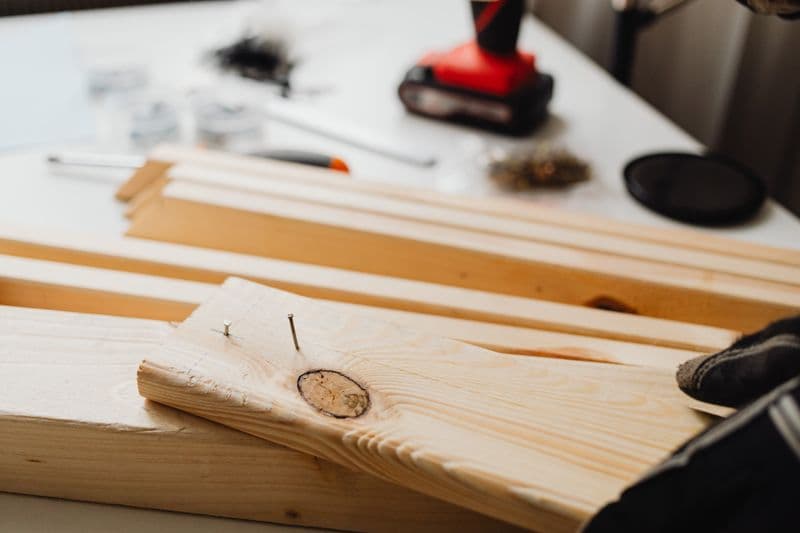
A nail driven into a wooden block beside woodworking tools and planks

Some links on this page are affiliate links. If you buy through one, Magoo Media Group earns a commission from the retailer at no extra cost to you. It never changes which product we rank first - how this site is funded.

Read this first

The short answer

A framing nailer joins structure. A brad nailer holds trim in place while glue dries or paint goes on. They are not two sizes of the same tool and neither one substitutes for the other - a brad nailer cannot build a wall and a framing nailer will destroy a piece of casing. If you need both jobs done, you are buying two tools, and that is the correct answer rather than a failure to find a compromise.

The fastener is where the difference actually lives. A 21-degree framing nail is 0.113 to 0.148 inches thick and 2 to 3-1/2 inches long, with a full round head designed to resist pull-through under load. An 18-gauge brad is 0.0475 inches thick, 3/8 to 2-1/8 inches long, with a head barely wider than the shank so the hole disappears under filler or paint. One is engineered to hold a building together. The other is engineered to be invisible.

If you are here because you own one and are wondering whether it covers the other job: it does not, in either direction. The useful question is which to buy first, and for most people arriving at this site the answer is the brad nailer - because trim, cabinets and small assemblies come up far more often in a garage than framing does, and because the brad nailer runs on any compressor you already own.

Published specifications, both classes
18-gauge brad nailer21-degree framing nailer
Fastener thickness0.0475" (18 gauge)0.113" to 0.148"
Fastener length3/8" to 2-1/8"2" to 3-1/2"
HeadBarely wider than the shankFull round head
Typical weight2.2 to 3.1 lb7.5 to 8.8 lb
Published air demand0.019 to 0.028 cu ft per nail0.09 SCFM per cycle at 100 PSI
Magazine100 brads55 to 64 nails
Structural useNoYes, where code permits
Runs on a 1-gallon trim compressorYesNo

Brad figures are Bostitch's and WEN's published specifications for the BTFP12233 and 61721; the framing figure is Metabo HPT's for the NR90AES1. The sources block below links each one. Weight ranges are the published figures for the four tools shown on this page.

The mistake this page exists to prevent

Buying a framing nailer for trim because it is "the more capable tool". It is not more capable at trim - it is incapable of it. A 0.131 inch nail through 3/4 inch casing splits the molding and leaves a hole you cannot fill. Capability in nailers is job-specific, not a ladder.

The picks

The two tools, side by side

Quick picks

#ProductBest forScorePrice
1
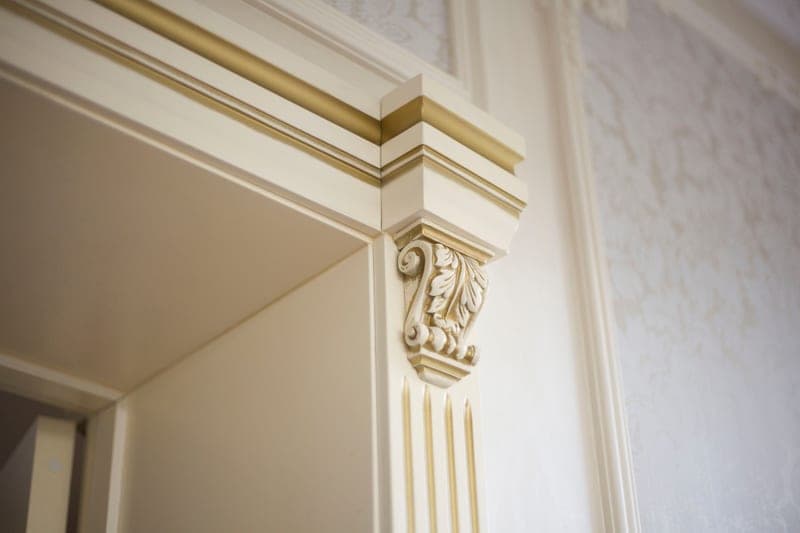
A length of white crown molding held up against an interior wall before fastening
Bostitch BTFP12233 Smart Point3.1 lbThe only brad nailer whose manual tells you what to size a compressor against: 1.15 CFM at 60 nails a minute, 0.58 CFM at 30.
Trim and casing work where you want the longest 18-gauge brad available5.3/10★★★☆☆

#ad Disclosure - we do not publish prices we cannot verify

2
A pneumatic framing nailer resting on framing lumber
Metabo HPT NR90AES17.5 lb0.09 SCFM at 100 PSI per cycle and 7.5 lb. Drives 3-1/2 inch nails off a 6-gallon pancake.
Framing, decking and subfloor off a portable compressor3.5/10★★☆☆☆

#ad Disclosure - we do not publish prices we cannot verify

3
A 15-gauge angled finish nailer next to trim molding
Bostitch BTFP721551.8 CFM free air at 80 PSI at 60 fasteners/min; 70-120 PSI operating range1.8 CFM of free air at 80 PSI at 60 nails a minute - the most honestly documented nailer figure we found.
Casing, baseboard and door trim4.3/10★★☆☆☆

#ad Disclosure - we do not publish prices we cannot verify

4
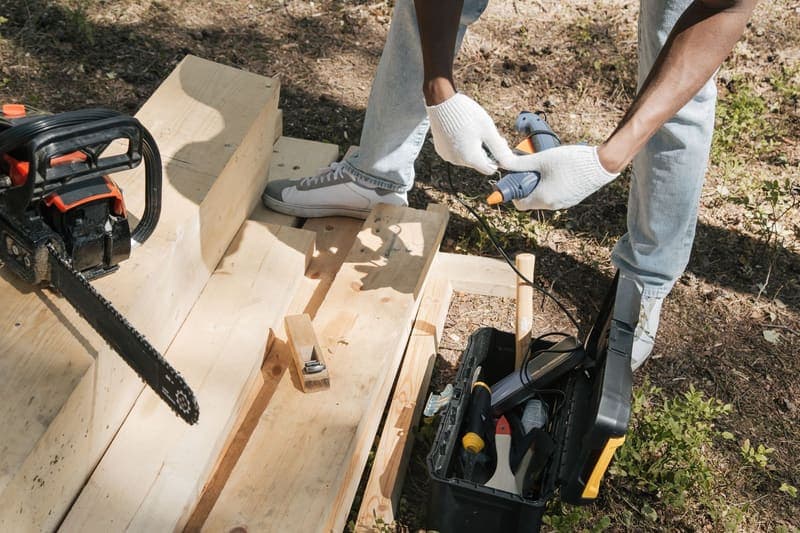
A carpenter working on a wooden panel with hand and power tools laid out beside it
WEN 617212.8 lb0.028 CFM per nail, published. The cheapest honest way into pneumatic trim work, with a pressure ceiling to match.
A first brad nailer when the compressor is the real purchase5.4/10★★★☆☆

#ad Disclosure - we do not publish prices we cannot verify

Scores are computed from manufacturer-published specs by the rubric on our methodology page. Nothing here has been bench-tested, and we do not publish prices we cannot verify.

Pick 1 - Bostitch BTFP12233

5.3/10★★★☆☆

Bostitch BTFP12233 Smart Point

Best for: Trim and casing work where you want the longest 18-gauge brad available

Verdict

The only brad nailer whose manual tells you what to size a compressor against: 1.15 CFM at 60 nails a minute, 0.58 CFM at 30.

What it does well

  • Publishes 1.15 CFM of free air at 80 PSI AND the firing rate it was measured at - 60 fasteners per minute
  • Takes 2-1/8 inch brads, the longest range in this group; everything else stops at 2 inches
  • Seven-year limited warranty on the pneumatic tool, the longest published here
  • 70 to 120 PSI operating range, so it runs on every compressor in our roster

What it will not do

  • 3.1 lb (1.4 kg) is the heaviest of the five, and you feel it overhead on crown
  • At a sustained 60 nails a minute its 1.15 CFM exceeds what a 0.7 CFM one-gallon trim compressor delivers
  • Costs noticeably more than the budget end of this class for the same 18-gauge hole
How this 5.3 was calculated
MetricScoreWeightBasis
Air economy5.040%No average CFM published - scored a neutral 5
Handling7.925%3.1 lb, on a 1.8-8 lb scale
Noise5.020%No dBA published - scored a neutral 5
Spec transparency2.015%1 of 5 useful figures published (average CFM, CFM at load, dBA, weight, minimum hose)
A length of white crown molding held up against an interior wall before fastening

Licensed stock photo - illustrative of the category, not a photo of this unit

#ad Disclosure - we do not publish prices we cannot verify

Published specs

Bostitch BTFP12233 Smart Point published specifications
Average air @ 90 PSINot published as a CFM figure
Performance1.15 CFM free air at 80 PSI at 60 fasteners/min (0.58 CFM at 30/min); 70-120 PSI; 5/8-2-1/8 in brads; 100-nail magazine
NoiseNot published
Weight3.1 lb
Minimum hoseNot published

Source: Bostitch BTFP12233 brad nailer - operation and maintenance manual, tool specifications

Pick 2 - Metabo HPT NR90AES1

3.5/10★★☆☆☆

Metabo HPT NR90AES1

Best for: Framing, decking and subfloor off a portable compressor

Verdict

0.09 SCFM at 100 PSI per cycle and 7.5 lb. Drives 3-1/2 inch nails off a 6-gallon pancake.

What it does well

  • 0.09 SCFM at 100 PSI published per cycle - genuinely undemanding for a full framing tool
  • 7.5 lb is light for a 3-1/2 inch capable nailer
  • 70-120 PSI operating range, so it works on every compressor in our roster

What it will not do

  • Nail pace is what drives demand; at roofing speed a small tank will not keep up
  • 21-degree plastic collation means you are buying plastic-strip nails, not paper-tape
How this 3.5 was calculated
MetricScoreWeightBasis
Air economy5.040%No average CFM published - scored a neutral 5
Handling0.825%7.5 lb, on a 1.8-8 lb scale
Noise5.020%No dBA published - scored a neutral 5
Spec transparency2.015%1 of 5 useful figures published (average CFM, CFM at load, dBA, weight, minimum hose)
A pneumatic framing nailer resting on framing lumber

Licensed stock photo - illustrative of the category, not a photo of this unit

#ad Disclosure - we do not publish prices we cannot verify

Published specs

Metabo HPT NR90AES1 published specifications
Average air @ 90 PSINot published as a CFM figure
Performance0.09 SCFM at 100 PSI per cycle, 70-120 PSI operating range, 64-70 nail magazine
NoiseNot published
Weight7.5 lb
Minimum hoseNot published

Source: Metabo HPT NR90AES1 framing nailer - product specifications

Pick 3 - Bostitch BTFP72155

4.3/10★★☆☆☆

Bostitch BTFP72155

Best for: Casing, baseboard and door trim

Verdict

1.8 CFM of free air at 80 PSI at 60 nails a minute - the most honestly documented nailer figure we found.

What it does well

  • Bostitch publishes the demand AND the firing rate it was measured at, which almost no brand does
  • Drives 1-1/4 to 2-1/2 inch DA-style angled nails
  • 70-120 PSI operating range, with 70 PSI enough for softwood trim

What it will not do

  • 15 gauge leaves a bigger hole than an 18-gauge brad nailer - wrong tool for delicate work
  • Angled magazines cost more per nail than straight 16-gauge
How this 4.3 was calculated
MetricScoreWeightBasis
Air economy5.040%No average CFM published - scored a neutral 5
Handling5.025%No weight published - scored a neutral 5
Noise5.020%No dBA published - scored a neutral 5
Spec transparency0.015%0 of 5 useful figures published (average CFM, CFM at load, dBA, weight, minimum hose)
A 15-gauge angled finish nailer next to trim molding

Licensed stock photo - illustrative of the category, not a photo of this unit

#ad Disclosure - we do not publish prices we cannot verify

Published specs

Bostitch BTFP72155 published specifications
Average air @ 90 PSINot published as a CFM figure
Performance1.8 CFM free air at 80 PSI at 60 fasteners/min; 70-120 PSI operating range
NoiseNot published
WeightNot published
Minimum hoseNot published

Source: Bostitch BTFP72155 finish nailer - operation and maintenance manual

Pick 4 - WEN 61721

5.4/10★★★☆☆

WEN 61721

Best for: A first brad nailer when the compressor is the real purchase

Verdict

0.028 CFM per nail, published. The cheapest honest way into pneumatic trim work, with a pressure ceiling to match.

What it does well

  • Publishes air demand per nail - 0.028 CFM at 88 PSI - which is the figure that actually scales to your pace
  • Fires from 60 PSI, the lowest minimum here, so a small tank spends less time waiting on the pump
  • Drives from 3/8 inch, shorter than any other nailer in this group, which matters on thin stock
  • 1/4 inch NPT inlet and a two-year warranty at a fraction of the class price

What it will not do

  • 115 PSI maximum, the lowest ceiling of the five - no headroom on dense hardwood trim
  • 2 inch maximum brad; it cannot reach the 2-1/8 inch length Bostitch offers
  • WEN's product page and its own manual disagree on magazine capacity, 106 against 100
  • Two-year warranty against five and seven years elsewhere in this group
How this 5.4 was calculated
MetricScoreWeightBasis
Air economy5.040%No average CFM published - scored a neutral 5
Handling8.425%2.8 lb, on a 1.8-8 lb scale
Noise5.020%No dBA published - scored a neutral 5
Spec transparency2.015%1 of 5 useful figures published (average CFM, CFM at load, dBA, weight, minimum hose)
A carpenter working on a wooden panel with hand and power tools laid out beside it

Licensed stock photo - illustrative of the category, not a photo of this unit

#ad Disclosure - we do not publish prices we cannot verify

Published specs

WEN 61721 published specifications
Average air @ 90 PSINot published as a CFM figure
Performance0.028 CFM per nail at 88 PSI (1.8 CFM at 80 PSI in the manual); 60-115 PSI; 3/8-2 in brads; 100-106 nail magazine
NoiseNot published
Weight2.8 lb
Minimum hoseNot published

Source: WEN 61721 18-gauge pneumatic brad nailer - product specifications

The arithmetic

Air demand: the brad nailer wins, and by more than you think

Converted to a common basis, an 18-gauge brad costs about 0.019 to 0.028 cubic feet of air per nail. Bostitch publishes 1.15 CFM of free air at 80 PSI at a stated 60 fasteners per minute, which is 0.019 per nail; WEN publishes 0.028 CFM per nail at 88 PSI directly. Those two figures, from tools at opposite ends of the price range, agree closely - which is how you know they are real.

Metabo HPT publishes 0.09 SCFM at 100 PSI per cycle for its framing nailer. That is three to five times the air per fastener, which is unsurprising given the nail is more than twice as thick and the driver has to move it. At a leisurely twenty nails a minute that is 1.8 CFM; at sixty it is 5.4 CFM, which is more than most portable compressors deliver.

The practical consequence is a different compressor conversation for each tool. A brad nailer genuinely runs on the smallest unit in our roster - a 1-gallon trim compressor delivering 0.7 CFM keeps up with trim nailing at a realistic pace, and Bostitch's own manual puts its requirement at 0.58 CFM for 30 fasteners a minute. A framing nailer wants a 6-gallon pancake minimum and prefers 20 gallons, because framing is fired faster and for longer stretches than trim.

Published air demand at 90 PSI
ToolCFM @ 90 PSIAt loadDutyWhat the number means
Brad nailer, 18 gauge0.5-BurstThe most forgiving air tool there is. A nailer draws air only at the instant it fires, so almost any tank covers it. That is why a 1-gallon compressor is a genuinely complete tool for trim work rather than a compromise.
Finish nailer, 15 gauge1.8-BurstBostitch publishes 1.8 CFM of free air at 80 PSI for its BTFP72155 running 60 fasteners a minute - a fast, sustained trim pace, not casual use. At a realistic pace the draw is a fraction of that.
Framing nailer, 21 or 30 degree2.5-BurstEngineering ToolBox lists 2.5 CFM for a framing nailer on a 25% load factor. Metabo HPT publishes 0.09 SCFM at 100 PSI for the NR90AES1 on a per-cycle basis. The two describe the same tool at different firing rates, which is exactly why one CFM number for a nailer is misleading: nail pace sets the demand, not the badge on the tool.
Roofing / coil nailerNot published-IntermittentNeither published chart carries a separate roofing-nailer line. Roofing is fired far faster and for far longer than framing, so treat it as the top of the framing range and size for recovery rather than peak. We will not print a number no source publishes.
Upholstery / crown stapler2-BurstEngineering ToolBox lists 2 CFM for an upholstery stapler, measured at 30 PSI. Low pressure means low demand, and a small tank keeps up easily.

Where two references publish different figures, both are shown rather than averaged into a number nobody published. Primary sources: Ingersoll Rand air consumption chart, Engineering ToolBox air tool consumption, and per-tool manufacturer specifications.

Sizing

Which compressor runs which

For the brad nailer, almost anything, and the nailer should never drive the compressor purchase. Our shared demand dataset carries 0.5 CFM for the 18-gauge class, from Engineering ToolBox's published table at a 25% load factor. Add our standard sizing margin and you need well under 1 CFM. Every compressor on this site clears that, down to the 1-gallon trim unit. Buying a bigger compressor because you bought a brad nailer is overbuying in its purest form.

For the framing nailer, the pancake class is the honest floor. A 6-gallon unit delivering around 2.6 CFM at 90 PSI keeps up at a deliberate pace, and the break-even against Metabo HPT's 0.09 cubic feet per nail lands somewhere around 25 to 30 nails a minute. Bump-firing down a row of sheathing will outrun it. If you are buying one compressor for framing work, 20 gallons and 4 CFM moves the break-even past any pace a person sustains by hand.

Both tools share the same plumbing advice, and it is the opposite of what we say about impact wrenches. A 1/4 inch hose is correct for both nailers - they take 1/4 inch NPT inlets and draw hundredths of a cubic foot per shot, so the thin recoil hose from your compressor kit is the right hose. What matters instead is a stable regulator and dry air, because nail depth is set by pressure and a regulator that sags when the tank cycles gives you inconsistent depth on both tools.

Senco PC1010: what it runs

Delivered flow: 0.7 CFM at 90 PSI. We call a tool covered when delivered flow clears its highest published demand plus a 25% margin.

Runs it (1)

  • Brad nailer, 18 gaugeYes - needs 0.5 CFM, burst duty

Does not run it (4)

  • Finish nailer, 15 gaugeNo - needs 1.8 CFM, burst duty
  • Upholstery / crown staplerNo - needs 2 CFM, burst duty
  • Framing nailer, 21 or 30 degreeNo - needs 2.5 CFM, burst duty
  • Roofing / coil nailerCannot say - no published demand figure for this class

Demand figures from the air tool CFM chart, which cites every one of them.

What each fastener does

Holding power, and the honest limit of a brad

An 18-gauge brad has very little withdrawal resistance. That is a feature for trim - it is thin enough not to split a 1/2 inch piece of shoe molding, and the hole closes under a dab of filler - but it means the brad is a clamp, not a joint. On cabinet assembly and face frames the glue is the joint and the brads hold the parts still while it cures. On casing and baseboard the brad holds the piece against the wall and that is all that is being asked of it.

A framing nail is the joint. A full round head bearing against the surface of the member is what resists pull-through, which is exactly why connector schedules and prescriptive framing codes call for full round head nails and why clipped-head tools are rejected in some jurisdictions. There is nothing decorative about it and no attempt to hide the hole.

This is also why the middle of the range exists. A 15 or 16-gauge finish nailer drives a thicker, longer fastener with real holding power for heavy baseboard, door jambs and stair parts - the jobs where a brad will not hold and a framing nail is absurd. We carry one in the registry: a 15-gauge angled tool publishing 1.8 CFM of free air at 80 PSI at 60 fasteners a minute, roughly 60% more air per shot than an 18-gauge brad. If your work is mostly heavy trim rather than light, that is the tool to look at instead of either extreme on this page.

The practical difference

Weight, and where you hold each one

The spread is larger than any other figure on this page. The brad nailers here publish 2.2 to 3.1 lb; the framing nailers publish 7.5 to 8.8 lb. That is three to four times the mass, and it matters because of where each tool is used. Trim work is frequently overhead, on a ladder, at the end of an extended arm - crown molding is the worst case and a pound of difference between brad nailers is genuinely felt there.

Framing is mostly at waist height or below, driving down into plates and joists, with the tool's own weight working for you rather than against you. Eight and a half pounds held at hip level for an hour is unremarkable. The same eight and a half pounds overhead, which is what toe-nailing a rafter asks for, is the hardest work either tool class produces.

There is a secondary effect worth knowing: recoil. A framing nailer driving a 3-1/2 inch nail kicks, and on a bump-fire trigger that recoil can lift the tool and fire a second nail if you are leaning on it. Every framing nailer here except the budget entry ships with or offers a selectable single-sequential mode for exactly this reason, and it is the mode to use until the tool feels predictable in your hands.

The decision

Which to buy first

Buy the brad nailer first if your work is inside the house. Trim, casing, shoe molding, cabinet assembly, small boxes, drawer parts, picture frames, backing panels - these come up constantly and a brad nailer turns a two-person clamping job into a one-person job. It runs on the compressor you already own, costs the least of anything on this page, and weighs nothing. For most people reading this site, this is the correct first nailer and the framing nailer may never be needed at all.

Buy the framing nailer first if you have a specific structural project queued - a deck, a fence, a shed, a stud wall. It is not a tool you buy speculatively, because framing is project work rather than ongoing work, and a framing nailer sitting idle in a case is a worse purchase than a brad nailer used monthly. If the project is one deck, the budget end of the framing class is a rational purchase and nobody should talk you out of it.

And if you are honestly going to do both, buy them in the order the work arrives, not as a set. They share no consumables, no magazine format and no nail stock, so there is no bundling efficiency to capture. What they do share is the compressor and the hose, which is the expensive part - and the framing nailer is the tool that sets the compressor size, so if framing is in the plan at all, size the compressor for it on day one even if you buy the brad nailer first.

FAQ

Questions people actually ask

Can a brad nailer be used for framing?

No. An 18-gauge brad is 0.0475 inches thick with almost no withdrawal resistance and no full round head, which is what framing connections require. It is a clamping fastener for trim, not a structural one. Using one for framing is unsafe and will not pass inspection anywhere.

Can a framing nailer be used for trim?

No, in practice. A 0.113 to 0.148 inch nail through 3/4 inch casing splits the molding, and the full round head leaves a hole too large to fill cleanly. The minimum framing nail length is 2 inches, which is longer than most trim details allow for.

Which uses more air, a framing nailer or a brad nailer?

The framing nailer, by three to five times per fastener. Metabo HPT publishes 0.09 SCFM per cycle at 100 PSI for its framing nailer against 0.019 to 0.028 cubic feet per nail for the 18-gauge brad nailers here. Both are small; the framing nailer is also fired faster and for longer.

Which nailer should I buy first?

The brad nailer if your work is interior trim, cabinets and small assemblies, because that work recurs and the tool runs on any compressor. The framing nailer if you have a specific structural project queued - a deck, fence, shed or stud wall. Framing nailers are poor speculative purchases.

Do I need a bigger compressor for a framing nailer?

Bigger than for a brad nailer, yes. A brad nailer runs on a 1-gallon 0.7 CFM trim unit. A framing nailer wants a 6-gallon pancake at minimum and prefers 20 gallons and 4 CFM if you intend to bump-fire. The framing nailer is the tool that should set your compressor size.

What about a finish nailer - is that the middle ground?

Yes, and it is the right tool for heavy trim. A 15 or 16-gauge finish nailer drives a thicker, longer fastener with real holding power for baseboard, jambs and stair parts. The 15-gauge tool we carry publishes 1.8 CFM of free air at 80 PSI at 60 fasteners a minute - about 60% more air per shot than an 18-gauge brad.

Sources

Where these numbers come from

Accessed September 2026. If a figure on this page does not match the manufacturer's current sheet, tell us at contact@psiandhose.com and we will correct and date the change - see our editorial policy.

Read next