Skip to content
Psi & Hose

Compare

Oil-free vs oil-lubricated air compressor

This is a duty-cycle decision dressed up as a maintenance decision. If your use is bursts, oil-free is genuinely the right answer - and if it is continuous, nothing else will do.

By Ryder M.Last updated Published
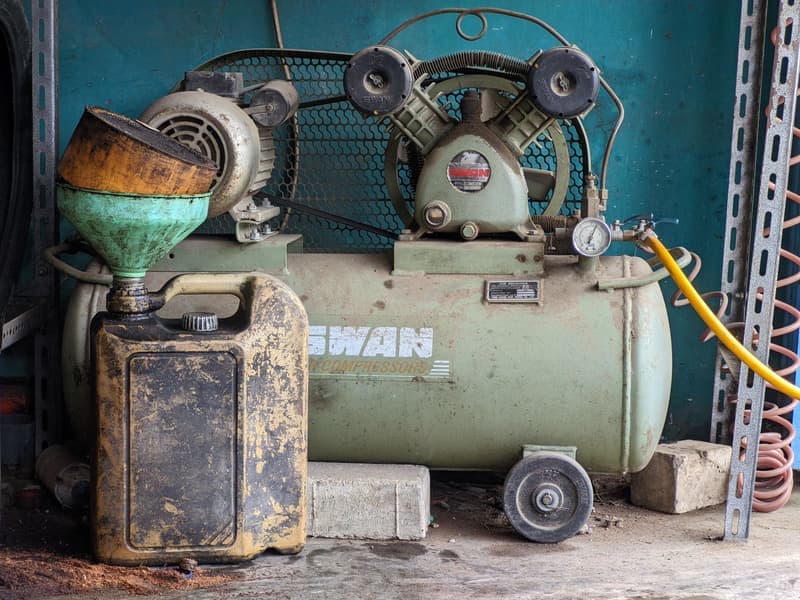
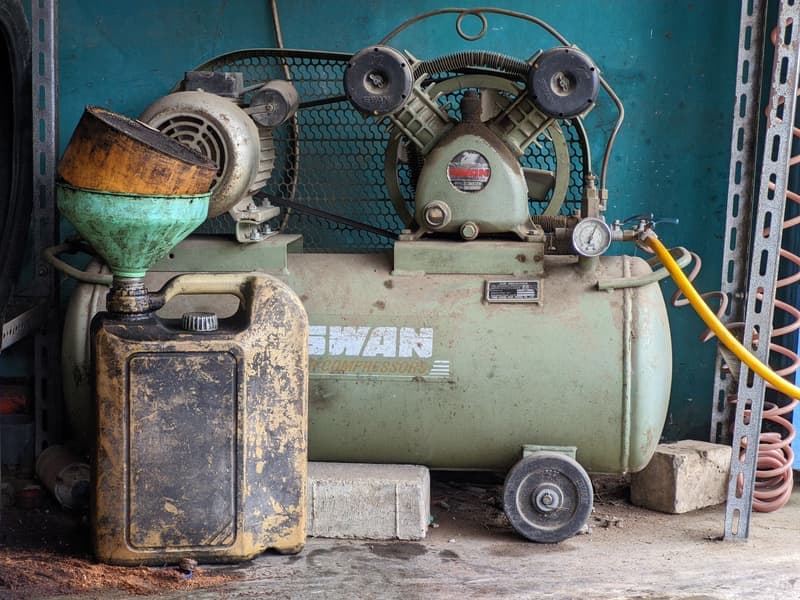
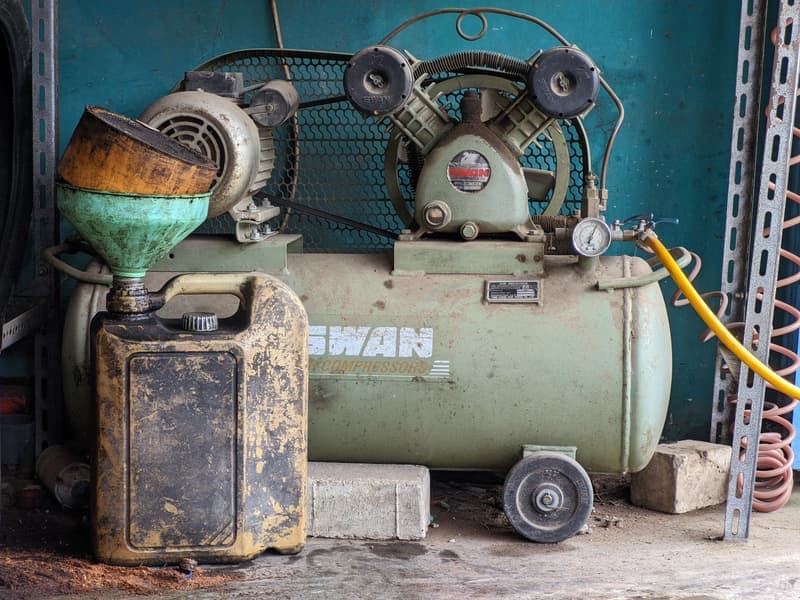
A belt-drive oil-lubricated compressor pump beside a compressor tank

Some links on this page are affiliate links. If you buy through one, Magoo Media Group earns a commission from the retailer at no extra cost to you. It never changes which product we rank first - how this site is funded.

Short version

The difference in one paragraph

An oil-lubricated pump runs its pistons in an oil bath that reduces friction and carries heat away from the cylinder walls. An oil-free pump uses permanently lubricated seals and no oil reservoir. The oil-lubricated pump runs cooler, slower and longer; the oil-free pump asks nothing of you and wears out sooner.

That is the entire trade. Everything else - noise, weight, price, whether it can sit at an angle - follows from it.

Head to head
Oil-freeOil-lubricated
MaintenanceNoneCheck level, change on schedule, keep level
Pump lifeFinite by design - 3,000+ hours published on one modelSubstantially longer
Heat toleranceLower - no oil bath to carry heat awayHigher - this is why continuous-duty units are oil-lubricated
Typical formatDirect drive, aluminum, portableBelt drive, cast iron, stationary or wheeled
NoiseGenerally higher (fast direct drive)Generally lower (slower belt-driven pump)
Can sit at an angleYesNo - the oil bath needs to be where the pump expects
Best forBurst work, portability, occasional useContinuous work, long service life

The products

Both sides, on published specs

Quick picks

#ProductBest forScorePrice
1
A red six-gallon pancake air compressor on a garage floor
Porter-Cable C20022.6 CFM @ 90 / 6 gal / 150 PSIThe default answer to 'cheapest useful compressor'. 6 gallons, 2.6 CFM, 150 PSI, and it has been the same machine for years.
A first compressor for nailing, inflation and burst automotive work3.6/10★★☆☆☆
Check price on Amazon

#ad Disclosure - we do not publish prices we cannot verify

2
A thirty-gallon belt-drive air compressor with a cast iron pump
DEWALT DXCMLA1983054 30-gallon5.7 CFM @ 90 / 30 gal / 155 PSI5.7 CFM, 30 gallons, oil-lubricated cast iron and belt drive. Where a garage compressor stops being disposable.
A permanent garage compressor you expect to keep for a decade7.9/10★★★★☆
Check price on Amazon

#ad Disclosure - we do not publish prices we cannot verify

3
A ten-gallon vertical oil-free air compressor on wheels in a workshop
California Air Tools 10020C5.3 CFM @ 90 / 10 gal / 125 PSI / 70 dBA5.3 CFM at 70 dBA with a published 70/30 duty cycle. The first unit here that runs a continuous-duty tool.
Running a ratchet, die grinder or touch-up gun without waiting6.2/10★★★☆☆
Check price on Amazon

#ad Disclosure - we do not publish prices we cannot verify

4
A large stationary vertical sixty-gallon air compressor in a workshop
Industrial Air ILA3606056 60-gallon11.5 CFM @ 90 / 60 gal / 155 PSI11.5 CFM at 90 PSI. Included as the reference point for what continuous sanding and blasting actually costs.
Body work, blasting, or running two tools at once8.1/10★★★★☆
Check price on Amazon

#ad Disclosure - we do not publish prices we cannot verify

Scores are computed from manufacturer-published specs by the rubric on our methodology page. Nothing here has been bench-tested, and we do not publish prices we cannot verify.

Pick 1 - Porter-Cable C2002

3.6/10★★☆☆☆

Porter-Cable C2002

Best for: A first compressor for nailing, inflation and burst automotive work

Verdict

The default answer to 'cheapest useful compressor'. 6 gallons, 2.6 CFM, 150 PSI, and it has been the same machine for years.

What it does well

  • 2.6 CFM at 90 PSI and 3.7 at 40 - the most common spec in the budget class for a reason
  • 6-gallon tank at 150 PSI stores enough air for real bursts of impact work
  • Two couplers, so two people or two tools without swapping

What it will not do

  • Porter-Cable does not publish a noise figure for it; the class sits in the high 70s to low 80s dBA
  • 2.6 CFM will not run a ratchet, die grinder or sander continuously
How this 3.6 was calculated
MetricScoreWeightBasis
Air flow3.640%2.6 CFM at 90 PSI, on a 0.7-6 CFM scale
Stored air2.325%6 gal x 150 PSI = 900, on a 125-3,500 scale
Noise5.015%Manufacturer publishes no dBA figure - scored a neutral 5, not a guess
Portability5.010%No weight published - scored a neutral 5
Spec transparency3.310%2 of 6 useful figures published (CFM at 90, CFM at 40, dBA, duty cycle, recovery, weight)
A red six-gallon pancake air compressor on a garage floor

Licensed stock photo - illustrative of the category, not a photo of this unit

Check price on Amazon

#ad Disclosure - we do not publish prices we cannot verify

Published specs

Porter-Cable C2002 published specifications
CFM @ 90 PSI2.6
CFM @ 40 PSI3.7
Tank6 gal
Max pressure150 PSI
NoiseNot published
Duty cycleNot published
RecoveryNot published
PumpOil-free
Motor0.8
WeightNot published
Power120V

Source: Porter-Cable C2002 - product specifications

Pick 2 - DEWALT DXCMLA1983054

7.9/10★★★★☆

DEWALT DXCMLA1983054 30-gallon

Best for: A permanent garage compressor you expect to keep for a decade

Verdict

5.7 CFM, 30 gallons, oil-lubricated cast iron and belt drive. Where a garage compressor stops being disposable.

What it does well

  • 5.7 CFM at 90 PSI and 7.0 at 40 - clears ratchets, die grinders and touch-up spraying
  • Oil-lubricated belt drive runs cooler and slower than a direct-drive oil-free pump
  • 120/240V, so it can move to a 240V circuit later

What it will not do

  • Oil-lubricated means an actual maintenance routine: check and change the oil
  • 155 PSI on 30 gallons stores less than 175 PSI on 20 in some comparisons - check the math, not the tank
How this 7.9 was calculated
MetricScoreWeightBasis
Air flow9.440%5.7 CFM at 90 PSI, on a 0.7-6 CFM scale
Stored air10.025%30 gal x 155 PSI = 4650, on a 125-3,500 scale
Noise5.015%Manufacturer publishes no dBA figure - scored a neutral 5, not a guess
Portability5.010%No weight published - scored a neutral 5
Spec transparency3.310%2 of 6 useful figures published (CFM at 90, CFM at 40, dBA, duty cycle, recovery, weight)
A thirty-gallon belt-drive air compressor with a cast iron pump

Licensed stock photo - illustrative of the category, not a photo of this unit

Check price on Amazon

#ad Disclosure - we do not publish prices we cannot verify

Published specs

DEWALT DXCMLA1983054 30-gallon published specifications
CFM @ 90 PSI5.7
CFM @ 40 PSI7
Tank30 gal
Max pressure155 PSI
NoiseNot published
Duty cycleNot published
RecoveryNot published
PumpOil-lubricated
Motor1.9
WeightNot published
Power120/240V

Source: DEWALT DXCMLA1983054 30-gallon compressor - product specifications

Pick 3 - California Air Tools 10020C

6.2/10★★★☆☆

California Air Tools 10020C

Best for: Running a ratchet, die grinder or touch-up gun without waiting

Verdict

5.3 CFM at 70 dBA with a published 70/30 duty cycle. The first unit here that runs a continuous-duty tool.

What it does well

  • 5.3 CFM at 90 PSI clears every published figure for ratchets, die grinders and touch-up spraying
  • 70 dBA at that output is unusual - most 5+ CFM units are far louder
  • Publishes a real 70/30 duty cycle and a 25-second recovery from 95 to 125 PSI

What it will not do

  • 82.5 lb and 14 A - it needs its own circuit and it is not a carry-it-upstairs machine
  • 125 PSI max, so a bigger tank at higher pressure still stores more per fill
How this 6.2 was calculated
MetricScoreWeightBasis
Air flow8.740%5.3 CFM at 90 PSI, on a 0.7-6 CFM scale
Stored air3.325%10 gal x 125 PSI = 1250, on a 125-3,500 scale
Noise5.615%70 dBA, on a 58-85 dBA scale
Portability1.110%82.5 lb, on a 20-90 lb scale
Spec transparency10.010%6 of 6 useful figures published (CFM at 90, CFM at 40, dBA, duty cycle, recovery, weight)
A ten-gallon vertical oil-free air compressor on wheels in a workshop

Licensed stock photo - illustrative of the category, not a photo of this unit

Check price on Amazon

#ad Disclosure - we do not publish prices we cannot verify

Published specs

California Air Tools 10020C published specifications
CFM @ 90 PSI5.3
CFM @ 40 PSI6.4
Tank10 gal
Max pressure125 PSI
Noise70 dBA
Duty cycle70/30 (manufacturer-published)
Recovery120 s empty to full; 25 s recovery 95 to 125 PSI
PumpOil-free
Motor2.0
Weight82.5 lb
Power110V, 14 A

Source: California Air Tools 10020C - product specifications

Pick 4 - Industrial Air ILA3606056

8.1/10★★★★☆

Industrial Air ILA3606056 60-gallon

Best for: Body work, blasting, or running two tools at once

Verdict

11.5 CFM at 90 PSI. Included as the reference point for what continuous sanding and blasting actually costs.

What it does well

  • 11.5 CFM at 90 PSI and 13.4 at 40 - clears an orbital sander with margin
  • Cast-iron twin-cylinder pump on a 60-gallon vertical tank
  • 3.7 HP on 240V

What it will not do

  • 240V and stationary: this is an electrical project, not a purchase
  • Overkill for anyone whose honest tool list is nailers, tires and a 1/2-inch impact - which is most people reading this
How this 8.1 was calculated
MetricScoreWeightBasis
Air flow10.040%11.5 CFM at 90 PSI, on a 0.7-6 CFM scale
Stored air10.025%60 gal x 155 PSI = 9300, on a 125-3,500 scale
Noise5.015%Manufacturer publishes no dBA figure - scored a neutral 5, not a guess
Portability5.010%No weight published - scored a neutral 5
Spec transparency3.310%2 of 6 useful figures published (CFM at 90, CFM at 40, dBA, duty cycle, recovery, weight)
A large stationary vertical sixty-gallon air compressor in a workshop

Licensed stock photo - illustrative of the category, not a photo of this unit

Check price on Amazon

#ad Disclosure - we do not publish prices we cannot verify

Published specs

Industrial Air ILA3606056 60-gallon published specifications
CFM @ 90 PSI11.5
CFM @ 40 PSI13.4
Tank60 gal
Max pressure155 PSI
NoiseNot published
Duty cycleNot published
RecoveryNot published
PumpOil-lubricated
Motor3.7
WeightNot published
Power240V

Source: Industrial Air ILA3606056 - product specifications

Against the grain

Why oil-free is the right answer for most home garages

Forum consensus tends to favor oil-lubricated on principle, and the principle is sound for a shop. For a home garage doing burst work, oil-free is usually the better purchase and it is worth saying so directly.

The reason is honest arithmetic about how you will actually use it. California Air Tools publishes a life expectancy of 3,000-plus hours before wear for its oil-free pumps. A home garage running a compressor thirty minutes a week reaches that in something over a hundred years of calendar time. The pump will outlive your interest in the hobby.

Against that, the maintenance burden on an oil-lubricated pump is real and it is the kind that gets skipped. A neglected oil-lubricated pump fails sooner than a well-treated oil-free one, so the longevity advantage is conditional on behavior rather than guaranteed by design.

When the answer flips

The moment you have a continuous-duty tool on the list - a die grinder, a cut-off tool, a sander, a spray gun used for more than touch-ups - the heat management of an oil bath stops being a nice-to-have. Every genuinely continuous-duty compressor made is oil-lubricated, and that is not a coincidence.

The honest downsides

What oil-free actually costs you

Noise. Direct-drive oil-free pumps turn fast and sit in thin aluminum and steel. Published figures for oil-free pancakes in our roster run 75.5 to 82 dBA. The quiet oil-free units get to 58 to 70 dBA by turning the pump slower, which costs flow.

Heat under sustained load. This is the practical expression of the whole difference: an oil-free pump run past its duty cycle trips its thermal cutout and stops. People read that as a fault. It is the design working as intended.

Rebuildability. An oil-lubricated cast-iron pump can often be rebuilt. An oil-free aluminum pump generally cannot in any economic sense - when it wears, the compressor is done. On a bottom-of-the-band machine that is fine; on one costing three times as much it is worth thinking about.

FAQ

Questions people actually ask

What is the difference between oil-free and oil-lubricated air compressors?

An oil-lubricated pump runs its pistons in an oil bath that reduces friction and carries away heat; an oil-free pump uses permanently lubricated seals and no reservoir. Oil-lubricated runs cooler and lasts longer but needs maintenance; oil-free needs none and wears out sooner.

What are the pros and cons of an oil-free air compressor?

Pros: zero maintenance, lighter, works at any angle, cheaper, and for burst use the pump will likely outlast your interest. Cons: louder, lower heat tolerance so it trips on sustained load, and effectively not rebuildable when it wears.

Is oil-free good enough for air tools?

For burst tools - impacts, nailers, blow guns - yes, entirely. For continuous tools like die grinders and sanders, an oil-free pump will hit its thermal limit before its flow limit, and oil-lubricated is the correct choice.

How often do you change oil in an air compressor?

On the manufacturer's published schedule for your specific pump - intervals vary by design and duty, and we will not print a generic figure. Checking the level before long sessions matters more in practice, because that is the step people skip.

Can you use an oil-free compressor for spray painting?

The pump type is not the problem - air preparation is. Both types put water into the line and both need filtration before a gun. What matters more is whether the compressor delivers the CFM the gun needs continuously, and that is where oil-lubricated units tend to win.

Sources

Where these numbers come from

Accessed September 2026. If a figure on this page does not match the manufacturer's current sheet, tell us at contact@psiandhose.com and we will correct and date the change - see our editorial policy.

Read next