Skip to content
Psi & Hose

CFM & Sizing

Air compressor PSI ratings explained

Max PSI is the most misread number on a compressor. Here is what each rating buys, the arithmetic behind it, and when paying for more is a waste.

By Ryder M.Last updated Published
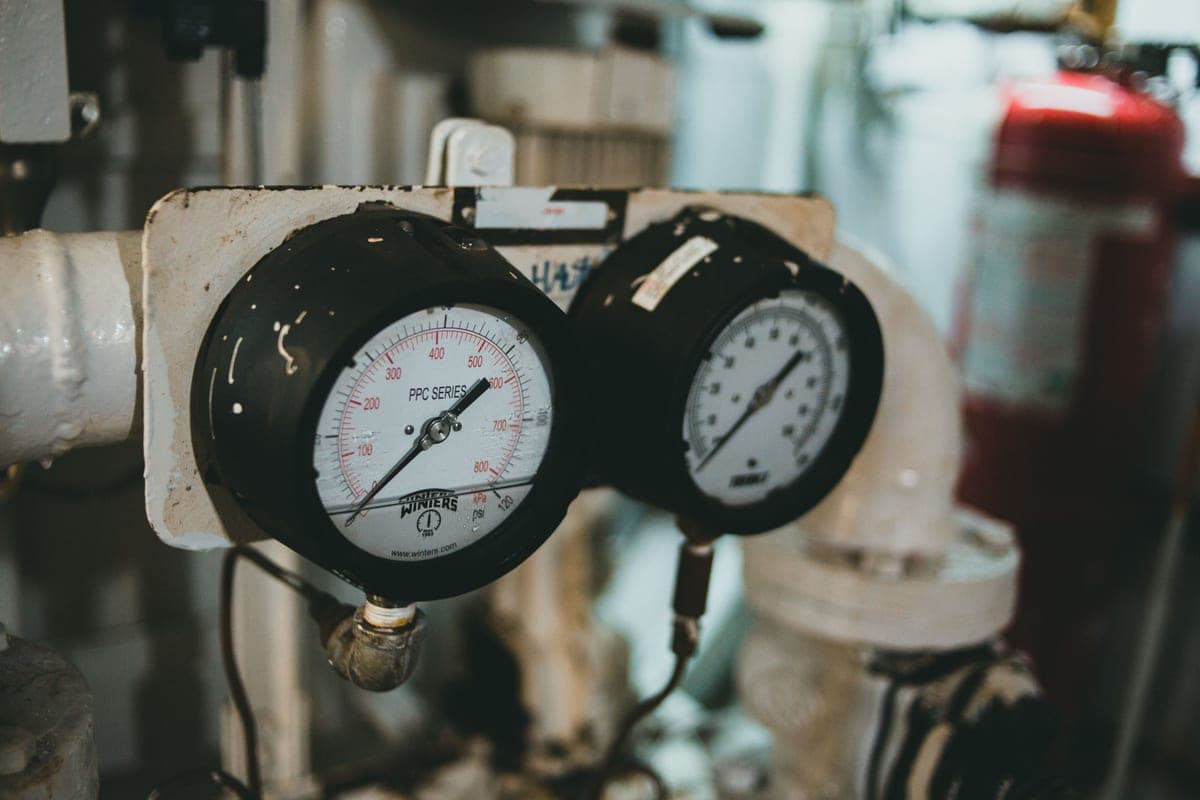
A close-up of an air compressor pressure gauge on a regulator manifold

Some links on this page are affiliate links. If you buy through one, Magoo Media Group earns a commission from the retailer at no extra cost to you. It never changes which product we rank first - how this site is funded.

Read this first

The short answer

A compressor's max PSI rating tells you how tightly it packs air into the tank, and nothing else. It does not tell you how much air the machine makes - that is CFM at 90 PSI - and it does not tell you what pressure your tools will see, because that is set at the regulator, downstream, and is almost always 90 PSI regardless of what the tank is rated for.

What a higher max PSI does buy is stored air in the same tank. Pack 200 PSI into 6 gallons and you are storing about the same usable air as 125 PSI in 20 gallons. That is a real and often-overlooked advantage, and it is the entire reason the Metabo HPT EC914S - a 6-gallon pancake rated to 200 PSI with a published 4.0 CFM at 90 PSI - behaves like a much bigger machine.

Where buyers go wrong is treating max PSI as a performance grade. It is not. A 175 PSI unit delivering 4.0 CFM makes less air than a 155 PSI unit delivering 5.7 CFM, and the tool does not care which tank it came out of. Never trade CFM for max PSI. Read the two numbers together, with tank volume, and the ratings stop being marketing and start being arithmetic.

What each max PSI rating means in practice
Max PSIWhere you see itWhat it means for you
100 PSI and belowAlmost nothing current; some very old units and a few airbrush compressorsBelow a standard 90 PSI tool working pressure plus any headroom. Treat a 100 PSI ceiling as unusable for general air tools
120-125 PSIUltra-quiet units, 12V inflators, small trim compressorsWorkable but with almost no storage headroom above 90 PSI. The pump will cycle constantly
135-150 PSIThe standard 6-gallon pancake and most hot dogsThe mainstream rating. Enough headroom for nailing and inflation, modest for automotive bursts
155-165 PSILarger portables and belt-drive 30-gallon unitsA meaningful storage gain over 150 PSI in the same tank; where most permanent garage units sit
175 PSI20-gallon vertical portablesThe best storage-per-gallon in the budget category. Usually paired with a modest 4.0 CFM pump
200 PSIA small number of high-capacity pancakesMaximum storage per gallon. Only useful if the pump also delivers - check CFM at 90 PSI first

Ratings above are the specification bands we see across the units in our product roster; each individual figure cited on this page is the manufacturer's own published specification, linked in the sources block.

The number that is not on the box

Nothing you own runs at the tank's max pressure. Air tools are specified at 90 PSI, and the regulator steps the tank pressure down to that. Max PSI is a storage specification, not an output specification - which is why a 200 PSI rating on a pump that makes 2 CFM is not an upgrade.

The query, answered directly

Why there is no such thing as a 100 PSI air compressor anymore

People search for a 100 PSI compressor, and the honest answer is that you should not buy one even if you find it. Air tools are rated at 90 PSI working pressure. A tank that cuts out at 100 PSI gives you 10 PSI of headroom, which means the pressure switch re-engages almost immediately and the machine runs continuously - which is exactly the condition that cooks a pump and trips a thermal overload.

The lowest ceiling in our current roster is 120 PSI, on the California Air Tools 8010A and the VIAIR 88P 12V inflator, and 120 is already tight. Most shop-class machines land at 150 PSI or above for this reason. If you are reading a 100 PSI figure on a listing, check whether it is the max rating or the regulated output, because those two numbers get swapped in product copy constantly.

The exception is purpose-built low-pressure equipment: airbrush compressors, some inflation-only units, and tire work where 35 PSI is the target. Those are specified around their job, not around a 90 PSI tool. If your entire use case is inflating things, a 100 to 120 PSI machine is fine and a 175 PSI machine is wasted money.

Do the math yourself

The stored-air arithmetic, shown

Here is the formula, and it is the only one you need. Usable free air stored above your working pressure, in gallons, is the tank volume multiplied by the difference between max PSI and working PSI, divided by 14.7 - atmospheric pressure at sea level. Divide by 7.48 to get cubic feet, which is the unit CFM is measured in, then divide by your tool's CFM to get minutes of run time with the pump off.

Run that on the machines in our roster, at a 90 PSI working pressure, and the ratings reorder in a way the box copy never shows. A 6-gallon tank at 200 PSI stores about 6.0 cubic feet of usable air. A 20-gallon tank at 125 PSI stores about 6.4 cubic feet. Those are effectively the same machine for storage purposes, and one of them weighs 41 pounds and the other needs a corner of the garage.

The same arithmetic also shows where max PSI stops mattering. A 30-gallon tank at 155 PSI stores about 17.7 cubic feet; a 20-gallon tank at 175 PSI stores about 15.5. The bigger tank with the lower rating still wins, because volume scales faster than the pressure difference does. Max PSI is a multiplier on volume, not a substitute for it.

Usable stored air above 90 PSI, computed from published tank volume and max PSI
Tank and ratingUsable free airMinutes at a 4 CFM draw, pump off
6 gal at 150 PSI (standard pancake)3.3 cu ft0.8 min
6 gal at 165 PSI (DEWALT DWFP55126)4.1 cu ft1.0 min
6 gal at 200 PSI (Metabo HPT EC914S)6.0 cu ft1.5 min
8 gal at 120 PSI (California Air Tools 8010A)2.2 cu ft0.5 min
20 gal at 125 PSI (for comparison)6.4 cu ft1.6 min
20 gal at 175 PSI (Husky C201H)15.5 cu ft3.9 min
30 gal at 155 PSI (DEWALT DXCMLA1983054)17.7 cu ft4.4 min

Our arithmetic from each manufacturer's published tank volume and max PSI: usable gallons = volume x (max PSI - 90) / 14.7, converted at 7.48 gallons per cubic foot. Tank volumes and ratings are sourced; the run times are a simplification that assumes the pump is off and the tool draws continuously, so treat them as a floor rather than a forecast.

If you are shopping

The picks, by pressure ceiling

Quick picks

#ProductBest forScorePrice
1
Metabo HPT EC914S (THE TANK) product photo
Metabo HPT EC914S (THE TANK)4 CFM @ 90 / 6 gal / 200 PSI4.0 CFM at 90 PSI and 200 PSI max - the only 6-gallon unit here that breaks the 2.6 CFM ceiling.
Getting real CFM without moving up to a 20-gallon footprint5.1/10★★★☆☆

#ad Disclosure - price as of November 14, 2026

2
A twenty-gallon vertical air compressor standing against a garage wall
Husky C201H 20-gallon4 CFM @ 90 / 20 gal / 175 PSI / 83 dBA4.0 CFM with 20 gallons at 175 PSI. The cheapest way to buy STORAGE rather than flow.
Burst automotive work where tank volume, not CFM, is the limit6.3/10★★★☆☆

#ad Disclosure - we do not publish prices we cannot verify

3
DEWALT DWFP55126 product photo
DEWALT DWFP551262.6 CFM @ 90 / 6 gal / 165 PSI / 75.5 dBA165 PSI instead of 150, at 75.5 dBA and 30 lb. The extra 15 PSI is free tank storage.
The pancake to buy if you are choosing on numbers alone4.0/10★★☆☆☆

#ad Disclosure - we do not publish prices we cannot verify

4
Bostitch BTFP02012 product photo
Bostitch BTFP020122.6 CFM @ 90 / 6 gal / 150 PSI / 78.5 dBA2.6 CFM at 78.5 dBA published - quieter on paper than most of the pancake class at the same output.
A pancake for someone who has to work near neighbors3.2/10★★☆☆☆

#ad Disclosure - we do not publish prices we cannot verify

5
California Air Tools 8010A product photo
California Air Tools 8010A2.2 CFM @ 90 / 8 gal / 120 PSI / 60 dBA60 dBA with 8 gallons and a published 30-60 minute continuous run limit. The honest quiet middle ground.
A garage where the compressor runs while you are standing next to it4.9/10★★☆☆☆

#ad Disclosure - price as of November 14, 2026

Scores are computed from manufacturer-published specs by the rubric on our methodology page. Nothing here has been bench-tested. Prices are Amazon's own, refreshed daily, and never shown when we cannot verify them.

Pick 1 - Metabo HPT EC914S

5.1/10★★★☆☆

Metabo HPT EC914S (THE TANK)

Best for: Getting real CFM without moving up to a 20-gallon footprint

Verdict

4.0 CFM at 90 PSI and 200 PSI max - the only 6-gallon unit here that breaks the 2.6 CFM ceiling.

What it does well

  • 4.0 CFM at 90 PSI is 54% more air than the rest of the 6-gallon class
  • 200 PSI max means the same 6 gallons holds far more usable air
  • Clears the published average demand for a 1/2-inch impact and a 3/8-inch ratchet

What it will not do

  • 41 lb, the heaviest 6-gallon unit in the roster
  • Metabo HPT does not publish a noise figure, and high-pressure pumps are not quiet
How this 5.1 was calculated
MetricScoreWeightBasis
Air flow6.240%4 CFM at 90 PSI, on a 0.7-6 CFM scale
Stored air3.225%6 gal x 200 PSI = 1200, on a 125-3,500 scale
Noise5.015%Manufacturer publishes no dBA figure - scored a neutral 5, not a guess
Portability7.010%41 lb, on a 20-90 lb scale
Spec transparency3.310%2 of 6 useful figures published (CFM at 90, CFM at 40, dBA, duty cycle, recovery, weight)
Metabo HPT EC914S (THE TANK) product photo

Product image from the Amazon listing for this model

#ad Disclosure - price as of November 14, 2026

Published specs

Metabo HPT EC914S (THE TANK) published specifications
CFM @ 90 PSI4
CFM @ 40 PSINot published
Tank6 gal
Max pressure200 PSI
NoiseNot published
Duty cycleNot published
RecoveryNot published
PumpOil-free
MotorNot published
Weight41 lb
Power120V

Source: Metabo HPT EC914S THE TANK - product specifications

Pick 2 - Husky C201H

6.3/10★★★☆☆

Husky C201H 20-gallon

Best for: Burst automotive work where tank volume, not CFM, is the limit

Verdict

4.0 CFM with 20 gallons at 175 PSI. The cheapest way to buy STORAGE rather than flow.

What it does well

  • 20 gallons at 175 PSI is roughly six times the stored air of a 6-gallon 150 PSI pancake
  • 4.0 CFM at 90 PSI and 5.2 at 40 - enough to recover between bursts instead of chasing you
  • Vertical footprint takes a corner instead of floor space

What it will not do

  • 83 dBA published and a 7-minute fill from empty - plan to switch it on before you start
  • Oil-free at 20 gallons means a shorter pump life than a cast-iron oil-lubricated unit
How this 6.3 was calculated
MetricScoreWeightBasis
Air flow6.240%4 CFM at 90 PSI, on a 0.7-6 CFM scale
Stored air10.025%20 gal x 175 PSI = 3500, on a 125-3,500 scale
Noise0.715%83 dBA, on a 58-85 dBA scale
Portability5.010%No weight published - scored a neutral 5
Spec transparency6.710%4 of 6 useful figures published (CFM at 90, CFM at 40, dBA, duty cycle, recovery, weight)
A twenty-gallon vertical air compressor standing against a garage wall

Licensed stock photo - illustrative of the category, not a photo of this unit

#ad Disclosure - we do not publish prices we cannot verify

Published specs

Husky C201H 20-gallon published specifications
CFM @ 90 PSI4
CFM @ 40 PSI5.2
Tank20 gal
Max pressure175 PSI
Noise83 dBA
Duty cycleNot published
Recoveryabout 7 minutes to fill from empty
PumpOil-free
Motor1.3 running
WeightNot published
Power120V

Source: Husky C201H 20-gallon compressor - retailer specification listing

Pick 3 - DEWALT DWFP55126

4.0/10★★☆☆☆

DEWALT DWFP55126

Best for: The pancake to buy if you are choosing on numbers alone

Verdict

165 PSI instead of 150, at 75.5 dBA and 30 lb. The extra 15 PSI is free tank storage.

What it does well

  • 165 PSI max is the highest in the 6-gallon class here, which means more stored air per fill
  • 75.5 dBA published - the quietest of the pancakes we list
  • 0.9 HP with a 10 A draw, so it starts on a normal household circuit

What it will not do

  • 2.6 CFM at 90 PSI is the same as every cheaper pancake; the gain is storage, not flow
  • 30 lb with no wheels
How this 4.0 was calculated
MetricScoreWeightBasis
Air flow3.640%2.6 CFM at 90 PSI, on a 0.7-6 CFM scale
Stored air2.625%6 gal x 165 PSI = 990, on a 125-3,500 scale
Noise3.515%75.5 dBA, on a 58-85 dBA scale
Portability8.610%30 lb, on a 20-90 lb scale
Spec transparency5.010%3 of 6 useful figures published (CFM at 90, CFM at 40, dBA, duty cycle, recovery, weight)
DEWALT DWFP55126 product photo

Product image from the Amazon listing for this model

#ad Disclosure - we do not publish prices we cannot verify

Published specs

DEWALT DWFP55126 published specifications
CFM @ 90 PSI2.6
CFM @ 40 PSINot published
Tank6 gal
Max pressure165 PSI
Noise75.5 dBA
Duty cycleNot published
RecoveryNot published
PumpOil-free
Motor0.9
Weight30 lb
Power120V

Source: DEWALT DWFP55126 - product specifications

Pick 4 - Bostitch BTFP02012

3.2/10★★☆☆☆

Bostitch BTFP02012

Best for: A pancake for someone who has to work near neighbors

Verdict

2.6 CFM at 78.5 dBA published - quieter on paper than most of the pancake class at the same output.

What it does well

  • 78.5 dBA published, against 82 for the Craftsman at the same 2.6 CFM
  • High-efficiency cold-start motor, which matters in an unheated garage
  • 150 PSI, 6 gallons - standard useful storage

What it will not do

  • Still noticeably louder than the 58-70 dBA quiet class
  • 2.6 CFM is a nailing and inflation number, not a continuous-tool number
How this 3.2 was calculated
MetricScoreWeightBasis
Air flow3.640%2.6 CFM at 90 PSI, on a 0.7-6 CFM scale
Stored air2.325%6 gal x 150 PSI = 900, on a 125-3,500 scale
Noise2.415%78.5 dBA, on a 58-85 dBA scale
Portability5.010%No weight published - scored a neutral 5
Spec transparency3.310%2 of 6 useful figures published (CFM at 90, CFM at 40, dBA, duty cycle, recovery, weight)
Bostitch BTFP02012 product photo

Product image from the Amazon listing for this model

#ad Disclosure - we do not publish prices we cannot verify

Published specs

Bostitch BTFP02012 published specifications
CFM @ 90 PSI2.6
CFM @ 40 PSINot published
Tank6 gal
Max pressure150 PSI
Noise78.5 dBA
Duty cycleNot published
RecoveryNot published
PumpOil-free
MotorNot published
WeightNot published
Power120V

Source: Bostitch BTFP02012 pancake compressor - distributor specification listing

Pick 5 - California Air Tools 8010A

4.9/10★★☆☆☆

California Air Tools 8010A

Best for: A garage where the compressor runs while you are standing next to it

Verdict

60 dBA with 8 gallons and a published 30-60 minute continuous run limit. The honest quiet middle ground.

What it does well

  • 60 dBA published at 8 gallons - you can hold a conversation over it
  • Aluminum tank at 37.25 lb with a wheel kit, so it moves easily and will not rust out
  • California Air Tools publishes fill, recovery and continuous-run figures, which most brands do not

What it will not do

  • 2.2 CFM at 90 PSI is LESS than a 2.6 CFM pancake - you pay for quiet, not for air
  • 120 PSI max is the lowest ceiling in the 6-gallon-and-up group, so storage is modest
How this 4.9 was calculated
MetricScoreWeightBasis
Air flow2.840%2.2 CFM at 90 PSI, on a 0.7-6 CFM scale
Stored air2.525%8 gal x 120 PSI = 960, on a 125-3,500 scale
Noise9.315%60 dBA, on a 58-85 dBA scale
Portability7.510%37.25 lb, on a 20-90 lb scale
Spec transparency10.010%6 of 6 useful figures published (CFM at 90, CFM at 40, dBA, duty cycle, recovery, weight)
California Air Tools 8010A product photo

Product image from the Amazon listing for this model

#ad Disclosure - price as of November 14, 2026

Published specs

California Air Tools 8010A published specifications
CFM @ 90 PSI2.2
CFM @ 40 PSI3.1
Tank8 gal
Max pressure120 PSI
Noise60 dBA
Duty cycleMax continuous running time 30-60 minutes (manufacturer-published)
Recovery165 s empty to full; 60 s recovery 90 to 120 PSI
PumpOil-free
Motor1.0 running / 2.0 peak
Weight37.25 lb
Power110V

Source: California Air Tools 8010A - product specifications

The distinction that fixes most problems

Max PSI versus working PSI: two numbers, two jobs

Your compressor has at least two gauges and they are telling you different things. The tank gauge shows stored pressure, which climbs to the cut-out setting and falls to the cut-in setting as the pump cycles. The regulated gauge shows what is leaving the machine toward the hose, and that is the number your tool experiences.

Almost every air tool is specified at 90 PSI. Setting the regulator higher does not make the tool stronger in any useful sense; it makes it draw more air, run hotter and wear faster, and on a nailer it drives fasteners past flush. Set the regulator to the tool's published figure, and set it with air actually flowing - a regulator adjusted at rest reads high the moment you pull the trigger, because the pressure drop across the regulator only appears under flow.

This is also why a high max PSI does not compensate for a low CFM pump. Pressure is what pushes; volume is what sustains. A 200 PSI tank on a 2 CFM pump gives you a longer first burst and then exactly the same wait as before. If your tools are stalling mid-job, the fix is more CFM, not more pressure, and anyone selling you the opposite is selling the spec that is cheapest to improve.

Published air demand at 90 PSI
ToolCFM @ 90 PSIAt loadDutyWhat the number means
Brad nailer, 18 gauge0.5-BurstThe most forgiving air tool there is. A nailer draws air only at the instant it fires, so almost any tank covers it. That is why a 1-gallon compressor is a genuinely complete tool for trim work rather than a compromise.
Framing nailer, 21 or 30 degree2.5-BurstEngineering ToolBox lists 2.5 CFM for a framing nailer on a 25% load factor. Metabo HPT publishes 0.09 SCFM at 100 PSI for the NR90AES1 on a per-cycle basis. The two describe the same tool at different firing rates, which is exactly why one CFM number for a nailer is misleading: nail pace sets the demand, not the badge on the tool.
Impact wrench, 1/2"4 - 522BurstThe most misunderstood number on this chart. Ingersoll Rand publishes 4.2 CFM average for the 231C and 22 CFM at load. The average assumes you hold the trigger for a second or two at a time. A 6-gallon pancake at 2.6 CFM does break lug nuts; it simply cannot keep the trigger down.
Air ratchet, 3/8"3 - 4-IntermittentIngersoll Rand publishes 3 CFM average at 90 PSI for the 105-D3; Engineering ToolBox lists 4 CFM for the class. A ratchet is the sneaky one: you hold the trigger far longer than with an impact, so it punishes a small tank harder despite the lower headline number.
Die grinder, 1/4"5 - 6-ContinuousIngersoll Rand lists 5 CFM; Engineering ToolBox gives a 4-6 CFM band. Continuous duty, so a 6-gallon pancake gives you a handful of seconds before pressure drops and the tool slows.
Paint spray gun, touch-up4-ContinuousIngersoll Rand lists 4 CFM for touch-up spraying. Continuous while the trigger is down, and the air also has to be clean and dry - see our air-prep pages.
Tire inflation2-IntermittentBoth references agree on 2 CFM. Note the working pressure: you are filling to 35 PSI, not 90, so almost every compressor delivers more than it needs to. Tires are why so many people overbuy - the job is easy and the marketing is not.

Where two references publish different figures, both are shown rather than averaged into a number nobody published. Primary sources: Ingersoll Rand air consumption chart, Engineering ToolBox air tool consumption, and per-tool manufacturer specifications.

The buying rule

When a higher rating is genuinely worth paying for

There are three cases where max PSI should move your decision, and they are narrower than the marketing suggests.

The first is when the tank is small and has to stay small. If a 6-gallon pancake is the biggest machine your space or your back allows, a 200 PSI rating genuinely buys you most of the storage of a 20-gallon unit - the EC914S case, and the reason it carries a 170 PSI cut-in and 200 PSI cut-out per Metabo HPT's published specification. That is the strongest argument for paying up on pressure.

The second is burst automotive work on a modest pump. A half-inch impact wrench pulls hard for two or three seconds at a time; what you need is a deep well to draw from between pulls, not continuous flow. A 20-gallon tank at 175 PSI gives you about 15.5 cubic feet above working pressure, which covers a wheel's worth of lug nuts before the pump has to catch up.

The third is long hose runs and multiple drops, where pressure drop across the plumbing eats into what reaches the tool. More headroom in the tank means the regulated outlet stays at 90 PSI longer into the cycle. And the case where it is worth nothing: continuous-duty tools. A die grinder at a published 5 CFM or a DA sander at 9 to 10 CFM continuous outruns any storage figure on this page in under two minutes. That is a pump problem and a 200 PSI tank does not touch it.

Safety

Never raise the pressure switch to get a higher rating

The max PSI on the label is a rating for the whole machine - the tank, the safety valve, the pump and the switch together - and it is set at the factory for a reason. The cut-out screw on a pressure switch can physically be turned past it. Do not turn it.

The ASME-stamped safety valve on the tank is sized to the tank's rated pressure. Raise the cut-out above that and you are relying on a relief valve to vent continuously on every cycle, with a pressure vessel behind it that was certified for less. Compressed air failures are not gradual. This is the one adjustment on a compressor where there is no upside and the downside is catastrophic.

If you want a higher ceiling, buy a machine rated for it. If your existing tank is rusting, pitted or weeping at a seam, it is at the end of its service life as a pressure vessel and no adjustment makes it safe. The correct action is replacement, and we have a page on exactly that decision.

The one adjustment never to make

Raising the pressure switch cut-out above the tank's rated max PSI defeats the only safety margin the machine has. The safety valve and the tank are certified together at the rated figure. Set the cut-out at or below the factory band, always.

FAQ

Questions people actually ask

Is 120 PSI enough for an air compressor?

For nailing, inflation and light work, yes. For automotive bursts it is tight: at a 90 PSI working pressure, 120 PSI leaves only 30 PSI of headroom, so the pump cycles often. The California Air Tools 8010A at 120 PSI and 8 gallons stores about 2.2 cubic feet of usable air, roughly half a minute at a 4 CFM draw.

Is 175 PSI better than 150 PSI?

For storage in the same tank, yes - about 40% more usable air above 90 PSI. For output, no: max PSI does not change CFM. A 175 PSI unit at 4.0 CFM makes less air than a 155 PSI unit at 5.7 CFM. Check CFM at 90 PSI first, then use max PSI as the tiebreaker.

Do I need a 200 PSI air compressor?

Only if your tank has to stay small. At 200 PSI a 6-gallon tank stores about 6.0 cubic feet of usable air above 90 PSI - comparable to a 20-gallon tank at 125 PSI. If you have room for a bigger tank, volume is the cheaper way to the same place.

What PSI should I set my air compressor to?

Set the regulator to the tool's published working pressure, which is 90 PSI for most air tools, and set it with air flowing rather than at rest. Leave the tank pressure switch at the factory setting. The tank gauge and the regulated gauge are different numbers doing different jobs.

Does higher PSI mean more power?

No. Pressure is what pushes; CFM is what sustains. A high max PSI on a low-CFM pump buys a slightly longer first burst and then the same wait. If tools stall mid-job, you need more CFM, not more pressure.

Can I increase my air compressor's max PSI?

No - and do not try. The tank, safety valve, pump and pressure switch are rated together at the factory figure, and the ASME safety valve is sized for that pressure. Turning the cut-out screw past the rated maximum removes the machine's only safety margin.

Sources

Where these numbers come from

Accessed September 2026. If a figure on this page does not match the manufacturer's current sheet, tell us at contact@psiandhose.com and we will correct and date the change - see our editorial policy.

Read next