Skip to content
Psi & Hose

Guides

Why your air compressor trips the breaker

When it trips tells you more than any meter will. Three distinct patterns, three different causes, and the cheap checks come before the expensive ones.

By Ryder M.Last updated Published
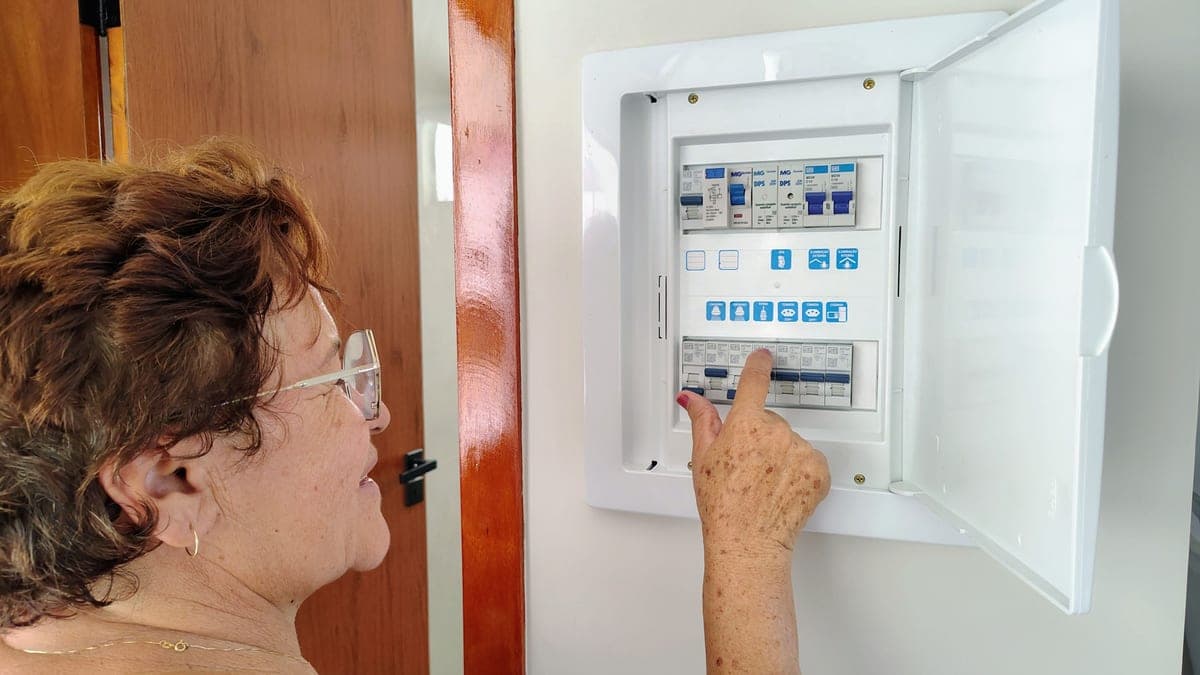
An electrical panel with circuit breakers in a utility space

Some links on this page are affiliate links. If you buy through one, Magoo Media Group earns a commission from the retailer at no extra cost to you. It never changes which product we rank first - how this site is funded.

The one observation that matters

First, note exactly when it trips

A tripping breaker feels like one problem and is actually three, and the thing that separates them is timing. Before you touch anything, run the compressor and watch the clock. There are only three answers and each one sends you somewhere different.

It trips within the first second or two of the motor turning over, usually with a grunt or a hum rather than a clean start. That is a startup-surge problem. An induction motor draws far more current getting up to speed than it draws running, and anything that makes starting harder - a long cord, a weak circuit, resistance against the pump - turns that surge into a trip.

It starts cleanly, runs for a while, and trips partway through filling the tank. That is a running-load problem: the circuit is carrying more than it can hold, either because the compressor's running draw is close to the breaker rating or because something else on the same circuit is adding to it.

It starts fine from empty but trips when it kicks back in later. That is the most diagnostic pattern of all, and it usually points at one specific mechanical part rather than anything electrical. The section on that pattern below is the one to read first if it describes you.

Timing to likely cause
When it tripsMost likely causeCheapest first check
Within 1-2 seconds of starting, with a humStartup surge not being supportedRemove the extension cord entirely
Partway through a fill, after running fineRunning load too close to breaker ratingUnplug everything else on that circuit
Only on a restart, never from emptyPump restarting against trapped pressureDrain the tank fully and retest
Immediately, every time, nothing spinsFault in the motor or switchStop - this is a service item, not a setup issue

This table is a triage order, not a diagnosis. The sections below explain each pattern and what to do about it.

Breaker, or thermal overload?

Check which one actually tripped before you go any further. A breaker is in your electrical panel and you reset it there. A thermal overload is a button or switch on the compressor itself, and it trips when the motor gets hot rather than when the circuit is overloaded. People spend hours on electrical theories for what turns out to be an overheating pump, and the two have completely different causes.

The surge problem

Pattern one: it trips on startup

Every published amp figure you will find for a compressor is its running current. The DEWALT pancake publishes 10 A. The WEN publishes an 11.5 A motor. California Air Tools publishes 8.5 A for its 8-gallon unit and 14 A for its 10-gallon. None of those are the number that trips a breaker on startup, because the surge drawn while a motor spins up is substantially higher, lasts a fraction of a second, and is not printed on anything.

A standard household breaker is designed to tolerate that. It has a deliberate time delay built in, so a brief surge passes and a sustained overload does not. What defeats it is not the size of the surge but the duration - if the motor cannot reach running speed quickly, the surge stops being brief and the breaker does its job.

The single most common reason a motor cannot reach speed is an extension cord. A long thin cord has enough resistance to drop the voltage at the motor during the surge, and a motor at low voltage produces less torque, takes longer to spin up, and draws the surge current for longer. The symptom is distinctive and misleading: the compressor works on one outlet and not another, or works inside the house and not in the garage. Almost everyone concludes the compressor is faulty. It is the cord.

So the first test is free: unplug the extension cord completely and run the compressor directly from a wall outlet. If it starts, you have found it. If a cord is genuinely unavoidable, use the shortest and heaviest-gauge one you can get, and understand that you are managing a problem rather than solving it. The real fix is an outlet close enough not to need a cord - and if that means moving the compressor rather than running a cord to it, move the compressor.

The second free test is to check what else shares the circuit. A breaker that is already carrying a freezer, a shop light and a space heater has very little headroom left for a surge, and the compressor will be blamed for the trip it merely triggered.

The running-load problem

Pattern two: it trips mid-cycle

If the compressor starts cleanly and trips halfway through a fill, the surge was fine and the running load is not. Here the published figures matter directly, and they vary more than people expect across machines that look identical on a shelf.

Compare the two ends of the range in our own registry. California Air Tools publishes 8.5 A for the 8-gallon 8010A - that is comfortable on a 15-amp circuit with room to spare. The same manufacturer publishes 14 A for its 10-gallon 10020C. On a 15-amp circuit, 14 A is nearly the whole thing, and a freezer compressor cycling on in the next room is enough to push it over. Same brand, same shelf, a completely different electrical proposition.

That is why the useful question is not "is my compressor too big for my garage" but "what is this specific model's published running current, and what else is on the run." Find the figure in the manual or on the manufacturer's page, compare it to the breaker, and if it is above roughly 80% of the breaker rating, the compressor wants a circuit to itself. That 80% figure is a long-standing convention for continuous loads rather than a number we invented, and it exists because breakers are not designed to sit permanently at their rated current.

There is an honest escape hatch here that most pages skip: a dual-voltage compressor. The 30-gallon belt-drive unit in our roster is 120/240V. Running the same machine at 240V roughly halves the current for the same power, which both starts more easily and leaves far more headroom. If you are at the edge of a 120V circuit and a 240V outlet exists or can exist, that is the cleanest solution available - and it is also licensed electrical work, which brings us to the end of this page.

Published running current, by model
CompressorVoltagePublished running drawOn a 15 A circuit
California Air Tools 8010A110V8.5 AComfortable, room for other loads
DEWALT DWFP55126 pancake120V10 AFine if the circuit is lightly loaded
WEN AP6092 pancake120V11.5 A motorCheck what shares the run
California Air Tools 10020C110V14 AWants its own circuit
DEWALT DXCMLA1983054120/240VNot publishedRun it at 240V if you can
VIAIR 88P12V DC20 A maxVehicle circuit - direct to battery

Every figure is the manufacturer's own published running current, carried in our product registry and cited on each product page. Startup surge is higher and is not published by any of them.

The one that is not electrical

Pattern three: it only trips on restart

This is the pattern worth knowing about, because it looks electrical and is not. The compressor starts perfectly from an empty tank, fills, shuts off at cut-out pressure, and then trips the breaker the next time pressure drops and it tries to kick back in.

The reason is that a piston compressor is designed to start with no load on it. When the pressure switch shuts the pump off, a small unloader valve on the switch vents the air trapped in the line between the pump head and the tank's check valve. The next start then happens against nothing. If that unloader does not vent - or if the check valve has failed and lets tank pressure back into the line - the motor is being asked to start against a column of compressed air sitting on top of the piston. It takes far longer to reach speed, the startup surge stretches out, and the breaker trips.

The diagnostic is clean and costs nothing: drain the tank completely through the bottom drain valve, leave the drain open for a minute, close it, and start the compressor from zero. If it starts normally from empty every time and only ever trips on a restart, you have confirmed the pattern. That points at the unloader valve on the pressure switch or the tank check valve, which are small, cheap, commonly replaced parts - and a repair rather than a setup change.

You may also hear it. A healthy compressor gives a short hiss from the pressure switch the instant it shuts off; that is the unloader doing its job. No hiss at shutoff, combined with hard restarts, is the same finding from a different direction.

We are not going to walk you through replacing either part. Both sit on a vessel that holds pressure, and the first step in any such job is depressurizing the tank completely - which is exactly the kind of instruction that goes wrong when written generically for a machine we cannot see. Take the finding to the manufacturer's service documentation for your model, or to a shop.

Less common, still real

Two more causes worth ruling out

Cold. Oil thickens as the temperature drops and a cold oil-lubricated pump is genuinely harder to turn over, which lengthens the startup surge in exactly the way a weak cord does. A compressor that trips on a January morning in an unheated garage and starts fine in July is telling you about viscosity, not wiring. Oil-free pumps are much less affected, which is one of the quiet arguments for them in a cold garage.

GFCI and AFCI outlets. These are not overload devices; they trip on imbalance or on arcing signatures, and a motor's startup behavior can look like an arc fault to some devices. If the compressor trips a protected outlet in a garage or basement but runs fine on an unprotected circuit, you are looking at device sensitivity rather than an overload. Whether to do anything about that is an electrician's call, not ours - protective devices are there for a reason and the answer is never to bypass one.

Both of these are worth ruling out before you conclude the compressor is too big for the circuit, because both produce the startup-trip pattern that otherwise points at the cord.

The picks

Compressors that live comfortably on a normal garage circuit

Quick picks

#ProductBest forScorePrice
1
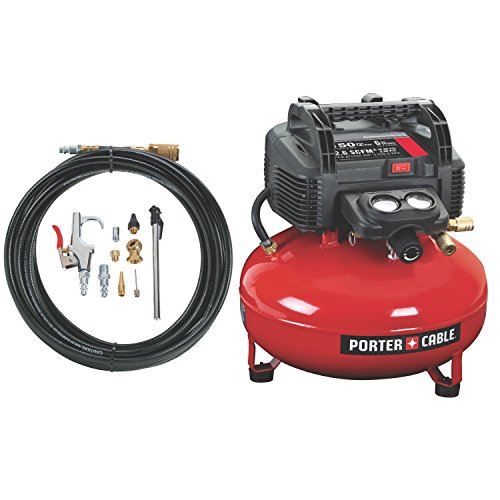
Porter-Cable C2002-WK product photo
Porter-Cable C2002-WK2.6 CFM @ 90 / 6 gal / 150 PSIThe default 6-gallon pancake: 2.6 CFM, 150 PSI, the same machine for years, now sold as the C2002-WK with its accessory kit.
A first compressor for nailing, inflation and burst automotive work3.6/10★★☆☆☆

#ad Disclosure - price as of November 14, 2026

2
California Air Tools 8010A product photo
California Air Tools 8010A2.2 CFM @ 90 / 8 gal / 120 PSI / 60 dBA60 dBA with 8 gallons and a published 30-60 minute continuous run limit. The honest quiet middle ground.
A garage where the compressor runs while you are standing next to it4.9/10★★☆☆☆

#ad Disclosure - price as of November 14, 2026

3
A twenty-gallon vertical air compressor standing against a garage wall
Husky C201H 20-gallon4 CFM @ 90 / 20 gal / 175 PSI / 83 dBA4.0 CFM with 20 gallons at 175 PSI. The cheapest way to buy STORAGE rather than flow.
Burst automotive work where tank volume, not CFM, is the limit6.3/10★★★☆☆

#ad Disclosure - we do not publish prices we cannot verify

4
A thirty-gallon belt-drive air compressor with a cast iron pump
DEWALT DXCMLA1983054 30-gallon5.7 CFM @ 90 / 30 gal / 155 PSI5.7 CFM, 30 gallons, oil-lubricated cast iron and belt drive. Where a garage compressor stops being disposable.
A permanent garage compressor you expect to keep for a decade7.9/10★★★★☆

#ad Disclosure - we do not publish prices we cannot verify

Scores are computed from manufacturer-published specs by the rubric on our methodology page. Nothing here has been bench-tested. Prices are Amazon's own, refreshed daily, and never shown when we cannot verify them.

Pick 1 - Porter-Cable C2002-WK

3.6/10★★☆☆☆

Porter-Cable C2002-WK

Best for: A first compressor for nailing, inflation and burst automotive work

Verdict

The default 6-gallon pancake: 2.6 CFM, 150 PSI, the same machine for years, now sold as the C2002-WK with its accessory kit.

What it does well

  • 2.6 CFM at 90 PSI and 3.7 at 40 - the most common spec in the budget class for a reason
  • 6-gallon tank at 150 PSI stores enough air for real bursts of impact work
  • Two couplers, so two people or two tools without swapping

What it will not do

  • Porter-Cable does not publish a noise figure for it; the class sits in the high 70s to low 80s dBA
  • 2.6 CFM will not run a ratchet, die grinder or sander continuously
How this 3.6 was calculated
MetricScoreWeightBasis
Air flow3.640%2.6 CFM at 90 PSI, on a 0.7-6 CFM scale
Stored air2.325%6 gal x 150 PSI = 900, on a 125-3,500 scale
Noise5.015%Manufacturer publishes no dBA figure - scored a neutral 5, not a guess
Portability5.010%No weight published - scored a neutral 5
Spec transparency3.310%2 of 6 useful figures published (CFM at 90, CFM at 40, dBA, duty cycle, recovery, weight)
Porter-Cable C2002-WK product photo

Product image from the Amazon listing for this model

#ad Disclosure - price as of November 14, 2026

Published specs

Porter-Cable C2002-WK published specifications
CFM @ 90 PSI2.6
CFM @ 40 PSI3.7
Tank6 gal
Max pressure150 PSI
NoiseNot published
Duty cycleNot published
RecoveryNot published
PumpOil-free
Motor0.8
WeightNot published
Power120V

Source: Porter-Cable C2002 - product specifications

Pick 2 - California Air Tools 8010A

4.9/10★★☆☆☆

California Air Tools 8010A

Best for: A garage where the compressor runs while you are standing next to it

Verdict

60 dBA with 8 gallons and a published 30-60 minute continuous run limit. The honest quiet middle ground.

What it does well

  • 60 dBA published at 8 gallons - you can hold a conversation over it
  • Aluminum tank at 37.25 lb with a wheel kit, so it moves easily and will not rust out
  • California Air Tools publishes fill, recovery and continuous-run figures, which most brands do not

What it will not do

  • 2.2 CFM at 90 PSI is LESS than a 2.6 CFM pancake - you pay for quiet, not for air
  • 120 PSI max is the lowest ceiling in the 6-gallon-and-up group, so storage is modest
How this 4.9 was calculated
MetricScoreWeightBasis
Air flow2.840%2.2 CFM at 90 PSI, on a 0.7-6 CFM scale
Stored air2.525%8 gal x 120 PSI = 960, on a 125-3,500 scale
Noise9.315%60 dBA, on a 58-85 dBA scale
Portability7.510%37.25 lb, on a 20-90 lb scale
Spec transparency10.010%6 of 6 useful figures published (CFM at 90, CFM at 40, dBA, duty cycle, recovery, weight)
California Air Tools 8010A product photo

Product image from the Amazon listing for this model

#ad Disclosure - price as of November 14, 2026

Published specs

California Air Tools 8010A published specifications
CFM @ 90 PSI2.2
CFM @ 40 PSI3.1
Tank8 gal
Max pressure120 PSI
Noise60 dBA
Duty cycleMax continuous running time 30-60 minutes (manufacturer-published)
Recovery165 s empty to full; 60 s recovery 90 to 120 PSI
PumpOil-free
Motor1.0 running / 2.0 peak
Weight37.25 lb
Power110V

Source: California Air Tools 8010A - product specifications

Pick 3 - Husky C201H

6.3/10★★★☆☆

Husky C201H 20-gallon

Best for: Burst automotive work where tank volume, not CFM, is the limit

Verdict

4.0 CFM with 20 gallons at 175 PSI. The cheapest way to buy STORAGE rather than flow.

What it does well

  • 20 gallons at 175 PSI is roughly six times the stored air of a 6-gallon 150 PSI pancake
  • 4.0 CFM at 90 PSI and 5.2 at 40 - enough to recover between bursts instead of chasing you
  • Vertical footprint takes a corner instead of floor space

What it will not do

  • 83 dBA published and a 7-minute fill from empty - plan to switch it on before you start
  • Oil-free at 20 gallons means a shorter pump life than a cast-iron oil-lubricated unit
How this 6.3 was calculated
MetricScoreWeightBasis
Air flow6.240%4 CFM at 90 PSI, on a 0.7-6 CFM scale
Stored air10.025%20 gal x 175 PSI = 3500, on a 125-3,500 scale
Noise0.715%83 dBA, on a 58-85 dBA scale
Portability5.010%No weight published - scored a neutral 5
Spec transparency6.710%4 of 6 useful figures published (CFM at 90, CFM at 40, dBA, duty cycle, recovery, weight)
A twenty-gallon vertical air compressor standing against a garage wall

Licensed stock photo - illustrative of the category, not a photo of this unit

#ad Disclosure - we do not publish prices we cannot verify

Published specs

Husky C201H 20-gallon published specifications
CFM @ 90 PSI4
CFM @ 40 PSI5.2
Tank20 gal
Max pressure175 PSI
Noise83 dBA
Duty cycleNot published
Recoveryabout 7 minutes to fill from empty
PumpOil-free
Motor1.3 running
WeightNot published
Power120V

Source: Husky C201H 20-gallon compressor - retailer specification listing

Pick 4 - DEWALT DXCMLA1983054

7.9/10★★★★☆

DEWALT DXCMLA1983054 30-gallon

Best for: A permanent garage compressor you expect to keep for a decade

Verdict

5.7 CFM, 30 gallons, oil-lubricated cast iron and belt drive. Where a garage compressor stops being disposable.

What it does well

  • 5.7 CFM at 90 PSI and 7.0 at 40 - clears ratchets, die grinders and touch-up spraying
  • Oil-lubricated belt drive runs cooler and slower than a direct-drive oil-free pump
  • 120/240V, so it can move to a 240V circuit later

What it will not do

  • Oil-lubricated means an actual maintenance routine: check and change the oil
  • 155 PSI on 30 gallons stores less than 175 PSI on 20 in some comparisons - check the math, not the tank
How this 7.9 was calculated
MetricScoreWeightBasis
Air flow9.440%5.7 CFM at 90 PSI, on a 0.7-6 CFM scale
Stored air10.025%30 gal x 155 PSI = 4650, on a 125-3,500 scale
Noise5.015%Manufacturer publishes no dBA figure - scored a neutral 5, not a guess
Portability5.010%No weight published - scored a neutral 5
Spec transparency3.310%2 of 6 useful figures published (CFM at 90, CFM at 40, dBA, duty cycle, recovery, weight)
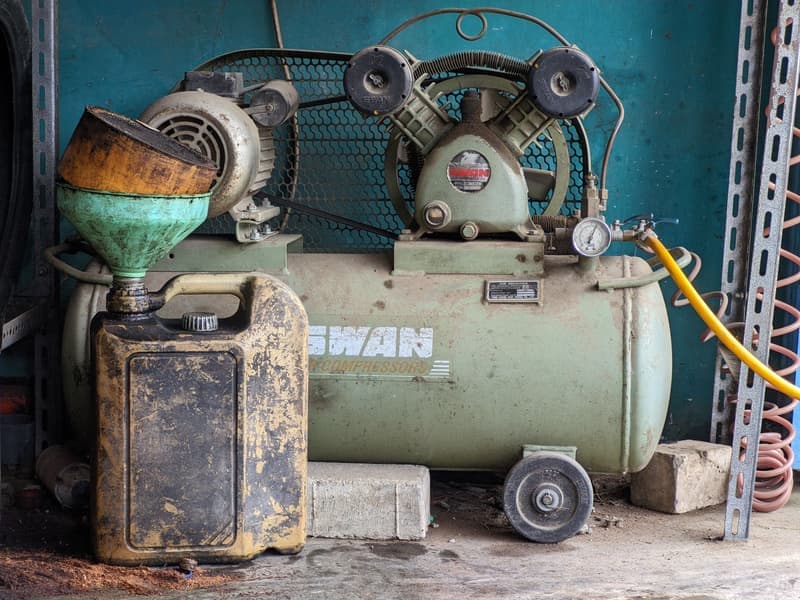
A thirty-gallon belt-drive air compressor with a cast iron pump

Licensed stock photo - illustrative of the category, not a photo of this unit

#ad Disclosure - we do not publish prices we cannot verify

Published specs

DEWALT DXCMLA1983054 30-gallon published specifications
CFM @ 90 PSI5.7
CFM @ 40 PSI7
Tank30 gal
Max pressure155 PSI
NoiseNot published
Duty cycleNot published
RecoveryNot published
PumpOil-lubricated
Motor1.9
WeightNot published
Power120/240V

Source: DEWALT DXCMLA1983054 30-gallon compressor - product specifications

The honest boundary

Where we stop, and why

Everything above is diagnosis using published figures and free tests. Everything past it is not. Adding a dedicated circuit, installing a 240V outlet, changing a breaker, or replacing a pressure switch on a pressure vessel is work governed by the National Electrical Code and by the manufacturer's service documentation. In most jurisdictions the electrical half requires a licensed electrician and a permit, and getting it wrong causes fires.

We size compressors. We have no electrical qualification, we will not publish wiring guidance, and we would rather say that plainly than hand you a diagram that looks authoritative because it is laid out neatly. Our methodology page says we state what we do not know, and this is one of the places that commitment costs us a section other sites happily write.

What you can take to an electrician is short and genuinely useful: the model's published voltage and running current, the fact that startup surge is higher and unpublished, which breaker it is on, what else is on that circuit, and which of the three timing patterns above you observed. That is a five-minute conversation instead of a diagnostic visit.

And one buying note, since the cheapest fix is sometimes a different compressor. If you are repeatedly at the edge of a 15-amp circuit, the answer is not always a bigger machine on a bigger circuit - the 8-gallon unit in our roster publishes the lowest draw of any tank compressor we list at 8.5 A, and a quiet low-draw machine that never trips is worth more than a bigger one that does.

FAQ

Questions people actually ask

Why does my air compressor trip the breaker on startup?

Because the startup surge is drawing for too long. The usual cause is an extension cord dropping voltage so the motor cannot reach speed quickly, or another load already using most of the circuit. Unplug the cord and unplug everything else on the circuit before assuming the compressor is at fault.

Why does my compressor only trip the breaker when it restarts?

Because it is trying to start against trapped pressure. The unloader valve on the pressure switch should vent the air between the pump and the tank check valve at shutoff. If it does not, or the check valve has failed, the motor starts loaded and the surge stretches out. Drain the tank fully - if it starts fine from empty every time, that confirms it.

What size breaker does an air compressor need?

That depends on the published running current for your specific model, and it is a question for an electrician rather than for us. As a rule of thumb, a continuous load above roughly 80% of the breaker rating wants its own circuit - and published draws in our registry range from 8.5 A to 14 A on 120V machines that look alike on the shelf.

Is it the breaker or the compressor's thermal overload?

Check where you reset it. A breaker is in the electrical panel and trips on circuit overload. A thermal overload is a button or switch on the compressor and trips on motor heat. They have different causes, and confusing them sends you down the wrong path entirely.

Can cold weather make a compressor trip the breaker?

Yes, on an oil-lubricated pump. Cold oil is thicker and harder to turn over, which lengthens the startup surge in the same way a weak extension cord does. A compressor that trips on a freezing morning and starts fine in summer is telling you about oil viscosity.

Will a bigger breaker fix a tripping compressor?

Do not do this. A breaker protects the wiring, not the appliance, and fitting a larger one to stop nuisance trips removes that protection from a circuit that was never sized for it. Find the cause, and if the answer is a dedicated circuit, that is licensed electrical work.

Sources

Where these numbers come from

Accessed September 2026. If a figure on this page does not match the manufacturer's current sheet, tell us at contact@psiandhose.com and we will correct and date the change - see our editorial policy.

Read next