Skip to content
Psi & Hose

Guides

Tankless air compressors

You can buy a compressor with no tank. What you cannot buy is a tankless machine that runs air tools on a household outlet - and the reason is worth two minutes before you spend anything.

By Ryder M.Last updated Published
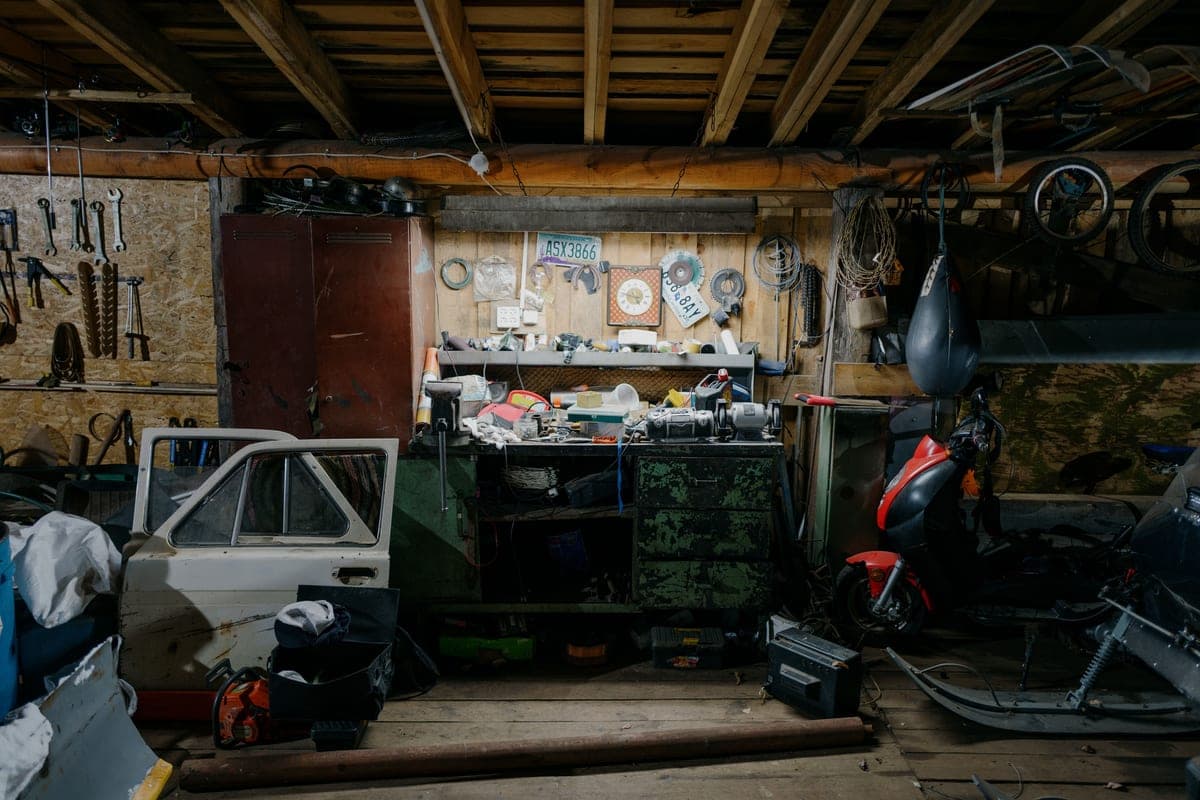
A home garage workshop with tools and equipment along the wall

Some links on this page are affiliate links. If you buy through one, Magoo Media Group earns a commission from the retailer at no extra cost to you. It never changes which product we rank first - how this site is funded.

Read this first

What people mean by tankless, and the two real answers

Tankless air compressors exist, and you have probably already met one: a 12V tire inflator is a tankless compressor. It is a direct-drive pump that makes air on demand and stores none of it. VIAIR publishes 1.97 CFM at 0 PSI for the 88P and a 120 PSI maximum working pressure, and that is a perfectly honest machine for tires. It will not run a single air tool, ever, and the missing tank is exactly why.

The other thing people mean is a continuously-running shop machine that never needs a tank because the pump simply keeps up. Those also exist, and they are industrial equipment - the class of machine a body shop or a factory runs, on three-phase power, at a price and a size that has nothing to do with a home garage. Nothing in that class is in this site's roster and we are not going to pretend to price it for you.

What does not exist is the thing the search usually hopes for: a compact, affordable, tankless machine that plugs into a 120-volt outlet and runs a sander or an impact wrench. The reason is not a gap in the market. It is that a 120V circuit caps the motor, the motor caps the flow, and without a tank there is nothing to cover the gap between what the pump makes and what the tool wants.

The short version

Tankless means the pump's output IS your supply, second by second. On a 120V circuit that is around 2 to 5 CFM, which is less than any continuous air tool asks for. The tank is not a compromise; it is what makes a small compressor useful.

The mechanism

Why the tank is doing more work than you think

A tank is three things at once, and only one of them is obvious. The obvious one is storage: a 6-gallon tank at 150 PSI holds a reservoir that a tool can empty far faster than the pump can refill it, which is what lets a 2.6 CFM pancake break lug nuts with an impact wrench that draws several times that at load. The pull lasts two seconds and the tank pays for it.

The second job is pressure stability. Air coming straight off a piston arrives in pulses; a tank smooths those into a steady supply that a regulator can hold at a set pressure. This is why spray finish quality and tank volume are related even when the gun's demand is well within the pump's output - a pulsing supply shows up in the work.

The third job is letting the pump rest. A tanked compressor runs to a cut-out pressure, stops, and restarts at the cut-in. That duty cycle is what keeps a small single-stage pump alive, because these pumps get hot quickly and oil-free ones have no oil bath carrying heat away. Remove the tank and the pump runs whenever the tool is open, which is the harshest possible way to work it.

A tank also does something for the air itself: it is where water drops out as the compressed air cools, which is why the drain is at the bottom and why draining it matters. A tankless machine hands that moisture straight down the hose to the tool, which is one more reason the format suits tires rather than tools.

Where the search usually goes next

The 100% duty cycle question this leads to

A tankless machine has to be able to run continuously, which is why people searching for one often end up searching for a 100% duty cycle compressor instead. It is a reasonable instinct and it runs into a wall of silence: of every machine we catalog, not one publishes a 100% duty cycle. The highest published figures are 70/30 - California Air Tools states that for the 10020C and the 60-gallon 60040DCAD - and the overwhelming majority of brands publish nothing at all.

That silence is the answer rather than an inconvenience. A manufacturer that publishes a duty cycle has measured one; a manufacturer that publishes tank gallons and MAX PSI in capital letters and says nothing about how long the pump may run has chosen which questions to answer. If continuous running is your actual requirement, treat the absence of a published figure as a no.

There is one more trap in the phrase. A duty cycle is only meaningful with a period and a pressure attached. VIAIR publishes 25 minutes at 30 PSI for the 88P and 33% at 100 PSI for its larger portables - usable figures, because they name the pressure the pump is working against. A bare percentage with no pressure, which is what most listings offer when they offer anything, tells you nothing you can plan around.

Our duty cycle page goes through the spec itself - what the ratios mean, why the period matters as much as the ratio, and how to tell when yours is overheating. If you came here looking for continuous running, read that next.

The picks

The smallest sensible alternatives

Quick picks

#ProductBest forScorePrice
1
Makita MAC100Q Quiet Series product photo
Makita MAC100Q Quiet Series0.7 CFM @ 90 / 1 gal / 135 PSI / 58 dBA58 dBA published - the quietest unit in this roster. Same 0.7 CFM as the Senco, with a roll cage and a higher ceiling.
Indoor finish work where noise decides the purchase3.1/10★★☆☆☆

#ad Disclosure - price as of November 14, 2026

2
A ten-gallon vertical oil-free air compressor on wheels in a workshop
California Air Tools 10020C5.3 CFM @ 90 / 10 gal / 125 PSI / 70 dBA5.3 CFM at 70 dBA with a published 70/30 duty cycle. The first unit here that runs a continuous-duty tool.
Running a ratchet, die grinder or touch-up gun without waiting6.2/10★★★☆☆

#ad Disclosure - we do not publish prices we cannot verify

3
VIAIR 88P product photo
VIAIR 88PCFM not published / no tank / 120 PSI / 81 dBAA 12V tire inflator, not a compressor. 120 PSI max with a 25-minute duty at 30 PSI. Buy it for the car, not the garage.
Topping up and re-airing tires away from a wall outlet1.7/10★☆☆☆☆

#ad Disclosure - price as of November 14, 2026

Scores are computed from manufacturer-published specs by the rubric on our methodology page. Nothing here has been bench-tested. Prices are Amazon's own, refreshed daily, and never shown when we cannot verify them.

Pick 1 - Makita MAC100Q

3.1/10★★☆☆☆

Makita MAC100Q Quiet Series

Best for: Indoor finish work where noise decides the purchase

Verdict

58 dBA published - the quietest unit in this roster. Same 0.7 CFM as the Senco, with a roll cage and a higher ceiling.

What it does well

  • 58 dBA is the lowest published figure of any compressor we list
  • 135 PSI max gives you more usable storage than the 125 PSI class
  • 1,750 RPM motor and roll-cage construction

What it will not do

  • 0.7 CFM at 90 PSI - nailers and inflation only
  • Costs meaningfully more than a 6-gallon pancake that moves four times the air
How this 3.1 was calculated
MetricScoreWeightBasis
Air flow0.040%0.7 CFM at 90 PSI, on a 0.7-6 CFM scale
Stored air0.025%1 gal x 135 PSI = 135, on a 125-3,500 scale
Noise10.015%58 dBA, on a 58-85 dBA scale
Portability9.210%25.5 lb, on a 20-90 lb scale
Spec transparency6.710%4 of 6 useful figures published (CFM at 90, CFM at 40, dBA, duty cycle, recovery, weight)
Makita MAC100Q Quiet Series product photo

Product image from the Amazon listing for this model

#ad Disclosure - price as of November 14, 2026

Published specs

Makita MAC100Q Quiet Series published specifications
CFM @ 90 PSI0.7
CFM @ 40 PSI1.2
Tank1 gal
Max pressure135 PSI
Noise58 dBA
Duty cycleNot published
RecoveryNot published
PumpOil-free
Motor0.5
Weight25.5 lb
Power120V

Source: Makita MAC100Q - product specifications

Pick 2 - California Air Tools 10020C

6.2/10★★★☆☆

California Air Tools 10020C

Best for: Running a ratchet, die grinder or touch-up gun without waiting

Verdict

5.3 CFM at 70 dBA with a published 70/30 duty cycle. The first unit here that runs a continuous-duty tool.

What it does well

  • 5.3 CFM at 90 PSI clears every published figure for ratchets, die grinders and touch-up spraying
  • 70 dBA at that output is unusual - most 5+ CFM units are far louder
  • Publishes a real 70/30 duty cycle and a 25-second recovery from 95 to 125 PSI

What it will not do

  • 82.5 lb and 14 A - it needs its own circuit and it is not a carry-it-upstairs machine
  • 125 PSI max, so a bigger tank at higher pressure still stores more per fill
How this 6.2 was calculated
MetricScoreWeightBasis
Air flow8.740%5.3 CFM at 90 PSI, on a 0.7-6 CFM scale
Stored air3.325%10 gal x 125 PSI = 1250, on a 125-3,500 scale
Noise5.615%70 dBA, on a 58-85 dBA scale
Portability1.110%82.5 lb, on a 20-90 lb scale
Spec transparency10.010%6 of 6 useful figures published (CFM at 90, CFM at 40, dBA, duty cycle, recovery, weight)
A ten-gallon vertical oil-free air compressor on wheels in a workshop

Licensed stock photo - illustrative of the category, not a photo of this unit

#ad Disclosure - we do not publish prices we cannot verify

Published specs

California Air Tools 10020C published specifications
CFM @ 90 PSI5.3
CFM @ 40 PSI6.4
Tank10 gal
Max pressure125 PSI
Noise70 dBA
Duty cycle70/30 (manufacturer-published)
Recovery120 s empty to full; 25 s recovery 95 to 125 PSI
PumpOil-free
Motor2.0
Weight82.5 lb
Power110V, 14 A

Source: California Air Tools 10020C - product specifications

Pick 3 - VIAIR 88P

1.7/10★☆☆☆☆

VIAIR 88P

Best for: Topping up and re-airing tires away from a wall outlet

Verdict

A 12V tire inflator, not a compressor. 120 PSI max with a 25-minute duty at 30 PSI. Buy it for the car, not the garage.

What it does well

  • 120 PSI max working pressure covers car, truck and trailer tires
  • 1.97 CFM at 0 PSI published, with a 25-minute duty at 30 PSI - the pressure tires live at
  • 4.75 lb with a 10 ft power cord and 16 ft air hose

What it will not do

  • No tank, so it cannot run any air tool at all - not one
  • 20 A draw and a published 25-minute duty at 30 PSI: four tires, then let it cool
How this 1.7 was calculated
MetricScoreWeightBasis
Air flow0.040%No CFM at 90 PSI published - scored zero rather than guessed
Stored air0.025%0 gal x 120 PSI = 0, on a 125-3,500 scale
Noise1.515%81 dBA, on a 58-85 dBA scale
Portability10.010%4.75 lb, on a 20-90 lb scale
Spec transparency5.010%3 of 6 useful figures published (CFM at 90, CFM at 40, dBA, duty cycle, recovery, weight)
VIAIR 88P product photo

Product image from the Amazon listing for this model

#ad Disclosure - price as of November 14, 2026

Published specs

VIAIR 88P published specifications
CFM @ 90 PSINot published
CFM @ 40 PSINot published
TankNone (direct drive)
Max pressure120 PSI
Noise81 dBA
Duty cycle25 min at 30 PSI (manufacturer-published)
RecoveryNot published
PumpOil-free
Motor12V DC, 20 A max draw
Weight4.75 lb
Power12V DC

Source: VIAIR 88P portable compressor - product specifications

Solve the actual complaint

If the real problem is size or noise, buy for that instead

Most people who search for a tankless compressor do not want tanklessness - they want one of the things a tank appears to cost them, and each of those is buyable directly. If the complaint is bulk, a 1-gallon trim compressor weighs 20 to 25 pounds and genuinely carries in one hand, and it runs brad and finish nailers all day. If the complaint is noise, Makita publishes 58 dBA for the 1-gallon MAC100Q and 60 dBA for the 2-gallon MAC210Q, which is a different experience from a pancake in a garage.

If the complaint is that the pump keeps stopping and starting, that is cycling rather than a tank problem, and the fix is usually the opposite of what the search implies: more storage, not less, so the pump runs in longer blocks and spends less time inrushing. A larger tank on the same pump makes a compressor feel calmer, not busier.

If the complaint is that the tool bogs down, the tank is not the issue at all and neither is tanklessness - the pump's CFM at 90 PSI is short of what the tool draws. That is a flow problem with its own page, and the answer is a bigger pump or a thirstier tool swapped for a leaner one, not a different format.

And if the complaint is that you want air away from a wall outlet, we would rather tell you plainly: for tires, a 12V pump is the right tool and it is the cheapest thing here. For tools away from power, the honest answers are a generator or a cordless tool, and we say the same on our portable compressor roundup rather than selling a format that cannot do the job.

Give it its due

Where a tankless machine is genuinely the right buy

For inflation, tankless wins outright and it is not close. A tire that needs air almost never needs it next to your compressor, and a 4.75-pound pump that lives in the vehicle solves the problem where it happens. Our own CFM chart puts tire inflation at 2 CFM at 30 to 60 PSI at the tire - a trivial job that a direct-drive pump covers and that people routinely buy a 30-gallon machine for.

It also wins where there is no mains power at all and the job is small: topping up trailer tires at a gate, airing a bike, re-seating an air mattress, blowing leaves off a radiator with a short burst. These are the jobs where waiting on a tank to fill is the slower option and the tank is dead weight.

What it cannot do, at any price in this format, is feed a tool. No tank means no reservoir, and every air tool we chart - including the gentlest burst tools - asks for more air in the moment than a 12V direct-drive pump makes. If a listing promises otherwise because it quotes a high maximum PSI, remember that pressure and flow are different specs and the tool needs both.

So the honest shopping rule is this. Buy tankless for tires and buy the smallest tank that covers your tool list for everything else. The two together cost less than one oversized machine, and each one is actually good at its job.

Published air demand at 90 PSI
ToolCFM @ 90 PSIAt loadDutyWhat the number means
Tire inflation2-IntermittentBoth references agree on 2 CFM. Note the working pressure: you are filling to 35 PSI, not 90, so almost every compressor delivers more than it needs to. Tires are why so many people overbuy - the job is easy and the marketing is not.
Brad nailer, 18 gauge0.5-BurstThe most forgiving air tool there is. A nailer draws air only at the instant it fires, so almost any tank covers it. That is why a 1-gallon compressor is a genuinely complete tool for trim work rather than a compromise.
Impact wrench, 1/2"4 - 522BurstThe most misunderstood number on this chart. Ingersoll Rand publishes 4.2 CFM average for the 231C and 22 CFM at load. The average assumes you hold the trigger for a second or two at a time. A 6-gallon pancake at 2.6 CFM does break lug nuts; it simply cannot keep the trigger down.
Orbital / DA sander, 6 inch10 - 9-ContinuousIngersoll Rand lists 10 CFM for a body orbital sander; Engineering ToolBox gives 6-9 CFM for the class. A sander runs continuously by nature, so there is no burst allowance to hide behind. This is the job that genuinely needs a big compressor.

Where two references publish different figures, both are shown rather than averaged into a number nobody published. Primary sources: Ingersoll Rand air consumption chart, Engineering ToolBox air tool consumption, and per-tool manufacturer specifications.

FAQ

Questions people actually ask

Can you buy an air compressor without a tank?

Yes, and the common example is a 12V tire inflator - a direct-drive pump that stores no air. VIAIR publishes 1.97 CFM at 0 PSI and a 120 PSI maximum working pressure for the 88P. What does not exist is a compact, affordable tankless machine on a 120V outlet that runs air tools, because without stored air the pump's output is your entire supply.

Is there such a thing as a 120V tankless air compressor?

Only in the inflator sense. A 120V circuit limits the motor, the motor limits the flow to roughly 2 to 5 CFM at 90 PSI in our roster, and with no tank there is nothing to cover the gap between that and what a continuous tool draws. Continuously-rated tankless machines are industrial equipment, not garage equipment.

What does a tank actually do?

Three things. It stores air so a tool can draw far more than the pump makes for short bursts - that is how a 2.6 CFM pancake runs an impact wrench. It smooths the pump's pulses into a steady supply a regulator can hold. And it lets the pump stop and cool, which is what keeps a small single-stage pump alive. It is also where water condenses out, which is why it has a drain.

Which air compressors have a 100% duty cycle?

None of the machines we catalog publishes one. The highest published figures are 70/30, which California Air Tools states for the 10020C and the 60-gallon 60040DCAD; most brands publish no duty cycle at all. If continuous running is a real requirement for you, treat a missing figure as a no rather than an oversight.

Will a tankless compressor run an impact wrench?

No. An impact wrench draws far more air in the moment than a direct-drive pump makes, and a tank is what covers that moment. A 12V unit rated to 150 PSI will not turn the wrench once, because pressure and flow are different specifications and the tool needs both.

My compressor cycles on and off constantly - do I need a tankless one?

No, the opposite. Frequent cycling usually means too little storage for the work, so the fix is a larger tank on the same pump, which lets it run in longer, cooler blocks. If instead the tool bogs down while running, that is a flow shortfall and the answer is more CFM at 90 PSI, not a different format.

Sources

Where these numbers come from

Accessed September 2026. If a figure on this page does not match the manufacturer's current sheet, tell us at contact@psiandhose.com and we will correct and date the change - see our editorial policy.

Read next