Skip to content
Psi & Hose

Air Tools

Best air blow guns and air chucks

The two cheapest things you can put on the end of an air hose, and the two most commonly bought wrong. Ranked on published flow and reach, not on blast.

By Ryder M.Last updated Published
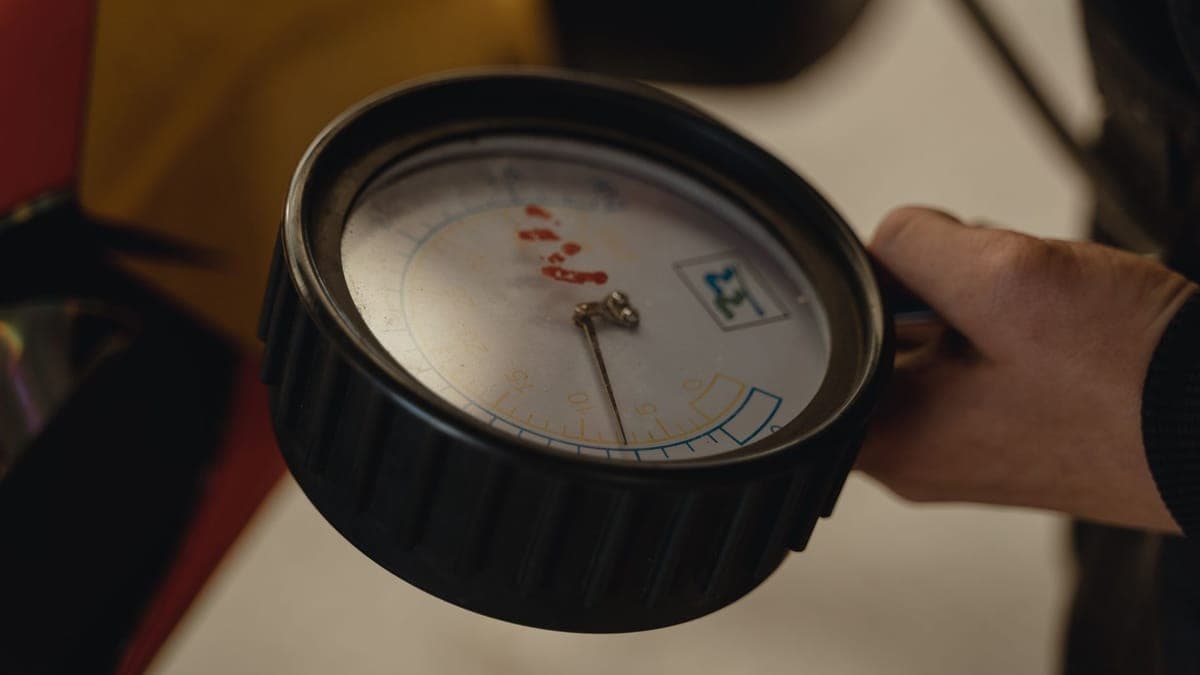
A hand holding a large analog air pressure gauge in a workshop

Some links on this page are affiliate links. If you buy through one, Magoo Media Group earns a commission from the retailer at no extra cost to you. It never changes which product we rank first - how this site is funded.

Criteria first

How we ranked these, and why blast is the wrong criterion

A blow gun is a hole with a trigger. There is nothing inside it to be good or bad at, which is why every listing sells you on blast instead - more CFM, more PSI, more turbo in the product name. On a garage compressor that is exactly backwards. The biggest number on the page is the one you cannot feed.

Here is the arithmetic that decides this whole category. The largest compressor in our roster, a 60-gallon two-stage machine on a 240V circuit, delivers 11.5 CFM at 90 PSI. The most common garage compressor on earth, a 6-gallon pancake, delivers 2.6 CFM. The high-flow blow gun below publishes 42 SCFM at 125 PSI. Hold its trigger and you are drawing air out of the tank roughly sixteen times faster than a pancake can replace it, which means you get a second or two of genuine blast and then a sagging hiss while the pump runs flat out behind you.

So the ranking criterion is published flow against delivered flow, with reach as the tiebreaker, and the top pick is deliberately not the most powerful gun on the page. Air chucks are ranked on a different axis entirely, because a chuck does not consume air in any meaningful quantity - it either reaches the valve stem or it does not, and that is the whole purchase.

Published flow against what a garage compressor delivers
ToolPublished flowMax pressureHonest verdict on a 6-gallon pancake
Milton S-160Not published150 PSIFine - the standard-bore tip is the one that behaves
Milton S-16313 SCFM90 PSIShort bursts; the lowest published draw here
Milton S-177Not publishedNot publishedFine in bursts; reach is what you are buying
Milton S-181 turbo42 SCFM at 125 PSI230 PSINo - you will empty the tank in seconds
Milton S-693 chuckNot applicable150 PSIYes - inflation is a low-flow job
Milton S-690-12 chuckNot applicable150 PSIYes, if you own dually or trailer wheels

Flow and pressure figures are Milton's own, from the product pages linked at the foot of this page. Where Milton publishes no figure we say so rather than quoting a retailer's number back at you. Compressor delivery figures are from our product registry.

The rule nobody puts on the box

29 CFR 1910.242(b) is one sentence long: "Compressed air shall not be used for cleaning purposes except where reduced to less than 30 p.s.i. and then only with effective chip guarding and personal protective equipment." That is a workplace rule, not a homeowner rule, but it is the reason an OSHA-compliant tip exists - the vent holes keep the pressure at a blocked nozzle below the threshold that can drive air into a wound. A tip that reads "OSHA-compliant" is a tip engineered so that pressing it against your palm does not become a medical emergency.

Ranked in buying order

The picks

Quick picks

#ProductBest forScorePrice
1
Milton S-160 pistol grip blow gun product photo
Milton S-160 pistol grip blow gun1/4" NPT / 150 PSI / Not published by MiltonZinc die-cast, chrome plated, 150 PSI and an OSHA-compliant tip. The blow gun that outlives the compressor it came with.
The one blow gun that lives on the hose permanently2.2/10★☆☆☆☆

#ad Disclosure - price as of November 14, 2026

2
Milton S-163 lightweight pistol grip blow gun product photo
Milton S-163 lightweight pistol grip blow gun1/4" NPT / 13 SCFM / 90 PSI13 SCFM and a 4-inch bent nozzle. The lowest published flow of any gun here, which on a 6-gallon pancake is the whole point.
A small compressor that cannot afford a thirsty nozzle1.6/10★☆☆☆☆

#ad Disclosure - price as of November 14, 2026

3
Milton S-693 straight-foot dual-head air chuck product photo
Milton S-693 straight-foot dual-head air chuck1/4" FNPT / Dual head, straight foot, closed / sealing / 150 PSIThe dual head seats on a valve stem pointing the wrong way, and unlike the S-690 it works on an inflator gauge too. 150 PSI.
Inflating anything whose valve stem is not conveniently square to you4.2/10★★☆☆☆

#ad Disclosure - price as of November 14, 2026

4
Milton S-177 blow gun, 11" bent nozzle product photo
Milton S-177 blow gun, 11" bent nozzle1/4" NPT / 11" bent / Die-cast aluminumEleven inches of die-cast aluminum nozzle that reaches the back of an engine bay. Reach is the entire purchase.
Blowing out a bay, a brake assembly or a channel you cannot get a hand into1.2/10★☆☆☆☆

#ad Disclosure - price as of November 14, 2026

5
Milton S-690-12 12" extended-reach dual-head air chuck product photo
Milton S-690-12 12" extended-reach dual-head air chuck1/4" FNPT / Dual head, closed / sealing / 12"Twelve inches of reach to an inner dual or a deep-dish wheel, at the same 150 PSI. Buy it only if you own that problem.
Dually rear wheels, trailer inner duals and deep-dish rims3.8/10★★☆☆☆

#ad Disclosure - price as of November 14, 2026

6
Milton S-181 turbo blow gun product photo
Milton S-181 turbo blow gun3/8" NPT brass / 42 SCFM at 125 PSI / 230 PSI42 SCFM at 125 PSI through a 3/8-inch inlet. Genuinely powerful, and genuinely wrong for a garage compressor.
A shop with a 60-gallon two-stage machine and metal chips to move8.0/10★★★★☆

#ad Disclosure - price as of November 14, 2026

Scores are computed from manufacturer-published specs by the rubric on our methodology page. Nothing here has been bench-tested. Prices are Amazon's own, refreshed daily, and never shown when we cannot verify them.

Pick 1 - Milton S-160

2.2/10★☆☆☆☆

Milton S-160 pistol grip blow gun

Best for: The one blow gun that lives on the hose permanently

Verdict

Zinc die-cast, chrome plated, 150 PSI and an OSHA-compliant tip. The blow gun that outlives the compressor it came with.

What it does well

  • OSHA-compliant safety tip, which is the only tip design the cleaning rule in 29 CFR 1910.242(b) leaves room for
  • 150 PSI maximum - the highest rating of the three standard-flow Milton guns here, so it survives being hung off a tank outlet
  • Takes Milton's 6 in (#122) and 10 in (#123) extensions, so one body covers short and long reach

What it will not do

  • Milton publishes no SCFM figure for this model, so you cannot size a line against it the way you can the S-163 or S-167
  • Zinc die-cast is heavier in the hand than a composite body, and the chrome shows every drop of tool oil
How this 2.2 was calculated
MetricScoreWeightBasis
Pressure headroom1.440%150 PSI rating, on a 125-300 PSI scale
Flow capacity0.040%0 SCFM, on a 40-100 SCFM scale
Spec transparency8.020%6 published specification figures
Milton S-160 pistol grip blow gun product photo

Product image from the Amazon listing for this model

#ad Disclosure - price as of November 14, 2026

Published specs

Milton S-160 pistol grip blow gun published specifications
Air inlet1/4" NPT
Max pressure150 PSI
Air flowNot published by Milton
TipOSHA-compliant safety tip
BodyZinc die-cast, chrome plated
ExtensionsMilton 6" (#122) and 10" (#123)

Source: Milton S-160 pistol grip blow gun with OSHA-compliant safety tip - product page, 29 CFR 1910.242(b) - Compressed air used for cleaning (eCFR)

Pick 2 - Milton S-163

1.6/10★☆☆☆☆

Milton S-163 lightweight pistol grip blow gun

Best for: A small compressor that cannot afford a thirsty nozzle

Verdict

13 SCFM and a 4-inch bent nozzle. The lowest published flow of any gun here, which on a 6-gallon pancake is the whole point.

What it does well

  • 13 SCFM published - the lowest figure Milton prints for a pistol grip gun
  • 4 in angled nozzle gets behind a radiator or under a dash without an extension fitted
  • Two separate hanging points on the body, so it does not end up on the floor

What it will not do

  • 90 PSI maximum, so it belongs downstream of the regulator on any tank that stores at 150 PSI or more
  • Even 13 SCFM is above what a pancake delivers continuously - this is still a short-burst tool
How this 1.6 was calculated
MetricScoreWeightBasis
Pressure headroom0.040%90 PSI rating, on a 125-300 PSI scale
Flow capacity0.040%13 SCFM, on a 40-100 SCFM scale
Spec transparency8.020%6 published specification figures
Milton S-163 lightweight pistol grip blow gun product photo

Product image from the Amazon listing for this model

#ad Disclosure - price as of November 14, 2026

Published specs

Milton S-163 lightweight pistol grip blow gun published specifications
Air inlet1/4" NPT
Air flow13 SCFM
Max pressure90 PSI
Stated working range60-90 PSI
Nozzle4" angled
Dimensions9 x 3.88 x 0.75 in

Source: Milton S-163 lightweight pistol grip blow gun - product page, 29 CFR 1910.242(b) - Compressed air used for cleaning (eCFR)

Pick 3 - Milton S-693

4.2/10★★☆☆☆

Milton S-693 straight-foot dual-head air chuck

Best for: Inflating anything whose valve stem is not conveniently square to you

Verdict

The dual head seats on a valve stem pointing the wrong way, and unlike the S-690 it works on an inflator gauge too. 150 PSI.

What it does well

  • Dual head seats on a valve facing inward - the case that defeats every straight single-head chuck
  • Milton states it works on an airline OR with an inflator gauge, which the S-690 does not
  • 150 PSI maximum, covering every passenger, light-truck and trailer pressure you will meet

What it will not do

  • Closed/sealing type means it only passes air when seated, so you cannot use it as a quick deflator
  • A dual head is bulkier than a single head, and on a tight alloy wheel the bulk is what stops you seating it
How this 4.2 was calculated
MetricScoreWeightBasis
Pressure headroom1.440%150 PSI rating, on a 125-300 PSI scale
Flow capacity6.040%Flow not published for this class - scored a 6, which is what a correctly sized hose or fitting does not restrict
Spec transparency6.020%5 published specification figures
Milton S-693 straight-foot dual-head air chuck product photo

Product image from the Amazon listing for this model

#ad Disclosure - price as of November 14, 2026

Published specs

Milton S-693 straight-foot dual-head air chuck published specifications
Thread1/4" FNPT
TypeDual head, straight foot, closed / sealing
Max pressure150 PSI
Designed forInner dual tires, valve facing inward
Works withAirline or inflator gauge

Source: Milton S-693 straight-foot dual-head air chuck, 1/4 in FNPT - product page

Pick 4 - Milton S-177

1.2/10★☆☆☆☆

Milton S-177 blow gun, 11" bent nozzle

Best for: Blowing out a bay, a brake assembly or a channel you cannot get a hand into

Verdict

Eleven inches of die-cast aluminum nozzle that reaches the back of an engine bay. Reach is the entire purchase.

What it does well

  • 11 in bent nozzle reaches recessed areas no 4 in tip gets near, with no extension to fit or lose
  • Die-cast aluminum body rather than plastic, at a weight that is still easy to hold out at arm's length
  • 1/4" NPT inlet, so it threads straight onto the hose every other tool on this page uses

What it will not do

  • Milton publishes neither an SCFM figure nor a maximum pressure for this model, which is the one thing the S-163 does better
  • The standard nozzle is not described as a vented safety tip, so for cleaning work it needs the regulator turned down rather than the tip doing the work
How this 1.2 was calculated
MetricScoreWeightBasis
Pressure headroom0.040%0 PSI rating, on a 125-300 PSI scale
Flow capacity0.040%0 SCFM, on a 40-100 SCFM scale
Spec transparency6.020%5 published specification figures
Milton S-177 blow gun, 11" bent nozzle product photo

Product image from the Amazon listing for this model

#ad Disclosure - price as of November 14, 2026

Published specs

Milton S-177 blow gun, 11" bent nozzle published specifications
Air inlet1/4" NPT
Nozzle11" bent
BodyDie-cast aluminum
Air flowNot published by Milton
Max pressureNot published by Milton

Source: Milton S-177 pistol grip blow gun with 11 in bent nozzle - product page, 29 CFR 1910.242(b) - Compressed air used for cleaning (eCFR)

Pick 5 - Milton S-690-12

3.8/10★★☆☆☆

Milton S-690-12 12" extended-reach dual-head air chuck

Best for: Dually rear wheels, trailer inner duals and deep-dish rims

Verdict

Twelve inches of reach to an inner dual or a deep-dish wheel, at the same 150 PSI. Buy it only if you own that problem.

What it does well

  • 12 in overall length reaches an inner dual valve without removing anything
  • Same closed/sealing design and 150 PSI rating as the short S-690
  • Turns a two-person inflation job on a dually into a one-person job

What it will not do

  • Milton states it is not compatible with Milton inflator gauges, which rules out the most obvious pairing
  • On a car it is pure nuisance - the extra length fouls every wheel you can already reach
How this 3.8 was calculated
MetricScoreWeightBasis
Pressure headroom1.440%150 PSI rating, on a 125-300 PSI scale
Flow capacity6.040%Flow not published for this class - scored a 6, which is what a correctly sized hose or fitting does not restrict
Spec transparency4.020%4 published specification figures
Milton S-690-12 12" extended-reach dual-head air chuck product photo

Product image from the Amazon listing for this model

#ad Disclosure - price as of November 14, 2026

Published specs

Milton S-690-12 12" extended-reach dual-head air chuck published specifications
Thread1/4" FNPT
TypeDual head, closed / sealing
Overall length12"
Max pressure150 PSI

Source: Milton S-690-12 12 in extended-reach dual-head air chuck - product page

Pick 6 - Milton S-181

8.0/10★★★★☆

Milton S-181 turbo blow gun

Best for: A shop with a 60-gallon two-stage machine and metal chips to move

Verdict

42 SCFM at 125 PSI through a 3/8-inch inlet. Genuinely powerful, and genuinely wrong for a garage compressor.

What it does well

  • 42 SCFM at 125 PSI published - roughly three times the flow of the standard-bore Milton guns
  • 230 PSI maximum working pressure, the highest rating in this roundup
  • Adjustable nozzle on an aluminum body, so the blast can be dialed down for lighter work

What it will not do

  • 42 SCFM is nearly four times the 11.5 CFM our largest listed compressor delivers at 90 PSI - on a garage machine you get one blast and then the pump is behind
  • 3/8" NPT inlet, so it needs an adapter on a 1/4" line, and a 1/4" line cannot feed it anyway
How this 8.0 was calculated
MetricScoreWeightBasis
Pressure headroom6.040%230 PSI rating, on a 125-300 PSI scale
Flow capacity10.040%42125 SCFM, on a 40-100 SCFM scale
Spec transparency8.020%6 published specification figures
Milton S-181 turbo blow gun product photo

Product image from the Amazon listing for this model

#ad Disclosure - price as of November 14, 2026

Published specs

Milton S-181 turbo blow gun published specifications
Air inlet3/8" NPT brass
Air flow42 SCFM at 125 PSI
Max pressure230 PSI
NozzleAdjustable
BodyAluminum
Dimensions5.5 x 4 x 1.375 in

Source: Milton S-181 turbo pistol grip blow gun, adjustable nozzle - product page, 29 CFR 1910.242(b) - Compressed air used for cleaning (eCFR)

Honest disclosure

Every pick here is Milton, and that is a finding rather than laziness

We went looking for a four-brand roundup and could not honestly build one. The test we apply to every product on this site is that each spec figure has to come from the manufacturer's own published page, fetched and dated. For blow guns and air chucks, Milton is the brand that publishes anything at all: an SCFM figure, a maximum pressure, a stated working range, a nozzle length, body material. Its two nearest competitors in American auto parts stores publish marketing copy and a photograph.

That is not a trivial difference when the purchase decision is literally "will my compressor feed this." A gun with a published 13 SCFM is a gun you can check against your own machine before you buy. A gun with no figure is a gun you find out about afterward, and the honest thing to write about it is nothing.

Two of the picks below have gaps even so, and we have left them visible rather than filling them in. Milton publishes no SCFM for the S-160, and neither an SCFM nor a maximum pressure for the S-177. Both are still on the page because the standard-bore Milton guns behave similarly in practice and because reach and build are verifiable from the published description - but if you want a figure to size against, the S-163 is the only gun here that gives you one.

The one decision that matters

Buy the standard-bore gun, not the turbo

Walk into any parts store and the blow gun display runs from a four-dollar plastic nozzle to a forty-dollar aluminum turbo gun with an adjustable tip. The instinct is that the expensive one is the better tool, and in a shop with a 60-gallon two-stage machine and a 3/8 inch line it genuinely is. In a garage with a pancake and a 1/4 inch recoil hose, buying it is the clearest overbuy in this entire category.

The mechanism is worth understanding because it applies to every air tool, not just blow guns. A compressor does not supply a tool directly; it supplies a tank, and the tank supplies the tool. For burst work that is a free lunch - a 6-gallon tank at 150 PSI holds a useful reservoir of air and the pump refills it in the gaps. For continuous work it is a ceiling you cannot raise. Blowing out a brake drum or chasing sawdust off a bench is continuous work. You hold the trigger for ten or fifteen seconds at a stretch, and at 42 SCFM a 6-gallon tank is gone long before you have finished the job.

The standard-bore guns sit in a range a garage compressor can live with. Milton's own figures put the S-163 at 13 SCFM and the longer-nozzle guns in similar territory, and while 13 SCFM is still above what any portable machine delivers continuously, it is close enough that the pump keeps meaningful pressure behind you and the work gets done in passes rather than in one blast. That is the difference between a tool that feels adequate and a tool that feels broken.

There is also a plumbing trap here. The turbo gun takes a 3/8 inch NPT inlet. Most garage hoses terminate in a 1/4 inch coupler, so you need an adapter, and once you have adapted a 42 SCFM gun onto a 1/4 inch line the line itself is the restriction - you have paid for flow the hose will not pass. If you are genuinely going to run a high-flow nozzle, the hose and the couplers have to move up with it, which turns a forty-dollar purchase into a two-hundred-dollar one.

Published air demand at 90 PSI
ToolCFM @ 90 PSIAt loadDutyWhat the number means
Blow gun / dusting gun2.5 - 3-IntermittentIngersoll Rand lists 2.5 CFM, Engineering ToolBox 3. Held open continuously - clearing a sprinkler line, blowing out a filter - a blow gun empties a 6-gallon tank surprisingly fast.
Tire inflation2-IntermittentBoth references agree on 2 CFM. Note the working pressure: you are filling to 35 PSI, not 90, so almost every compressor delivers more than it needs to. Tires are why so many people overbuy - the job is easy and the marketing is not.

Where two references publish different figures, both are shown rather than averaged into a number nobody published. Primary sources: Ingersoll Rand air consumption chart, Engineering ToolBox air tool consumption, and per-tool manufacturer specifications.

Read this part

What the safety tip actually does, and why we will not tell you to remove it

An OSHA-compliant tip has small vent holes drilled behind the orifice. When the nozzle is clear, air leaves through the orifice and the vents do almost nothing. When the nozzle is blocked - pressed against a palm, a leg, a workbench - the vents become the path of least resistance and bleed the pressure sideways instead of letting it build at the blockage. That is the entire mechanism, and it is why a compliant tip whistles more than a plain one.

The reason it exists is the injury it prevents. Compressed air at line pressure applied to skin can force air into the tissue beneath it, and the resulting air embolism is a genuine emergency rather than a bruise. The regulation puts the limit for cleaning work at under 30 PSI at the nozzle, which is far below the 90 to 150 PSI sitting in your tank. A vented tip is the engineering answer; turning the regulator down is the procedural answer, and in a home garage the correct move is both.

People remove safety tips because the gun feels weaker with one fitted. It is weaker, by design, and the weakness only appears when the nozzle is blocked - which is to say in the exact scenario the tip exists for. If a compliant gun does not shift what you need to shift, the honest fix is a bigger compressor and a shorter working distance, not a modified nozzle. We will not publish instructions for defeating the tip and we would rather say so plainly than imply there is a clever workaround.

One practical note that is not about safety at all: wear eye protection, every time, without exception. Everything a blow gun moves goes somewhere, at speed, and most of it goes up. This is the one accessory on the whole site where the protective gear costs more than the tool and is still the better purchase.

What we are and are not saying

29 CFR 1910.242(b) governs employers and workplaces, not what you do in your own garage. We cite it because it is the only authoritative number published on this subject and because the tip designs on the market are built to it. Treat it as the engineering standard, not as a citation you are at risk of.

The other tool

Air chucks: the half of this page that decides whether inflation works

An air chuck consumes no meaningful air and has no performance to compare. What it has is geometry, and geometry is the only thing that fails. A straight single-head chuck needs the valve stem pointed roughly at you. The moment the stem is angled away - an inner dual on a dually, a trailer tire behind a fender, a deep-dish rim where the stem sits down in the barrel - a straight chuck will not seat, and no amount of pressure from your arm changes that.

A dual-head chuck solves it with two openings at right angles, so one of them is always usable. That is the whole innovation and it is about a century old. Milton publishes 150 PSI for both chucks here, which covers every pressure a passenger car, light truck or utility trailer runs, and both are closed or sealing type - the chuck passes air only when it is seated on a stem, so the hose is not venting while you walk to the next wheel.

The difference between the two picks is reach and nothing else. The S-693 is a short straight-foot dual head and it is the one almost everybody should buy; Milton specifically notes it works either on an airline or with an inflator gauge, which matters because the S-690 variant is documented as not compatible with Milton's gauges. The S-690-12 adds twelve inches of extension and exists for one reason: reaching the inner valve on a dual-wheel axle without crawling under the vehicle. On a car it is a nuisance. On a one-ton pickup or a tandem-axle trailer it is the difference between a two-minute job and a twenty-minute one.

Both chucks assume you are inflating from a tank. If you are inflating away from a wall outlet - trailside, on a job site, airing up after a day on sand - a chuck is not what you need; a 12V compressor is, and that is a separate purchase with a separate failure mode.

Published chuck specifications
ChuckTypeMax pressureReachWorks with a gauge
Milton S-693Dual head, straight foot, sealing150 PSIStandardYes - airline or inflator gauge
Milton S-690-12Dual head, sealing150 PSI12" overallNo - Milton states gauges are not compatible

Both figures are from Milton's own product pages, fetched 2026-10-23 and linked in the sources below. The gauge-compatibility notes are Milton's own warnings, quoted in substance.

Sizing

What these two tools cost you in compressor terms: nothing

This is the section where most air tool pages tell you to buy a bigger compressor. We are telling you the opposite: neither a blow gun nor an air chuck should influence the compressor purchase at all, and if a salesperson uses either one to sell you up a tank size, walk away.

Tire inflation is the lowest-demand job in compressed air. A passenger tire takes a small volume of air at 32 to 36 PSI, and even the smallest 1-gallon trim compressor in our roster manages it, slowly. The reason people believe inflation needs a big compressor is that a small pump takes a while to top up four tires - that is a patience problem, not a capability problem, and the correct fix is a tank that holds enough to do a wheel between pump cycles, not a pump four times the size.

Blow guns are genuinely demanding per second and genuinely trivial per job. You hold the trigger for a few seconds, release, move, and repeat. Over an hour of cleaning up a bench, the pump might run for three or four minutes. What that means in practice is that a blow gun exposes an undersized setup immediately and costs you almost nothing over time - the pancake that sags under a turbo nozzle is the same pancake that cleans a whole garage perfectly well with a standard tip and a little patience.

If you want one upgrade that makes both tools better, it is not the compressor. It is the hose. A 3/8 inch hose instead of the 1/4 inch recoil hose that came in the compressor box removes the single biggest restriction between the tank and the nozzle, and it costs a fraction of a tank size. We have said that on every air tool page on this site, and it is just as true for the cheapest accessory as for a half-inch impact wrench.

Porter-Cable C2002-WK: what it runs

Delivered flow: 2.6 CFM at 90 PSI. We call a tool covered when delivered flow clears its highest published demand plus a 25% margin.

Runs it (1)

  • Tire inflationYes - needs 2 CFM, intermittent duty

Does not run it (3)

  • Blow gun / dusting gunNo - needs 3 CFM, intermittent duty
  • Impact wrench, 1/2"No - needs 5 CFM, burst duty
  • Air ratchet, 3/8"No - needs 4 CFM, intermittent duty

Demand figures from the air tool CFM chart, which cites every one of them.

What we would buy

The verdict

One gun and one chuck: the Milton S-160 with its OSHA-compliant tip, and the S-693 dual-head chuck. That pair covers cleaning and inflation for every vehicle in a normal driveway, runs on the smallest compressor on this site, and costs less than a single tank of gas. Nothing else on this page displaces either of them for a first purchase.

If you want a published number to size against - and on a 6-gallon pancake you should - the S-163 instead of the S-160, at 13 SCFM and a 90 PSI ceiling. It is the only gun here that tells you what it draws, and the 4-inch angled nozzle covers most of what a longer tip does.

Add the S-177 as a second gun if your actual problem is reach rather than power. Eleven inches of bent aluminum nozzle gets to the back of an engine bay and into recessed channels that no short tip touches, and because it is a second gun rather than a replacement you keep the compliant tip on the hose for everything else.

Add the S-690-12 chuck only if you own dual rear wheels or a tandem trailer. It is a specialist and it behaves like one.

And the S-181 turbo last, with a condition attached: buy it when you own a 240V compressor and a 3/8 inch line, and not before. It is a good tool badly matched to most of the people who buy it, and pretending otherwise would be the easiest way to sell the most expensive item on this page.

FAQ

Questions people actually ask

How many CFM does an air blow gun use?

Milton publishes 13 SCFM for the S-163 and 42 SCFM at 125 PSI for the S-181 turbo, and publishes nothing for several other models. Our shared CFM demand dataset carries a blow-gun class figure too. Either way it is more than a portable compressor delivers continuously, so a blow gun is a burst tool on any garage machine.

What does an OSHA-compliant blow gun tip do?

It has vent holes behind the orifice that bleed pressure sideways when the nozzle is blocked, keeping the pressure at the blockage below the level that can force air into skin. 29 CFR 1910.242(b) sets the limit for cleaning work at under 30 PSI at the nozzle, and the tip design exists to meet it.

Will a blow gun work on a 6 gallon pancake compressor?

A standard-bore gun, yes, in passes rather than in one continuous blast. A high-flow turbo gun publishing 42 SCFM, no - a 2.6 CFM pancake cannot come close to keeping up, so you get a second of blast and then a sag.

What is the difference between a single-head and dual-head air chuck?

A dual head has two openings at right angles, so one of them seats on a valve stem that is angled away from you. A single head needs the stem pointed roughly at you. The dual head is why inner duals and deep-dish rims are inflatable at all.

Do I need a bigger air compressor for a blow gun or an air chuck?

No, and neither tool should influence the compressor purchase. Inflation is the lowest-demand job in compressed air, and a blow gun is used in short bursts. If either feels weak, upgrade the hose to 3/8 inch before you consider a bigger tank.

What PSI should a blow gun be set to?

For cleaning work the published standard is under 30 PSI at the nozzle. That is far below tank pressure, so turn the regulator down and use a vented safety tip - the two measures do different jobs and a home garage should use both.

Sources

Where these numbers come from

Accessed September 2026. If a figure on this page does not match the manufacturer's current sheet, tell us at contact@psiandhose.com and we will correct and date the change - see our editorial policy.

Read next