Skip to content
Psi & Hose

By Job

Best air compressor for a roofing nailer

Roofing is the one nailing job where pace, not the nail, sets the demand. A compressor that handles a framing gun all day can fall behind a coil nailer in a single course.

By Ryder M.Last updated Published
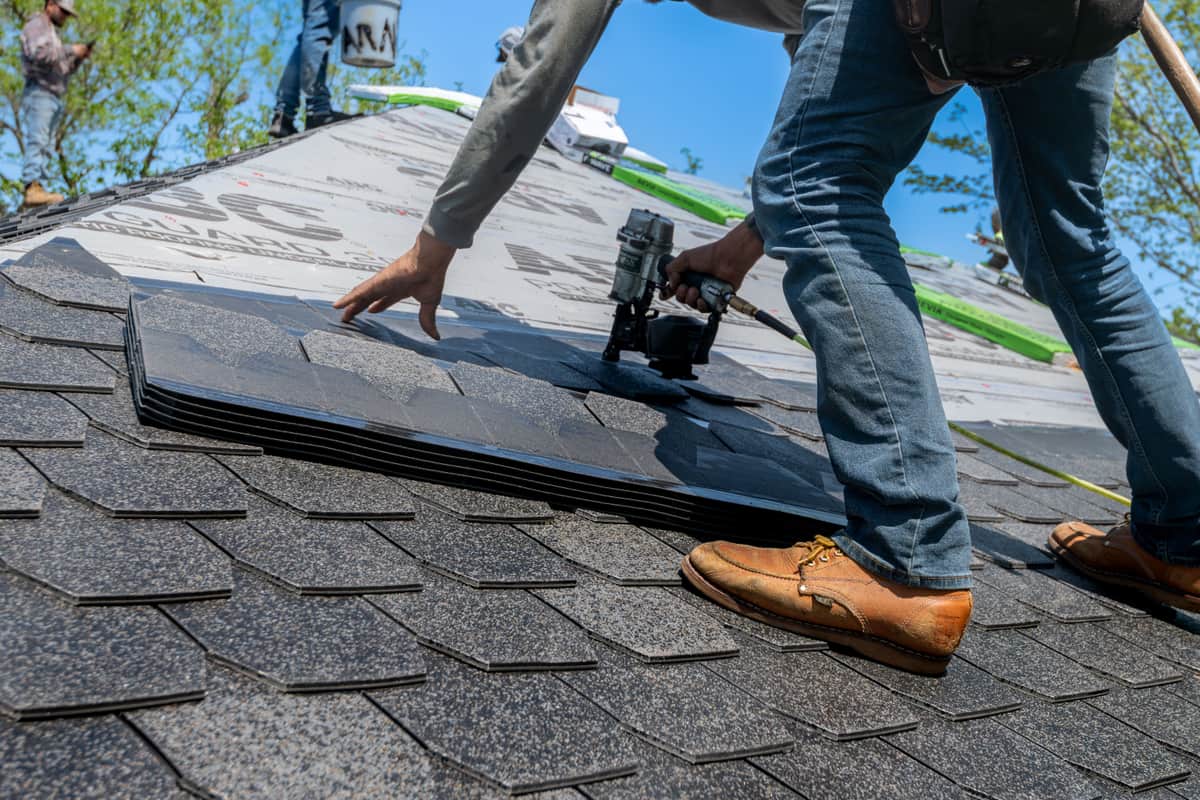
A roofer fastening shingles on a sloped roof deck

Some links on this page are affiliate links. If you buy through one, Magoo Media Group earns a commission from the retailer at no extra cost to you. It never changes which product we rank first - how this site is funded.

Criteria first

How we ranked these, and why CFM is the wrong starting point

We will start with the thing most pages on this subject quietly skip: there is no published CFM figure for a roofing nailer. Engineering ToolBox's air consumption table has no roofing line. Ingersoll Rand's service-shop chart has no roofing line. Our own CFM chart carries the class with the number deliberately left blank, because we do not print figures no source publishes. Anyone quoting you a precise roofing-nailer CFM has either read it off a different tool or made it up.

That sounds like a problem and is actually a clarification, because CFM was never the right frame for a nailer anyway. A nailer draws air only in the instant it fires. Engineering ToolBox's 2.5 CFM for a framing nailer is explicitly built on a 25% load factor, and Metabo HPT publishes 0.09 SCFM at 100 PSI per cycle for the NR90AES1 - the same tool described two ways, at two firing rates. Which means the real variable is not the gun. It is how many nails a minute you put through it.

Roofing is where that variable goes somewhere framing never does. A framer sets a stud, lines it up, fires twice, moves. A roofer walks a course bumping a coil gun through shingle after shingle, four nails per shingle, with no pause between them for the pump to catch up. The gun is smaller than a framing nailer and the demand is higher, because the pace is relentless in a way no other fastening job is.

So we ranked these on recovery rather than on peak output: delivered CFM at 90 PSI as the pump's ability to keep up with a sustained pace, max PSI as the size of the usable reservoir above a 90 to 100 PSI working setting, and weight, because this machine gets carried to a job and sometimes onto a roof. Tank gallons are the least interesting number here, which is why the top pick does not have the biggest tank.

What each machine brings to a sustained nailing pace
CompressorCFM at 90 PSIMax PSITankVerdict for a coil roofing nailer
Metabo HPT EC914S4.02006 galYes, and it is the only one here with real margin for two guns
DEWALT DWFP551262.61656 galYes for one gun at a normal pace; the 165 PSI helps
Bostitch BTFP020122.61506 galYes for one gun; expect the pump running most of the time
Makita MAC210Q2.01352 galOne gun, light duty. Buy it for the noise, not the pace
Porter-Cable C20022.61506 galThe baseline. Works, with the smallest reservoir above 90 PSI

Every compressor figure is the manufacturer's own published number, linked in the sources block. There is no tool-demand column because no manufacturer or reference chart publishes a roofing-nailer consumption figure - which is the point of the section above.

The number that is not on the box

Roofing nailer demand scales with nails per minute, and nails per minute is set by you, not by the tool. A homeowner replacing a shed roof and a crew stripping and re-laying a house are using the same gun and asking two completely different things of the compressor. Size for your pace, not for the gun's badge.
The spec people skip

Max PSI matters more here than on any other nailing job

Roofing nailers are generally run in the 90 to 100 PSI region - our air tool PSI chart covers the window, and the gun's own manual is the authority for the model in your hands. That working pressure is what makes max PSI the quietly decisive spec on this page.

Here is why. Usable stored air is not the tank's volume; it is the volume multiplied by the pressure range you can draw it down across. A 6-gallon tank filled to 150 PSI and worked down to a 100 PSI floor has 50 PSI of range to give you. The same 6 gallons filled to 200 PSI has 100 PSI of range - double the usable air from an identical tank, which on a sustained nailing pace is the difference between a pump that catches up between courses and a pump that never does.

That is the whole argument for the Metabo HPT EC914S as the top pick. Its 200 PSI ceiling is the highest published figure in our roster, and combined with 4.0 CFM at 90 PSI it gives you a 6-gallon tank that behaves closer to a much larger machine for burst fastening. The DEWALT DWFP55126's 165 PSI is the next best and genuinely useful; the 150 PSI machines are fine for one gun and will simply have the pump running more of the time.

The opposite end of this logic is worth stating plainly because it explains the Makita MAC210Q's placement. At 135 max PSI and 2.0 CFM it has both the narrowest usable band and the lowest output here, and on a fast roofing pace you will feel it. It is on the page because 60 dBA is a figure that genuinely matters to some buyers - residential work, early starts, neighbors - and because at a homeowner's pace on a small roof it is perfectly adequate. It is not the one to buy for a long day of production nailing.

Published air demand at 90 PSI
ToolCFM @ 90 PSIAt loadDutyWhat the number means
Roofing / coil nailerNot published-IntermittentNeither published chart carries a separate roofing-nailer line. Roofing is fired far faster and for far longer than framing, so treat it as the top of the framing range and size for recovery rather than peak. We will not print a number no source publishes.
Framing nailer, 21 or 30 degree2.5-BurstEngineering ToolBox lists 2.5 CFM for a framing nailer on a 25% load factor. Metabo HPT publishes 0.09 SCFM at 100 PSI for the NR90AES1 on a per-cycle basis. The two describe the same tool at different firing rates, which is exactly why one CFM number for a nailer is misleading: nail pace sets the demand, not the badge on the tool.
Finish nailer, 15 gauge1.8-BurstBostitch publishes 1.8 CFM of free air at 80 PSI for its BTFP72155 - the same tool now sold as the BTFP72156 kit - running 60 fasteners a minute - a fast, sustained trim pace, not casual use. At a realistic pace the draw is a fraction of that.
Brad nailer, 18 gauge0.5-BurstThe most forgiving air tool there is. A nailer draws air only at the instant it fires, so almost any tank covers it. That is why a 1-gallon compressor is a genuinely complete tool for trim work rather than a compromise.

Where two references publish different figures, both are shown rather than averaged into a number nobody published. Primary sources: Ingersoll Rand air consumption chart, Engineering ToolBox air tool consumption, and per-tool manufacturer specifications.

Ranked in buying order

The picks

Quick picks

#ProductBest forScorePrice
1
Metabo HPT EC914S (THE TANK) product photo
Metabo HPT EC914S (THE TANK)4 CFM @ 90 / 6 gal / 200 PSI4.0 CFM at 90 PSI and 200 PSI max - the only 6-gallon unit here that breaks the 2.6 CFM ceiling.
Getting real CFM without moving up to a 20-gallon footprint5.1/10★★★☆☆

#ad Disclosure - price as of November 14, 2026

2
DEWALT DWFP55126 product photo
DEWALT DWFP551262.6 CFM @ 90 / 6 gal / 165 PSI / 75.5 dBA165 PSI instead of 150, at 75.5 dBA and 30 lb. The extra 15 PSI is free tank storage.
The pancake to buy if you are choosing on numbers alone4.0/10★★☆☆☆

#ad Disclosure - we do not publish prices we cannot verify

3
Bostitch BTFP02012 product photo
Bostitch BTFP020122.6 CFM @ 90 / 6 gal / 150 PSI / 78.5 dBA2.6 CFM at 78.5 dBA published - quieter on paper than most of the pancake class at the same output.
A pancake for someone who has to work near neighbors3.2/10★★☆☆☆

#ad Disclosure - we do not publish prices we cannot verify

4
Makita MAC210Q Quiet Series product photo
Makita MAC210Q Quiet Series2 CFM @ 90 / 2 gal / 135 PSI / 60 dBA2.0 CFM at 60 dBA. The quiet option that can actually feed a framing nailer, not just a brad gun.
Quiet nailing at a real working pace3.8/10★★☆☆☆

#ad Disclosure - price as of November 14, 2026

5
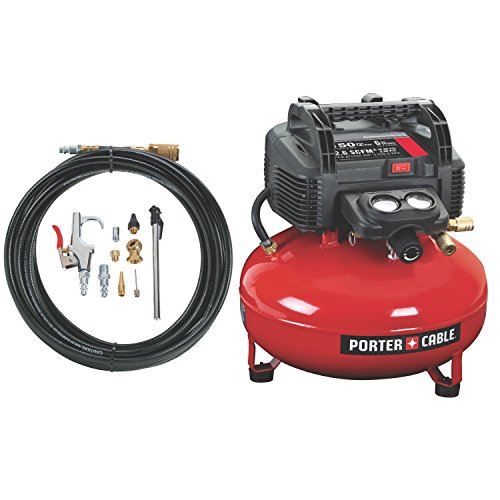
Porter-Cable C2002-WK product photo
Porter-Cable C2002-WK2.6 CFM @ 90 / 6 gal / 150 PSIThe default 6-gallon pancake: 2.6 CFM, 150 PSI, the same machine for years, now sold as the C2002-WK with its accessory kit.
A first compressor for nailing, inflation and burst automotive work3.6/10★★☆☆☆

#ad Disclosure - price as of November 14, 2026

Scores are computed from manufacturer-published specs by the rubric on our methodology page. Nothing here has been bench-tested. Prices are Amazon's own, refreshed daily, and never shown when we cannot verify them.

Pick 1 - Metabo HPT EC914S

5.1/10★★★☆☆

Metabo HPT EC914S (THE TANK)

Best for: Getting real CFM without moving up to a 20-gallon footprint

Verdict

4.0 CFM at 90 PSI and 200 PSI max - the only 6-gallon unit here that breaks the 2.6 CFM ceiling.

What it does well

  • 4.0 CFM at 90 PSI is 54% more air than the rest of the 6-gallon class
  • 200 PSI max means the same 6 gallons holds far more usable air
  • Clears the published average demand for a 1/2-inch impact and a 3/8-inch ratchet

What it will not do

  • 41 lb, the heaviest 6-gallon unit in the roster
  • Metabo HPT does not publish a noise figure, and high-pressure pumps are not quiet
How this 5.1 was calculated
MetricScoreWeightBasis
Air flow6.240%4 CFM at 90 PSI, on a 0.7-6 CFM scale
Stored air3.225%6 gal x 200 PSI = 1200, on a 125-3,500 scale
Noise5.015%Manufacturer publishes no dBA figure - scored a neutral 5, not a guess
Portability7.010%41 lb, on a 20-90 lb scale
Spec transparency3.310%2 of 6 useful figures published (CFM at 90, CFM at 40, dBA, duty cycle, recovery, weight)
Metabo HPT EC914S (THE TANK) product photo

Product image from the Amazon listing for this model

#ad Disclosure - price as of November 14, 2026

Published specs

Metabo HPT EC914S (THE TANK) published specifications
CFM @ 90 PSI4
CFM @ 40 PSINot published
Tank6 gal
Max pressure200 PSI
NoiseNot published
Duty cycleNot published
RecoveryNot published
PumpOil-free
MotorNot published
Weight41 lb
Power120V

Source: Metabo HPT EC914S THE TANK - product specifications

Pick 2 - DEWALT DWFP55126

4.0/10★★☆☆☆

DEWALT DWFP55126

Best for: The pancake to buy if you are choosing on numbers alone

Verdict

165 PSI instead of 150, at 75.5 dBA and 30 lb. The extra 15 PSI is free tank storage.

What it does well

  • 165 PSI max is the highest in the 6-gallon class here, which means more stored air per fill
  • 75.5 dBA published - the quietest of the pancakes we list
  • 0.9 HP with a 10 A draw, so it starts on a normal household circuit

What it will not do

  • 2.6 CFM at 90 PSI is the same as every cheaper pancake; the gain is storage, not flow
  • 30 lb with no wheels
How this 4.0 was calculated
MetricScoreWeightBasis
Air flow3.640%2.6 CFM at 90 PSI, on a 0.7-6 CFM scale
Stored air2.625%6 gal x 165 PSI = 990, on a 125-3,500 scale
Noise3.515%75.5 dBA, on a 58-85 dBA scale
Portability8.610%30 lb, on a 20-90 lb scale
Spec transparency5.010%3 of 6 useful figures published (CFM at 90, CFM at 40, dBA, duty cycle, recovery, weight)
DEWALT DWFP55126 product photo

Product image from the Amazon listing for this model

#ad Disclosure - we do not publish prices we cannot verify

Published specs

DEWALT DWFP55126 published specifications
CFM @ 90 PSI2.6
CFM @ 40 PSINot published
Tank6 gal
Max pressure165 PSI
Noise75.5 dBA
Duty cycleNot published
RecoveryNot published
PumpOil-free
Motor0.9
Weight30 lb
Power120V

Source: DEWALT DWFP55126 - product specifications

Pick 3 - Bostitch BTFP02012

3.2/10★★☆☆☆

Bostitch BTFP02012

Best for: A pancake for someone who has to work near neighbors

Verdict

2.6 CFM at 78.5 dBA published - quieter on paper than most of the pancake class at the same output.

What it does well

  • 78.5 dBA published, against 82 for the Craftsman at the same 2.6 CFM
  • High-efficiency cold-start motor, which matters in an unheated garage
  • 150 PSI, 6 gallons - standard useful storage

What it will not do

  • Still noticeably louder than the 58-70 dBA quiet class
  • 2.6 CFM is a nailing and inflation number, not a continuous-tool number
How this 3.2 was calculated
MetricScoreWeightBasis
Air flow3.640%2.6 CFM at 90 PSI, on a 0.7-6 CFM scale
Stored air2.325%6 gal x 150 PSI = 900, on a 125-3,500 scale
Noise2.415%78.5 dBA, on a 58-85 dBA scale
Portability5.010%No weight published - scored a neutral 5
Spec transparency3.310%2 of 6 useful figures published (CFM at 90, CFM at 40, dBA, duty cycle, recovery, weight)
Bostitch BTFP02012 product photo

Product image from the Amazon listing for this model

#ad Disclosure - we do not publish prices we cannot verify

Published specs

Bostitch BTFP02012 published specifications
CFM @ 90 PSI2.6
CFM @ 40 PSINot published
Tank6 gal
Max pressure150 PSI
Noise78.5 dBA
Duty cycleNot published
RecoveryNot published
PumpOil-free
MotorNot published
WeightNot published
Power120V

Source: Bostitch BTFP02012 pancake compressor - distributor specification listing

Pick 4 - Makita MAC210Q

3.8/10★★☆☆☆

Makita MAC210Q Quiet Series

Best for: Quiet nailing at a real working pace

Verdict

2.0 CFM at 60 dBA. The quiet option that can actually feed a framing nailer, not just a brad gun.

What it does well

  • 2.0 CFM at 90 PSI clears every nailer class on our CFM chart
  • 60 dBA published, against 78-82 dBA for the pancakes at similar output
  • Fills the 2-gallon tank from empty in about 65 seconds

What it will not do

  • 44 lb - heavier than a 6-gallon pancake with more tank
  • 2 gallons of storage means automotive burst work drains it fast
How this 3.8 was calculated
MetricScoreWeightBasis
Air flow2.540%2 CFM at 90 PSI, on a 0.7-6 CFM scale
Stored air0.425%2 gal x 135 PSI = 270, on a 125-3,500 scale
Noise9.315%60 dBA, on a 58-85 dBA scale
Portability6.610%44 lb, on a 20-90 lb scale
Spec transparency6.710%4 of 6 useful figures published (CFM at 90, CFM at 40, dBA, duty cycle, recovery, weight)
Makita MAC210Q Quiet Series product photo

Product image from the Amazon listing for this model

#ad Disclosure - price as of November 14, 2026

Published specs

Makita MAC210Q Quiet Series published specifications
CFM @ 90 PSI2
CFM @ 40 PSINot published
Tank2 gal
Max pressure135 PSI
Noise60 dBA
Duty cycleNot published
Recoveryabout 65 seconds from empty
PumpOil-free
Motor1.0
Weight44 lb
Power120V

Source: Makita MAC210Q - product specifications

Pick 5 - Porter-Cable C2002-WK

3.6/10★★☆☆☆

Porter-Cable C2002-WK

Best for: A first compressor for nailing, inflation and burst automotive work

Verdict

The default 6-gallon pancake: 2.6 CFM, 150 PSI, the same machine for years, now sold as the C2002-WK with its accessory kit.

What it does well

  • 2.6 CFM at 90 PSI and 3.7 at 40 - the most common spec in the budget class for a reason
  • 6-gallon tank at 150 PSI stores enough air for real bursts of impact work
  • Two couplers, so two people or two tools without swapping

What it will not do

  • Porter-Cable does not publish a noise figure for it; the class sits in the high 70s to low 80s dBA
  • 2.6 CFM will not run a ratchet, die grinder or sander continuously
How this 3.6 was calculated
MetricScoreWeightBasis
Air flow3.640%2.6 CFM at 90 PSI, on a 0.7-6 CFM scale
Stored air2.325%6 gal x 150 PSI = 900, on a 125-3,500 scale
Noise5.015%Manufacturer publishes no dBA figure - scored a neutral 5, not a guess
Portability5.010%No weight published - scored a neutral 5
Spec transparency3.310%2 of 6 useful figures published (CFM at 90, CFM at 40, dBA, duty cycle, recovery, weight)
Porter-Cable C2002-WK product photo

Product image from the Amazon listing for this model

#ad Disclosure - price as of November 14, 2026

Published specs

Porter-Cable C2002-WK published specifications
CFM @ 90 PSI2.6
CFM @ 40 PSI3.7
Tank6 gal
Max pressure150 PSI
NoiseNot published
Duty cycleNot published
RecoveryNot published
PumpOil-free
Motor0.8
WeightNot published
Power120V

Source: Porter-Cable C2002 - product specifications

Read this before you buy

Two guns on one compressor: the decision that actually sizes the machine

Almost every roofing job that is not a shed involves two people, and two people usually means two guns on one compressor. This is the single biggest sizing variable on the page and it gets almost no attention in the buying guides, because it is inconvenient for anybody trying to recommend the cheapest pancake.

The arithmetic is not complicated. Two nailers at a sustained roofing pace draw roughly twice what one does, while the pump output stays exactly where it was. A 2.6 CFM machine that comfortably supports one gun at a normal pace is operating at the edge with two, and the symptom is not a dramatic failure - it is both guns firing slightly softly, nails standing proud, and someone reaching for a hammer to set them. On a roof, soft-set nails are not a cosmetic problem.

If two guns is the plan, the honest options are a machine with real CFM margin or a second compressor. The EC914S at 4.0 CFM and 200 PSI is the only pick here we would put two coil guns on without qualification, and even then the pump will be busy. The alternative that crews actually use is two separate compressors, which also removes the hose-management problem of two people working off one tank on a sloped surface - and is often cheaper than one machine with twice the output.

The hose side of this deserves its own sentence, because it is where a correctly-sized compressor gets wasted. Long runs of 1/4-inch hose cost pressure, and roofing runs are long by nature: the compressor is on the ground and you are not. Our hose length page covers the physics; the practical version is to keep the main run as short as the job allows, step up to 3/8-inch for the long leg if you are running more than about fifty feet, and use the short 1/4-inch whip only at the gun.

Job reality

What roofing does to a compressor that framing does not

The thread running through all five is that roofing is the hardest environment a portable compressor normally sees. Not the most demanding in CFM terms - a DA sander asks for far more air - but the most sustained, the dirtiest and the most physically awkward. That is why we weight recovery, max PSI and weight ahead of tank size, and why oil-free is the right pump type for this job even though we would not say that about every job on this site.

It is also why we would push back on one common piece of advice: that a bigger tank is the answer to a roofing pace. A 20-gallon machine does store more air, and it also weighs two to three times what a pancake does and will not be going on the roof or up a ladder with you. For this job the tank that fits the work is a 6-gallon one with the highest pressure ceiling you can get, and the pump behind it is what you should be paying for.

  • It runs the pump harder for longer. A sustained nailing pace keeps the motor cycling continuously for hours, so the duty-cycle rating and the heat the machine sheds matter more than on any trim job.
  • It puts the compressor outdoors, in the sun, on an uneven surface. Oil-free pumps have the advantage here: no sump to sit at an angle, nothing to check before the machine goes in the truck.
  • It means the machine gets lifted. The DEWALT DWFP55126 at 30 lb and the EC914S at 41 lb are a meaningful difference when the compressor is going up a ladder or into a bed every evening.
  • It means dirt and grit in everything. A roof deck is an abrasive environment and an air filter that lives on the ground beside it clogs faster than one in a garage - check it far more often than the manual's interval.
  • It means the hose is a trip hazard on a sloped surface. This is the one job where hose routing is a safety decision rather than a tidiness one, and it is worth planning before the first bundle goes up.

The practical answer

If you only have the compressor you already own

A roofing nailer will physically run on almost any pancake compressor, including a 2.6 CFM machine at 150 PSI. The question is only whether it keeps up with your pace, and the honest test is to watch the gauge rather than the nails: if the tank pressure is sitting near the cut-in point while you work rather than cycling between cut-in and cut-out, the pump is at its limit and nails will start setting soft.

Two things genuinely help without buying a new machine. The first is pacing - working in planned bursts along a course and letting the pump recover at the end of each one, which is tedious but costs nothing and damages nothing. The second is checking the regulated pressure under flow rather than at rest, because a gauge reading 100 PSI with the trigger up can be reading well under that while the gun is firing, and the fix is often just setting it correctly in the first place.

What does not help is turning the regulator above the gun's specified range to compensate for a slow pump. It increases air consumption, drives nails harder than the manual intends, and on a shingle that means overdriven fasteners cutting through the mat. Our regulator guide covers setting it properly; the short version is to set it under flow, at the pressure the gun's manual specifies, and fix the air supply instead.

And if you are reading this because the nailer is the only air tool you plan to own, our nail gun page is the better starting point - the cheapest compressor on the shelf really is the right answer for occasional fastening, and roofing is the one case where that stops being true only because of pace.

FAQ

Questions people actually ask

How many CFM does a roofing nailer need?

No manufacturer or reference chart publishes a figure for the class, and we will not invent one. What is published is the framing-nailer class at 2.5 CFM on a 25% load factor, and Metabo HPT's 0.09 SCFM per cycle at 100 PSI for a framing gun. Roofing fires faster and for longer than framing, so treat it as the top of the framing range and size for recovery rather than for a peak number.

What size air compressor do I need for a roofing nailer?

A 6-gallon pancake with the highest pressure ceiling you can get. For one gun at a normal pace, 2.6 CFM at 90 PSI and 150 PSI maximum is workable. For a fast pace or two guns, the 4.0 CFM and 200 PSI of the Metabo HPT EC914S is the pick on this page with real margin.

Can two roofing nailers run off one compressor?

Only with CFM margin. Two guns at a sustained pace draw roughly double while the pump output stays the same, and the symptom of being short is both guns setting nails soft rather than an obvious failure. Either buy a machine with genuine margin or run a second compressor - which is often cheaper and solves the hose routing too.

Does max PSI matter for a roofing nailer?

More than on any other nailing job. A roofing gun runs around 90 to 100 PSI, so the usable reservoir is the range between your working pressure and the tank's ceiling. A 6-gallon tank at 200 PSI gives you double the usable air of the same tank at 150 PSI, which on a sustained pace is what keeps the pump ahead of you.

Is a 20-gallon compressor better for roofing than a pancake?

It stores more air and it is also two to three times the weight, which matters on a job where the machine moves daily and sometimes goes up a ladder. For roofing we would take a 6-gallon pancake with a 200 PSI ceiling over a heavier 20-gallon unit with a lower one.

Should I turn the pressure up if nails are not setting?

No. Raising the regulator above the gun's specified range overdrives fasteners, and on shingles an overdriven nail cuts through the mat. Check the regulated pressure under flow rather than at rest, set it to what the gun's manual specifies, and fix the air supply or your pace instead.

Sources

Where these numbers come from

Accessed September 2026. If a figure on this page does not match the manufacturer's current sheet, tell us at contact@psiandhose.com and we will correct and date the change - see our editorial policy.

Read next