Skip to content
Psi & Hose

Air Compressors

Best 120V air compressors

A 120V machine plugs into the wall you already have. That convenience sets a hard ceiling on how much air you can get, and these five sit right against it.

By Ryder M.Last updated Published
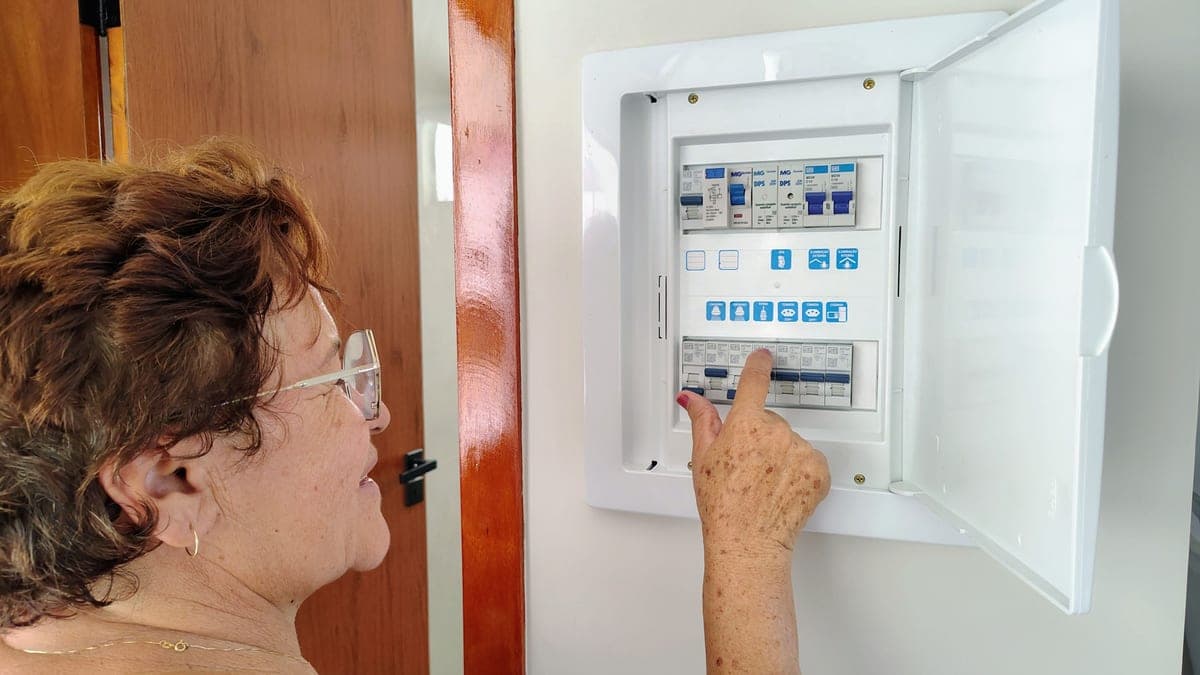
A compressor power cord plugged into a garage wall outlet

Some links on this page are affiliate links. If you buy through one, Magoo Media Group earns a commission from the retailer at no extra cost to you. It never changes which product we rank first - how this site is funded.

Read this first

The verdict, before the specs

The best use of a 120V outlet in our roster is the Metabo HPT EC914S: 4.0 CFM at 90 PSI, 200 PSI maximum, six gallons, 41 pounds. It is for the buyer who wants automotive-grade air without rewiring the garage. The budget pick is the Bostitch BTFP02012 - 2.6 CFM at 90 PSI, 150 PSI and 78.5 dBA published, the cheapest machine here at the last price check - for the buyer whose tools are nailers and tires.

If you want the most stored air a 120V circuit will support, the Craftsman CMXECXA0232043 is the one: 20 gallons, 4.0 CFM at 90 PSI, 175 PSI, on a normal plug. If you want to run a machine indoors or in the evening, the Makita MAC210Q publishes 60 dBA at 2.0 CFM, which is the quietest useful figure on a household circuit.

All prices come from the live price layer in the buy buttons, each with its own as-of date.

The hard number behind this whole page

A 15-amp 120V circuit is the limit, not the motor. Every machine here is pushing against the same supply, which is why so many of them publish exactly 2.6 CFM at 90 PSI. Beating that figure takes design, not horsepower.

The electrical reality

What a household circuit can and cannot give you

A compressor is one of the few tools in a garage that draws near-continuously for minutes at a time, and that is what makes the circuit matter. Start-up current on an induction motor is several times its running current, which is why a compressor can trip a breaker the instant it kicks in while running happily afterwards, and why sharing the circuit with a shop vac is a bad plan. Our power-requirements guide works through the numbers, and our breaker-tripping guide covers the fault when it happens.

The practical consequences are simple. Give the compressor its own circuit if you can. Do not run it on a long thin extension cord - voltage drop makes the motor draw more current and run hotter, which is the most common cause of nuisance tripping on a jobsite. And expect a 120V machine to top out somewhere near 4 CFM at 90 PSI, because that is roughly what the supply allows.

That ceiling is the real reason to know whether you want 120V at all. A 240V machine on a dedicated circuit starts where these finish: the 60-gallon machines in our roster publish 10.6 to 14.0 CFM at 90 PSI, which is two and a half to three and a half times what the best 120V unit manages. If your tool list has a sander or a die grinder on it, the voltage question is already answered and the honest move is to price an electrician.

Five 120V machines, on published figures
CFM at 90 PSIMax PSITankPublished noiseSupply
Metabo HPT EC914S4.0200 PSI6 galNot published120V
Craftsman CMXECXA02320434.0175 PSI20 galNot published120V
Makita MAC210Q2.0135 PSI2 gal60 dBA120V
Porter-Cable C2002-WK2.6150 PSI6 galNot published120V
Bostitch BTFP020122.6150 PSI6 gal78.5 dBA120V

Manufacturer-published figures, attributed in the sources block. The California Air Tools 8010A publishes 110V rather than 120V and appears on our quiet roundup; the distinction is nominal on a standard household supply but we quote what each maker prints.

Ranked

The picks

Quick picks

#ProductBest forScorePrice
1
Metabo HPT EC914S (THE TANK) product photo
Metabo HPT EC914S (THE TANK)4 CFM @ 90 / 6 gal / 200 PSI4.0 CFM at 90 PSI and 200 PSI max - the only 6-gallon unit here that breaks the 2.6 CFM ceiling.
Getting real CFM without moving up to a 20-gallon footprint5.1/10★★★☆☆

#ad Disclosure - price as of November 14, 2026

2
Craftsman CMXECXA0232043 20-gallon product photo
Craftsman CMXECXA0232043 20-gallon4 CFM @ 90 / 20 gal / 175 PSIThe same 4.0 CFM / 175 PSI / 20-gallon formula as the Husky, from a 1.8 HP oil-free pump.
A second 20-gallon option when the first is out of stock6.6/10★★★☆☆

#ad Disclosure - price as of November 14, 2026

3
Makita MAC210Q Quiet Series product photo
Makita MAC210Q Quiet Series2 CFM @ 90 / 2 gal / 135 PSI / 60 dBA2.0 CFM at 60 dBA. The quiet option that can actually feed a framing nailer, not just a brad gun.
Quiet nailing at a real working pace3.8/10★★☆☆☆

#ad Disclosure - price as of November 14, 2026

4
Porter-Cable C2002-WK product photo
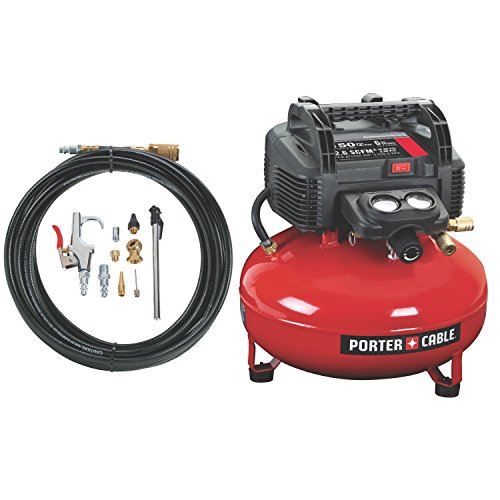
Porter-Cable C2002-WK2.6 CFM @ 90 / 6 gal / 150 PSIThe default 6-gallon pancake: 2.6 CFM, 150 PSI, the same machine for years, now sold as the C2002-WK with its accessory kit.
A first compressor for nailing, inflation and burst automotive work3.6/10★★☆☆☆

#ad Disclosure - price as of November 14, 2026

5
Bostitch BTFP02012 product photo
Bostitch BTFP020122.6 CFM @ 90 / 6 gal / 150 PSI / 78.5 dBA2.6 CFM at 78.5 dBA published - quieter on paper than most of the pancake class at the same output.
A pancake for someone who has to work near neighbors3.2/10★★☆☆☆

#ad Disclosure - we do not publish prices we cannot verify

Scores are computed from manufacturer-published specs by the rubric on our methodology page. Nothing here has been bench-tested. Prices are Amazon's own, refreshed daily, and never shown when we cannot verify them.

Pick 1 - Metabo HPT EC914S

5.1/10★★★☆☆

Metabo HPT EC914S (THE TANK)

Best for: Getting real CFM without moving up to a 20-gallon footprint

Verdict

4.0 CFM at 90 PSI and 200 PSI max - the only 6-gallon unit here that breaks the 2.6 CFM ceiling.

What it does well

  • 4.0 CFM at 90 PSI is 54% more air than the rest of the 6-gallon class
  • 200 PSI max means the same 6 gallons holds far more usable air
  • Clears the published average demand for a 1/2-inch impact and a 3/8-inch ratchet

What it will not do

  • 41 lb, the heaviest 6-gallon unit in the roster
  • Metabo HPT does not publish a noise figure, and high-pressure pumps are not quiet
How this 5.1 was calculated
MetricScoreWeightBasis
Air flow6.240%4 CFM at 90 PSI, on a 0.7-6 CFM scale
Stored air3.225%6 gal x 200 PSI = 1200, on a 125-3,500 scale
Noise5.015%Manufacturer publishes no dBA figure - scored a neutral 5, not a guess
Portability7.010%41 lb, on a 20-90 lb scale
Spec transparency3.310%2 of 6 useful figures published (CFM at 90, CFM at 40, dBA, duty cycle, recovery, weight)
Metabo HPT EC914S (THE TANK) product photo

Product image from the Amazon listing for this model

#ad Disclosure - price as of November 14, 2026

Published specs

Metabo HPT EC914S (THE TANK) published specifications
CFM @ 90 PSI4
CFM @ 40 PSINot published
Tank6 gal
Max pressure200 PSI
NoiseNot published
Duty cycleNot published
RecoveryNot published
PumpOil-free
MotorNot published
Weight41 lb
Power120V

Source: Metabo HPT EC914S THE TANK - product specifications

Pick 2 - Craftsman CMXECXA0232043

6.6/10★★★☆☆

Craftsman CMXECXA0232043 20-gallon

Best for: A second 20-gallon option when the first is out of stock

Verdict

The same 4.0 CFM / 175 PSI / 20-gallon formula as the Husky, from a 1.8 HP oil-free pump.

What it does well

  • 4.0 CFM at 90 PSI, 5.0 at 40, 175 PSI max
  • 1.8 HP oil-free pump - nothing to drain but the tank
  • Two quick couplers

What it will not do

  • Craftsman does not publish a noise figure for it
  • At 4.0 CFM it still will not run a DA sander, whatever the tank says
How this 6.6 was calculated
MetricScoreWeightBasis
Air flow6.240%4 CFM at 90 PSI, on a 0.7-6 CFM scale
Stored air10.025%20 gal x 175 PSI = 3500, on a 125-3,500 scale
Noise5.015%Manufacturer publishes no dBA figure - scored a neutral 5, not a guess
Portability5.010%No weight published - scored a neutral 5
Spec transparency3.310%2 of 6 useful figures published (CFM at 90, CFM at 40, dBA, duty cycle, recovery, weight)
Craftsman CMXECXA0232043 20-gallon product photo

Product image from the Amazon listing for this model

#ad Disclosure - price as of November 14, 2026

Published specs

Craftsman CMXECXA0232043 20-gallon published specifications
CFM @ 90 PSI4
CFM @ 40 PSI5
Tank20 gal
Max pressure175 PSI
NoiseNot published
Duty cycleNot published
RecoveryNot published
PumpOil-free
Motor1.8
WeightNot published
Power120V

Source: Craftsman CMXECXA0232043 20-gallon compressor - retailer specification listing

Pick 3 - Makita MAC210Q

3.8/10★★☆☆☆

Makita MAC210Q Quiet Series

Best for: Quiet nailing at a real working pace

Verdict

2.0 CFM at 60 dBA. The quiet option that can actually feed a framing nailer, not just a brad gun.

What it does well

  • 2.0 CFM at 90 PSI clears every nailer class on our CFM chart
  • 60 dBA published, against 78-82 dBA for the pancakes at similar output
  • Fills the 2-gallon tank from empty in about 65 seconds

What it will not do

  • 44 lb - heavier than a 6-gallon pancake with more tank
  • 2 gallons of storage means automotive burst work drains it fast
How this 3.8 was calculated
MetricScoreWeightBasis
Air flow2.540%2 CFM at 90 PSI, on a 0.7-6 CFM scale
Stored air0.425%2 gal x 135 PSI = 270, on a 125-3,500 scale
Noise9.315%60 dBA, on a 58-85 dBA scale
Portability6.610%44 lb, on a 20-90 lb scale
Spec transparency6.710%4 of 6 useful figures published (CFM at 90, CFM at 40, dBA, duty cycle, recovery, weight)
Makita MAC210Q Quiet Series product photo

Product image from the Amazon listing for this model

#ad Disclosure - price as of November 14, 2026

Published specs

Makita MAC210Q Quiet Series published specifications
CFM @ 90 PSI2
CFM @ 40 PSINot published
Tank2 gal
Max pressure135 PSI
Noise60 dBA
Duty cycleNot published
Recoveryabout 65 seconds from empty
PumpOil-free
Motor1.0
Weight44 lb
Power120V

Source: Makita MAC210Q - product specifications

Pick 4 - Porter-Cable C2002-WK

3.6/10★★☆☆☆

Porter-Cable C2002-WK

Best for: A first compressor for nailing, inflation and burst automotive work

Verdict

The default 6-gallon pancake: 2.6 CFM, 150 PSI, the same machine for years, now sold as the C2002-WK with its accessory kit.

What it does well

  • 2.6 CFM at 90 PSI and 3.7 at 40 - the most common spec in the budget class for a reason
  • 6-gallon tank at 150 PSI stores enough air for real bursts of impact work
  • Two couplers, so two people or two tools without swapping

What it will not do

  • Porter-Cable does not publish a noise figure for it; the class sits in the high 70s to low 80s dBA
  • 2.6 CFM will not run a ratchet, die grinder or sander continuously
How this 3.6 was calculated
MetricScoreWeightBasis
Air flow3.640%2.6 CFM at 90 PSI, on a 0.7-6 CFM scale
Stored air2.325%6 gal x 150 PSI = 900, on a 125-3,500 scale
Noise5.015%Manufacturer publishes no dBA figure - scored a neutral 5, not a guess
Portability5.010%No weight published - scored a neutral 5
Spec transparency3.310%2 of 6 useful figures published (CFM at 90, CFM at 40, dBA, duty cycle, recovery, weight)
Porter-Cable C2002-WK product photo

Product image from the Amazon listing for this model

#ad Disclosure - price as of November 14, 2026

Published specs

Porter-Cable C2002-WK published specifications
CFM @ 90 PSI2.6
CFM @ 40 PSI3.7
Tank6 gal
Max pressure150 PSI
NoiseNot published
Duty cycleNot published
RecoveryNot published
PumpOil-free
Motor0.8
WeightNot published
Power120V

Source: Porter-Cable C2002 - product specifications

Pick 5 - Bostitch BTFP02012

3.2/10★★☆☆☆

Bostitch BTFP02012

Best for: A pancake for someone who has to work near neighbors

Verdict

2.6 CFM at 78.5 dBA published - quieter on paper than most of the pancake class at the same output.

What it does well

  • 78.5 dBA published, against 82 for the Craftsman at the same 2.6 CFM
  • High-efficiency cold-start motor, which matters in an unheated garage
  • 150 PSI, 6 gallons - standard useful storage

What it will not do

  • Still noticeably louder than the 58-70 dBA quiet class
  • 2.6 CFM is a nailing and inflation number, not a continuous-tool number
How this 3.2 was calculated
MetricScoreWeightBasis
Air flow3.640%2.6 CFM at 90 PSI, on a 0.7-6 CFM scale
Stored air2.325%6 gal x 150 PSI = 900, on a 125-3,500 scale
Noise2.415%78.5 dBA, on a 58-85 dBA scale
Portability5.010%No weight published - scored a neutral 5
Spec transparency3.310%2 of 6 useful figures published (CFM at 90, CFM at 40, dBA, duty cycle, recovery, weight)
Bostitch BTFP02012 product photo

Product image from the Amazon listing for this model

#ad Disclosure - we do not publish prices we cannot verify

Published specs

Bostitch BTFP02012 published specifications
CFM @ 90 PSI2.6
CFM @ 40 PSINot published
Tank6 gal
Max pressure150 PSI
Noise78.5 dBA
Duty cycleNot published
RecoveryNot published
PumpOil-free
MotorNot published
WeightNot published
Power120V

Source: Bostitch BTFP02012 pancake compressor - distributor specification listing

Tank, noise, or flow

Choosing between four shapes on the same plug

The EC914S and the Craftsman 20-gallon both publish 4.0 CFM at 90 PSI, which is the top of what 120V supports, and they are completely different purchases. The EC914S puts that flow in a 41-pound carry handle with a 200 PSI tank; the Craftsman puts it behind 20 gallons of storage on wheels. Pick the first if the machine moves, the second if it does not.

The two pancakes - Porter-Cable and Bostitch - are the value answer at 2.6 CFM. That is enough for every nailer we cover, for tires, for blow-down work and for an air ratchet in bursts. The Porter-Cable arrives as a kit with hose and accessories; the Bostitch is usually the bare machine and the cheaper of the two. Neither will run a sander.

The MAC210Q is the odd one out and the right answer for a specific person: 60 dBA published, two gallons, 2.0 CFM at 90 PSI. It is a trim and cabinet machine you can run inside a house with people in it. Buying it for automotive work would be a mistake; buying a pancake for indoor finish work is a different mistake.

If none of those descriptions is you, our sizing pillar is the page to read instead of this one - it starts from your tool list rather than from a voltage.

Published air demand at 90 PSI
ToolCFM @ 90 PSIAt loadDutyWhat the number means
Brad nailer, 18 gauge0.5-BurstThe most forgiving air tool there is. A nailer draws air only at the instant it fires, so almost any tank covers it. That is why a 1-gallon compressor is a genuinely complete tool for trim work rather than a compromise.
Air ratchet, 3/8"3 - 4-IntermittentIngersoll Rand publishes 3 CFM average at 90 PSI for the 105-D3; Engineering ToolBox lists 4 CFM for the class. A ratchet is the sneaky one: you hold the trigger far longer than with an impact, so it punishes a small tank harder despite the lower headline number.
Impact wrench, 1/2"4 - 522BurstThe most misunderstood number on this chart. Ingersoll Rand publishes 4.2 CFM average for the 231C and 22 CFM at load. The average assumes you hold the trigger for a second or two at a time. A 6-gallon pancake at 2.6 CFM does break lug nuts; it simply cannot keep the trigger down.

Where two references publish different figures, both are shown rather than averaged into a number nobody published. Primary sources: Ingersoll Rand air consumption chart, Engineering ToolBox air tool consumption, and per-tool manufacturer specifications.

The upgrade point

When to stop fighting the circuit

There is a clean test for whether 120V is still the right answer: look at the longest continuous run in your tool list. If everything you own works in bursts - nailers, tires, impact wrenches, ratchets, blow guns - a 120V machine is correct and a bigger one is wasted money. If anything on the list runs for a minute without stopping, 120V is already the wrong category.

Sanders, die grinders, cut-off tools and spray guns are all continuous-draw tools, and our CFM chart puts them well above 4 CFM. No 120V machine meets that, which is why the usual experience is a pancake that keeps up for ten seconds and then becomes a very loud paperweight. That is not a defect; it is the circuit.

The upgrade is not a slightly bigger 120V machine. It is a 240V stationary unit, a dedicated circuit and probably hard-piped air, which is a different project with a different budget. Our 60-gallon roundup sets out what that money buys, and our 120V-versus-240V comparison is the page that makes the decision rather than this one.

If the answer is that you cannot have 240V - a rented garage, a shared building, an apartment - then the EC914S at 4.0 CFM is the ceiling of what is available to you, and the right move is to adjust the tool list rather than keep buying compressors.

FAQ

Questions people actually ask

What is the best 120V air compressor?

The Metabo HPT EC914S: 4.0 CFM at 90 PSI and 200 PSI from six gallons on a standard outlet, which is the top of what a household circuit supports. The Craftsman 20-gallon matches the flow with far more storage, the Makita MAC210Q is the quiet choice at 60 dBA, and the Bostitch BTFP02012 is the budget pick at 2.6 CFM.

How much CFM can a 120V air compressor deliver?

In practice about 4 CFM at 90 PSI at the top of the category. A 15-amp 120V circuit limits the electrical power available, so most machines land at 2.6 CFM at 90 PSI and the best published figure in our roster is 4.0. For 10 CFM and up you need a 240V machine.

Does a 120V air compressor need its own circuit?

It should have one. Start-up current is several times running current, so a compressor sharing a circuit with other tools is the classic cause of a breaker tripping the moment the pump kicks in. Avoid long thin extension cords for the same reason - voltage drop makes the motor draw more current and run hotter.

Can a 120V air compressor run an impact wrench?

Yes, in bursts. At 2.6 CFM at 90 PSI a pancake breaks lug nuts and then waits for the pump; at 4.0 CFM the Metabo HPT EC914S keeps a usable rhythm. Continuous-draw tools like sanders and die grinders are a different matter and need more air than any 120V machine supplies.

Is 120V or 240V better for a home garage?

It depends on one thing: your longest continuous tool run. If every tool works in bursts, 120V is correct and cheaper to install. If anything runs for a minute without stopping - a sander, a grinder, a spray gun - 240V is the only category that works, and the cost of the dedicated circuit is part of the purchase.

Sources

Where these numbers come from

Accessed September 2026. If a figure on this page does not match the manufacturer's current sheet, tell us at contact@psiandhose.com and we will correct and date the change - see our editorial policy.

Read next