Skip to content
Psi & Hose

CFM & Sizing

Die grinder CFM requirements

A die grinder is the tool that exposes an undersized compressor, because unlike an impact wrench it never stops drawing air.

By Ryder M.Last updated Published
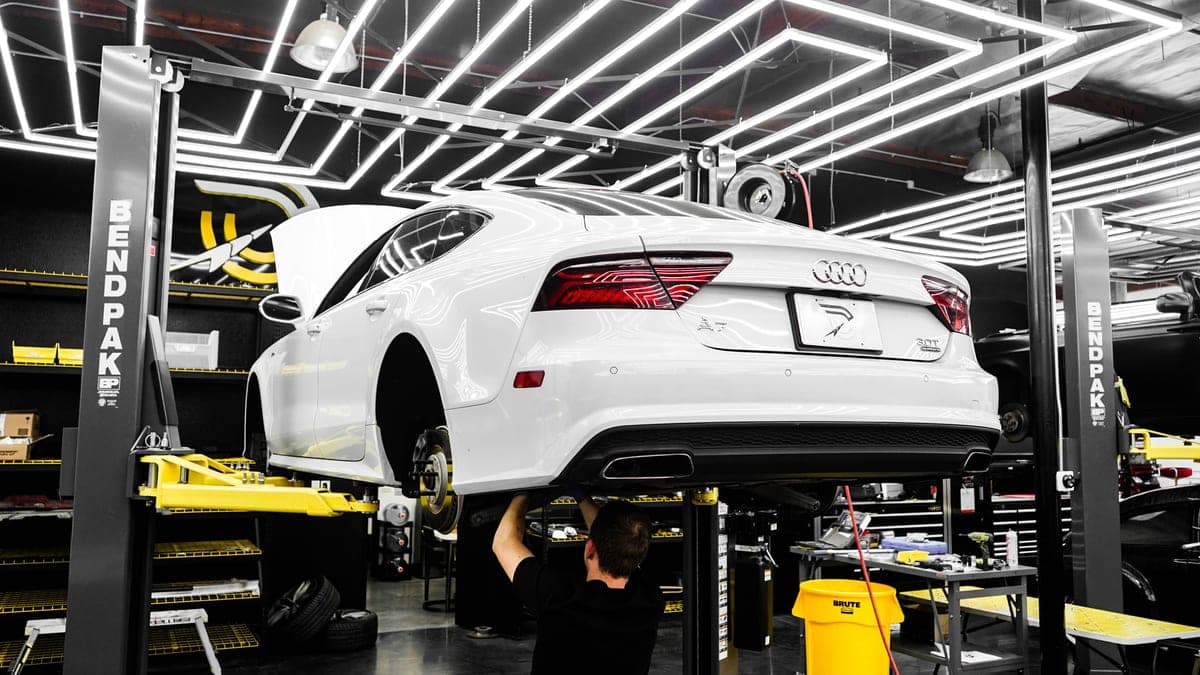
A mechanic working at a bench in a well-equipped shop

Some links on this page are affiliate links. If you buy through one, Magoo Media Group earns a commission from the retailer at no extra cost to you. It never changes which product we rank first - how this site is funded.

Read this first

The short answer

A quarter-inch die grinder draws about 5 CFM at 90 PSI - Ingersoll Rand's service-shop chart lists 5 CFM and Engineering ToolBox gives a 4 to 6 CFM band - and critically it draws it continuously rather than in bursts. That means you need a compressor whose delivered CFM at 90 PSI meets or exceeds the tool's draw, not one whose tank can absorb a burst. The honest minimum is a machine publishing at least 5 CFM at 90 PSI, which on this site means the California Air Tools 10020C at 5.3 CFM or larger.

This is the tool that breaks the usual garage logic. An impact wrench averages 4.2 CFM on Ingersoll Rand's figure and draws 22 CFM at load - a far scarier number - yet a 2.6 CFM pancake runs one acceptably, because a lug nut is a two-second trigger pull and the tank carries it. A die grinder at a lower average will defeat the same pancake inside a minute, because you hold the trigger for a minute at a time and there is no gap for the pump to catch up.

If your compressor publishes under 5 CFM at 90 PSI, a die grinder still physically runs - it just runs in thirty-second bursts followed by waits, with the pressure sagging through each burst so the tool slows as you work. For deburring one bracket that is tolerable. For porting, weld dressing or any sustained grinding it is not, and no accessory fixes it. The pump is the constraint.

Die grinder demand against compressor output
Published figureVerdict for a die grinder
Die grinder, 1/4" - demand5 CFM at 90 PSI (IR); 4-6 CFM band (Engineering ToolBox)Continuous duty - no tank relief
Typical 6 gal pancake2.6 CFM at 90 PSINo. Bursts only, with long waits
Metabo HPT EC914S4.0 CFM at 90 PSIMarginal. Below the 5 CFM figure, workable for short jobs
California Air Tools 10020C5.3 CFM at 90 PSI, 70/30 duty publishedYes, with little margin
DEWALT 30-gallon5.7 CFM at 90 PSIYes, comfortably
Industrial Air 60-gallon11.5 CFM at 90 PSIYes, and it will run two tools

Tool demand is from Ingersoll Rand's air consumption chart for automotive service shops and Engineering ToolBox, both linked in the sources block. Both carry their own caveats about averages - Ingersoll Rand's chart states it should not be considered accurate for any particular make of tool, and Engineering ToolBox's table is based on a 25% load factor. Compressor figures are manufacturer-published.

The load-factor trap

Engineering ToolBox states its table is based on a 25% load factor - tools running 25% of the time - and that full performance requires four times the volume. A die grinder is one of the few garage tools genuinely run near 100% while in use, which is exactly why it defeats compressors that handle nominally thirstier tools.

The arithmetic

Why continuous duty changes the whole calculation

The useful way to think about a compressor is as a bank account with an income. The pump is the income - a fixed CFM per minute. The tank is the balance. Burst tools spend from the balance faster than the income arrives, then stop and let the balance refill. Continuous tools spend at a steady rate, and the only question that matters is whether the income covers it. If it does, you can work indefinitely. If it does not, the tank is just a countdown.

You can calculate the countdown. A 20-gallon tank drawn from 175 PSI down to a 90 PSI cut-in holds a usable volume in the region of 15 cubic feet of free air. A die grinder at 5 CFM empties that in about three minutes on tank alone - but the pump is running the whole time, so the real figure is tank volume divided by the deficit between tool draw and pump output. On a 4 CFM machine the deficit is 1 CFM and you get roughly fifteen minutes before pressure collapses. On a 2.6 CFM pancake the deficit is 2.4 CFM against a 6-gallon tank, and you get about a minute.

That arithmetic is the whole reason this page exists separately from our impact wrench page. The two tools have similar average demand figures and completely different compressor requirements, and the difference is entirely in the duty shape. It is also why duty cycle - the manufacturer's statement of how long the pump can run continuously - matters here more than on any other tool. California Air Tools publishes 70/30 for the 10020C, which means it is rated to run 70% of the time, and a die grinder will hold it close to that.

Published air demand at 90 PSI
ToolCFM @ 90 PSIAt loadDutyWhat the number means
Die grinder, 1/4"5 - 6-ContinuousIngersoll Rand lists 5 CFM; Engineering ToolBox gives a 4-6 CFM band. Continuous duty, so a 6-gallon pancake gives you a handful of seconds before pressure drops and the tool slows.
Cut-off tool, 3 inch4 - 10-ContinuousEngineering ToolBox publishes a wide 4-10 CFM band because cut-off tools vary enormously. Whichever end yours sits at, it runs continuously, so size for the top of the band.
Impact wrench, 1/2"4 - 522BurstThe most misunderstood number on this chart. Ingersoll Rand publishes 4.2 CFM average for the 231C and 22 CFM at load. The average assumes you hold the trigger for a second or two at a time. A 6-gallon pancake at 2.6 CFM does break lug nuts; it simply cannot keep the trigger down.
Orbital / DA sander, 6 inch10 - 9-ContinuousIngersoll Rand lists 10 CFM for a body orbital sander; Engineering ToolBox gives 6-9 CFM for the class. A sander runs continuously by nature, so there is no burst allowance to hide behind. This is the job that genuinely needs a big compressor.
Air ratchet, 3/8"3 - 4-IntermittentIngersoll Rand publishes 3 CFM average at 90 PSI for the 105-D3; Engineering ToolBox lists 4 CFM for the class. A ratchet is the sneaky one: you hold the trigger far longer than with an impact, so it punishes a small tank harder despite the lower headline number.

Where two references publish different figures, both are shown rather than averaged into a number nobody published. Primary sources: Ingersoll Rand air consumption chart, Engineering ToolBox air tool consumption, and per-tool manufacturer specifications.

The picks

Three compressors that actually cover it

Quick picks

#ProductBest forScorePrice
1
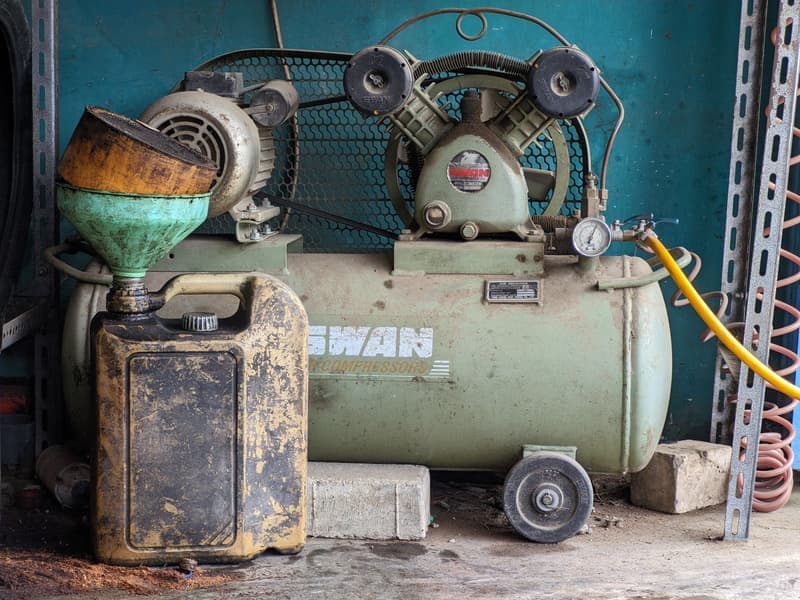
A ten-gallon vertical oil-free air compressor on wheels in a workshop
California Air Tools 10020C5.3 CFM @ 90 / 10 gal / 125 PSI / 70 dBA5.3 CFM at 70 dBA with a published 70/30 duty cycle. The first unit here that runs a continuous-duty tool.
Running a ratchet, die grinder or touch-up gun without waiting6.2/10★★★☆☆

#ad Disclosure - we do not publish prices we cannot verify

2
A thirty-gallon belt-drive air compressor with a cast iron pump
DEWALT DXCMLA1983054 30-gallon5.7 CFM @ 90 / 30 gal / 155 PSI5.7 CFM, 30 gallons, oil-lubricated cast iron and belt drive. Where a garage compressor stops being disposable.
A permanent garage compressor you expect to keep for a decade7.9/10★★★★☆

#ad Disclosure - we do not publish prices we cannot verify

3
A large stationary vertical sixty-gallon air compressor in a workshop
Industrial Air ILA3606056 60-gallon11.5 CFM @ 90 / 60 gal / 155 PSI11.5 CFM at 90 PSI. Included as the reference point for what continuous sanding and blasting actually costs.
Body work, blasting, or running two tools at once8.1/10★★★★☆

#ad Disclosure - we do not publish prices we cannot verify

Scores are computed from manufacturer-published specs by the rubric on our methodology page. Nothing here has been bench-tested, and we do not publish prices we cannot verify.

Pick 1 - California Air Tools 10020C

6.2/10★★★☆☆

California Air Tools 10020C

Best for: Running a ratchet, die grinder or touch-up gun without waiting

Verdict

5.3 CFM at 70 dBA with a published 70/30 duty cycle. The first unit here that runs a continuous-duty tool.

What it does well

  • 5.3 CFM at 90 PSI clears every published figure for ratchets, die grinders and touch-up spraying
  • 70 dBA at that output is unusual - most 5+ CFM units are far louder
  • Publishes a real 70/30 duty cycle and a 25-second recovery from 95 to 125 PSI

What it will not do

  • 82.5 lb and 14 A - it needs its own circuit and it is not a carry-it-upstairs machine
  • 125 PSI max, so a bigger tank at higher pressure still stores more per fill
How this 6.2 was calculated
MetricScoreWeightBasis
Air flow8.740%5.3 CFM at 90 PSI, on a 0.7-6 CFM scale
Stored air3.325%10 gal x 125 PSI = 1250, on a 125-3,500 scale
Noise5.615%70 dBA, on a 58-85 dBA scale
Portability1.110%82.5 lb, on a 20-90 lb scale
Spec transparency10.010%6 of 6 useful figures published (CFM at 90, CFM at 40, dBA, duty cycle, recovery, weight)
A ten-gallon vertical oil-free air compressor on wheels in a workshop

Licensed stock photo - illustrative of the category, not a photo of this unit

#ad Disclosure - we do not publish prices we cannot verify

Published specs

California Air Tools 10020C published specifications
CFM @ 90 PSI5.3
CFM @ 40 PSI6.4
Tank10 gal
Max pressure125 PSI
Noise70 dBA
Duty cycle70/30 (manufacturer-published)
Recovery120 s empty to full; 25 s recovery 95 to 125 PSI
PumpOil-free
Motor2.0
Weight82.5 lb
Power110V, 14 A

Source: California Air Tools 10020C - product specifications

Pick 2 - DEWALT DXCMLA1983054

7.9/10★★★★☆

DEWALT DXCMLA1983054 30-gallon

Best for: A permanent garage compressor you expect to keep for a decade

Verdict

5.7 CFM, 30 gallons, oil-lubricated cast iron and belt drive. Where a garage compressor stops being disposable.

What it does well

  • 5.7 CFM at 90 PSI and 7.0 at 40 - clears ratchets, die grinders and touch-up spraying
  • Oil-lubricated belt drive runs cooler and slower than a direct-drive oil-free pump
  • 120/240V, so it can move to a 240V circuit later

What it will not do

  • Oil-lubricated means an actual maintenance routine: check and change the oil
  • 155 PSI on 30 gallons stores less than 175 PSI on 20 in some comparisons - check the math, not the tank
How this 7.9 was calculated
MetricScoreWeightBasis
Air flow9.440%5.7 CFM at 90 PSI, on a 0.7-6 CFM scale
Stored air10.025%30 gal x 155 PSI = 4650, on a 125-3,500 scale
Noise5.015%Manufacturer publishes no dBA figure - scored a neutral 5, not a guess
Portability5.010%No weight published - scored a neutral 5
Spec transparency3.310%2 of 6 useful figures published (CFM at 90, CFM at 40, dBA, duty cycle, recovery, weight)
A thirty-gallon belt-drive air compressor with a cast iron pump

Licensed stock photo - illustrative of the category, not a photo of this unit

#ad Disclosure - we do not publish prices we cannot verify

Published specs

DEWALT DXCMLA1983054 30-gallon published specifications
CFM @ 90 PSI5.7
CFM @ 40 PSI7
Tank30 gal
Max pressure155 PSI
NoiseNot published
Duty cycleNot published
RecoveryNot published
PumpOil-lubricated
Motor1.9
WeightNot published
Power120/240V

Source: DEWALT DXCMLA1983054 30-gallon compressor - product specifications

Pick 3 - Industrial Air ILA3606056

8.1/10★★★★☆

Industrial Air ILA3606056 60-gallon

Best for: Body work, blasting, or running two tools at once

Verdict

11.5 CFM at 90 PSI. Included as the reference point for what continuous sanding and blasting actually costs.

What it does well

  • 11.5 CFM at 90 PSI and 13.4 at 40 - clears an orbital sander with margin
  • Cast-iron twin-cylinder pump on a 60-gallon vertical tank
  • 3.7 HP on 240V

What it will not do

  • 240V and stationary: this is an electrical project, not a purchase
  • Overkill for anyone whose honest tool list is nailers, tires and a 1/2-inch impact - which is most people reading this
How this 8.1 was calculated
MetricScoreWeightBasis
Air flow10.040%11.5 CFM at 90 PSI, on a 0.7-6 CFM scale
Stored air10.025%60 gal x 155 PSI = 9300, on a 125-3,500 scale
Noise5.015%Manufacturer publishes no dBA figure - scored a neutral 5, not a guess
Portability5.010%No weight published - scored a neutral 5
Spec transparency3.310%2 of 6 useful figures published (CFM at 90, CFM at 40, dBA, duty cycle, recovery, weight)
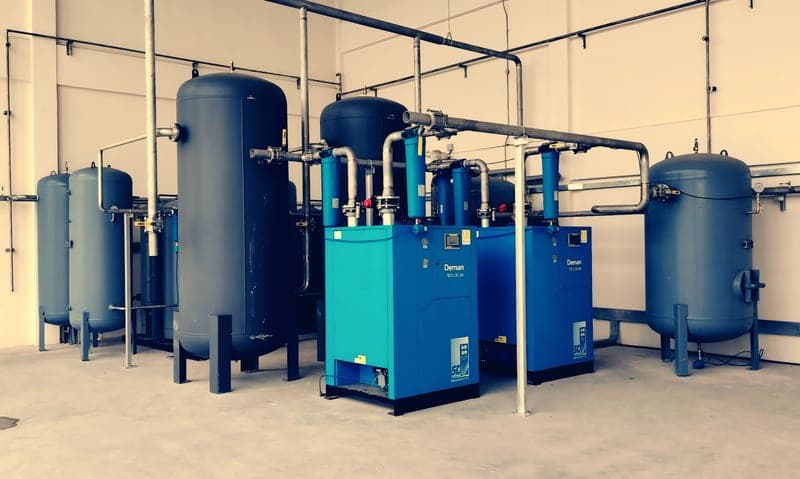
A large stationary vertical sixty-gallon air compressor in a workshop

Licensed stock photo - illustrative of the category, not a photo of this unit

#ad Disclosure - we do not publish prices we cannot verify

Published specs

Industrial Air ILA3606056 60-gallon published specifications
CFM @ 90 PSI11.5
CFM @ 40 PSI13.4
Tank60 gal
Max pressure155 PSI
NoiseNot published
Duty cycleNot published
RecoveryNot published
PumpOil-lubricated
Motor3.7
WeightNot published
Power240V

Source: Industrial Air ILA3606056 - product specifications

What else has to be right

Plumbing a continuous tool

With a continuous tool, every restriction in the line is paid for continuously too, and that changes what you can get away with. A 3/8-inch hose is the right size - our hose chart calls for 3/8-inch for die grinders and cut-off tools specifically because continuous duty is where every restriction shows. A 1/4-inch hose that works fine for a nailer will cost you measurable pressure at the grinder, all the time.

Couplers matter for the same reason. A standard 1/4-inch M-STYLE body publishes 40 SCFM, which is far above a 5 CFM tool, so one coupler is not the problem. A stack of adapters because the tool is a different pattern is a different story, and so is a filter with a smaller port than the line around it. The fix is the usual one: standardize on one coupler pattern and keep the port sizes consistent from the tank to the tool.

The one genuinely die-grinder-specific requirement is dry air. Continuous flow means continuous moisture delivery, and a die grinder's internal vane motor is where that water does its damage - it rusts the rotor and the cylinder wall while the tool sits. If you run a die grinder regularly, a filter-regulator at the point of use is not an accessory, and an inline oiler is worth reading the tool manual about: unlike most modern nailers, a vane-motor air tool generally does want lubrication.

The practical answer

What to do if your compressor is the one you have

The auxiliary-tank option is the one worth knowing about, because it is the only route that genuinely improves a small compressor's behavior on this tool without buying a new compressor. Adding a tank does not change the income - the pump still makes 2.6 CFM - but it makes the balance much larger, which turns a one-minute working window into several minutes. For someone who grinds occasionally rather than regularly, that is the right spend.

What none of these do is make an undersized compressor adequate for sustained grinding. If die grinding, cut-off work or DA sanding is a regular part of what you do, the answer is a compressor publishing 5 CFM or more at 90 PSI, and everything above is a way of coping until you buy one. We would rather say that plainly than sell you accessories against it.

  • Match the tool to the machine. A 2-inch mini die grinder or a pencil grinder draws less than a full quarter-inch body and is a genuinely better fit for a small compressor than a full-size tool you will stall.
  • Work in planned cycles rather than fighting the pressure. Thirty seconds on, wait for the pump to recover, thirty seconds on. Tedious, but it does not damage anything and it does finish the job.
  • Raise the cut-in pressure rather than the regulated pressure, if the switch allows it. A wider band between cut-in and cut-out gives you more usable stored air without changing what the tool sees.
  • Add tank volume instead of replacing the compressor. An auxiliary tank plumbed into the line extends the burst window substantially and costs far less than a new machine - it does not add CFM, but for intermittent grinding it buys real working time.
  • Do not raise the regulator above 90 PSI to compensate. It increases consumption without adding usable speed, because the tool's free speed is specified at 90 PSI.

FAQ

Questions people actually ask

How many CFM does a die grinder need?

About 5 CFM at 90 PSI. Ingersoll Rand's service-shop chart lists 5 CFM for a quarter-inch die grinder and Engineering ToolBox gives a 4 to 6 CFM band. The important part is that it is continuous duty, so your compressor's delivered CFM has to meet that figure rather than its tank absorbing a burst.

What size air compressor do I need for a die grinder?

One publishing at least 5 CFM at 90 PSI. On this site that means the California Air Tools 10020C at 5.3 CFM as the honest minimum, a 30-gallon at 5.7 CFM comfortably, or a 60-gallon at 11.5 CFM if you want to run other tools at the same time.

Can a pancake compressor run a die grinder?

Only in short bursts. A 2.6 CFM pancake is 2.4 CFM short of the tool's draw, which against a 6-gallon tank gives you roughly a minute of grinding before pressure collapses. It runs; it does not work.

Why does my compressor handle an impact wrench but not a die grinder?

Duty shape. An impact wrench averages 4.2 CFM but is used in two-second pulls, so the tank carries each one and the pump refills between them. A die grinder draws steadily for a minute at a time with no gap, so the pump's output is the only thing that matters.

Will a bigger tank let my small compressor run a die grinder?

It extends the working window without fixing the shortfall. An auxiliary tank makes the stored volume much larger, turning a one-minute burst into several minutes, which is genuinely useful for occasional grinding. It adds no CFM, so sustained work still needs a bigger pump.

Should I raise the pressure to make a die grinder work better?

No. Free speed is specified at 90 PSI, so running higher increases air consumption without adding usable performance - which makes an already-marginal compressor worse. Set 90 PSI under flow and fix the plumbing instead.

Sources

Where these numbers come from

Accessed September 2026. If a figure on this page does not match the manufacturer's current sheet, tell us at contact@psiandhose.com and we will correct and date the change - see our editorial policy.

Read next