Skip to content
Psi & Hose

Guides

What size air compressor do I need for an orbital sander?

This is the question where the arithmetic is brutal and most buying guides go quiet. An air sander is the single hungriest tool a home garage is likely to want, and almost no home compressor can feed one.

By Ryder M.Last updated Published
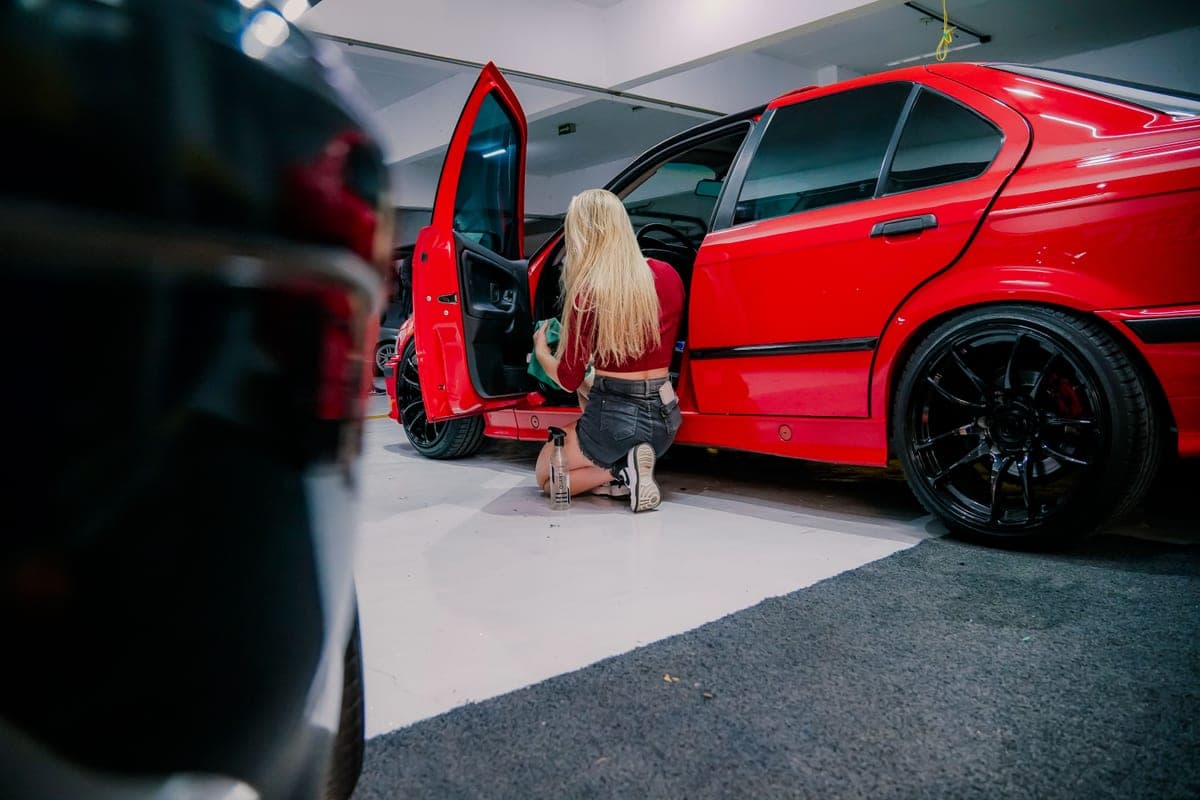
A body panel being prepared for refinishing in a workshop

Some links on this page are affiliate links. If you buy through one, Magoo Media Group earns a commission from the retailer at no extra cost to you. It never changes which product we rank first - how this site is funded.

Read this first

The honest answer

A 6-inch orbital or dual-action sander is a published 9 to 10 CFM at 90 PSI, continuous. Ingersoll Rand lists 10 CFM for a body orbital sander and Engineering ToolBox gives 6 to 9 CFM, and both figures are duty-rated rather than peak. Across our entire roster exactly one machine clears that honestly: the 60-gallon Industrial Air ILA3606056 at 11.5 CFM at 90 PSI, on a 240V circuit with a 3.7 HP motor.

Nothing on a 120V circuit meets it. The best 120V figures in our roster are 5.7, 5.3 and 4.0 CFM, which is between a half and two fifths of what the tool asks for. A bigger tank does not fix this: a sander draws air for as long as you hold it, so the tank only delays the moment the pump becomes your pace. Thirty gallons at 5.7 CFM buys you a longer first panel, not a working setup.

And a disc sander is worse. Our dataset carries 20 CFM for that class, continuous, which is above everything we list. If that is the tool you have in mind, the answer is that a home garage compressor is not the supply for it and an electric sander is.

Why 'it sort of works' is the trap

A sander fed by an undersized compressor does run - it just runs at falling pressure as the tank empties, which means falling pad speed, uneven cut, and a finish that looks different at the start of the panel than at the end. It does not stop, so you do not get a clear signal that it is wrong. You get a worse result and a compressor running at 100% duty.

The specification

What to look for if you want to do this with air

  1. 01Delivered CFM at 90 PSI at or above 10, and preferably above it. The tool's demand is continuous, so there is no borrowing from the tank. Margin above the figure is what keeps the compressor out of 100% duty rather than optional headroom.
  2. 02A 240V dedicated circuit. A standard household circuit is a fixed power budget and the 120V ceiling in our roster is 5.7 CFM. Getting to 10 CFM and beyond means doubling the voltage, which means an electrician and a dedicated run.
  3. 03An oil-lubricated pump. Continuous duty is where the oil bath carrying heat out of the cylinder matters. Both machines in our roster above 5 CFM on a real tank are oil-lubricated, and that is not a coincidence.
  4. 04Plumbing that does not undo it. At 10 CFM the hose and fittings stop being incidental. 3/8-inch is the minimum and a 1/2-inch drop with a high-flow coupler - 99 SCFM against 40 for a standard 1/4-inch pattern - is what a hungry tool actually wants.
  5. 05Water separation, because sanding follows into filling and spraying. A 10 micron trap is the first stage, not the whole answer.

The picks

The machines that can actually do it

Quick picks

#ProductBest forScorePrice
1
A large stationary vertical sixty-gallon air compressor in a workshop
Industrial Air ILA3606056 60-gallon11.5 CFM @ 90 / 60 gal / 155 PSI11.5 CFM at 90 PSI. Included as the reference point for what continuous sanding and blasting actually costs.
Body work, blasting, or running two tools at once8.1/10★★★★☆

#ad Disclosure - we do not publish prices we cannot verify

2
A thirty-gallon belt-drive air compressor with a cast iron pump
DEWALT DXCMLA1983054 30-gallon5.7 CFM @ 90 / 30 gal / 155 PSI5.7 CFM, 30 gallons, oil-lubricated cast iron and belt drive. Where a garage compressor stops being disposable.
A permanent garage compressor you expect to keep for a decade7.9/10★★★★☆

#ad Disclosure - we do not publish prices we cannot verify

3
A ten-gallon vertical oil-free air compressor on wheels in a workshop
California Air Tools 10020C5.3 CFM @ 90 / 10 gal / 125 PSI / 70 dBA5.3 CFM at 70 dBA with a published 70/30 duty cycle. The first unit here that runs a continuous-duty tool.
Running a ratchet, die grinder or touch-up gun without waiting6.2/10★★★☆☆

#ad Disclosure - we do not publish prices we cannot verify

Scores are computed from manufacturer-published specs by the rubric on our methodology page. Nothing here has been bench-tested, and we do not publish prices we cannot verify.

Pick 1 - Industrial Air ILA3606056

8.1/10★★★★☆

Industrial Air ILA3606056 60-gallon

Best for: Body work, blasting, or running two tools at once

Verdict

11.5 CFM at 90 PSI. Included as the reference point for what continuous sanding and blasting actually costs.

What it does well

  • 11.5 CFM at 90 PSI and 13.4 at 40 - clears an orbital sander with margin
  • Cast-iron twin-cylinder pump on a 60-gallon vertical tank
  • 3.7 HP on 240V

What it will not do

  • 240V and stationary: this is an electrical project, not a purchase
  • Overkill for anyone whose honest tool list is nailers, tires and a 1/2-inch impact - which is most people reading this
How this 8.1 was calculated
MetricScoreWeightBasis
Air flow10.040%11.5 CFM at 90 PSI, on a 0.7-6 CFM scale
Stored air10.025%60 gal x 155 PSI = 9300, on a 125-3,500 scale
Noise5.015%Manufacturer publishes no dBA figure - scored a neutral 5, not a guess
Portability5.010%No weight published - scored a neutral 5
Spec transparency3.310%2 of 6 useful figures published (CFM at 90, CFM at 40, dBA, duty cycle, recovery, weight)
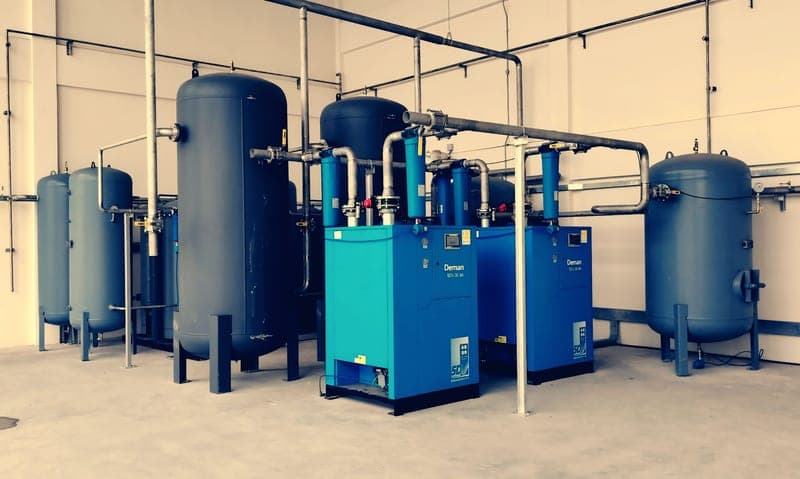
A large stationary vertical sixty-gallon air compressor in a workshop

Licensed stock photo - illustrative of the category, not a photo of this unit

#ad Disclosure - we do not publish prices we cannot verify

Published specs

Industrial Air ILA3606056 60-gallon published specifications
CFM @ 90 PSI11.5
CFM @ 40 PSI13.4
Tank60 gal
Max pressure155 PSI
NoiseNot published
Duty cycleNot published
RecoveryNot published
PumpOil-lubricated
Motor3.7
WeightNot published
Power240V

Source: Industrial Air ILA3606056 - product specifications

Pick 2 - DEWALT DXCMLA1983054

7.9/10★★★★☆

DEWALT DXCMLA1983054 30-gallon

Best for: A permanent garage compressor you expect to keep for a decade

Verdict

5.7 CFM, 30 gallons, oil-lubricated cast iron and belt drive. Where a garage compressor stops being disposable.

What it does well

  • 5.7 CFM at 90 PSI and 7.0 at 40 - clears ratchets, die grinders and touch-up spraying
  • Oil-lubricated belt drive runs cooler and slower than a direct-drive oil-free pump
  • 120/240V, so it can move to a 240V circuit later

What it will not do

  • Oil-lubricated means an actual maintenance routine: check and change the oil
  • 155 PSI on 30 gallons stores less than 175 PSI on 20 in some comparisons - check the math, not the tank
How this 7.9 was calculated
MetricScoreWeightBasis
Air flow9.440%5.7 CFM at 90 PSI, on a 0.7-6 CFM scale
Stored air10.025%30 gal x 155 PSI = 4650, on a 125-3,500 scale
Noise5.015%Manufacturer publishes no dBA figure - scored a neutral 5, not a guess
Portability5.010%No weight published - scored a neutral 5
Spec transparency3.310%2 of 6 useful figures published (CFM at 90, CFM at 40, dBA, duty cycle, recovery, weight)
A thirty-gallon belt-drive air compressor with a cast iron pump

Licensed stock photo - illustrative of the category, not a photo of this unit

#ad Disclosure - we do not publish prices we cannot verify

Published specs

DEWALT DXCMLA1983054 30-gallon published specifications
CFM @ 90 PSI5.7
CFM @ 40 PSI7
Tank30 gal
Max pressure155 PSI
NoiseNot published
Duty cycleNot published
RecoveryNot published
PumpOil-lubricated
Motor1.9
WeightNot published
Power120/240V

Source: DEWALT DXCMLA1983054 30-gallon compressor - product specifications

Pick 3 - California Air Tools 10020C

6.2/10★★★☆☆

California Air Tools 10020C

Best for: Running a ratchet, die grinder or touch-up gun without waiting

Verdict

5.3 CFM at 70 dBA with a published 70/30 duty cycle. The first unit here that runs a continuous-duty tool.

What it does well

  • 5.3 CFM at 90 PSI clears every published figure for ratchets, die grinders and touch-up spraying
  • 70 dBA at that output is unusual - most 5+ CFM units are far louder
  • Publishes a real 70/30 duty cycle and a 25-second recovery from 95 to 125 PSI

What it will not do

  • 82.5 lb and 14 A - it needs its own circuit and it is not a carry-it-upstairs machine
  • 125 PSI max, so a bigger tank at higher pressure still stores more per fill
How this 6.2 was calculated
MetricScoreWeightBasis
Air flow8.740%5.3 CFM at 90 PSI, on a 0.7-6 CFM scale
Stored air3.325%10 gal x 125 PSI = 1250, on a 125-3,500 scale
Noise5.615%70 dBA, on a 58-85 dBA scale
Portability1.110%82.5 lb, on a 20-90 lb scale
Spec transparency10.010%6 of 6 useful figures published (CFM at 90, CFM at 40, dBA, duty cycle, recovery, weight)
A ten-gallon vertical oil-free air compressor on wheels in a workshop

Licensed stock photo - illustrative of the category, not a photo of this unit

#ad Disclosure - we do not publish prices we cannot verify

Published specs

California Air Tools 10020C published specifications
CFM @ 90 PSI5.3
CFM @ 40 PSI6.4
Tank10 gal
Max pressure125 PSI
Noise70 dBA
Duty cycle70/30 (manufacturer-published)
Recovery120 s empty to full; 25 s recovery 95 to 125 PSI
PumpOil-free
Motor2.0
Weight82.5 lb
Power110V, 14 A

Source: California Air Tools 10020C - product specifications

The number

The demand figures, from the cited dataset

These are the surface-finishing and cutting classes from the same dataset that drives our CFM chart and calculator. The gap between them and a garage compressor is the single clearest illustration on this site of why CFM matters more than gallons.

Published air demand at 90 PSI
ToolCFM @ 90 PSIAt loadDutyWhat the number means
Orbital / DA sander, 6 inch10 - 9-ContinuousIngersoll Rand lists 10 CFM for a body orbital sander; Engineering ToolBox gives 6-9 CFM for the class. A sander runs continuously by nature, so there is no burst allowance to hide behind. This is the job that genuinely needs a big compressor.
Vertical disc sander / polisher20-Continuous20 CFM continuous. No portable garage compressor of any tank size will run this. If body work is the plan, price a 60-gallon two-stage before anything else.
Die grinder, 1/4"5 - 6-ContinuousIngersoll Rand lists 5 CFM; Engineering ToolBox gives a 4-6 CFM band. Continuous duty, so a 6-gallon pancake gives you a handful of seconds before pressure drops and the tool slows.
Cut-off tool, 3 inch4 - 10-ContinuousEngineering ToolBox publishes a wide 4-10 CFM band because cut-off tools vary enormously. Whichever end yours sits at, it runs continuously, so size for the top of the band.
Air drill, 3/8"4-IntermittentBoth references agree on 4 CFM. Honest answer: a cordless drill is better for almost every home-garage drilling job, and needs no compressor at all.

Where two references publish different figures, both are shown rather than averaged into a number nobody published. Primary sources: Ingersoll Rand air consumption chart, Engineering ToolBox air tool consumption, and per-tool manufacturer specifications.

The comparison

What our roster delivers against it

One machine clears 10 CFM. Everything else on this list is included so you can see exactly how far short the 120V class falls, and so you are not persuaded that a 30-gallon tank changes the answer.

Continuous-duty capability, manufacturer-published
CompressorCFM @ 90TankSupplyPumpClears a 10 CFM sander?
Industrial Air ILA360605611.560 gal240VOil-lubricatedYes
DEWALT DXCMLA19830545.730 gal120/240VOil-lubricatedNo
California Air Tools 10020C5.310 gal110V, 14 AOil-freeNo
Husky C201H4.020 gal120VOil-freeNo
Metabo HPT EC914S4.06 gal120VOil-freeNo
DEWALT DWFP551262.66 gal120VOil-freeNo

Manufacturer-published figures against the 9 to 10 CFM published demand for a 6-inch orbital sander.

Being honest

The alternative we would actually recommend

Buy an electric random-orbital sander. For a home garage doing occasional bodywork, furniture or deck prep, a corded or cordless electric sander does the job with no compressor at all, no duty-cycle anxiety, and no 240V circuit. The reason air sanders dominate body shops is that the shop already has 11.5 CFM on tap and air tools are lighter and more serviceable - neither of which applies in a garage with a pancake compressor.

If you want air specifically, buy the smallest air tool that does your job. A 1/4-inch die grinder is 5 to 6 CFM continuous rather than 9 to 10, which a 5.3 or 5.7 CFM machine approaches - not comfortably, but within reach for short work. Going down a tool size is a far cheaper solution than going up a compressor class.

And if you are buying the 60-gallon machine anyway for spraying, the sander comes along for free. That is the one case where the air sander makes straightforward sense in a home garage: you needed 11.5 CFM for something else and now you have it.

Working with what you have

If you already own the sander and a small compressor

  • Work in short sessions and let the compressor recover. If the pump never reaches cut-out it is running at 100% duty, which no machine in our roster is rated for, and heat is what ends pumps.
  • Set the regulator under flow rather than at rest, so the number you set is the number the tool gets while it is cutting.
  • Go up in hose diameter and down in hose length. The restriction grows as diameter falls and length rises, and at this flow rate the hose is a real part of the problem rather than a rounding error.
  • Check your couplers. A standard 1/4-inch coupler publishes 40 SCFM which is fine in principle, but a chain of cheap unbranded fittings on a 10 CFM tool is a stack of restrictions you installed yourself.
  • Accept the finish limitation. Falling pressure mid-panel changes pad speed and cut rate, and that shows up in the work. This is the honest reason to use an electric sander instead rather than to push a small compressor harder.

FAQ

Questions people actually ask

What size air compressor do I need for an orbital sander?

A 6-inch orbital or DA sander is a published 9 to 10 CFM at 90 PSI continuous, so you need a machine delivering at least that with margin. In our roster only a 60-gallon 240V unit at 11.5 CFM clears it; the 120V ceiling is 5.7 CFM.

Will a 30 gallon compressor run an air sander?

Not sustainably. Our 30-gallon pick publishes 5.7 CFM against a 9 to 10 CFM continuous demand, so the tank empties and the pump cannot catch up. A bigger tank delays the shortfall rather than removing it.

Can a 6 gallon pancake run an orbital sander?

No. 2.6 CFM against 9 to 10 CFM continuous is a factor of about four. It will turn the sander briefly at falling pressure, which produces an uneven cut and runs the compressor at 100% duty.

How much CFM does a DA sander use?

Ingersoll Rand lists 10 CFM for a body orbital sander and Engineering ToolBox gives 6 to 9 CFM for the class. Both are duty-rated continuous figures. A disc sander is worse - our dataset carries 20 CFM for that class.

Is an electric sander better than an air sander for home use?

For most home garages, yes. An electric random-orbital sander needs no compressor, no 240V circuit and no duty-cycle management. Air sanders make sense where 10 CFM is already available, which is a body shop rather than a garage.

What air tool can I run instead on a small compressor?

Going down a tool size helps more than going up a compressor class. A 1/4-inch die grinder is 5 to 6 CFM continuous rather than 9 to 10, which a 5.3 or 5.7 CFM machine can approach for short work.

Sources

Where these numbers come from

Accessed September 2026. If a figure on this page does not match the manufacturer's current sheet, tell us at contact@psiandhose.com and we will correct and date the change - see our editorial policy.

Read next