Skip to content
Psi & Hose

Compare

Tire inflator vs air compressor

These are sold under the same search term and are not the same machine. One has a tank and can run tools; the other weighs five pounds and lives in your car.

By Ryder M.Last updated Published
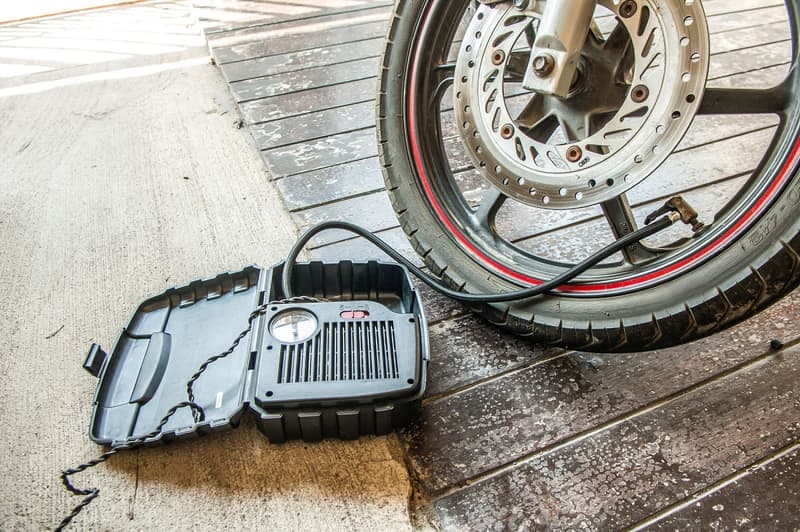
A portable 12-volt tire inflator connected to a vehicle tire

Some links on this page are affiliate links. If you buy through one, Magoo Media Group earns a commission from the retailer at no extra cost to you. It never changes which product we rank first - how this site is funded.

Tank or no tank

The difference that matters

A 12V tire inflator is a small direct-drive pump with no storage. Air goes from the pump straight into the tire. It is powered from a vehicle's electrical system and it weighs a few pounds.

A tank compressor stores air under pressure, which is what allows a tool drawing 22 CFM at load to work off a pump producing 2.6. No tank means no stored air, which means no air tool of any kind, ever.

That single distinction determines everything. Tires need moving air at low pressure, which a tankless pump supplies fine. Tools need stored air at 90 PSI, which only a tank supplies.

Head to head
12V inflator (VIAIR 88P)6-gallon compressor (Porter-Cable C2002)
TankNone6 gal
Max pressure120 PSI150 PSI
Flow1.47 CFM free flow at 0 PSI; about 1.25 at 30 PSI2.6 CFM at 90 PSI, 3.7 at 40
Duty cycle25 min at 30 PSI (published)Not published
Power12V DC, 20 A max draw120V AC
Weight4.75 lbNot published (class is about 30 lb)
Runs air toolsNo, noneNailers, inflation, burst impact work
LivesIn the vehicleIn the garage

The products

Both, on published specs

Quick picks

#ProductBest forScorePrice
1
A portable 12-volt air compressor with a coiled hose beside a tire
VIAIR 88PCFM not published / no tank / 120 PSIA 12V tire inflator, not a compressor. 120 PSI max with a 25-minute duty at 30 PSI. Buy it for the car, not the garage.
Topping up and re-airing tires away from a wall outlet2.1/10★☆☆☆☆
Check price on Amazon

#ad Disclosure - we do not publish prices we cannot verify

2
A red six-gallon pancake air compressor on a garage floor
Porter-Cable C20022.6 CFM @ 90 / 6 gal / 150 PSIThe default answer to 'cheapest useful compressor'. 6 gallons, 2.6 CFM, 150 PSI, and it has been the same machine for years.
A first compressor for nailing, inflation and burst automotive work3.6/10★★☆☆☆
Check price on Amazon

#ad Disclosure - we do not publish prices we cannot verify

3
A twin-stack style air compressor in a home garage
Makita MAC210Q Quiet Series2 CFM @ 90 / 2 gal / 135 PSI / 60 dBA2.0 CFM at 60 dBA. The quiet option that can actually feed a framing nailer, not just a brad gun.
Quiet nailing at a real working pace3.8/10★★☆☆☆
Check price on Amazon

#ad Disclosure - we do not publish prices we cannot verify

4
A twenty-gallon vertical air compressor standing against a garage wall
Husky C201H 20-gallon4 CFM @ 90 / 20 gal / 175 PSI / 83 dBA4.0 CFM with 20 gallons at 175 PSI. The cheapest way to buy STORAGE rather than flow.
Burst automotive work where tank volume, not CFM, is the limit6.3/10★★★☆☆
Check price on Amazon

#ad Disclosure - we do not publish prices we cannot verify

Scores are computed from manufacturer-published specs by the rubric on our methodology page. Nothing here has been bench-tested, and we do not publish prices we cannot verify.

Pick 1 - VIAIR 88P

2.1/10★☆☆☆☆

VIAIR 88P

Best for: Topping up and re-airing tires away from a wall outlet

Verdict

A 12V tire inflator, not a compressor. 120 PSI max with a 25-minute duty at 30 PSI. Buy it for the car, not the garage.

What it does well

  • 120 PSI max working pressure covers car, truck and trailer tires
  • 1.47 CFM free flow at 0 PSI; about 1.25 CFM at 30 PSI - the pressure tires actually live at
  • 4.75 lb with a 10 ft power cord and 16 ft air hose

What it will not do

  • No tank, so it cannot run any air tool at all - not one
  • 20 A draw and a published 25-minute duty at 30 PSI: four tires, then let it cool
How this 2.1 was calculated
MetricScoreWeightBasis
Air flow0.040%No CFM at 90 PSI published - scored zero rather than guessed
Stored air0.025%0 gal x 120 PSI = 0, on a 125-3,500 scale
Noise5.015%Manufacturer publishes no dBA figure - scored a neutral 5, not a guess
Portability10.010%4.75 lb, on a 20-90 lb scale
Spec transparency3.310%2 of 6 useful figures published (CFM at 90, CFM at 40, dBA, duty cycle, recovery, weight)
A portable 12-volt air compressor with a coiled hose beside a tire

Licensed stock photo - illustrative of the category, not a photo of this unit

Check price on Amazon

#ad Disclosure - we do not publish prices we cannot verify

Published specs

VIAIR 88P published specifications
CFM @ 90 PSINot published
CFM @ 40 PSINot published
TankNone (direct drive)
Max pressure120 PSI
NoiseNot published
Duty cycle25 min at 30 PSI (manufacturer-published)
RecoveryNot published
PumpOil-free
Motor12V DC, 20 A max draw
Weight4.75 lb
Power12V DC

Source: VIAIR 88P portable compressor - product specifications

Pick 2 - Porter-Cable C2002

3.6/10★★☆☆☆

Porter-Cable C2002

Best for: A first compressor for nailing, inflation and burst automotive work

Verdict

The default answer to 'cheapest useful compressor'. 6 gallons, 2.6 CFM, 150 PSI, and it has been the same machine for years.

What it does well

  • 2.6 CFM at 90 PSI and 3.7 at 40 - the most common spec in the budget class for a reason
  • 6-gallon tank at 150 PSI stores enough air for real bursts of impact work
  • Two couplers, so two people or two tools without swapping

What it will not do

  • Porter-Cable does not publish a noise figure for it; the class sits in the high 70s to low 80s dBA
  • 2.6 CFM will not run a ratchet, die grinder or sander continuously
How this 3.6 was calculated
MetricScoreWeightBasis
Air flow3.640%2.6 CFM at 90 PSI, on a 0.7-6 CFM scale
Stored air2.325%6 gal x 150 PSI = 900, on a 125-3,500 scale
Noise5.015%Manufacturer publishes no dBA figure - scored a neutral 5, not a guess
Portability5.010%No weight published - scored a neutral 5
Spec transparency3.310%2 of 6 useful figures published (CFM at 90, CFM at 40, dBA, duty cycle, recovery, weight)
A red six-gallon pancake air compressor on a garage floor

Licensed stock photo - illustrative of the category, not a photo of this unit

Check price on Amazon

#ad Disclosure - we do not publish prices we cannot verify

Published specs

Porter-Cable C2002 published specifications
CFM @ 90 PSI2.6
CFM @ 40 PSI3.7
Tank6 gal
Max pressure150 PSI
NoiseNot published
Duty cycleNot published
RecoveryNot published
PumpOil-free
Motor0.8
WeightNot published
Power120V

Source: Porter-Cable C2002 - product specifications

Pick 3 - Makita MAC210Q

3.8/10★★☆☆☆

Makita MAC210Q Quiet Series

Best for: Quiet nailing at a real working pace

Verdict

2.0 CFM at 60 dBA. The quiet option that can actually feed a framing nailer, not just a brad gun.

What it does well

  • 2.0 CFM at 90 PSI clears every nailer class on our CFM chart
  • 60 dBA published, against 78-82 dBA for the pancakes at similar output
  • Fills the 2-gallon tank from empty in about 65 seconds

What it will not do

  • 44 lb - heavier than a 6-gallon pancake with more tank
  • 2 gallons of storage means automotive burst work drains it fast
How this 3.8 was calculated
MetricScoreWeightBasis
Air flow2.540%2 CFM at 90 PSI, on a 0.7-6 CFM scale
Stored air0.425%2 gal x 135 PSI = 270, on a 125-3,500 scale
Noise9.315%60 dBA, on a 58-85 dBA scale
Portability6.610%44 lb, on a 20-90 lb scale
Spec transparency6.710%4 of 6 useful figures published (CFM at 90, CFM at 40, dBA, duty cycle, recovery, weight)
A twin-stack style air compressor in a home garage

Licensed stock photo - illustrative of the category, not a photo of this unit

Check price on Amazon

#ad Disclosure - we do not publish prices we cannot verify

Published specs

Makita MAC210Q Quiet Series published specifications
CFM @ 90 PSI2
CFM @ 40 PSINot published
Tank2 gal
Max pressure135 PSI
Noise60 dBA
Duty cycleNot published
Recoveryabout 65 seconds from empty
PumpOil-free
Motor1.0
Weight44 lb
Power120V

Source: Makita MAC210Q - product specifications

Pick 4 - Husky C201H

6.3/10★★★☆☆

Husky C201H 20-gallon

Best for: Burst automotive work where tank volume, not CFM, is the limit

Verdict

4.0 CFM with 20 gallons at 175 PSI. The cheapest way to buy STORAGE rather than flow.

What it does well

  • 20 gallons at 175 PSI is roughly six times the stored air of a 6-gallon 150 PSI pancake
  • 4.0 CFM at 90 PSI and 5.2 at 40 - enough to recover between bursts instead of chasing you
  • Vertical footprint takes a corner instead of floor space

What it will not do

  • 83 dBA published and a 7-minute fill from empty - plan to switch it on before you start
  • Oil-free at 20 gallons means a shorter pump life than a cast-iron oil-lubricated unit
How this 6.3 was calculated
MetricScoreWeightBasis
Air flow6.240%4 CFM at 90 PSI, on a 0.7-6 CFM scale
Stored air10.025%20 gal x 175 PSI = 3500, on a 125-3,500 scale
Noise0.715%83 dBA, on a 58-85 dBA scale
Portability5.010%No weight published - scored a neutral 5
Spec transparency6.710%4 of 6 useful figures published (CFM at 90, CFM at 40, dBA, duty cycle, recovery, weight)
A twenty-gallon vertical air compressor standing against a garage wall

Licensed stock photo - illustrative of the category, not a photo of this unit

Check price on Amazon

#ad Disclosure - we do not publish prices we cannot verify

Published specs

Husky C201H 20-gallon published specifications
CFM @ 90 PSI4
CFM @ 40 PSI5.2
Tank20 gal
Max pressure175 PSI
Noise83 dBA
Duty cycleNot published
Recoveryabout 7 minutes to fill from empty
PumpOil-free
Motor1.3 running
WeightNot published
Power120V

Source: Husky C201H 20-gallon compressor - retailer specification listing

The 12V case

Buy the inflator if

Your job is tires, and the tires are not always next to your garage. This is the whole argument and it is decisive for a lot of people. A soft tire in a parking lot, a trailer at a campsite, a bike on a trail - a garage compressor is useless for all three and a 4.75-pound pump in the trunk is perfect.

You want honest specifications. VIAIR publishes 120 PSI maximum working pressure, about 1.25 CFM at 30 PSI, a 20-amp maximum draw and a 25-minute duty cycle at 30 PSI. That is enough to set a correct expectation, which is more than several compressor brands manage.

You have no interest in air tools. If your entire list is tires and the occasional air mattress, a tank compressor is a large, loud, expensive way to do a job a small pump does better.

The tank case

Buy the compressor if

You want to use any air tool at all. A brad nailer, a blow gun, an impact wrench - all of them need stored air, and no 12V pump supplies it. This is not a matter of degree; it is a hard capability line.

You inflate tires at home and want it fast. A 6-gallon tank at 150 PSI holds enough for all four car tires without the pump even starting. That is quicker than a 12V unit, which has to make every cubic foot on demand.

You want one machine for several jobs. A 6-gallon pancake handles tires, nailing, dusting and burst impact work for around the price of a good 12V inflator plus a cheap one. If it can live in the garage, it is the better value.

And the genuinely best answer for many people is both: a pancake in the garage and a 12V pump in the car. They are inexpensive enough that owning both is not extravagant, and they cover different situations rather than competing.

FAQ

Questions people actually ask

Can a tire inflator run air tools?

No. A 12V inflator has no tank, so there is no stored air, and air tools depend entirely on stored air for their at-load draw. This is a hard capability line, not a matter of the pump being small.

Is a 12V inflator good enough for car tires?

Yes. Tire inflation needs about 2 CFM at 30 to 60 PSI, and a good 12V unit publishes 120 PSI maximum with roughly 1.25 CFM at 30 PSI - slower than a garage compressor but adequate, and it is in the car where soft tires happen.

Which is faster at filling tires?

A tank compressor, comfortably. A full 6-gallon tank holds enough air for four car tires without the pump starting, while a 12V unit makes every cubic foot on demand. The 12V wins on being where the car is, not on speed.

Should I buy both?

For many people, yes - they cost little and cover different situations. A pancake in the garage for tools and fast home inflation, and a 12V pump in the trunk for everywhere else. They complement rather than compete.

Can I plug a 12V inflator into a cigarette lighter?

For a quick top-up, usually. A unit drawing up to 20 amps wants a direct battery connection for sustained work, and many accessory sockets are fused well below that. Check the maximum draw against your socket's fuse rating.

Sources

Where these numbers come from

Accessed September 2026. If a figure on this page does not match the manufacturer's current sheet, tell us at contact@psiandhose.com and we will correct and date the change - see our editorial policy.

Read next