Skip to content
Psi & Hose

CFM & Sizing

Air ratchet CFM requirements

On paper a ratchet is the gentlest automotive tool you can own. In practice it is harder on a small tank than the impact wrench next to it.

By Ryder M.Last updated Published
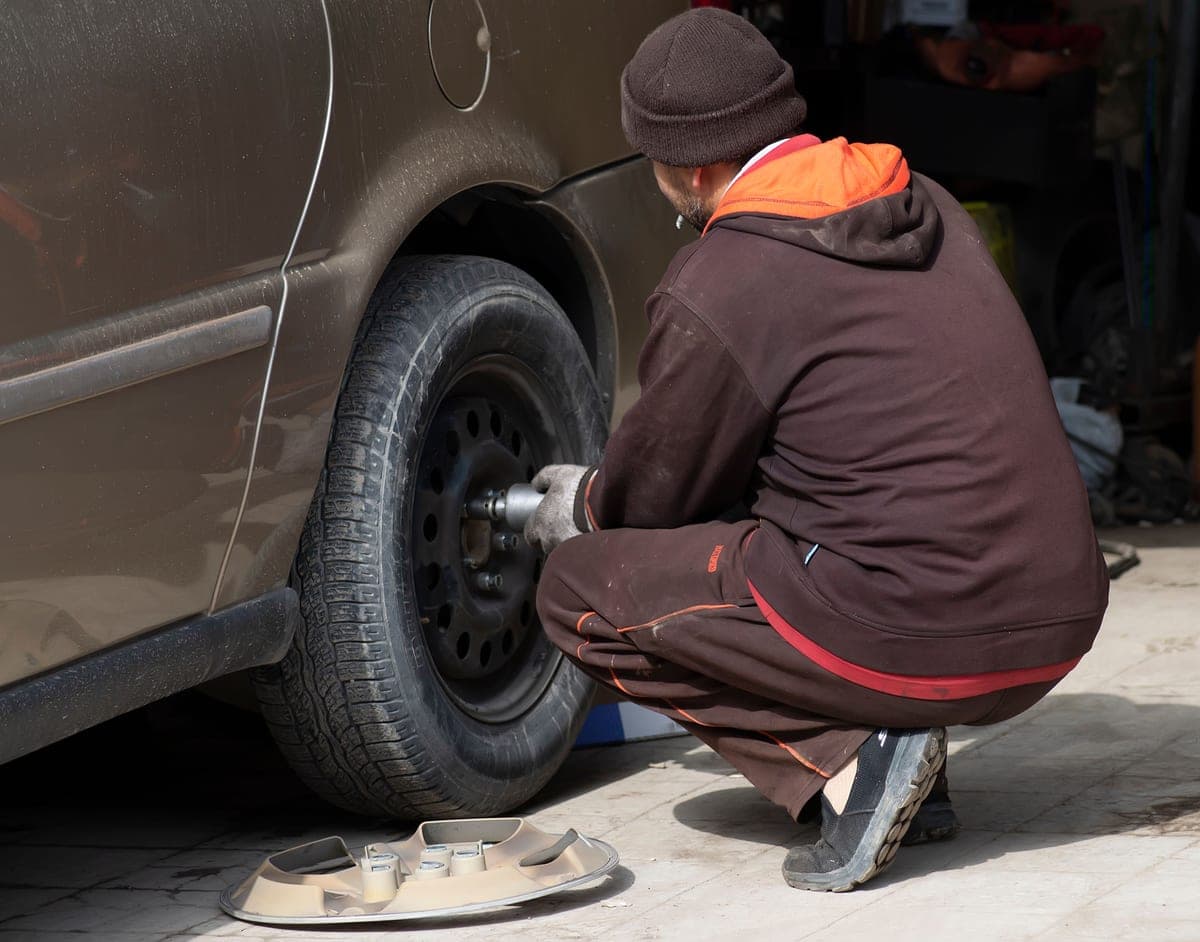
A wheel being removed from a vehicle with air tools nearby

Some links on this page are affiliate links. If you buy through one, Magoo Media Group earns a commission from the retailer at no extra cost to you. It never changes which product we rank first - how this site is funded.

Read this first

The short answer

A 3/8-inch air ratchet draws about 3 CFM at 90 PSI. Ingersoll Rand publishes exactly 3 CFM average for the 105-D3, and Engineering ToolBox lists 4 CFM for the class - the lowest automotive-tool figure either source carries. For a compressor, the practical answer is that a machine publishing 4 CFM at 90 PSI runs a ratchet comfortably, and a 2.6 CFM pancake runs one badly despite the gap looking small.

The reason the small gap matters is trigger time. You hold a ratchet trigger for twenty or thirty seconds at a stretch, working a bolt out of an accessory bracket, and then move to the next one. You hold an impact wrench trigger for two seconds. That means a ratchet behaves far closer to a continuous-duty tool than its CFM figure suggests, and a 0.4 CFM deficit sustained for thirty seconds at a time adds up where a 20 CFM deficit for two seconds does not.

So the honest sizing answer is: 4 CFM at 90 PSI as the comfortable minimum, which on this site means the Metabo HPT EC914S or a 20-gallon machine like the Husky C201H. Below that the ratchet works but the pump never stops. Above it - the California Air Tools 10020C at 5.3 CFM - you stop thinking about the compressor at all, which is the real luxury.

Ratchet demand against compressor output
Published figureVerdict for a ratchet
Air ratchet, 3/8" - demand3 CFM (Ingersoll Rand 105-D3); 4 CFM class figure (Engineering ToolBox)Intermittent, but long trigger pulls
Air ratchet, 1/4" - demand3 CFM at 90 PSISame band; smaller drive, similar air
Typical 6 gal pancake2.6 CFM at 90 PSIMarginal. Works, but the pump runs constantly
Metabo HPT EC914S4.0 CFM at 90 PSIYes. The comfortable minimum
Husky C201H 20-gallon4.0 CFM at 90 PSI, 175 PSI tankYes, with a big buffer for burst work alongside
California Air Tools 10020C5.3 CFM at 90 PSI, 70/30 dutyYes, with real margin and 70 dBA published

Tool demand is from Ingersoll Rand's published specification for the 105-D3 and its automotive service-shop consumption chart, plus Engineering ToolBox. Both sources carry caveats - Engineering ToolBox's table assumes a 25% load factor, which a ratchet exceeds in real use. Compressor figures are manufacturer-published; all are linked in the sources block.

What the 3 CFM figure does not tell you

Ingersoll Rand's 3 CFM is an average, and averages assume a duty pattern. The 105-D3's own cons are instructive: you hold a ratchet trigger far longer than an impact trigger, so a 2.6 CFM pancake falls behind on a tool whose published figure looks almost within reach.

The job shape

What a ratchet is actually for, and why that sets the air demand

An air ratchet is not a small impact wrench and it is not a torque tool. Ingersoll Rand publishes 25 ft-lb maximum for the 105-D3 with a recommended working range of 5 to 20 ft-lb, and 250 RPM free speed. That is accessory-bolt territory - alternator brackets, intake bolts, valve covers, bell housing bolts - the fasteners where the problem is access and quantity rather than torque. It will not break a lug nut and it is not supposed to.

That job shape is what produces the air profile. You are not applying force, you are spinning a fastener out of a hole you can barely reach, which takes as long as it takes - frequently twenty or thirty seconds of continuous running per bolt. Then you reposition, and go again. Over an hour of bracket work the tool is running a substantial fraction of the time, which is why the published average understates what your compressor experiences.

The flip side is that a ratchet is a genuinely transformative tool for the work it suits, and it is the air tool most likely to justify a compressor on its own. At 1.8 lb and 7.3 inches long it goes where a socket wrench cannot swing, and on a job with thirty accessible-but-awkward bolts it turns an afternoon into an hour. That is why it is on this page as a pick rather than only as a demand figure.

Published air demand at 90 PSI
ToolCFM @ 90 PSIAt loadDutyWhat the number means
Air ratchet, 3/8"3 - 4-IntermittentIngersoll Rand publishes 3 CFM average at 90 PSI for the 105-D3; Engineering ToolBox lists 4 CFM for the class. A ratchet is the sneaky one: you hold the trigger far longer than with an impact, so it punishes a small tank harder despite the lower headline number.
Air ratchet, 1/4"3-IntermittentEngineering ToolBox lists 3 CFM. Ingersoll Rand does not publish an air-consumption figure for its 105-D2, so there is no second number to give you.
Impact wrench, 1/2"4 - 522BurstThe most misunderstood number on this chart. Ingersoll Rand publishes 4.2 CFM average for the 231C and 22 CFM at load. The average assumes you hold the trigger for a second or two at a time. A 6-gallon pancake at 2.6 CFM does break lug nuts; it simply cannot keep the trigger down.
Impact wrench, 3/8"3 - 5-BurstIngersoll Rand's service-shop chart says 3 CFM; Engineering ToolBox gives a 2-5 CFM band. Both describe short bursts on fasteners, not continuous running.
Air hammer / chisel4-IntermittentUsed in bursts on exhaust bolts and ball joints, a 20-gallon tank copes. Used continuously on a seized assembly, it will outrun anything under about 5 CFM.
Air drill, 3/8"4-IntermittentBoth references agree on 4 CFM. Honest answer: a cordless drill is better for almost every home-garage drilling job, and needs no compressor at all.

Where two references publish different figures, both are shown rather than averaged into a number nobody published. Primary sources: Ingersoll Rand air consumption chart, Engineering ToolBox air tool consumption, and per-tool manufacturer specifications.

The picks

The ratchet and three compressors that run it

Quick picks

#ProductBest forScorePrice
1
A compact three-eighths drive air ratchet resting on an engine component
Ingersoll Rand 105-D33 CFM avg / 1.8 lb3 CFM average and 1.8 lb. Lower demand than an impact on paper, harder on your tank in practice.
Fast bolt removal in places a socket wrench cannot swing7.0/10★★★★☆

#ad Disclosure - we do not publish prices we cannot verify

2
A high-capacity pancake air compressor with a roll cage
Metabo HPT EC914S (THE TANK)4 CFM @ 90 / 6 gal / 200 PSI4.0 CFM at 90 PSI and 200 PSI max - the only 6-gallon unit here that breaks the 2.6 CFM ceiling.
Getting real CFM without moving up to a 20-gallon footprint5.1/10★★★☆☆

#ad Disclosure - we do not publish prices we cannot verify

3
A twenty-gallon vertical air compressor standing against a garage wall
Husky C201H 20-gallon4 CFM @ 90 / 20 gal / 175 PSI / 83 dBA4.0 CFM with 20 gallons at 175 PSI. The cheapest way to buy STORAGE rather than flow.
Burst automotive work where tank volume, not CFM, is the limit6.3/10★★★☆☆

#ad Disclosure - we do not publish prices we cannot verify

4
A ten-gallon vertical oil-free air compressor on wheels in a workshop
California Air Tools 10020C5.3 CFM @ 90 / 10 gal / 125 PSI / 70 dBA5.3 CFM at 70 dBA with a published 70/30 duty cycle. The first unit here that runs a continuous-duty tool.
Running a ratchet, die grinder or touch-up gun without waiting6.2/10★★★☆☆

#ad Disclosure - we do not publish prices we cannot verify

Scores are computed from manufacturer-published specs by the rubric on our methodology page. Nothing here has been bench-tested, and we do not publish prices we cannot verify.

Pick 1 - Ingersoll Rand 105-D3

7.0/10★★★★☆

Ingersoll Rand 105-D3

Best for: Fast bolt removal in places a socket wrench cannot swing

Verdict

3 CFM average and 1.8 lb. Lower demand than an impact on paper, harder on your tank in practice.

What it does well

  • 3 CFM average at 90 PSI is the lowest automotive-tool figure Ingersoll Rand publishes
  • 1.8 lb and 7.3 inches long - it goes where your hand barely does
  • 25 ft-lb max with a 5-20 ft-lb working range, which is the right range for accessory bolts

What it will not do

  • You hold a ratchet trigger for far longer than an impact trigger, so a 2.6 CFM pancake will fall behind
  • 25 ft-lb will not break a lug nut - this is a removal tool, not a breaker
How this 7.0 was calculated
MetricScoreWeightBasis
Air economy7.140%3 CFM average at 90 PSI, on a 1.8-6 CFM scale (lower is better)
Handling10.025%1.8 lb, on a 1.8-8 lb scale
Noise5.020%No dBA published - scored a neutral 5
Spec transparency4.015%2 of 5 useful figures published (average CFM, CFM at load, dBA, weight, minimum hose)
A compact three-eighths drive air ratchet resting on an engine component

Licensed stock photo - illustrative of the category, not a photo of this unit

#ad Disclosure - we do not publish prices we cannot verify

Published specs

Ingersoll Rand 105-D3 published specifications
Average air @ 90 PSI3 CFM
Performance25 ft-lb max torque, 250 RPM free speed, 5-20 ft-lb recommended range
NoiseNot published
Weight1.8 lb
Minimum hoseNot published

Source: Ingersoll Rand 105 Series mini ratchet - product specifications

Pick 2 - Metabo HPT EC914S

5.1/10★★★☆☆

Metabo HPT EC914S (THE TANK)

Best for: Getting real CFM without moving up to a 20-gallon footprint

Verdict

4.0 CFM at 90 PSI and 200 PSI max - the only 6-gallon unit here that breaks the 2.6 CFM ceiling.

What it does well

  • 4.0 CFM at 90 PSI is 54% more air than the rest of the 6-gallon class
  • 200 PSI max means the same 6 gallons holds far more usable air
  • Clears the published average demand for a 1/2-inch impact and a 3/8-inch ratchet

What it will not do

  • 41 lb, the heaviest 6-gallon unit in the roster
  • Metabo HPT does not publish a noise figure, and high-pressure pumps are not quiet
How this 5.1 was calculated
MetricScoreWeightBasis
Air flow6.240%4 CFM at 90 PSI, on a 0.7-6 CFM scale
Stored air3.225%6 gal x 200 PSI = 1200, on a 125-3,500 scale
Noise5.015%Manufacturer publishes no dBA figure - scored a neutral 5, not a guess
Portability7.010%41 lb, on a 20-90 lb scale
Spec transparency3.310%2 of 6 useful figures published (CFM at 90, CFM at 40, dBA, duty cycle, recovery, weight)
A high-capacity pancake air compressor with a roll cage

Licensed stock photo - illustrative of the category, not a photo of this unit

#ad Disclosure - we do not publish prices we cannot verify

Published specs

Metabo HPT EC914S (THE TANK) published specifications
CFM @ 90 PSI4
CFM @ 40 PSINot published
Tank6 gal
Max pressure200 PSI
NoiseNot published
Duty cycleNot published
RecoveryNot published
PumpOil-free
MotorNot published
Weight41 lb
Power120V

Source: Metabo HPT EC914S THE TANK - product specifications

Pick 3 - Husky C201H

6.3/10★★★☆☆

Husky C201H 20-gallon

Best for: Burst automotive work where tank volume, not CFM, is the limit

Verdict

4.0 CFM with 20 gallons at 175 PSI. The cheapest way to buy STORAGE rather than flow.

What it does well

  • 20 gallons at 175 PSI is roughly six times the stored air of a 6-gallon 150 PSI pancake
  • 4.0 CFM at 90 PSI and 5.2 at 40 - enough to recover between bursts instead of chasing you
  • Vertical footprint takes a corner instead of floor space

What it will not do

  • 83 dBA published and a 7-minute fill from empty - plan to switch it on before you start
  • Oil-free at 20 gallons means a shorter pump life than a cast-iron oil-lubricated unit
How this 6.3 was calculated
MetricScoreWeightBasis
Air flow6.240%4 CFM at 90 PSI, on a 0.7-6 CFM scale
Stored air10.025%20 gal x 175 PSI = 3500, on a 125-3,500 scale
Noise0.715%83 dBA, on a 58-85 dBA scale
Portability5.010%No weight published - scored a neutral 5
Spec transparency6.710%4 of 6 useful figures published (CFM at 90, CFM at 40, dBA, duty cycle, recovery, weight)
A twenty-gallon vertical air compressor standing against a garage wall

Licensed stock photo - illustrative of the category, not a photo of this unit

#ad Disclosure - we do not publish prices we cannot verify

Published specs

Husky C201H 20-gallon published specifications
CFM @ 90 PSI4
CFM @ 40 PSI5.2
Tank20 gal
Max pressure175 PSI
Noise83 dBA
Duty cycleNot published
Recoveryabout 7 minutes to fill from empty
PumpOil-free
Motor1.3 running
WeightNot published
Power120V

Source: Husky C201H 20-gallon compressor - retailer specification listing

Pick 4 - California Air Tools 10020C

6.2/10★★★☆☆

California Air Tools 10020C

Best for: Running a ratchet, die grinder or touch-up gun without waiting

Verdict

5.3 CFM at 70 dBA with a published 70/30 duty cycle. The first unit here that runs a continuous-duty tool.

What it does well

  • 5.3 CFM at 90 PSI clears every published figure for ratchets, die grinders and touch-up spraying
  • 70 dBA at that output is unusual - most 5+ CFM units are far louder
  • Publishes a real 70/30 duty cycle and a 25-second recovery from 95 to 125 PSI

What it will not do

  • 82.5 lb and 14 A - it needs its own circuit and it is not a carry-it-upstairs machine
  • 125 PSI max, so a bigger tank at higher pressure still stores more per fill
How this 6.2 was calculated
MetricScoreWeightBasis
Air flow8.740%5.3 CFM at 90 PSI, on a 0.7-6 CFM scale
Stored air3.325%10 gal x 125 PSI = 1250, on a 125-3,500 scale
Noise5.615%70 dBA, on a 58-85 dBA scale
Portability1.110%82.5 lb, on a 20-90 lb scale
Spec transparency10.010%6 of 6 useful figures published (CFM at 90, CFM at 40, dBA, duty cycle, recovery, weight)
A ten-gallon vertical oil-free air compressor on wheels in a workshop

Licensed stock photo - illustrative of the category, not a photo of this unit

#ad Disclosure - we do not publish prices we cannot verify

Published specs

California Air Tools 10020C published specifications
CFM @ 90 PSI5.3
CFM @ 40 PSI6.4
Tank10 gal
Max pressure125 PSI
Noise70 dBA
Duty cycle70/30 (manufacturer-published)
Recovery120 s empty to full; 25 s recovery 95 to 125 PSI
PumpOil-free
Motor2.0
Weight82.5 lb
Power110V, 14 A

Source: California Air Tools 10020C - product specifications

The arithmetic

Why the ratchet is harder on a tank than the impact wrench

Put the two tools side by side on Ingersoll Rand's own figures and the comparison is counterintuitive. The 231C half-inch impact wrench: 4.2 CFM average, 22 CFM at load. The 105-D3 ratchet: 3 CFM average. The impact wrench's load figure is more than seven times the ratchet's average, and yet a 2.6 CFM pancake handles the impact wrench better.

The resolution is in how the tank behaves. A two-second trigger pull at 22 CFM consumes about 0.7 cubic feet of air - a trivial amount against a 6-gallon tank's stored volume, and the pump has the next twenty seconds to replace it while you move the socket. A thirty-second pull at 3 CFM consumes about 1.5 cubic feet, which is more than twice as much, and there is no comparable pause afterward because the next bolt is right there.

This is the single most useful thing to understand about sizing a compressor for automotive work, and it is why we publish average CFM, load CFM and duty shape rather than one number. The question is never just how much air a tool draws. It is how much air it draws multiplied by how long you hold the trigger, divided by how long you rest between pulls - and on that measure a modest-looking ratchet outranks a frightening-looking impact wrench.

Metabo HPT EC914S (THE TANK): what it runs

Delivered flow: 4 CFM at 90 PSI. We call a tool covered when delivered flow clears its highest published demand plus a 25% margin.

Runs it (2)

  • Air ratchet, 1/4"Yes - needs 3 CFM, intermittent duty
  • Impact wrench, 1/2"In bursts only - needs 5 CFM, burst duty

Does not run it (4)

  • Air ratchet, 3/8"No - needs 4 CFM, intermittent duty
  • Air hammer / chiselNo - needs 4 CFM, intermittent duty
  • Die grinder, 1/4"No - needs 6 CFM, continuous duty
  • Air drill, 3/8"No - needs 4 CFM, intermittent duty

Demand figures from the air tool CFM chart, which cites every one of them.

Plumbing and pressure

Setting it up so the ratchet is not the problem

Set 90 PSI at the regulator with the trigger held open, not idle. A ratchet's 250 RPM free speed is specified at 90 PSI, and a regulator that reads 90 static and droops to 70 under flow turns a brisk tool into a slow one. This is the single most common reason a ratchet feels disappointing on a compressor that should run it fine.

A 3/8-inch hose is correct and a 1/4-inch hose is not quite enough. Ingersoll Rand does not publish a minimum hose ID for the 105-D3 the way it does for the 231C, so we will not claim a published figure - but a sustained 3 CFM draw through 50 feet of 1/4-inch hose costs measurable pressure, and the fix costs the price of a hose. Our hose chart puts continuous automotive tools on 3/8-inch for exactly this reason.

Finally, lubrication. A vane-motor air tool like a ratchet generally wants a few drops of air tool oil in the inlet before use, and this is one of the places where modern tool advice diverges from nailer advice - most nailers do not want oil, most rotary air tools do. Check the tool's own manual, because it is the only source that is authoritative for your tool, and run dry filtered air into it either way: water is what rusts the vanes while the tool sits in the drawer.

FAQ

Questions people actually ask

How many CFM does an air ratchet need?

About 3 CFM at 90 PSI. Ingersoll Rand publishes 3 CFM average for the 105-D3 and Engineering ToolBox lists 4 CFM for the class. It is the lowest automotive-tool figure either source carries, but long trigger pulls mean your compressor experiences more than the average implies.

What size compressor do I need for an air ratchet?

A machine publishing 4 CFM at 90 PSI is the comfortable minimum - the Metabo HPT EC914S or a 20-gallon like the Husky C201H. A 2.6 CFM pancake runs a ratchet with the pump going constantly. The California Air Tools 10020C at 5.3 CFM gives you margin.

Why is a ratchet harder on my compressor than an impact wrench?

Trigger time. A two-second impact pull at 22 CFM uses about 0.7 cubic feet and then rests. A thirty-second ratchet pull at 3 CFM uses about 1.5 cubic feet with the next bolt immediately after. Demand is draw multiplied by duration divided by rest, not draw alone.

Can an air ratchet remove lug nuts?

No. Ingersoll Rand publishes 25 ft-lb maximum for the 105-D3 with a 5 to 20 ft-lb working range. It is a removal tool for accessible-but-awkward accessory bolts, not a breaker. Lug nuts need an impact wrench.

Do I need a 3/8-inch hose for an air ratchet?

It is the right choice. Ingersoll Rand does not publish a minimum hose ID for the 105-D3, but a sustained 3 CFM draw through 50 feet of 1/4-inch hose costs measurable pressure at the tool, and our hose chart puts continuous automotive tools on 3/8-inch for that reason.

Does an air ratchet need oiling?

Generally yes - a vane-motor rotary tool usually wants a few drops of air tool oil at the inlet, unlike most modern nailers which do not. Check your tool's manual, which is the only authoritative source for your tool, and feed it dry filtered air regardless.

Sources

Where these numbers come from

Accessed September 2026. If a figure on this page does not match the manufacturer's current sheet, tell us at contact@psiandhose.com and we will correct and date the change - see our editorial policy.

Read next