Skip to content
Psi & Hose

Guides

Do air compressors run out of air?

The air supply is the room you are standing in, so no. What runs out is pressure, and it happens for one reason: the tool draws more CFM than the pump produces.

By Ryder M.Last updated Published
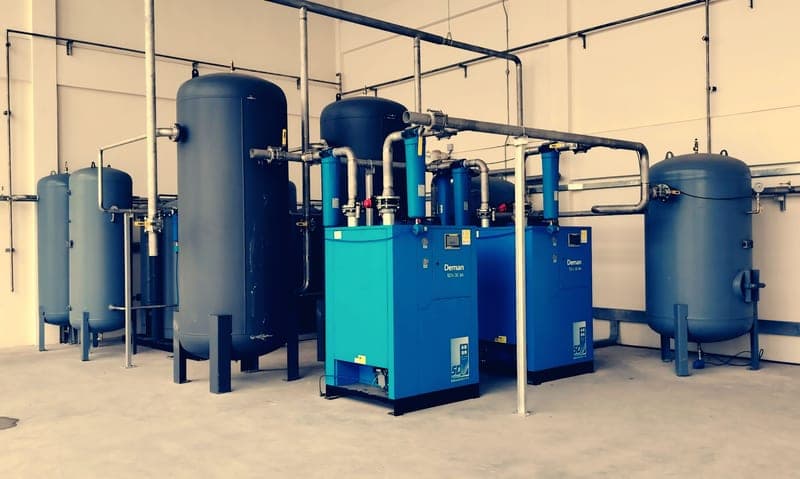
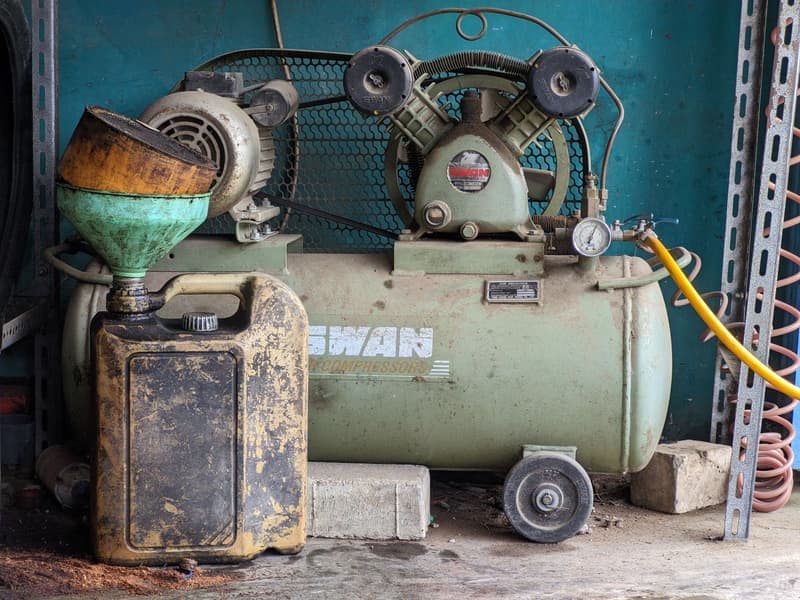
A twin-stack air compressor with twin tanks and a pressure manifold

Some links on this page are affiliate links. If you buy through one, Magoo Media Group earns a commission from the retailer at no extra cost to you. It never changes which product we rank first - how this site is funded.

Read this first

The direct answer

No. A compressor cannot run out of air, because it draws from the atmosphere around it and the atmosphere is not a limited supply. What it runs out of is pressure. The tank holds a fixed volume of compressed air, your tool consumes it at a published rate, and the pump replaces it at a published rate. When consumption exceeds replacement, tank pressure falls until the tool stops working properly.

So the real question behind this search is how long you get before that happens, and that is arithmetic rather than opinion. It depends on exactly three published numbers: the tank volume, the pressure band your switch works across, and the tool's air consumption at 90 PSI. The pump's CFM figure then tells you whether you ever recover while the trigger is down.

The useful distinction is burst against continuous. For burst tools - nailers, staplers, an impact wrench breaking lug nuts - the tank does the work and a modest pump is genuinely fine. For continuous tools - a die grinder, a sander, a cut-off tool, a blow gun held open - the tank is irrelevant after the first half minute and the pump's output is the entire story.

How long you get

The arithmetic, with real published numbers

Here is the shape of the calculation. A tank's usable air is its volume multiplied by the pressure band it works across, expressed in atmospheres. A 6-gallon tank working between a 150 PSI cut-out and a 90 PSI tool requirement holds far less usable air than its nameplate suggests, because everything below 90 PSI is unavailable to a tool rated at 90.

Then subtract the pump. If a tool draws 4 CFM and the pump delivers 2.6, the tank is depleting at 1.4 CFM, not 4 - the pump is still contributing. That is why a continuous tool slightly above your pump's output runs for a surprisingly long time before it fades, and a tool far above it fades almost immediately.

The recovery figures some brands publish are the cleanest way to see this. One 10-gallon unit in our registry publishes a 25-second recovery from 95 to 125 PSI; a 20-gallon unit publishes roughly seven minutes to fill from empty. Those two numbers describe completely different experiences of the same question, and neither brand had to publish them.

Published air demand at 90 PSI, every tool class
ToolCFM @ 90 PSIAt loadDutyWhat the number means
Brad nailer, 18 gauge0.5-BurstThe most forgiving air tool there is. A nailer draws air only at the instant it fires, so almost any tank covers it. That is why a 1-gallon compressor is a genuinely complete tool for trim work rather than a compromise.
Finish nailer, 15 gauge1.8-BurstBostitch publishes 1.8 CFM of free air at 80 PSI for its BTFP72155 running 60 fasteners a minute - a fast, sustained trim pace, not casual use. At a realistic pace the draw is a fraction of that.
Framing nailer, 21 or 30 degree2.5-BurstEngineering ToolBox lists 2.5 CFM for a framing nailer on a 25% load factor. Metabo HPT publishes 0.09 SCFM at 100 PSI for the NR90AES1 on a per-cycle basis. The two describe the same tool at different firing rates, which is exactly why one CFM number for a nailer is misleading: nail pace sets the demand, not the badge on the tool.
Roofing / coil nailerNot published-IntermittentNeither published chart carries a separate roofing-nailer line. Roofing is fired far faster and for far longer than framing, so treat it as the top of the framing range and size for recovery rather than peak. We will not print a number no source publishes.
Upholstery / crown stapler2-BurstEngineering ToolBox lists 2 CFM for an upholstery stapler, measured at 30 PSI. Low pressure means low demand, and a small tank keeps up easily.
Impact wrench, 3/8"3 - 5-BurstIngersoll Rand's service-shop chart says 3 CFM; Engineering ToolBox gives a 2-5 CFM band. Both describe short bursts on fasteners, not continuous running.
Impact wrench, 1/2"4 - 522BurstThe most misunderstood number on this chart. Ingersoll Rand publishes 4.2 CFM average for the 231C and 22 CFM at load. The average assumes you hold the trigger for a second or two at a time. A 6-gallon pancake at 2.6 CFM does break lug nuts; it simply cannot keep the trigger down.
Impact wrench, 3/4"6-BurstPast the point where a portable garage compressor is the right answer. If you genuinely need 3/4-inch drive, budget for the compressor before the wrench.
Impact wrench, 1"12 - 10-IntermittentTruck and heavy-equipment territory. 12 CFM average is more than most 30-gallon single-stage compressors produce, let alone anything portable.
Air ratchet, 3/8"3 - 4-IntermittentIngersoll Rand publishes 3 CFM average at 90 PSI for the 105-D3; Engineering ToolBox lists 4 CFM for the class. A ratchet is the sneaky one: you hold the trigger far longer than with an impact, so it punishes a small tank harder despite the lower headline number.
Air ratchet, 1/4"3-IntermittentEngineering ToolBox lists 3 CFM. Ingersoll Rand does not publish an air-consumption figure for its 105-D2, so there is no second number to give you.
Air hammer / chisel4-IntermittentUsed in bursts on exhaust bolts and ball joints, a 20-gallon tank copes. Used continuously on a seized assembly, it will outrun anything under about 5 CFM.
Grease gun3 - 4-IntermittentModest and intermittent. Not a sizing constraint for any compressor on this site.
Tire inflation2-IntermittentBoth references agree on 2 CFM. Note the working pressure: you are filling to 35 PSI, not 90, so almost every compressor delivers more than it needs to. Tires are why so many people overbuy - the job is easy and the marketing is not.
Orbital / DA sander, 6 inch10 - 9-ContinuousIngersoll Rand lists 10 CFM for a body orbital sander; Engineering ToolBox gives 6-9 CFM for the class. A sander runs continuously by nature, so there is no burst allowance to hide behind. This is the job that genuinely needs a big compressor.
Vertical disc sander / polisher20-Continuous20 CFM continuous. No portable garage compressor of any tank size will run this. If body work is the plan, price a 60-gallon two-stage before anything else.
Die grinder, 1/4"5 - 6-ContinuousIngersoll Rand lists 5 CFM; Engineering ToolBox gives a 4-6 CFM band. Continuous duty, so a 6-gallon pancake gives you a handful of seconds before pressure drops and the tool slows.
Cut-off tool, 3 inch4 - 10-ContinuousEngineering ToolBox publishes a wide 4-10 CFM band because cut-off tools vary enormously. Whichever end yours sits at, it runs continuously, so size for the top of the band.
Air drill, 3/8"4-IntermittentBoth references agree on 4 CFM. Honest answer: a cordless drill is better for almost every home-garage drilling job, and needs no compressor at all.
Blow gun / dusting gun2.5 - 3-IntermittentIngersoll Rand lists 2.5 CFM, Engineering ToolBox 3. Held open continuously - clearing a sprinkler line, blowing out a filter - a blow gun empties a 6-gallon tank surprisingly fast.
Paint spray gun, touch-up4-ContinuousIngersoll Rand lists 4 CFM for touch-up spraying. Continuous while the trigger is down, and the air also has to be clean and dry - see our air-prep pages.
Paint spray gun, production / HVLP8 - 7-ContinuousIngersoll Rand lists 8 CFM for production spraying; Engineering ToolBox gives 3-7 CFM for small hand-operated sprayers. Check the gun's own spec sheet - HVLP demand varies more than any other tool class on this chart.
Paint spray gun, undercoat19-Continuous19 CFM. Undercoating and bedliner guns are not home-garage compressor territory on any budget.
Sandblaster / blast cabinetNot published-ContinuousEngineering ToolBox gives 6-400 CFM - a range so wide it is really a statement that the nozzle orifice sets the demand, not the cabinet. A small siphon gun sits near the bottom; a pressure pot with a 1/4-inch nozzle is industrial. We publish no single number because no source does.

Where two references publish different figures, both are shown rather than averaged into a number nobody published. Primary sources: Ingersoll Rand air consumption chart, Engineering ToolBox air tool consumption, and per-tool manufacturer specifications.

Not always the compressor

Where the real bottleneck usually is

Before you conclude your compressor is too small, rule out three cheaper explanations. The first is hose diameter. A 1/4-inch hose at 50 feet loses meaningfully more pressure than 3/8-inch over the same run, and the symptom is a tool that feels weak and a compressor that seems to run constantly - which is exactly what an undersized compressor looks like.

The second is leaks. A system that bleeds down keeps the pump chasing pressure it cannot hold, and the most common single cause is a tank drain valve that was opened to drain and not closed firmly. Pressurize, switch off at the wall, note the gauge, come back in an hour. If pressure dropped, you have your answer and it is free to fix.

The third is stacked adapters. Every junction between the tank and the tool is a potential restriction and a potential leak, and three adapters in series to make a plug fit a coupler will cost you flow you paid for. Standardizing the garage on one coupler pattern removes both problems at once.

What to look for

What to look for if you keep running out

CFM at 90 PSI, and nothing else first. This is the number that decides whether you ever run out during continuous work, and it is the number listings bury under a MAX PSI headline. Match it against the highest continuous-draw tool on your list, not against an average of everything you own.

A published recovery figure second. A brand that states a recovery time from one pressure to another is telling you what the pump does under real conditions, which is more useful than any tank size. A 25-second recovery from 95 to 125 PSI is a machine you can work continuously with; a seven-minute fill from empty is a machine you wait for once.

A published duty cycle third, if you can find one. It tells you what proportion of the hour the pump is allowed to run, which is the ceiling on how long you can keep going regardless of how the pressure math works out. Almost nobody prints it, so treat its presence as a strong positive signal.

Pressure ceiling last, and only for burst work. A higher cut-out stores more air in the same tank, which buys extra burst capacity - roughly 10% more at 165 PSI than at 150. For continuous tools it changes nothing at all, because stored air is consumed in seconds and then the pump is all you have.

Ranked by delivered CFM

The compressors that do not run out

Quick picks

#ProductBest forScorePrice
1
A ten-gallon vertical oil-free air compressor on wheels in a workshop
California Air Tools 10020C5.3 CFM @ 90 / 10 gal / 125 PSI / 70 dBA5.3 CFM at 70 dBA with a published 70/30 duty cycle. The first unit here that runs a continuous-duty tool.
Running a ratchet, die grinder or touch-up gun without waiting6.2/10★★★☆☆

#ad Disclosure - we do not publish prices we cannot verify

2
A high-capacity pancake air compressor with a roll cage
Metabo HPT EC914S (THE TANK)4 CFM @ 90 / 6 gal / 200 PSI4.0 CFM at 90 PSI and 200 PSI max - the only 6-gallon unit here that breaks the 2.6 CFM ceiling.
Getting real CFM without moving up to a 20-gallon footprint5.1/10★★★☆☆

#ad Disclosure - we do not publish prices we cannot verify

3
A twenty-gallon vertical air compressor standing against a garage wall
Husky C201H 20-gallon4 CFM @ 90 / 20 gal / 175 PSI / 83 dBA4.0 CFM with 20 gallons at 175 PSI. The cheapest way to buy STORAGE rather than flow.
Burst automotive work where tank volume, not CFM, is the limit6.3/10★★★☆☆

#ad Disclosure - we do not publish prices we cannot verify

4
A thirty-gallon belt-drive air compressor with a cast iron pump
DEWALT DXCMLA1983054 30-gallon5.7 CFM @ 90 / 30 gal / 155 PSI5.7 CFM, 30 gallons, oil-lubricated cast iron and belt drive. Where a garage compressor stops being disposable.
A permanent garage compressor you expect to keep for a decade7.9/10★★★★☆

#ad Disclosure - we do not publish prices we cannot verify

Scores are computed from manufacturer-published specs by the rubric on our methodology page. Nothing here has been bench-tested, and we do not publish prices we cannot verify.

Pick 1 - California Air Tools 10020C

6.2/10★★★☆☆

California Air Tools 10020C

Best for: Running a ratchet, die grinder or touch-up gun without waiting

Verdict

5.3 CFM at 70 dBA with a published 70/30 duty cycle. The first unit here that runs a continuous-duty tool.

What it does well

  • 5.3 CFM at 90 PSI clears every published figure for ratchets, die grinders and touch-up spraying
  • 70 dBA at that output is unusual - most 5+ CFM units are far louder
  • Publishes a real 70/30 duty cycle and a 25-second recovery from 95 to 125 PSI

What it will not do

  • 82.5 lb and 14 A - it needs its own circuit and it is not a carry-it-upstairs machine
  • 125 PSI max, so a bigger tank at higher pressure still stores more per fill
How this 6.2 was calculated
MetricScoreWeightBasis
Air flow8.740%5.3 CFM at 90 PSI, on a 0.7-6 CFM scale
Stored air3.325%10 gal x 125 PSI = 1250, on a 125-3,500 scale
Noise5.615%70 dBA, on a 58-85 dBA scale
Portability1.110%82.5 lb, on a 20-90 lb scale
Spec transparency10.010%6 of 6 useful figures published (CFM at 90, CFM at 40, dBA, duty cycle, recovery, weight)
A ten-gallon vertical oil-free air compressor on wheels in a workshop

Licensed stock photo - illustrative of the category, not a photo of this unit

#ad Disclosure - we do not publish prices we cannot verify

Published specs

California Air Tools 10020C published specifications
CFM @ 90 PSI5.3
CFM @ 40 PSI6.4
Tank10 gal
Max pressure125 PSI
Noise70 dBA
Duty cycle70/30 (manufacturer-published)
Recovery120 s empty to full; 25 s recovery 95 to 125 PSI
PumpOil-free
Motor2.0
Weight82.5 lb
Power110V, 14 A

Source: California Air Tools 10020C - product specifications

Pick 2 - Metabo HPT EC914S

5.1/10★★★☆☆

Metabo HPT EC914S (THE TANK)

Best for: Getting real CFM without moving up to a 20-gallon footprint

Verdict

4.0 CFM at 90 PSI and 200 PSI max - the only 6-gallon unit here that breaks the 2.6 CFM ceiling.

What it does well

  • 4.0 CFM at 90 PSI is 54% more air than the rest of the 6-gallon class
  • 200 PSI max means the same 6 gallons holds far more usable air
  • Clears the published average demand for a 1/2-inch impact and a 3/8-inch ratchet

What it will not do

  • 41 lb, the heaviest 6-gallon unit in the roster
  • Metabo HPT does not publish a noise figure, and high-pressure pumps are not quiet
How this 5.1 was calculated
MetricScoreWeightBasis
Air flow6.240%4 CFM at 90 PSI, on a 0.7-6 CFM scale
Stored air3.225%6 gal x 200 PSI = 1200, on a 125-3,500 scale
Noise5.015%Manufacturer publishes no dBA figure - scored a neutral 5, not a guess
Portability7.010%41 lb, on a 20-90 lb scale
Spec transparency3.310%2 of 6 useful figures published (CFM at 90, CFM at 40, dBA, duty cycle, recovery, weight)
A high-capacity pancake air compressor with a roll cage

Licensed stock photo - illustrative of the category, not a photo of this unit

#ad Disclosure - we do not publish prices we cannot verify

Published specs

Metabo HPT EC914S (THE TANK) published specifications
CFM @ 90 PSI4
CFM @ 40 PSINot published
Tank6 gal
Max pressure200 PSI
NoiseNot published
Duty cycleNot published
RecoveryNot published
PumpOil-free
MotorNot published
Weight41 lb
Power120V

Source: Metabo HPT EC914S THE TANK - product specifications

Pick 3 - Husky C201H

6.3/10★★★☆☆

Husky C201H 20-gallon

Best for: Burst automotive work where tank volume, not CFM, is the limit

Verdict

4.0 CFM with 20 gallons at 175 PSI. The cheapest way to buy STORAGE rather than flow.

What it does well

  • 20 gallons at 175 PSI is roughly six times the stored air of a 6-gallon 150 PSI pancake
  • 4.0 CFM at 90 PSI and 5.2 at 40 - enough to recover between bursts instead of chasing you
  • Vertical footprint takes a corner instead of floor space

What it will not do

  • 83 dBA published and a 7-minute fill from empty - plan to switch it on before you start
  • Oil-free at 20 gallons means a shorter pump life than a cast-iron oil-lubricated unit
How this 6.3 was calculated
MetricScoreWeightBasis
Air flow6.240%4 CFM at 90 PSI, on a 0.7-6 CFM scale
Stored air10.025%20 gal x 175 PSI = 3500, on a 125-3,500 scale
Noise0.715%83 dBA, on a 58-85 dBA scale
Portability5.010%No weight published - scored a neutral 5
Spec transparency6.710%4 of 6 useful figures published (CFM at 90, CFM at 40, dBA, duty cycle, recovery, weight)
A twenty-gallon vertical air compressor standing against a garage wall

Licensed stock photo - illustrative of the category, not a photo of this unit

#ad Disclosure - we do not publish prices we cannot verify

Published specs

Husky C201H 20-gallon published specifications
CFM @ 90 PSI4
CFM @ 40 PSI5.2
Tank20 gal
Max pressure175 PSI
Noise83 dBA
Duty cycleNot published
Recoveryabout 7 minutes to fill from empty
PumpOil-free
Motor1.3 running
WeightNot published
Power120V

Source: Husky C201H 20-gallon compressor - retailer specification listing

Pick 4 - DEWALT DXCMLA1983054

7.9/10★★★★☆

DEWALT DXCMLA1983054 30-gallon

Best for: A permanent garage compressor you expect to keep for a decade

Verdict

5.7 CFM, 30 gallons, oil-lubricated cast iron and belt drive. Where a garage compressor stops being disposable.

What it does well

  • 5.7 CFM at 90 PSI and 7.0 at 40 - clears ratchets, die grinders and touch-up spraying
  • Oil-lubricated belt drive runs cooler and slower than a direct-drive oil-free pump
  • 120/240V, so it can move to a 240V circuit later

What it will not do

  • Oil-lubricated means an actual maintenance routine: check and change the oil
  • 155 PSI on 30 gallons stores less than 175 PSI on 20 in some comparisons - check the math, not the tank
How this 7.9 was calculated
MetricScoreWeightBasis
Air flow9.440%5.7 CFM at 90 PSI, on a 0.7-6 CFM scale
Stored air10.025%30 gal x 155 PSI = 4650, on a 125-3,500 scale
Noise5.015%Manufacturer publishes no dBA figure - scored a neutral 5, not a guess
Portability5.010%No weight published - scored a neutral 5
Spec transparency3.310%2 of 6 useful figures published (CFM at 90, CFM at 40, dBA, duty cycle, recovery, weight)
A thirty-gallon belt-drive air compressor with a cast iron pump

Licensed stock photo - illustrative of the category, not a photo of this unit

#ad Disclosure - we do not publish prices we cannot verify

Published specs

DEWALT DXCMLA1983054 30-gallon published specifications
CFM @ 90 PSI5.7
CFM @ 40 PSI7
Tank30 gal
Max pressure155 PSI
NoiseNot published
Duty cycleNot published
RecoveryNot published
PumpOil-lubricated
Motor1.9
WeightNot published
Power120/240V

Source: DEWALT DXCMLA1983054 30-gallon compressor - product specifications

The common mistake

Why a bigger tank is usually the wrong fix

Tank volume buys time, not capability. Doubling the tank doubles how long you can exceed your pump's output before pressure falls - and then you are in exactly the same position, except the refill takes twice as long. For a tool that draws continuously, this is a delay rather than a solution.

It is also the upgrade the category pushes hardest, because gallons are easy to advertise and CFM at 90 PSI is not. A 20-gallon machine at 4.0 CFM and a 6-gallon machine at 4.0 CFM have identical sustained capability; the larger one simply takes longer to get there and holds more when it arrives.

The case for a bigger tank is real but narrow: genuine burst work, repeated. Breaking a set of wheel bolts, firing a run of framing nails, blowing out a brake assembly - those are short, heavy draws with gaps, and a larger tank covers them without the pump ever becoming your pace. If that describes your work, buy gallons. If anything on your list holds the trigger down, buy CFM.

FAQ

Questions people actually ask

Do air compressors run out of air?

No. A compressor draws from the atmosphere, which is not a limited supply. What runs out is pressure: the tank holds a fixed volume of compressed air, your tool consumes it at a published rate, and when consumption exceeds the pump's output, pressure falls until the tool stops working properly.

How long can you run an air tool off a compressor?

It depends on whether the tool draws more or less than the pump delivers. If it draws less, indefinitely - subject to duty cycle. If it draws more, the tank depletes at the difference between the two rates, not at the tool's full rate, which is why a tool slightly over your pump's output lasts far longer than one far over it.

Will a bigger tank stop my compressor running out?

Only for burst work. Tank volume buys time, not capability - double the tank and you can exceed your pump's output for twice as long, then you are in the same position with a longer refill. For a continuous-draw tool, more CFM is the only real fix.

Why does my air compressor run constantly?

Three usual causes, in order of likelihood: a leak somewhere in the system, most often a drain valve left open; a tool drawing more air than the pump produces; or a failed pressure switch or check valve. The first is free to find with soapy water and is by far the most common.

Does hose size affect running out of air?

Yes, and it is the most commonly missed cause. A 1/4-inch hose at 50 feet loses meaningfully more pressure than 3/8-inch over the same run. The symptom - a weak tool and a compressor that never seems to stop - looks exactly like an undersized compressor.

What CFM do I need so I never run out?

Enough to exceed the highest continuous-draw tool on your list, not an average of your tools. Burst tools like nailers and impacts are served by the tank; continuous tools like die grinders, sanders and spray guns are served only by the pump, and that is where you need headroom.

Sources

Where these numbers come from

Accessed September 2026. If a figure on this page does not match the manufacturer's current sheet, tell us at contact@psiandhose.com and we will correct and date the change - see our editorial policy.

Read next