Skip to content
Psi & Hose

Guides

What to look for when buying an air compressor

Horsepower, max PSI and tank gallons are the three numbers on the box. None of them is the one that decides whether the machine runs your tools.

By Ryder M.Last updated Published
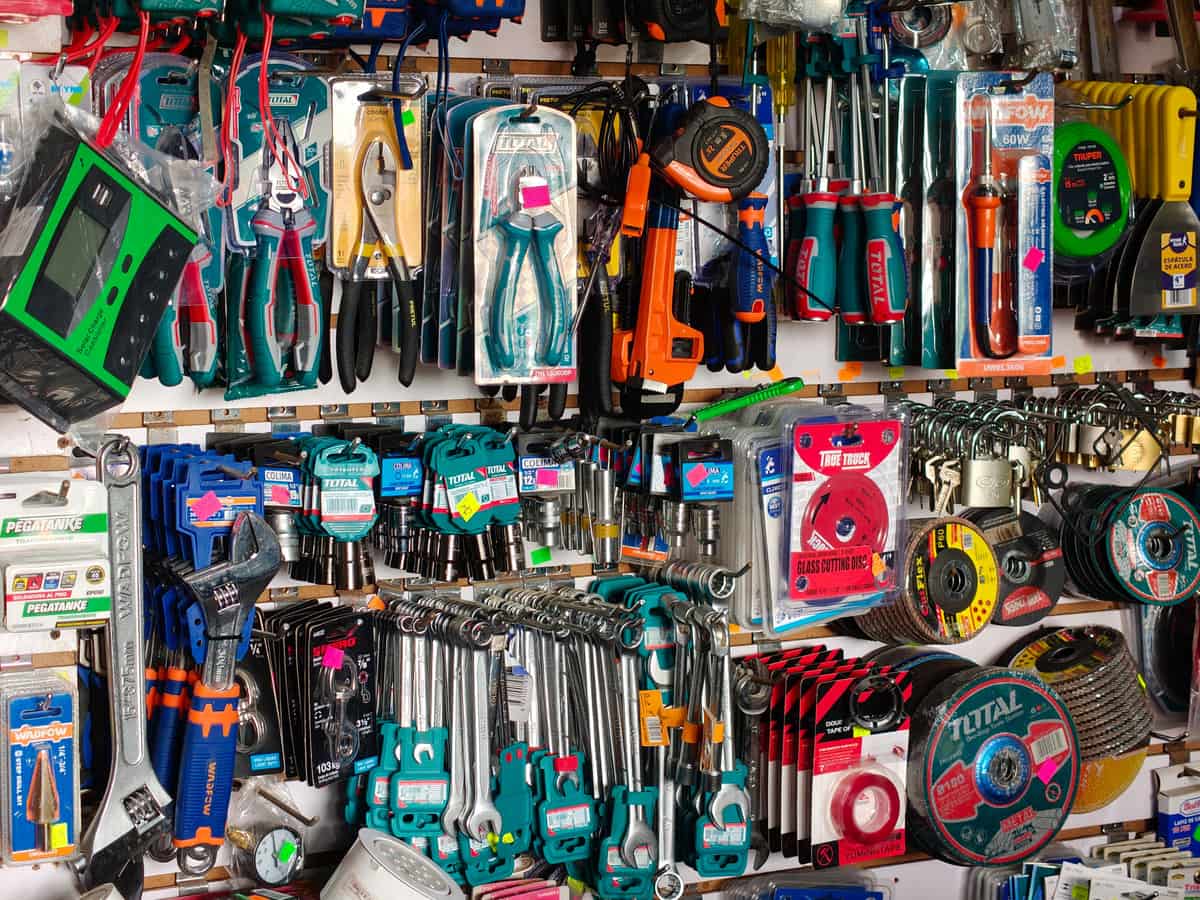
Tools and equipment displayed on shelves in a store aisle

Some links on this page are affiliate links. If you buy through one, Magoo Media Group earns a commission from the retailer at no extra cost to you. It never changes which product we rank first - how this site is funded.

Read this first

The short answer

Look at delivered CFM at 90 PSI first, and treat it as the spec that decides the purchase. It is the only figure that tells you whether the machine can feed your tools, and it is the one marketing works hardest to bury behind horsepower and max PSI. Everything else on the spec sheet - tank size, pressure ceiling, noise, weight, pump type - is a secondary question you answer after the CFM number has narrowed the field.

The reason is simple arithmetic. Your tool has a published air demand, almost always stated at 90 PSI. Your compressor has a published output, almost always stated at 90 PSI. If the output meets or exceeds the demand you can work continuously; if it does not, you work in bursts with the tank as a buffer. No other spec changes that relationship. A huge tank on a weak pump gives you a longer burst and the same ceiling.

The four specs that genuinely decide a purchase, in order: delivered CFM at 90 PSI, duty cycle if the maker publishes one, noise in dBA if the machine will be near living space, and the voltage and circuit it needs. The three that mislead most often: peak horsepower, maximum PSI, and tank gallons. The checklist below is how to read a spec sheet with that in mind.

Which specs to trust, and what each actually tells you
SpecTrust it?What it actually tells you
Delivered CFM at 90 PSIYes - the decisive figureWhether the pump can feed your tool continuously
Delivered CFM at 40 PSIYes, for inflation workOutput where tires and blow-down actually happen
Duty cycleYes, when publishedHow long the pump is rated to run; rarely published, always informative
Noise in dBAYes, when publishedWhether you can use it near living space. Logarithmic - 60 vs 83 dBA is enormous
Volts and circuitYesWhether you can plug it in at all. 240V means an electrician
WeightYesWhether it is portable in practice, not just on paper
Tank gallonsPartlyStorage, not output. Longer bursts, not more air
Maximum PSIPartlyMore stored air in the same tank. Tools still run at 90 PSI or less
Peak horsepowerNoA momentary inrush figure, not work the machine can do
Running horsepowerPartlyHonest, but CFM at 90 PSI already tells you the result

Spec interpretations follow this site's standing methodology; all product figures referenced elsewhere on this page are manufacturer-published and linked in the sources block.

The sentence that should end a purchase

If a spec sheet gives you peak horsepower and maximum PSI but no delivered CFM at 90 PSI, stop. Not because the machine is necessarily bad, but because the manufacturer has chosen not to tell you the only number that answers your question - and you are being asked to buy on the strength of what they left out.

The arithmetic

Why CFM at 90 PSI is the one number

Air tool specifications are stated at 90 PSI almost universally, and compressor output is published at 90 PSI for the same reason - it gives the two sides of the equation a shared basis. When Ingersoll Rand publishes 4.2 CFM average for the 231C impact wrench and 3 CFM for the 105-D3 ratchet, and when Metabo HPT publishes 4.0 CFM at 90 PSI for the EC914S, those numbers are directly comparable. That comparability is the entire value of the convention.

Horsepower is not comparable in the same way, which is why it persists as a marketing figure. A pump's horsepower describes input, not output, and efficiency between pumps varies enough that two machines of nominally identical horsepower can deliver meaningfully different CFM. Peak horsepower is worse still - it describes a momentary current surge at startup. Nobody has ever done work with peak horsepower.

Tank gallons mislead in a more subtle and more common way, because the intuition that a bigger tank means more air feels correct. It means more air stored, not more air produced. The clearest illustration in our registry: the Husky C201H holds 20 gallons and the Metabo HPT EC914S holds 6, and both publish 4.0 CFM at 90 PSI. The Husky gives you longer bursts before the pump has to keep up. Its ceiling for continuous work is identical.

Published air demand at 90 PSI, every tool class
ToolCFM @ 90 PSIAt loadDutyWhat the number means
Brad nailer, 18 gauge0.5-BurstThe most forgiving air tool there is. A nailer draws air only at the instant it fires, so almost any tank covers it. That is why a 1-gallon compressor is a genuinely complete tool for trim work rather than a compromise.
Finish nailer, 15 gauge1.8-BurstBostitch publishes 1.8 CFM of free air at 80 PSI for its BTFP72155 running 60 fasteners a minute - a fast, sustained trim pace, not casual use. At a realistic pace the draw is a fraction of that.
Framing nailer, 21 or 30 degree2.5-BurstEngineering ToolBox lists 2.5 CFM for a framing nailer on a 25% load factor. Metabo HPT publishes 0.09 SCFM at 100 PSI for the NR90AES1 on a per-cycle basis. The two describe the same tool at different firing rates, which is exactly why one CFM number for a nailer is misleading: nail pace sets the demand, not the badge on the tool.
Roofing / coil nailerNot published-IntermittentNeither published chart carries a separate roofing-nailer line. Roofing is fired far faster and for far longer than framing, so treat it as the top of the framing range and size for recovery rather than peak. We will not print a number no source publishes.
Upholstery / crown stapler2-BurstEngineering ToolBox lists 2 CFM for an upholstery stapler, measured at 30 PSI. Low pressure means low demand, and a small tank keeps up easily.
Impact wrench, 3/8"3 - 5-BurstIngersoll Rand's service-shop chart says 3 CFM; Engineering ToolBox gives a 2-5 CFM band. Both describe short bursts on fasteners, not continuous running.
Impact wrench, 1/2"4 - 522BurstThe most misunderstood number on this chart. Ingersoll Rand publishes 4.2 CFM average for the 231C and 22 CFM at load. The average assumes you hold the trigger for a second or two at a time. A 6-gallon pancake at 2.6 CFM does break lug nuts; it simply cannot keep the trigger down.
Impact wrench, 3/4"6-BurstPast the point where a portable garage compressor is the right answer. If you genuinely need 3/4-inch drive, budget for the compressor before the wrench.
Impact wrench, 1"12 - 10-IntermittentTruck and heavy-equipment territory. 12 CFM average is more than most 30-gallon single-stage compressors produce, let alone anything portable.
Air ratchet, 3/8"3 - 4-IntermittentIngersoll Rand publishes 3 CFM average at 90 PSI for the 105-D3; Engineering ToolBox lists 4 CFM for the class. A ratchet is the sneaky one: you hold the trigger far longer than with an impact, so it punishes a small tank harder despite the lower headline number.
Air ratchet, 1/4"3-IntermittentEngineering ToolBox lists 3 CFM. Ingersoll Rand does not publish an air-consumption figure for its 105-D2, so there is no second number to give you.
Air hammer / chisel4-IntermittentUsed in bursts on exhaust bolts and ball joints, a 20-gallon tank copes. Used continuously on a seized assembly, it will outrun anything under about 5 CFM.
Grease gun3 - 4-IntermittentModest and intermittent. Not a sizing constraint for any compressor on this site.
Tire inflation2-IntermittentBoth references agree on 2 CFM. Note the working pressure: you are filling to 35 PSI, not 90, so almost every compressor delivers more than it needs to. Tires are why so many people overbuy - the job is easy and the marketing is not.
Orbital / DA sander, 6 inch10 - 9-ContinuousIngersoll Rand lists 10 CFM for a body orbital sander; Engineering ToolBox gives 6-9 CFM for the class. A sander runs continuously by nature, so there is no burst allowance to hide behind. This is the job that genuinely needs a big compressor.
Vertical disc sander / polisher20-Continuous20 CFM continuous. No portable garage compressor of any tank size will run this. If body work is the plan, price a 60-gallon two-stage before anything else.
Die grinder, 1/4"5 - 6-ContinuousIngersoll Rand lists 5 CFM; Engineering ToolBox gives a 4-6 CFM band. Continuous duty, so a 6-gallon pancake gives you a handful of seconds before pressure drops and the tool slows.
Cut-off tool, 3 inch4 - 10-ContinuousEngineering ToolBox publishes a wide 4-10 CFM band because cut-off tools vary enormously. Whichever end yours sits at, it runs continuously, so size for the top of the band.
Air drill, 3/8"4-IntermittentBoth references agree on 4 CFM. Honest answer: a cordless drill is better for almost every home-garage drilling job, and needs no compressor at all.
Blow gun / dusting gun2.5 - 3-IntermittentIngersoll Rand lists 2.5 CFM, Engineering ToolBox 3. Held open continuously - clearing a sprinkler line, blowing out a filter - a blow gun empties a 6-gallon tank surprisingly fast.
Paint spray gun, touch-up4-ContinuousIngersoll Rand lists 4 CFM for touch-up spraying. Continuous while the trigger is down, and the air also has to be clean and dry - see our air-prep pages.
Paint spray gun, production / HVLP8 - 7-ContinuousIngersoll Rand lists 8 CFM for production spraying; Engineering ToolBox gives 3-7 CFM for small hand-operated sprayers. Check the gun's own spec sheet - HVLP demand varies more than any other tool class on this chart.
Paint spray gun, undercoat19-Continuous19 CFM. Undercoating and bedliner guns are not home-garage compressor territory on any budget.
Sandblaster / blast cabinetNot published-ContinuousEngineering ToolBox gives 6-400 CFM - a range so wide it is really a statement that the nozzle orifice sets the demand, not the cabinet. A small siphon gun sits near the bottom; a pressure pot with a 1/4-inch nozzle is industrial. We publish no single number because no source does.

Where two references publish different figures, both are shown rather than averaged into a number nobody published. Primary sources: Ingersoll Rand air consumption chart, Engineering ToolBox air tool consumption, and per-tool manufacturer specifications.

The picks

Four machines that illustrate the checklist

These are not ranked against each other - they occupy different parts of the market deliberately, and each one is here because it shows what a particular spec is worth. Read them as four worked examples of the checklist rather than as a roundup.

The Porter-Cable C2002 is the baseline: 2.6 CFM at 90 PSI and 3.7 at 40 PSI from a 6-gallon tank, which is what a standard 120V circuit produces and what covers nailing, inflation and burst automotive work. The Metabo HPT EC914S shows what crossing a CFM threshold buys - 4.0 CFM at 90 PSI and a 200 PSI tank in the same footprint class, which turns an impact wrench from technically possible into genuinely usable.

The California Air Tools 10020C shows what published transparency looks like: 5.3 CFM at 90 PSI, 6.4 at 40 PSI, a published 70/30 duty cycle and a published 70 dBA, at 82.5 lb. It is the only machine in our registry that tells you all four of the specs that matter. The DEWALT 30-gallon shows where the 120V ceiling gives way - 5.7 CFM at 90 PSI with a 120/240V motor, which is the point where continuous-duty tools come into range and where your electrical supply becomes part of the decision.

Quick picks

#ProductBest forScorePrice
1
A high-capacity pancake air compressor with a roll cage
Metabo HPT EC914S (THE TANK)4 CFM @ 90 / 6 gal / 200 PSI4.0 CFM at 90 PSI and 200 PSI max - the only 6-gallon unit here that breaks the 2.6 CFM ceiling.
Getting real CFM without moving up to a 20-gallon footprint5.1/10★★★☆☆

#ad Disclosure - we do not publish prices we cannot verify

2
A ten-gallon vertical oil-free air compressor on wheels in a workshop
California Air Tools 10020C5.3 CFM @ 90 / 10 gal / 125 PSI / 70 dBA5.3 CFM at 70 dBA with a published 70/30 duty cycle. The first unit here that runs a continuous-duty tool.
Running a ratchet, die grinder or touch-up gun without waiting6.2/10★★★☆☆

#ad Disclosure - we do not publish prices we cannot verify

3
A red six-gallon pancake air compressor on a garage floor
Porter-Cable C20022.6 CFM @ 90 / 6 gal / 150 PSIThe default answer to 'cheapest useful compressor'. 6 gallons, 2.6 CFM, 150 PSI, and it has been the same machine for years.
A first compressor for nailing, inflation and burst automotive work3.6/10★★☆☆☆

#ad Disclosure - we do not publish prices we cannot verify

4
A thirty-gallon belt-drive air compressor with a cast iron pump
DEWALT DXCMLA1983054 30-gallon5.7 CFM @ 90 / 30 gal / 155 PSI5.7 CFM, 30 gallons, oil-lubricated cast iron and belt drive. Where a garage compressor stops being disposable.
A permanent garage compressor you expect to keep for a decade7.9/10★★★★☆

#ad Disclosure - we do not publish prices we cannot verify

Scores are computed from manufacturer-published specs by the rubric on our methodology page. Nothing here has been bench-tested, and we do not publish prices we cannot verify.

Pick 1 - Metabo HPT EC914S

5.1/10★★★☆☆

Metabo HPT EC914S (THE TANK)

Best for: Getting real CFM without moving up to a 20-gallon footprint

Verdict

4.0 CFM at 90 PSI and 200 PSI max - the only 6-gallon unit here that breaks the 2.6 CFM ceiling.

What it does well

  • 4.0 CFM at 90 PSI is 54% more air than the rest of the 6-gallon class
  • 200 PSI max means the same 6 gallons holds far more usable air
  • Clears the published average demand for a 1/2-inch impact and a 3/8-inch ratchet

What it will not do

  • 41 lb, the heaviest 6-gallon unit in the roster
  • Metabo HPT does not publish a noise figure, and high-pressure pumps are not quiet
How this 5.1 was calculated
MetricScoreWeightBasis
Air flow6.240%4 CFM at 90 PSI, on a 0.7-6 CFM scale
Stored air3.225%6 gal x 200 PSI = 1200, on a 125-3,500 scale
Noise5.015%Manufacturer publishes no dBA figure - scored a neutral 5, not a guess
Portability7.010%41 lb, on a 20-90 lb scale
Spec transparency3.310%2 of 6 useful figures published (CFM at 90, CFM at 40, dBA, duty cycle, recovery, weight)
A high-capacity pancake air compressor with a roll cage

Licensed stock photo - illustrative of the category, not a photo of this unit

#ad Disclosure - we do not publish prices we cannot verify

Published specs

Metabo HPT EC914S (THE TANK) published specifications
CFM @ 90 PSI4
CFM @ 40 PSINot published
Tank6 gal
Max pressure200 PSI
NoiseNot published
Duty cycleNot published
RecoveryNot published
PumpOil-free
MotorNot published
Weight41 lb
Power120V

Source: Metabo HPT EC914S THE TANK - product specifications

Pick 2 - California Air Tools 10020C

6.2/10★★★☆☆

California Air Tools 10020C

Best for: Running a ratchet, die grinder or touch-up gun without waiting

Verdict

5.3 CFM at 70 dBA with a published 70/30 duty cycle. The first unit here that runs a continuous-duty tool.

What it does well

  • 5.3 CFM at 90 PSI clears every published figure for ratchets, die grinders and touch-up spraying
  • 70 dBA at that output is unusual - most 5+ CFM units are far louder
  • Publishes a real 70/30 duty cycle and a 25-second recovery from 95 to 125 PSI

What it will not do

  • 82.5 lb and 14 A - it needs its own circuit and it is not a carry-it-upstairs machine
  • 125 PSI max, so a bigger tank at higher pressure still stores more per fill
How this 6.2 was calculated
MetricScoreWeightBasis
Air flow8.740%5.3 CFM at 90 PSI, on a 0.7-6 CFM scale
Stored air3.325%10 gal x 125 PSI = 1250, on a 125-3,500 scale
Noise5.615%70 dBA, on a 58-85 dBA scale
Portability1.110%82.5 lb, on a 20-90 lb scale
Spec transparency10.010%6 of 6 useful figures published (CFM at 90, CFM at 40, dBA, duty cycle, recovery, weight)
A ten-gallon vertical oil-free air compressor on wheels in a workshop

Licensed stock photo - illustrative of the category, not a photo of this unit

#ad Disclosure - we do not publish prices we cannot verify

Published specs

California Air Tools 10020C published specifications
CFM @ 90 PSI5.3
CFM @ 40 PSI6.4
Tank10 gal
Max pressure125 PSI
Noise70 dBA
Duty cycle70/30 (manufacturer-published)
Recovery120 s empty to full; 25 s recovery 95 to 125 PSI
PumpOil-free
Motor2.0
Weight82.5 lb
Power110V, 14 A

Source: California Air Tools 10020C - product specifications

Pick 3 - Porter-Cable C2002

3.6/10★★☆☆☆

Porter-Cable C2002

Best for: A first compressor for nailing, inflation and burst automotive work

Verdict

The default answer to 'cheapest useful compressor'. 6 gallons, 2.6 CFM, 150 PSI, and it has been the same machine for years.

What it does well

  • 2.6 CFM at 90 PSI and 3.7 at 40 - the most common spec in the budget class for a reason
  • 6-gallon tank at 150 PSI stores enough air for real bursts of impact work
  • Two couplers, so two people or two tools without swapping

What it will not do

  • Porter-Cable does not publish a noise figure for it; the class sits in the high 70s to low 80s dBA
  • 2.6 CFM will not run a ratchet, die grinder or sander continuously
How this 3.6 was calculated
MetricScoreWeightBasis
Air flow3.640%2.6 CFM at 90 PSI, on a 0.7-6 CFM scale
Stored air2.325%6 gal x 150 PSI = 900, on a 125-3,500 scale
Noise5.015%Manufacturer publishes no dBA figure - scored a neutral 5, not a guess
Portability5.010%No weight published - scored a neutral 5
Spec transparency3.310%2 of 6 useful figures published (CFM at 90, CFM at 40, dBA, duty cycle, recovery, weight)
A red six-gallon pancake air compressor on a garage floor

Licensed stock photo - illustrative of the category, not a photo of this unit

#ad Disclosure - we do not publish prices we cannot verify

Published specs

Porter-Cable C2002 published specifications
CFM @ 90 PSI2.6
CFM @ 40 PSI3.7
Tank6 gal
Max pressure150 PSI
NoiseNot published
Duty cycleNot published
RecoveryNot published
PumpOil-free
Motor0.8
WeightNot published
Power120V

Source: Porter-Cable C2002 - product specifications

Pick 4 - DEWALT DXCMLA1983054

7.9/10★★★★☆

DEWALT DXCMLA1983054 30-gallon

Best for: A permanent garage compressor you expect to keep for a decade

Verdict

5.7 CFM, 30 gallons, oil-lubricated cast iron and belt drive. Where a garage compressor stops being disposable.

What it does well

  • 5.7 CFM at 90 PSI and 7.0 at 40 - clears ratchets, die grinders and touch-up spraying
  • Oil-lubricated belt drive runs cooler and slower than a direct-drive oil-free pump
  • 120/240V, so it can move to a 240V circuit later

What it will not do

  • Oil-lubricated means an actual maintenance routine: check and change the oil
  • 155 PSI on 30 gallons stores less than 175 PSI on 20 in some comparisons - check the math, not the tank
How this 7.9 was calculated
MetricScoreWeightBasis
Air flow9.440%5.7 CFM at 90 PSI, on a 0.7-6 CFM scale
Stored air10.025%30 gal x 155 PSI = 4650, on a 125-3,500 scale
Noise5.015%Manufacturer publishes no dBA figure - scored a neutral 5, not a guess
Portability5.010%No weight published - scored a neutral 5
Spec transparency3.310%2 of 6 useful figures published (CFM at 90, CFM at 40, dBA, duty cycle, recovery, weight)
A thirty-gallon belt-drive air compressor with a cast iron pump

Licensed stock photo - illustrative of the category, not a photo of this unit

#ad Disclosure - we do not publish prices we cannot verify

Published specs

DEWALT DXCMLA1983054 30-gallon published specifications
CFM @ 90 PSI5.7
CFM @ 40 PSI7
Tank30 gal
Max pressure155 PSI
NoiseNot published
Duty cycleNot published
RecoveryNot published
PumpOil-lubricated
Motor1.9
WeightNot published
Power120/240V

Source: DEWALT DXCMLA1983054 30-gallon compressor - product specifications

How to actually shop

The checklist, in order

Step one is where most overbuying starts and ends. People add up the CFM of every tool they own, arrive at a frightening number, and buy a 60-gallon machine to run a brad nailer. In a home garage you hold one trigger at a time, so the governing figure is your single thirstiest tool plus margin - which is usually far smaller than the sum and frequently smaller than people expect.

Step eight is the one that gets skipped and then resented. A bare compressor cannot connect to a tool: you need a hose and a coupler-and-plug set at minimum, and a filter-regulator as soon as the machine has a permanent home. Factoring that in from the start sometimes changes which compressor is affordable, which is better to know before the purchase than after.

  1. 01Write down your tool list, including the one tool you think you might buy later. Look up each one's published air demand at 90 PSI. The largest single figure, not the sum, is your starting requirement - you will not run two tools at once in a home garage.
  2. 02Add margin for duty shape, not just volume. A burst tool like an impact wrench can sit near your compressor's CFM. A continuous tool like a die grinder or a sander needs the compressor's output to clear the tool's demand outright.
  3. 03Filter the market by delivered CFM at 90 PSI. Discard anything that does not publish it. This step alone eliminates most of the machines you would have regretted.
  4. 04Check the voltage and the circuit. A 120V machine on a standard 15 A household circuit is a different purchase from a 240V machine that needs an electrician. Get this wrong and the compressor does not run at all.
  5. 05Check noise if it will live near living space, and take the logarithm seriously - the gap from 60 dBA to 83 dBA is roughly five times the perceived loudness, not 'a bit louder'.
  6. 06Check weight against how you will actually move it. A 41 lb machine is a two-handed lift; an 82 lb machine with wheels is a machine that stays where you put it.
  7. 07Decide oil-free versus oil-lubricated last. Oil-free is lower maintenance and usually louder; oil-lubricated is quieter and longer-lived and needs oil checks. Both are legitimate and the choice follows from how much you will use it.
  8. 08Budget for the system, not the compressor. A hose, a coupler kit and a filter-regulator are required, not optional, and they are what turn a compressor into a working air supply.

What to avoid

The mistakes that cost the most money

The two errors on that list that actually cost money rather than convenience are the voltage mistake and the CFM mistake, and they fail in opposite directions. A 240V machine in a garage with no 240V circuit is unusable until you spend real money on wiring. An undersized machine is usable but permanently inadequate for the job you bought it for, and the only fix is buying again.

Everything else on the list is recoverable. You can add a filter-regulator later, live with a loud machine, or put up with a tank that is bigger than you needed. Getting CFM at 90 PSI and the electrical supply right at the point of purchase is what separates a compressor you keep for a decade from one you replace in a year.

  • Buying on tank size. It is the most visible spec and one of the least informative. A 20-gallon tank on a 4 CFM pump has the same continuous ceiling as a 6-gallon tank on a 4 CFM pump.
  • Buying on peak horsepower. It describes a startup current surge, not capability. Running horsepower is the honest version, and CFM at 90 PSI already tells you the outcome.
  • Buying a 240V machine without checking the garage has, or can have, the circuit. This is the single most expensive sizing mistake available, because the fix is an electrician.
  • Under-buying on CFM because the tank looked big. The most common version of this: a 6-gallon pancake bought for a die grinder, which needs about 5 CFM continuously against the pancake's 2.6.
  • Over-buying because the spec sum looked frightening. You run one tool at a time. Size on the thirstiest tool plus margin, not on the total.
  • Forgetting the accessories budget. Hose, couplers and a filter-regulator are part of the purchase, not an upgrade path.
  • Ignoring noise on an attached garage, then discovering you can only use the compressor when nobody is home. This is the regret people report most often and it is entirely avoidable from the spec sheet.

FAQ

Questions people actually ask

What is the most important spec when buying an air compressor?

Delivered CFM at 90 PSI. It is the only figure that tells you whether the pump can feed your tools, and it shares a basis with how air tool demand is published, so the two are directly comparable. Everything else is a secondary question.

Does a bigger tank mean a better compressor?

No - it means more stored air, not more produced air. The Husky C201H at 20 gallons and the Metabo HPT EC914S at 6 gallons both publish 4.0 CFM at 90 PSI. The bigger tank gives longer bursts; the continuous ceiling is identical.

Should I pay attention to horsepower?

Not peak horsepower - it describes a momentary startup current surge, not work the machine can do. Running horsepower is honest but redundant, because delivered CFM at 90 PSI already tells you the result that horsepower was meant to imply.

How do I know what CFM I need?

Look up the published demand of your thirstiest single tool at 90 PSI and add margin - you run one trigger at a time in a home garage, so the sum of your tools is the wrong figure. Then add more margin for continuous-duty tools like die grinders and sanders than for burst tools.

What if the spec sheet does not list CFM at 90 PSI?

Treat that as the answer. The manufacturer has chosen not to publish the one number that answers your question, which tells you something either about the figure or about how much measurement went into the machine. Our strong view is that disclosure correlates with quality better than brand name does.

What should I budget beyond the compressor itself?

A hose, a coupler-and-plug kit in one pattern, and a filter-regulator once the machine has a permanent spot. A bare compressor cannot connect to a tool, so these are part of the purchase rather than an upgrade. Factoring them in sometimes changes which compressor is affordable.

Sources

Where these numbers come from

Accessed September 2026. If a figure on this page does not match the manufacturer's current sheet, tell us at contact@psiandhose.com and we will correct and date the change - see our editorial policy.

Read next