Skip to content
Psi & Hose

By Job

Best air compressor for an HVLP spray gun

Spraying is the one job on this site where the published average CFM is the honest requirement rather than a burst figure you can borrow from the tank. A gun held open for ninety seconds is a continuous-duty tool, and most garage compressors are not.

By Ryder M.Last updated Published
A spray gun applying an even coat of paint to a panel

Some links on this page are affiliate links. If you buy through one, Magoo Media Group earns a commission from the retailer at no extra cost to you. It never changes which product we rank first - how this site is funded.

Read this first

The answer, and who it is for

For a full-size HVLP gun the pick is the 60-gallon Industrial Air ILA3606056: 11.5 CFM at 90 PSI and 13.4 at 40 PSI, which is the only machine in our roster that clears a production spray gun's published demand with genuine margin. It needs a 240V circuit and it is not moving once it is placed, which is the trade. If you want 120 volts and the ability to spray a panel at a time, the 30-gallon DEWALT DXCMLA1983054 at 5.7 CFM is the realistic answer.

The number to beat is published, not invented. Ingersoll Rand's air consumption chart lists 8 CFM for a production or HVLP spray gun; Engineering ToolBox gives 3 to 7 CFM for the same class. Both are continuous-duty figures, and Engineering ToolBox states its own basis plainly - its ratings assume a 25% load factor, and full performance requires four times the volume. That caveat is the whole reason spraying breaks compressors that run impacts happily.

A touch-up or detail gun is a different purchase. Ingersoll Rand lists 4 CFM for touch-up spraying, which brings a 10-gallon quiet compressor at 5.3 CFM into range for small panels and trim. If you are spraying a bumper or a motorcycle tank rather than a car, start there.

Why burst logic fails here

An impact wrench averages 4 CFM because you squeeze the trigger for two seconds at a time - the tank covers the gap and the pump refills it. A spray pass is continuous: you hold the trigger across the whole panel. There is no gap for the pump to catch up in, so the compressor's delivered CFM has to meet the gun's demand outright, and pressure drop mid-pass shows up in the finish.

The comparison

The published numbers, side by side

The flow columns are what each machine delivers. The requirement to compare them against is 8 CFM for a production or HVLP gun per Ingersoll Rand, or 3 to 7 CFM per Engineering ToolBox at a 25% load factor. Both references are linked in the sources block and neither has been adjusted.

Spray-relevant specifications, manufacturer-published
CompressorCFM @ 90CFM @ 40TankMax PSISupply
Industrial Air ILA360605611.513.460 gal155240V
DEWALT DXCMLA19830545.77.030 gal155120/240V
California Air Tools 10020C5.36.410 gal125110V, 14 A
Husky C201H4.05.220 gal175120V
Porter-Cable C20022.63.76 gal150120V

Manufacturer-published figures. The bottom two rows are included to show what does not clear the requirement.

Ranked

The picks

Quick picks

#ProductBest forScorePrice
1
A large stationary vertical sixty-gallon air compressor in a workshop
Industrial Air ILA3606056 60-gallon11.5 CFM @ 90 / 60 gal / 155 PSI11.5 CFM at 90 PSI. Included as the reference point for what continuous sanding and blasting actually costs.
Body work, blasting, or running two tools at once8.1/10★★★★☆

#ad Disclosure - we do not publish prices we cannot verify

2
A thirty-gallon belt-drive air compressor with a cast iron pump
DEWALT DXCMLA1983054 30-gallon5.7 CFM @ 90 / 30 gal / 155 PSI5.7 CFM, 30 gallons, oil-lubricated cast iron and belt drive. Where a garage compressor stops being disposable.
A permanent garage compressor you expect to keep for a decade7.9/10★★★★☆

#ad Disclosure - we do not publish prices we cannot verify

3
A ten-gallon vertical oil-free air compressor on wheels in a workshop
California Air Tools 10020C5.3 CFM @ 90 / 10 gal / 125 PSI / 70 dBA5.3 CFM at 70 dBA with a published 70/30 duty cycle. The first unit here that runs a continuous-duty tool.
Running a ratchet, die grinder or touch-up gun without waiting6.2/10★★★☆☆

#ad Disclosure - we do not publish prices we cannot verify

4
A three-stage compressed air filtration and regulation assembly mounted on a wall
PneumaticPlus SAU430 three-stage1/2" NPT / 10 micron particulate filter / 0.1 micron mist separator10 micron, then 0.1 micron mist separator, then regulator. The honest minimum before a spray gun.
Spraying paint or clear coat from a garage compressor5.6/10★★★☆☆

#ad Disclosure - we do not publish prices we cannot verify

Scores are computed from manufacturer-published specs by the rubric on our methodology page. Nothing here has been bench-tested, and we do not publish prices we cannot verify.

Pick 1 - Industrial Air ILA3606056

8.1/10★★★★☆

Industrial Air ILA3606056 60-gallon

Best for: Body work, blasting, or running two tools at once

Verdict

11.5 CFM at 90 PSI. Included as the reference point for what continuous sanding and blasting actually costs.

What it does well

  • 11.5 CFM at 90 PSI and 13.4 at 40 - clears an orbital sander with margin
  • Cast-iron twin-cylinder pump on a 60-gallon vertical tank
  • 3.7 HP on 240V

What it will not do

  • 240V and stationary: this is an electrical project, not a purchase
  • Overkill for anyone whose honest tool list is nailers, tires and a 1/2-inch impact - which is most people reading this
How this 8.1 was calculated
MetricScoreWeightBasis
Air flow10.040%11.5 CFM at 90 PSI, on a 0.7-6 CFM scale
Stored air10.025%60 gal x 155 PSI = 9300, on a 125-3,500 scale
Noise5.015%Manufacturer publishes no dBA figure - scored a neutral 5, not a guess
Portability5.010%No weight published - scored a neutral 5
Spec transparency3.310%2 of 6 useful figures published (CFM at 90, CFM at 40, dBA, duty cycle, recovery, weight)
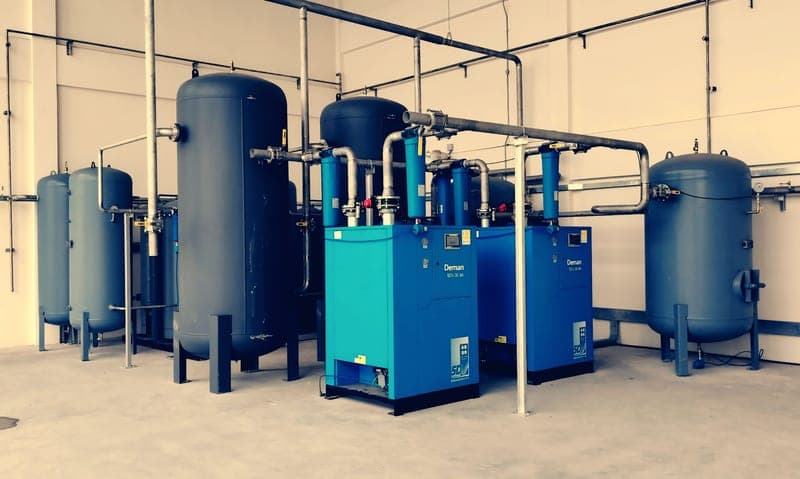
A large stationary vertical sixty-gallon air compressor in a workshop

Licensed stock photo - illustrative of the category, not a photo of this unit

#ad Disclosure - we do not publish prices we cannot verify

Published specs

Industrial Air ILA3606056 60-gallon published specifications
CFM @ 90 PSI11.5
CFM @ 40 PSI13.4
Tank60 gal
Max pressure155 PSI
NoiseNot published
Duty cycleNot published
RecoveryNot published
PumpOil-lubricated
Motor3.7
WeightNot published
Power240V

Source: Industrial Air ILA3606056 - product specifications

Pick 2 - DEWALT DXCMLA1983054

7.9/10★★★★☆

DEWALT DXCMLA1983054 30-gallon

Best for: A permanent garage compressor you expect to keep for a decade

Verdict

5.7 CFM, 30 gallons, oil-lubricated cast iron and belt drive. Where a garage compressor stops being disposable.

What it does well

  • 5.7 CFM at 90 PSI and 7.0 at 40 - clears ratchets, die grinders and touch-up spraying
  • Oil-lubricated belt drive runs cooler and slower than a direct-drive oil-free pump
  • 120/240V, so it can move to a 240V circuit later

What it will not do

  • Oil-lubricated means an actual maintenance routine: check and change the oil
  • 155 PSI on 30 gallons stores less than 175 PSI on 20 in some comparisons - check the math, not the tank
How this 7.9 was calculated
MetricScoreWeightBasis
Air flow9.440%5.7 CFM at 90 PSI, on a 0.7-6 CFM scale
Stored air10.025%30 gal x 155 PSI = 4650, on a 125-3,500 scale
Noise5.015%Manufacturer publishes no dBA figure - scored a neutral 5, not a guess
Portability5.010%No weight published - scored a neutral 5
Spec transparency3.310%2 of 6 useful figures published (CFM at 90, CFM at 40, dBA, duty cycle, recovery, weight)
A thirty-gallon belt-drive air compressor with a cast iron pump

Licensed stock photo - illustrative of the category, not a photo of this unit

#ad Disclosure - we do not publish prices we cannot verify

Published specs

DEWALT DXCMLA1983054 30-gallon published specifications
CFM @ 90 PSI5.7
CFM @ 40 PSI7
Tank30 gal
Max pressure155 PSI
NoiseNot published
Duty cycleNot published
RecoveryNot published
PumpOil-lubricated
Motor1.9
WeightNot published
Power120/240V

Source: DEWALT DXCMLA1983054 30-gallon compressor - product specifications

Pick 3 - California Air Tools 10020C

6.2/10★★★☆☆

California Air Tools 10020C

Best for: Running a ratchet, die grinder or touch-up gun without waiting

Verdict

5.3 CFM at 70 dBA with a published 70/30 duty cycle. The first unit here that runs a continuous-duty tool.

What it does well

  • 5.3 CFM at 90 PSI clears every published figure for ratchets, die grinders and touch-up spraying
  • 70 dBA at that output is unusual - most 5+ CFM units are far louder
  • Publishes a real 70/30 duty cycle and a 25-second recovery from 95 to 125 PSI

What it will not do

  • 82.5 lb and 14 A - it needs its own circuit and it is not a carry-it-upstairs machine
  • 125 PSI max, so a bigger tank at higher pressure still stores more per fill
How this 6.2 was calculated
MetricScoreWeightBasis
Air flow8.740%5.3 CFM at 90 PSI, on a 0.7-6 CFM scale
Stored air3.325%10 gal x 125 PSI = 1250, on a 125-3,500 scale
Noise5.615%70 dBA, on a 58-85 dBA scale
Portability1.110%82.5 lb, on a 20-90 lb scale
Spec transparency10.010%6 of 6 useful figures published (CFM at 90, CFM at 40, dBA, duty cycle, recovery, weight)
A ten-gallon vertical oil-free air compressor on wheels in a workshop

Licensed stock photo - illustrative of the category, not a photo of this unit

#ad Disclosure - we do not publish prices we cannot verify

Published specs

California Air Tools 10020C published specifications
CFM @ 90 PSI5.3
CFM @ 40 PSI6.4
Tank10 gal
Max pressure125 PSI
Noise70 dBA
Duty cycle70/30 (manufacturer-published)
Recovery120 s empty to full; 25 s recovery 95 to 125 PSI
PumpOil-free
Motor2.0
Weight82.5 lb
Power110V, 14 A

Source: California Air Tools 10020C - product specifications

Pick 4 - PneumaticPlus SAU430-N04G

5.6/10★★★☆☆

PneumaticPlus SAU430 three-stage

Best for: Spraying paint or clear coat from a garage compressor

Verdict

10 micron, then 0.1 micron mist separator, then regulator. The honest minimum before a spray gun.

What it does well

  • 0.1 micron mist separator stage is the one that actually removes oil aerosol and sub-micron mist
  • Three stages in one modular body with a bracket and gauge
  • 1/2" NPT, so it is not the restriction in a spray setup

What it will not do

  • Three elements to buy and replace instead of one
  • Does not dry air the way a refrigerated dryer or desiccant column does - it separates, it does not chill
How this 5.6 was calculated
MetricScoreWeightBasis
Pressure headroom5.040%No pressure rating published - scored a neutral 5
Flow capacity6.040%Flow not published for this class - scored a 6, which is what a correctly sized hose or fitting does not restrict
Spec transparency6.020%5 published specification figures
A three-stage compressed air filtration and regulation assembly mounted on a wall

Licensed stock photo - illustrative of the category, not a photo of this unit

#ad Disclosure - we do not publish prices we cannot verify

Published specs

PneumaticPlus SAU430 three-stage published specifications
Port size1/2" NPT
Stage 110 micron particulate filter
Stage 20.1 micron mist separator
Stage 3Pressure regulator
IncludedBracket and gauge

Source: PneumaticPlus SAU430 three-stage air drying system - product specifications

The number

What the gun demands, from the cited dataset

These are the spraying and blasting classes from the same dataset that drives our CFM chart and calculator - one dataset across the whole site, so no page here can contradict another. Note how far apart touch-up, production and undercoat spraying are. Buying for the wrong one of the three is the most expensive mistake available in this category.

Published air demand at 90 PSI
ToolCFM @ 90 PSIAt loadDutyWhat the number means
Paint spray gun, touch-up4-ContinuousIngersoll Rand lists 4 CFM for touch-up spraying. Continuous while the trigger is down, and the air also has to be clean and dry - see our air-prep pages.
Paint spray gun, production / HVLP8 - 7-ContinuousIngersoll Rand lists 8 CFM for production spraying; Engineering ToolBox gives 3-7 CFM for small hand-operated sprayers. Check the gun's own spec sheet - HVLP demand varies more than any other tool class on this chart.
Paint spray gun, undercoat19-Continuous19 CFM. Undercoating and bedliner guns are not home-garage compressor territory on any budget.
Blow gun / dusting gun2.5 - 3-IntermittentIngersoll Rand lists 2.5 CFM, Engineering ToolBox 3. Held open continuously - clearing a sprinkler line, blowing out a filter - a blow gun empties a 6-gallon tank surprisingly fast.

Where two references publish different figures, both are shown rather than averaged into a number nobody published. Primary sources: Ingersoll Rand air consumption chart, Engineering ToolBox air tool consumption, and per-tool manufacturer specifications.

Air quality

Filtration is not optional, and it is not the same as a water trap

A compressor makes warm, wet air. As it cools in the tank and the hose, the water in it condenses, and that water travels down the line to your gun. Water in a spray pass is a defect in the finish - fisheyes, blush, lifting - and it is the single most common reason a home spray job fails for a reason that has nothing to do with technique.

A 10 micron water trap is not enough on its own. Our PneumaticPlus SAW300 publishes 53 SCFM and 10 micron filtration, which catches liquid water and rust and is genuinely the most useful small purchase in a garage air system - but 10 micron does not remove oil aerosol or sub-micron mist. For spraying, the honest minimum is a three-stage assembly: 10 micron particulate, then a 0.1 micron mist separator, then a regulator. That is what the PneumaticPlus SAU430 is, on 1/2-inch NPT so the air prep is not the restriction.

If you are spraying clear coat, a final-stage filter earns its place too. The Motor Guard M-60 publishes 0.01 micron at up to 100 CFM at 80 PSI, with a hydrophilic wound element that absorbs water and oil rather than blocking particles. It is rated to 125 PSI maximum, so it has to sit downstream of your regulator, never on a 175 PSI tank outlet.

Pump type

Oil-free or oil-lubricated for spraying?

The instinct is that an oil-free pump is safer for paint because there is no oil to carry into the air. There is something to that, and it is why oil-free is the right choice anywhere oil contamination matters. But the two biggest compressors on this page are both oil-lubricated, and that is not an accident.

Spraying is continuous duty, and continuous duty is where oil-lubricated pumps are structurally better. The oil bath carries heat out of the cylinder and keeps the rings lubricated; an oil-free pump relies on dry self-lubricating materials and runs hotter by design. Over a long spray session the oil-lubricated machine is the one that stays inside itself.

The answer to the contamination worry is filtration, not pump type. A 0.1 micron mist separator exists precisely to remove oil aerosol, and if you are spraying anything you care about you need that stage regardless of which pump you bought. Choosing an oil-free pump and skipping the filter stage is the wrong trade in both directions.

Working with what you own

If you only have a pancake compressor

A 6-gallon 2.6 CFM pancake cannot hold a production HVLP gun. That is arithmetic, not an opinion: the gun's published demand is 7 to 8 CFM continuous and the compressor delivers 2.6. You will spray for a few seconds, the pressure will fall, and the fan pattern will change mid-pass.

What a pancake can do is touch-up and detail work in short passes. Ingersoll Rand lists 4 CFM for touch-up spraying, which a 2.6 CFM machine still does not meet - but on a small part, with a small gun, and pauses between passes while the pump catches up, the result can be acceptable. Set the regulator, spray one panel section, let it recover, continue. It is slow and it is honest.

The upgrade order, if the budget is staged: filtration first, because clean 2.6 CFM beats wet 5.3 CFM for finish quality; then the compressor; then the gun. Most people do it in exactly the reverse order and blame the gun.

FAQ

Questions people actually ask

What size air compressor do I need for an HVLP spray gun?

Ingersoll Rand publishes 8 CFM for a production or HVLP gun and Engineering ToolBox gives 3 to 7 CFM at a 25% load factor. Spraying is continuous duty, so the compressor's delivered CFM at 90 PSI has to meet that outright. A 30-gallon unit at 5.7 CFM is the practical 120V floor; 11.5 CFM from a 60-gallon machine clears it with margin.

Can a 6 gallon pancake compressor run an HVLP gun?

Not a production gun. 2.6 CFM against a published 7 to 8 CFM continuous demand means the pressure falls mid-pass and the fan pattern changes with it. Small touch-up work in short passes with recovery pauses is possible; a car panel is not.

Do I need a 60 gallon compressor to spray a car?

You need delivered CFM, and 60 gallons is how you usually get it - our 60-gallon pick publishes 11.5 CFM at 90 PSI on 240V. A 30-gallon machine at 5.7 CFM will spray panel by panel. The tank size matters less than the flow figure printed next to it.

What filtration do I need before a spray gun?

Three stages at minimum: 10 micron particulate, a 0.1 micron mist separator to take out oil aerosol and sub-micron mist, then a regulator. A plain 10 micron water trap catches liquid water and rust but not aerosol, and aerosol is what ruins a clear coat.

Is an oil-free compressor better for spraying?

Not necessarily. Oil-free avoids one contamination path but runs hotter, and spraying is continuous duty where oil-lubricated pumps are structurally better. Fit a 0.1 micron mist separator either way - that is what actually removes oil aerosol from the line.

Why does my spray pattern change halfway through a pass?

Almost always pressure drop. The compressor cannot hold the flow the gun is drawing, so tank pressure falls during the pass and the gun atomizes differently at the end than at the start. Check delivered CFM at 90 PSI against the gun's published requirement before blaming the gun or the paint.

Sources

Where these numbers come from

Accessed September 2026. If a figure on this page does not match the manufacturer's current sheet, tell us at contact@psiandhose.com and we will correct and date the change - see our editorial policy.

Read next