Skip to content
Psi & Hose

Compare

Makita MAC100Q vs MAC210Q

Both are Quiet Series. One makes 0.7 CFM and one makes 2.0, and that is the entire decision - the noise figures are two decibels apart.

By Ryder M.Last updated Published
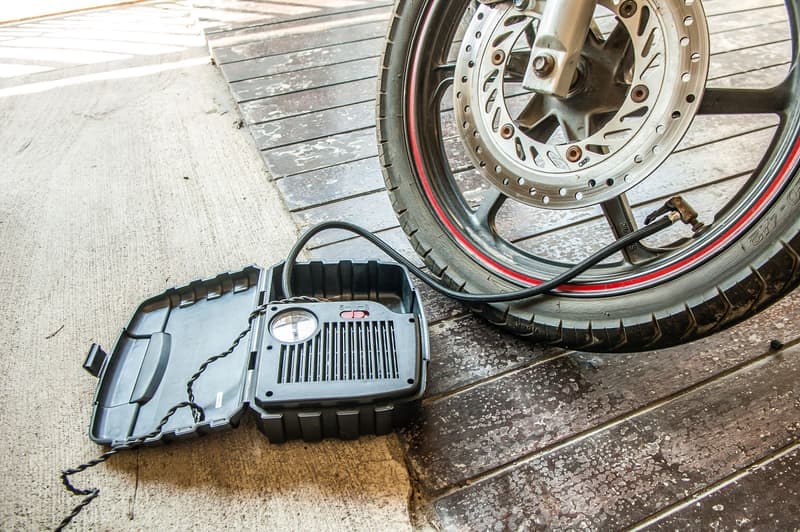
A small quiet-series oil-free air compressor on a workshop floor with a coiled hose

Some links on this page are affiliate links. If you buy through one, Magoo Media Group earns a commission from the retailer at no extra cost to you. It never changes which product we rank first - how this site is funded.

Read this first

The short answer

The MAC210Q is the one to buy unless weight is the deciding factor. It publishes 2.0 CFM at 90 PSI from a 2-gallon twin-stack tank at 135 PSI max, 60 dBA and 44 pounds, with a manufacturer-stated fill of roughly 65 seconds from empty. Nearly three times the airflow of its smaller sibling for two extra decibels is not a close trade.

The MAC100Q is the one to buy if you carry the compressor more than you use it. It publishes 0.7 CFM at 90 PSI and 1.2 at 40 from a 1-gallon tank at 135 PSI max, 58 dBA - the quietest figure in our whole registry - and 25.5 pounds. That is eighteen and a half pounds lighter, which over a day of stairs and attic hatches is a real specification rather than a rounding error.

Everything else about the two machines is the same by design. Both are oil-free, so there is nothing to check and nothing to spill. Both cap at 135 PSI, so stored air per gallon is identical. Both are Quiet Series, which means the pump turns slowly - that is where the low dBA comes from, and it is also why these pumps tend to outlive faster-spinning oil-free units.

Both machines, on Makita's published specifications
TankCFM at 90 PSICFM at 40 PSIMax PSINoiseWeight
Makita MAC210Q2 gal2.0Not published13560 dBA44 lb
Makita MAC100Q1 gal0.71.213558 dBA25.5 lb
California Air Tools 8010A8 gal2.23.112060 dBA37.25 lb

Makita's own published figures, linked in the sources block. Makita publishes a fill time of roughly 65 seconds from empty for the MAC210Q and no CFM at 40 PSI figure for it. The California Air Tools 8010A is included as the obvious cross-shop: a third machine at the same 60 dBA with four times the MAC210Q's tank.

Two decibels is nothing. 1.3 CFM is everything

Decibels are logarithmic, so a 58-to-60 dBA difference is below the threshold most people would notice in a garage. The airflow difference is not subtle at all: 2.0 CFM against 0.7 is nearly a tripling. If both machines are in your budget and you are not carrying one up a ladder, this comparison has a clear answer.

The capability

What each one actually runs

The MAC100Q is a trim machine. At 0.7 CFM it comfortably feeds one 18-gauge brad nailer - published demand for that tool class runs from about 0.028 CFM per nail up to roughly 1.15 CFM at a sustained 60 fasteners a minute, and nobody sustains that rate through a room of casing. It will also inflate tires, slowly, and run a blow gun in short bursts. That is the honest list.

The MAC210Q is a trim-plus machine. At 2.0 CFM it feeds two 18-gauge guns, a 15-gauge finish nailer, or a framing nailer at a working pace - and the 2-gallon tank means the pump cycles less often rather than constantly. It will also run a 3/8-inch air ratchet at a published 3 CFM in bursts, which the MAC100Q cannot pretend to do.

Neither will run anything automotive or anything continuous, and that is not a defect of the Quiet Series - it is physics. A half-inch impact wrench publishes a 4.2 CFM average and spikes to 22 on load. An orbital sander wants 9 to 10 CFM with the trigger held. Quiet pumps turn slowly, slow pumps make less air, and that is the whole trade you accepted when you bought quiet.

The check below is the MAC210Q against published demand for each tool class with nothing rounded in its favor, so you can see exactly where the line falls.

Makita MAC210Q Quiet Series: what it runs

Delivered flow: 2 CFM at 90 PSI. We call a tool covered when delivered flow clears its highest published demand plus a 25% margin.

Runs it (4)

  • Brad nailer, 18 gaugeYes - needs 0.5 CFM, burst duty
  • Finish nailer, 15 gaugeIn bursts only - needs 1.8 CFM, burst duty
  • Upholstery / crown staplerIn bursts only - needs 2 CFM, burst duty
  • Framing nailer, 21 or 30 degreeIn bursts only - needs 2.5 CFM, burst duty

Does not run it (4)

  • Air ratchet, 3/8"No - needs 4 CFM, intermittent duty
  • Impact wrench, 1/2"No - needs 5 CFM, burst duty
  • Tire inflationNo - needs 2 CFM, intermittent duty
  • Blow gun / dusting gunNo - needs 3 CFM, intermittent duty

Demand figures from the air tool CFM chart, which cites every one of them.

The picks

Both sides, ranked

Quick picks

#ProductBest forScorePrice
1
Makita MAC210Q Quiet Series product photo
Makita MAC210Q Quiet Series2 CFM @ 90 / 2 gal / 135 PSI / 60 dBA2.0 CFM at 60 dBA. The quiet option that can actually feed a framing nailer, not just a brad gun.
Quiet nailing at a real working pace3.8/10★★☆☆☆

#ad Disclosure - price as of November 14, 2026

2
Makita MAC100Q Quiet Series product photo
Makita MAC100Q Quiet Series0.7 CFM @ 90 / 1 gal / 135 PSI / 58 dBA58 dBA published - the quietest unit in this roster. Same 0.7 CFM as the Senco, with a roll cage and a higher ceiling.
Indoor finish work where noise decides the purchase3.1/10★★☆☆☆

#ad Disclosure - price as of November 14, 2026

3
California Air Tools 8010A product photo
California Air Tools 8010A2.2 CFM @ 90 / 8 gal / 120 PSI / 60 dBA60 dBA with 8 gallons and a published 30-60 minute continuous run limit. The honest quiet middle ground.
A garage where the compressor runs while you are standing next to it4.9/10★★☆☆☆

#ad Disclosure - price as of November 14, 2026

Scores are computed from manufacturer-published specs by the rubric on our methodology page. Nothing here has been bench-tested. Prices are Amazon's own, refreshed daily, and never shown when we cannot verify them.

Pick 1 - Makita MAC210Q

3.8/10★★☆☆☆

Makita MAC210Q Quiet Series

Best for: Quiet nailing at a real working pace

Verdict

2.0 CFM at 60 dBA. The quiet option that can actually feed a framing nailer, not just a brad gun.

What it does well

  • 2.0 CFM at 90 PSI clears every nailer class on our CFM chart
  • 60 dBA published, against 78-82 dBA for the pancakes at similar output
  • Fills the 2-gallon tank from empty in about 65 seconds

What it will not do

  • 44 lb - heavier than a 6-gallon pancake with more tank
  • 2 gallons of storage means automotive burst work drains it fast
How this 3.8 was calculated
MetricScoreWeightBasis
Air flow2.540%2 CFM at 90 PSI, on a 0.7-6 CFM scale
Stored air0.425%2 gal x 135 PSI = 270, on a 125-3,500 scale
Noise9.315%60 dBA, on a 58-85 dBA scale
Portability6.610%44 lb, on a 20-90 lb scale
Spec transparency6.710%4 of 6 useful figures published (CFM at 90, CFM at 40, dBA, duty cycle, recovery, weight)
Makita MAC210Q Quiet Series product photo

Product image from the Amazon listing for this model

#ad Disclosure - price as of November 14, 2026

Published specs

Makita MAC210Q Quiet Series published specifications
CFM @ 90 PSI2
CFM @ 40 PSINot published
Tank2 gal
Max pressure135 PSI
Noise60 dBA
Duty cycleNot published
Recoveryabout 65 seconds from empty
PumpOil-free
Motor1.0
Weight44 lb
Power120V

Source: Makita MAC210Q - product specifications

Pick 2 - Makita MAC100Q

3.1/10★★☆☆☆

Makita MAC100Q Quiet Series

Best for: Indoor finish work where noise decides the purchase

Verdict

58 dBA published - the quietest unit in this roster. Same 0.7 CFM as the Senco, with a roll cage and a higher ceiling.

What it does well

  • 58 dBA is the lowest published figure of any compressor we list
  • 135 PSI max gives you more usable storage than the 125 PSI class
  • 1,750 RPM motor and roll-cage construction

What it will not do

  • 0.7 CFM at 90 PSI - nailers and inflation only
  • Costs meaningfully more than a 6-gallon pancake that moves four times the air
How this 3.1 was calculated
MetricScoreWeightBasis
Air flow0.040%0.7 CFM at 90 PSI, on a 0.7-6 CFM scale
Stored air0.025%1 gal x 135 PSI = 135, on a 125-3,500 scale
Noise10.015%58 dBA, on a 58-85 dBA scale
Portability9.210%25.5 lb, on a 20-90 lb scale
Spec transparency6.710%4 of 6 useful figures published (CFM at 90, CFM at 40, dBA, duty cycle, recovery, weight)
Makita MAC100Q Quiet Series product photo

Product image from the Amazon listing for this model

#ad Disclosure - price as of November 14, 2026

Published specs

Makita MAC100Q Quiet Series published specifications
CFM @ 90 PSI0.7
CFM @ 40 PSI1.2
Tank1 gal
Max pressure135 PSI
Noise58 dBA
Duty cycleNot published
RecoveryNot published
PumpOil-free
Motor0.5
Weight25.5 lb
Power120V

Source: Makita MAC100Q - product specifications

Pick 3 - California Air Tools 8010A

4.9/10★★☆☆☆

California Air Tools 8010A

Best for: A garage where the compressor runs while you are standing next to it

Verdict

60 dBA with 8 gallons and a published 30-60 minute continuous run limit. The honest quiet middle ground.

What it does well

  • 60 dBA published at 8 gallons - you can hold a conversation over it
  • Aluminum tank at 37.25 lb with a wheel kit, so it moves easily and will not rust out
  • California Air Tools publishes fill, recovery and continuous-run figures, which most brands do not

What it will not do

  • 2.2 CFM at 90 PSI is LESS than a 2.6 CFM pancake - you pay for quiet, not for air
  • 120 PSI max is the lowest ceiling in the 6-gallon-and-up group, so storage is modest
How this 4.9 was calculated
MetricScoreWeightBasis
Air flow2.840%2.2 CFM at 90 PSI, on a 0.7-6 CFM scale
Stored air2.525%8 gal x 120 PSI = 960, on a 125-3,500 scale
Noise9.315%60 dBA, on a 58-85 dBA scale
Portability7.510%37.25 lb, on a 20-90 lb scale
Spec transparency10.010%6 of 6 useful figures published (CFM at 90, CFM at 40, dBA, duty cycle, recovery, weight)
California Air Tools 8010A product photo

Product image from the Amazon listing for this model

#ad Disclosure - price as of November 14, 2026

Published specs

California Air Tools 8010A published specifications
CFM @ 90 PSI2.2
CFM @ 40 PSI3.1
Tank8 gal
Max pressure120 PSI
Noise60 dBA
Duty cycleMax continuous running time 30-60 minutes (manufacturer-published)
Recovery165 s empty to full; 60 s recovery 90 to 120 PSI
PumpOil-free
Motor1.0 running / 2.0 peak
Weight37.25 lb
Power110V

Source: California Air Tools 8010A - product specifications

The mechanism

Where the quiet comes from

Quiet Series machines are quiet because the pump turns slowly. That is the entire mechanism, and understanding it tells you what else you are buying.

A conventional oil-free direct-drive pump spins fast to extract output from a small, cheap mechanism. Fast means noisy and fast means hot, which is why a typical 6-gallon pancake publishes something in the high 70s dBA and why its pump is a consumable part rather than a serviceable one. Slowing the pump down drops the noise sharply - Makita publishes 58 and 60 dBA against the category's 75 to 83 - and it also drops the operating temperature, which is the main thing that kills oil-free pumps.

What you pay is output per dollar. A slow pump moves less air for the same motor, which is why the MAC210Q makes 2.0 CFM where a similarly-priced pancake makes 2.6 from six gallons. You are buying noise and longevity, and you are paying in airflow and tank size. For indoor work that is a good trade. For a driveway it usually is not.

Both machines are oil-free, so the longevity argument has a ceiling: there is still no oil film and the pump is still not rebuildable. Slow and cool extends the life of an oil-free pump considerably; it does not turn it into cast iron.

The verdict

Which one to buy

Buy the MAC210Q if the compressor lives in a garage or a van and gets carried occasionally. The 2.0 CFM output is the difference between a machine that keeps up with your work and a machine you wait on, and the 2-gallon tank means fewer pump cycles for the same job. 44 pounds is a two-hand carry but it is not heavy by the standards of the category.

Buy the MAC100Q if you carry it every day, up stairs, into attics, through finished houses. 25.5 pounds one-handed with the hose over your shoulder is a genuinely different experience from 44 pounds, and 58 dBA is the quietest thing you can put in an occupied room. For a single brad nailer it is not a compromise at all.

Buy the California Air Tools 8010A if you want the quiet and the tank. At 60 dBA it matches the MAC210Q on noise while publishing 2.2 CFM, 3.1 at 40 PSI, and four times the tank volume at 37.25 pounds - lighter than the MAC210Q, because the tank is aluminum. What it gives up is ceiling: 120 PSI max against Makita's 135, so less usable air per gallon than the gallon count suggests. It also publishes a maximum continuous running time of 30 to 60 minutes, which almost nobody else in this class will put in writing.

  1. 01Garage or van, carried occasionally: MAC210Q, for the 2.0 CFM
  2. 02Carried daily through finished houses: MAC100Q, for 25.5 lb and 58 dBA
  3. 03Quiet plus a real tank: California Air Tools 8010A at 8 gallons and 37.25 lb
  4. 04Automotive or continuous tools: none of these - buy 20 gallons or more

After you buy

Getting the most out of either one

Small quiet machines have very little margin, so the plumbing downstream matters more than it does on a big compressor. Three things, in order of how much air they give back.

Run 3/8-inch hose rather than 1/4-inch. On a 0.7 or 2.0 CFM machine the restriction is the hose and the coupler, not the pump, and a long quarter-inch line throws away air you already paid for. Then standardize on one coupler pattern - a 1/4-inch M-style passes a published 40 SCFM and a high-flow V-style up to 74, both far beyond what these machines make, so choose on feel and leak behavior and then stop mixing patterns.

Fit a filter and regulator on the outlet and set working pressure with air flowing. A regulator adjusted at rest reads high the instant the trigger goes, which on a nailer means the first fastener drives deeper than the rest.

And drain the tank after every session. A 1 or 2-gallon steel tank has very little wall thickness to give up to corrosion, and these are machines that get carried and stored rather than looked after. The aluminum-tank California Air Tools is the one unit here that will not rust, which is worth remembering if you know yourself.

  1. 013/8-inch hose, one coupler pattern, no adapters stacked up
  2. 02Filter and regulator on the outlet, set under flow
  3. 03Drain the tank after every session
  4. 04Give the shroud room to breathe - a slow pump still needs airflow

FAQ

Questions people actually ask

What is the difference between the Makita MAC100Q and MAC210Q?

Airflow and weight. The MAC210Q publishes 2.0 CFM at 90 PSI from a 2-gallon twin-stack tank at 44 pounds; the MAC100Q publishes 0.7 CFM from a 1-gallon tank at 25.5 pounds. Both cap at 135 PSI, both are oil-free, and the noise figures are two decibels apart at 60 and 58 dBA.

Is the MAC210Q worth the extra money over the MAC100Q?

For almost everyone, yes. You get nearly three times the airflow - 2.0 CFM against 0.7 - for two extra decibels. The only reason to choose the MAC100Q is weight: 25.5 pounds against 44, which matters if you carry the machine up stairs every day.

Which Makita compressor is quieter?

The MAC100Q, at a published 58 dBA against the MAC210Q's 60. That is the quietest figure in our registry, but a two-decibel gap is below what most people notice in a garage. Do not choose between these two on noise - choose on airflow and weight.

Can the Makita MAC210Q run a framing nailer?

At a working pace, yes. A framing nailer is a burst tool and the MAC210Q publishes 2.0 CFM at 90 PSI with a 2-gallon tank, so it keeps up with normal sheathing and wall work. Production framing at full speed wants more air, and the MAC100Q at 0.7 CFM should not be asked to do it at all.

Do Makita Quiet Series compressors need oil?

No. Both the MAC100Q and the MAC210Q are oil-free, so there is nothing to check, nothing to change and nothing to spill on a finished floor. The quiet comes from a slow-turning pump rather than from oil, and slow also means cooler running, which is the main thing that extends an oil-free pump's life.

Is there a quieter compressor with a bigger tank?

Yes - the California Air Tools 8010A publishes 60 dBA with 8 gallons, 2.2 CFM at 90 PSI and 37.25 pounds on an aluminum tank, plus a stated 30-to-60-minute maximum continuous running time. The trade is its 120 PSI ceiling against Makita's 135, which means less usable stored air per gallon.

Sources

Where these numbers come from

Accessed September 2026. If a figure on this page does not match the manufacturer's current sheet, tell us at contact@psiandhose.com and we will correct and date the change - see our editorial policy.

Read next