Skip to content
Psi & Hose

Air Compressors

Best air compressors for construction

A jobsite compressor is judged on three things a garage never tests: how much air it delivers with two nailers on it, how much it weighs going up a ramp, and whether it survives the back of a truck.

By Ryder M.Last updated Published
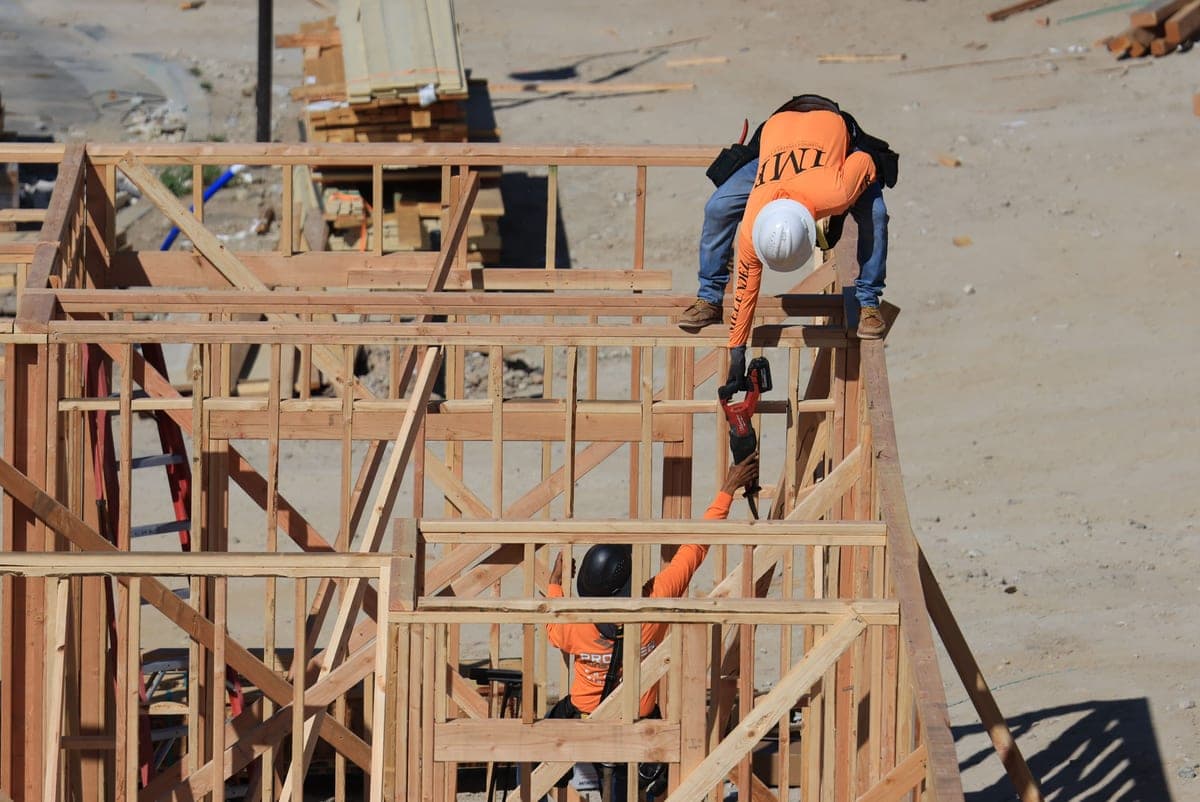
A framing crew working on a timber frame on a construction site

Some links on this page are affiliate links. If you buy through one, Magoo Media Group earns a commission from the retailer at no extra cost to you. It never changes which product we rank first - how this site is funded.

Read this first

The verdict, before the specs

Buy the Metabo HPT EC914S. It is for the crew running two nailers off one machine: 4.0 CFM at 90 PSI, a 200 PSI maximum tank pressure and 6 gallons, at 41 pounds. Four CFM is enough air for two framing nailers at a working pace, and 200 PSI in a 6-gallon tank stores roughly a third more usable air than the 150 PSI pancakes it sits beside - which is the whole argument for it on a jobsite.

The budget pick is the WEN AP6092. It reaches the useful 6-gallon spec - 2.6 CFM at 90 PSI, 3.6 CFM at 40 PSI, 150 PSI - for the least money of anything we carry in that class, and for a one-trade crew with one nailer that is the entire requirement. At the last price check it showed no buyable offer, so its button reads "Check price on Amazon" rather than quoting a number we cannot verify.

The Porter-Cable C2002-WK is the pick if you want the standard jobsite pancake with parts available in any town: 2.6 CFM at 90 PSI, 3.7 at 40 PSI, 150 PSI, and light. The Craftsman 20-gallon is the pick when the compressor stays in one place for weeks and you want stored air at 175 PSI. The Makita MAC210Q is the pick for finish work inside an occupied building, at a published 60 dBA. And the VIAIR 300P is the pick for the service truck, where there is no generator and no outlet.

Every price here comes from the live price layer inside the buy button, with the date it was read. No price is written into this page.

What decides this, in one line

CFM at 90 PSI per nailer. A framing nailer is a burst tool, but two of them firing alternately is a near-continuous load, and 2.6 CFM is where one crew member starts waiting on the other.

The load

What a jobsite asks that a garage does not

Two tools, not one. A garage compressor serves one person; a jobsite compressor usually serves two nailers on a tee, and the second tool is what exposes a thin pump. Four CFM at 90 PSI is the practical line between two framers working and two framers taking turns.

Pressure, not just volume. Nailers run at 70 to 120 PSI, so a tank that holds 200 PSI gives you far more usable air between pump cycles than a 150 PSI tank of the same size. The usable figure is the difference between tank pressure and the pressure your tool needs, and the EC914S has the widest margin on this page.

Weight and shape, because the machine moves every day. A 30 to 41-pound pancake goes up a ramp in one hand; a 20-gallon vertical does not, and that is the honest reason it ranks third here rather than first despite better numbers.

Power that may not exist. On a framing site you often have one generator and several tools sharing it, which makes a 0.8 to 1.0 HP, 120V compressor a feature rather than a compromise. On a service truck there is no generator at all, and the answer is a 12V unit.

And the roofing exception: a coil roofing nailer and a coil siding nailer ask for more air than any trim tool - a published 2.2 and 3.2 SCFM respectively - which is the one case where a 2.6 CFM pancake genuinely is not enough for sustained work.

Published air demand at 90 PSI
ToolCFM @ 90 PSIAt loadDutyWhat the number means
Framing nailer, 21 or 30 degree2.5-BurstEngineering ToolBox lists 2.5 CFM for a framing nailer on a 25% load factor. Metabo HPT publishes 0.09 SCFM at 100 PSI for the NR90AES1 on a per-cycle basis. The two describe the same tool at different firing rates, which is exactly why one CFM number for a nailer is misleading: nail pace sets the demand, not the badge on the tool.
Roofing / coil nailerNot published-IntermittentNeither published chart carries a separate roofing-nailer line. Roofing is fired far faster and for far longer than framing, so treat it as the top of the framing range and size for recovery rather than peak. We will not print a number no source publishes.
Upholstery / crown stapler2-BurstEngineering ToolBox lists 2 CFM for an upholstery stapler, measured at 30 PSI. Low pressure means low demand, and a small tank keeps up easily.
Impact wrench, 1/2"4 - 522BurstThe most misunderstood number on this chart. Ingersoll Rand publishes 4.2 CFM average for the 231C and 22 CFM at load. The average assumes you hold the trigger for a second or two at a time. A 6-gallon pancake at 2.6 CFM does break lug nuts; it simply cannot keep the trigger down.
Blow gun / dusting gun2.5 - 3-IntermittentIngersoll Rand lists 2.5 CFM, Engineering ToolBox 3. Held open continuously - clearing a sprinkler line, blowing out a filter - a blow gun empties a 6-gallon tank surprisingly fast.

Where two references publish different figures, both are shown rather than averaged into a number nobody published. Primary sources: Ingersoll Rand air consumption chart, Engineering ToolBox air tool consumption, and per-tool manufacturer specifications.

The table

The six, on published figures

Ranked for two tools on one machine
TankCFM at 90CFM at 40Max PSIdBAWeight
Metabo HPT EC914S6 gal4.0Not published200Not published41 lb
Porter-Cable C2002-WK6 gal2.63.7150Not publishedNot published
Craftsman CMXECXA023204320 gal4.05.0175Not publishedNot published
Makita MAC210Q2 gal2.0Not published1356044 lb
WEN AP60926 gal2.63.6150Not publishedNot published
VIAIR 300PNo tankNot publishedNot published150788.7 lb

Manufacturer-published figures only, attributed in the sources block. Blanks are figures the manufacturer does not publish; we flag them rather than estimate. WEN publishes motor amperage rather than horsepower for the AP6092. The VIAIR is a direct-drive 12V unit with no tank.

Quick picks

#ProductBest forScorePrice
1
Metabo HPT EC914S (THE TANK) product photo
Metabo HPT EC914S (THE TANK)4 CFM @ 90 / 6 gal / 200 PSI4.0 CFM at 90 PSI and 200 PSI max - the only 6-gallon unit here that breaks the 2.6 CFM ceiling.
Getting real CFM without moving up to a 20-gallon footprint5.1/10★★★☆☆

#ad Disclosure - we do not publish prices we cannot verify

2
Porter-Cable C2002-WK product photo
Porter-Cable C2002-WK2.6 CFM @ 90 / 6 gal / 150 PSIThe default 6-gallon pancake: 2.6 CFM, 150 PSI, the same machine for years, now sold as the C2002-WK with its accessory kit.
A first compressor for nailing, inflation and burst automotive work3.6/10★★☆☆☆

#ad Disclosure - price as of November 28, 2026

3
Craftsman CMXECXA0232043 20-gallon product photo
Craftsman CMXECXA0232043 20-gallon4 CFM @ 90 / 20 gal / 175 PSIThe same 4.0 CFM / 175 PSI / 20-gallon formula as the Husky, from a 1.8 HP oil-free pump.
A second 20-gallon option when the first is out of stock6.6/10★★★☆☆

#ad Disclosure - price as of November 28, 2026

4
Makita MAC210Q Quiet Series product photo
Makita MAC210Q Quiet Series2 CFM @ 90 / 2 gal / 135 PSI / 60 dBA2.0 CFM at 60 dBA. The quiet option that can actually feed a framing nailer, not just a brad gun.
Quiet nailing at a real working pace3.8/10★★☆☆☆

#ad Disclosure - price as of November 28, 2026

5
A compact oil-free pancake compressor with two gauges
WEN AP60922.6 CFM @ 90 / 6 gal / 150 PSIThe cheapest way to get the standard 2.6 CFM / 150 PSI pancake spec. That is the whole pitch.
Spending the least possible to reach the useful 6-gallon spec3.6/10★★☆☆☆

#ad Disclosure - we do not publish prices we cannot verify

6
VIAIR 300P product photo
VIAIR 300PCFM not published / no tank / 150 PSI / 78 dBAThe cheapest 12V unit here that publishes a duty cycle tied to a pressure: 33% at 100 PSI. That one figure is what you are paying the step up for.
A 33-inch tire set that gets aired down and back up regularly1.9/10★☆☆☆☆

#ad Disclosure - price as of November 28, 2026

Scores are computed from manufacturer-published specs by the rubric on our methodology page. Nothing here has been bench-tested. Prices are Amazon's own, refreshed daily, and never shown when we cannot verify them.

Pick 1 - Metabo HPT EC914S

5.1/10★★★☆☆

Metabo HPT EC914S (THE TANK)

Best for: Getting real CFM without moving up to a 20-gallon footprint

Verdict

4.0 CFM at 90 PSI and 200 PSI max - the only 6-gallon unit here that breaks the 2.6 CFM ceiling.

What it does well

  • 4.0 CFM at 90 PSI is 54% more air than the rest of the 6-gallon class
  • 200 PSI max means the same 6 gallons holds far more usable air
  • Clears the published average demand for a 1/2-inch impact and a 3/8-inch ratchet

What it will not do

  • 41 lb, the heaviest 6-gallon unit in the roster
  • Metabo HPT does not publish a noise figure, and high-pressure pumps are not quiet
How this 5.1 was calculated
MetricScoreWeightBasis
Air flow6.240%4 CFM at 90 PSI, on a 0.7-6 CFM scale
Stored air3.225%6 gal x 200 PSI = 1200, on a 125-3,500 scale
Noise5.015%Manufacturer publishes no dBA figure - scored a neutral 5, not a guess
Portability7.010%41 lb, on a 20-90 lb scale
Spec transparency3.310%2 of 6 useful figures published (CFM at 90, CFM at 40, dBA, duty cycle, recovery, weight)
Metabo HPT EC914S (THE TANK) product photo

Product image from the Amazon listing for this model

#ad Disclosure - we do not publish prices we cannot verify

Published specs

Metabo HPT EC914S (THE TANK) published specifications
CFM @ 90 PSI4
CFM @ 40 PSINot published
Tank6 gal
Max pressure200 PSI
NoiseNot published
Duty cycleNot published
RecoveryNot published
PumpOil-free
MotorNot published
Weight41 lb
Power120V

Source: Metabo HPT EC914S THE TANK - product specifications

Pick 2 - Porter-Cable C2002-WK

3.6/10★★☆☆☆

Porter-Cable C2002-WK

Best for: A first compressor for nailing, inflation and burst automotive work

Verdict

The default 6-gallon pancake: 2.6 CFM, 150 PSI, the same machine for years, now sold as the C2002-WK with its accessory kit.

What it does well

  • 2.6 CFM at 90 PSI and 3.7 at 40 - the most common spec in the budget class for a reason
  • 6-gallon tank at 150 PSI stores enough air for real bursts of impact work
  • Two couplers, so two people or two tools without swapping

What it will not do

  • Porter-Cable does not publish a noise figure for it; the class sits in the high 70s to low 80s dBA
  • 2.6 CFM will not run a ratchet, die grinder or sander continuously
How this 3.6 was calculated
MetricScoreWeightBasis
Air flow3.640%2.6 CFM at 90 PSI, on a 0.7-6 CFM scale
Stored air2.325%6 gal x 150 PSI = 900, on a 125-3,500 scale
Noise5.015%Manufacturer publishes no dBA figure - scored a neutral 5, not a guess
Portability5.010%No weight published - scored a neutral 5
Spec transparency3.310%2 of 6 useful figures published (CFM at 90, CFM at 40, dBA, duty cycle, recovery, weight)
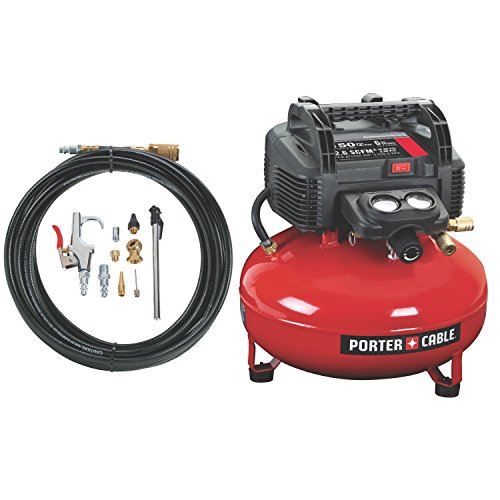
Porter-Cable C2002-WK product photo

Product image from the Amazon listing for this model

#ad Disclosure - price as of November 28, 2026

Published specs

Porter-Cable C2002-WK published specifications
CFM @ 90 PSI2.6
CFM @ 40 PSI3.7
Tank6 gal
Max pressure150 PSI
NoiseNot published
Duty cycleNot published
RecoveryNot published
PumpOil-free
Motor0.8
WeightNot published
Power120V

Source: Porter-Cable C2002 - product specifications

Pick 3 - Craftsman CMXECXA0232043

6.6/10★★★☆☆

Craftsman CMXECXA0232043 20-gallon

Best for: A second 20-gallon option when the first is out of stock

Verdict

The same 4.0 CFM / 175 PSI / 20-gallon formula as the Husky, from a 1.8 HP oil-free pump.

What it does well

  • 4.0 CFM at 90 PSI, 5.0 at 40, 175 PSI max
  • 1.8 HP oil-free pump - nothing to drain but the tank
  • Two quick couplers

What it will not do

  • Craftsman does not publish a noise figure for it
  • At 4.0 CFM it still will not run a DA sander, whatever the tank says
How this 6.6 was calculated
MetricScoreWeightBasis
Air flow6.240%4 CFM at 90 PSI, on a 0.7-6 CFM scale
Stored air10.025%20 gal x 175 PSI = 3500, on a 125-3,500 scale
Noise5.015%Manufacturer publishes no dBA figure - scored a neutral 5, not a guess
Portability5.010%No weight published - scored a neutral 5
Spec transparency3.310%2 of 6 useful figures published (CFM at 90, CFM at 40, dBA, duty cycle, recovery, weight)
Craftsman CMXECXA0232043 20-gallon product photo

Product image from the Amazon listing for this model

#ad Disclosure - price as of November 28, 2026

Published specs

Craftsman CMXECXA0232043 20-gallon published specifications
CFM @ 90 PSI4
CFM @ 40 PSI5
Tank20 gal
Max pressure175 PSI
NoiseNot published
Duty cycleNot published
RecoveryNot published
PumpOil-free
Motor1.8
WeightNot published
Power120V

Source: Craftsman CMXECXA0232043 20-gallon compressor - retailer specification listing

Pick 4 - Makita MAC210Q

3.8/10★★☆☆☆

Makita MAC210Q Quiet Series

Best for: Quiet nailing at a real working pace

Verdict

2.0 CFM at 60 dBA. The quiet option that can actually feed a framing nailer, not just a brad gun.

What it does well

  • 2.0 CFM at 90 PSI clears every nailer class on our CFM chart
  • 60 dBA published, against 78-82 dBA for the pancakes at similar output
  • Fills the 2-gallon tank from empty in about 65 seconds

What it will not do

  • 44 lb - heavier than a 6-gallon pancake with more tank
  • 2 gallons of storage means automotive burst work drains it fast
How this 3.8 was calculated
MetricScoreWeightBasis
Air flow2.540%2 CFM at 90 PSI, on a 0.7-6 CFM scale
Stored air0.425%2 gal x 135 PSI = 270, on a 125-3,500 scale
Noise9.315%60 dBA, on a 58-85 dBA scale
Portability6.610%44 lb, on a 20-90 lb scale
Spec transparency6.710%4 of 6 useful figures published (CFM at 90, CFM at 40, dBA, duty cycle, recovery, weight)
Makita MAC210Q Quiet Series product photo

Product image from the Amazon listing for this model

#ad Disclosure - price as of November 28, 2026

Published specs

Makita MAC210Q Quiet Series published specifications
CFM @ 90 PSI2
CFM @ 40 PSINot published
Tank2 gal
Max pressure135 PSI
Noise60 dBA
Duty cycleNot published
Recoveryabout 65 seconds from empty
PumpOil-free
Motor1.0
Weight44 lb
Power120V

Source: Makita MAC210Q - product specifications

Pick 5 - WEN AP6092

3.6/10★★☆☆☆

WEN AP6092

Best for: Spending the least possible to reach the useful 6-gallon spec

Verdict

The cheapest way to get the standard 2.6 CFM / 150 PSI pancake spec. That is the whole pitch.

What it does well

  • 2.6 CFM at 90 PSI and 3.6 at 40 - the class spec, at the bottom of the class price
  • Two 1/4-inch NPT quick couplers and two gauges
  • Oil-free, so no maintenance routine to forget

What it will not do

  • WEN does not publish a noise figure for it
  • 11.5 A draw is the highest of the 6-gallon units here - worth knowing on an older circuit
How this 3.6 was calculated
MetricScoreWeightBasis
Air flow3.640%2.6 CFM at 90 PSI, on a 0.7-6 CFM scale
Stored air2.325%6 gal x 150 PSI = 900, on a 125-3,500 scale
Noise5.015%Manufacturer publishes no dBA figure - scored a neutral 5, not a guess
Portability5.010%No weight published - scored a neutral 5
Spec transparency3.310%2 of 6 useful figures published (CFM at 90, CFM at 40, dBA, duty cycle, recovery, weight)
A compact oil-free pancake compressor with two gauges

Licensed stock photo - illustrative of the category, not a photo of this unit

#ad Disclosure - we do not publish prices we cannot verify

Published specs

WEN AP6092 published specifications
CFM @ 90 PSI2.6
CFM @ 40 PSI3.6
Tank6 gal
Max pressure150 PSI
NoiseNot published
Duty cycleNot published
RecoveryNot published
PumpOil-free
Motor11.5 A motor (HP not published)
WeightNot published
Power120V

Source: WEN AP6092 - product specifications

Pick 6 - VIAIR 300P

1.9/10★☆☆☆☆

VIAIR 300P

Best for: A 33-inch tire set that gets aired down and back up regularly

Verdict

The cheapest 12V unit here that publishes a duty cycle tied to a pressure: 33% at 100 PSI. That one figure is what you are paying the step up for.

What it does well

  • 33% duty cycle at 100 PSI published - a real figure at a real pressure, not a free-flow number
  • 150 PSI max working pressure and 2.30 CFM at 0 PSI, with a 25 ft air hose in the kit
  • IP54 and a sand tray with vibration isolators: built to sit on a trail, not in a glovebox

What it will not do

  • 8.70 lb and a 30 A draw - this is a battery-clamp tool, and it is no longer pocketable
  • Still has no tank, so it runs no air tool regardless of the 150 PSI on the box
  • Costs roughly double an 88P to fill the same 33-inch tires, just faster and for longer
How this 1.9 was calculated
MetricScoreWeightBasis
Air flow0.040%No CFM at 90 PSI published - scored zero rather than guessed
Stored air0.025%0 gal x 150 PSI = 0, on a 125-3,500 scale
Noise2.615%78 dBA, on a 58-85 dBA scale
Portability10.010%8.7 lb, on a 20-90 lb scale
Spec transparency5.010%3 of 6 useful figures published (CFM at 90, CFM at 40, dBA, duty cycle, recovery, weight)
VIAIR 300P product photo

Product image from the Amazon listing for this model

#ad Disclosure - price as of November 28, 2026

Published specs

VIAIR 300P published specifications
CFM @ 90 PSINot published
CFM @ 40 PSINot published
TankNone (direct drive)
Max pressure150 PSI
Noise78 dBA
Duty cycle33% at 100 PSI (manufacturer-published)
RecoveryNot published
PumpOil-free
Motor12V DC, 30 A max draw
Weight8.7 lb
Power12V DC

Source: VIAIR 300P portable compressor (part 30033) - product specifications

The criteria

How we ranked these six

  1. 01CFM at 90 PSI first, measured against two nailers rather than one. The EC914S and the Craftsman both publish 4.0; the pancakes publish 2.6; the Makita publishes 2.0.
  2. 02Usable stored air second - tank volume against the margin above 120 PSI, which is the top of a nailer's operating range. Six gallons at 200 PSI beats 6 gallons at 150 PSI by a wide margin, and that is the EC914S's whole case.
  3. 03Weight and handling, weighted properly because the machine moves daily. This is why a 20-gallon vertical with better numbers sits below a 41-pound pancake.
  4. 04Noise, but only where it decides the job - finish work in an occupied building. The Makita's published 60 dBA is the reason it is on this list at 2.0 CFM.
  5. 05Serviceability and parts, because a dead pressure switch on a Tuesday is a lost day. Porter-Cable and Craftsman win this criterion outright.

The detail

What each one is for, and the honest cons

The EC914S is the two-nailer machine. Four CFM at 90 PSI and 200 PSI of storage in a 6-gallon pancake is the best air-to-weight package we carry, and 41 pounds is still a one-hand carry. The cons: Metabo HPT publishes no noise figure and no duty cycle for it, and 200 PSI means the regulator and the hose fittings are doing real work - use a hose rated above tank pressure, not at it.

The C2002-WK is the dependable single-nailer machine. Two point six CFM at 90 PSI and 3.7 at 40 PSI runs any one nailer all day, it is the lightest full pancake here, and you can buy parts for it anywhere. The con is that it is a one-tool machine: put a second nailer on it during a framing push and someone waits.

The Craftsman 20-gallon is for the site where the compressor is dropped once and left - a long remodel, a shop build, a repetitive run of trim. Four CFM at 90 PSI and 175 PSI in 20 gallons is a lot of stored air on a household circuit. The cons are weight, footprint and no published noise figure, and it is slow to fill from empty.

The MAC210Q is the inside-finish machine. Sixty dBA at 2.0 CFM is what lets you trim an occupied house without clearing the floor, and it fills its 2-gallon tank from empty in about 65 seconds. The cons: 2 gallons and 2.0 CFM is one trim tool only, and 44 pounds is heavy for the capability.

The AP6092 is the budget route to a real 6-gallon spec - 2.6 CFM at 90 PSI, 3.6 at 40 PSI, 150 PSI - and for a crew that owns one nailer it does the job the Porter-Cable does. The cons: WEN publishes no horsepower figure, no noise figure and no duty cycle, and at the last check the listing had no buyable offer.

The 300P is the service-truck machine, not a framing machine. A published 33 percent duty cycle at 100 PSI and a 30-amp 12V draw means tires, blow-down and a punch-list brad nailer, and we will not claim more. At 8.7 pounds it rides behind a seat.

What people get wrong

The hose and the plumbing are part of the purchase

A 200 PSI tank behind a 250 PSI hose is fine; a 200 PSI tank behind an unknown hose is not. Check the working pressure printed on the hose and keep real margin over your cut-out pressure. On a site where hoses get driven over and dragged across block, that margin is the difference between a repair and a bang.

Hose diameter costs you air before the tool ever sees it. A long 1/4-inch hose behind a framing nailer gives away pressure you paid for; 3/8-inch is the jobsite default for a reason, and the loss gets worse with every extra 25 feet.

Run a tee, not a daisy chain. Two nailers on a tee off a single 3/8-inch line share the supply predictably; two nailers with the second one fed through the first tool's coupler do not, and the second person feels it on every nail.

Finally, drain the tank at the end of the day, not at the start of the next one. A jobsite compressor lives in temperature swings that put more water in the tank than a garage machine ever sees, and the drain is easier to open while the air is still warm.

FAQ

Questions people actually ask

What size air compressor do I need for construction?

Four CFM at 90 PSI if two people are nailing off one machine, which is the Metabo HPT EC914S or the Craftsman 20-gallon. Two point six CFM at 90 PSI is enough for one nailer all day, which is the Porter-Cable C2002-WK or the WEN AP6092. Sustained coil roofing or siding work asks for more than any 6-gallon pancake delivers.

Can one compressor run two framing nailers?

At 4.0 CFM at 90 PSI, yes, at a real working pace - that is the EC914S and the Craftsman 20-gallon. At 2.6 CFM it becomes taking turns during a framing push. Feed both tools from a tee off one 3/8-inch line rather than chaining the second tool through the first.

Is a pancake compressor good for a jobsite?

Yes, and it is the standard for good reason: light, stable, 150 PSI of storage and enough air for any single nailer. The jobsite upgrade is not a bigger tank but a higher-pressure one - 6 gallons at 200 PSI stores meaningfully more usable air than 6 gallons at 150 PSI.

How much does a jobsite compressor weigh?

The machines on this page that publish a weight run from 41 pounds for the Metabo HPT EC914S to 44 pounds for the Makita MAC210Q, with the 12V VIAIR 300P at 8.7 pounds. Twenty-gallon machines are a two-person lift and belong on sites where the compressor is dropped once and left.

Do I need a 240V compressor on site?

Not for nailing. Every machine on this page runs on 120V, which also means they share a generator with the rest of the tools. You need 240V when the work is continuous-draw - sanding, blasting, a production spray gun - which is a 60-gallon conversation rather than a jobsite one.

What hose should I use on a construction site?

Three-eighths-inch ID, 50 feet, with a working pressure comfortably above your compressor's cut-out. Quarter-inch hose gives away pressure behind a framing nailer, and the loss grows with length. Check the printed working pressure before you put any hose on a 200 PSI tank.

Sources

Where these numbers come from

Accessed September 2026. If a figure on this page does not match the manufacturer's current sheet, tell us at contact@psiandhose.com and we will correct and date the change - see our editorial policy.

Read next