Skip to content
Psi & Hose

By Job

Best air compressors for motorcycle tires

Two small tires at modest pressure is the easiest inflation job there is. Which means the machine barely matters and the valve access, the gauge and the duty cycle decide the purchase.

By Ryder M.Last updated Published
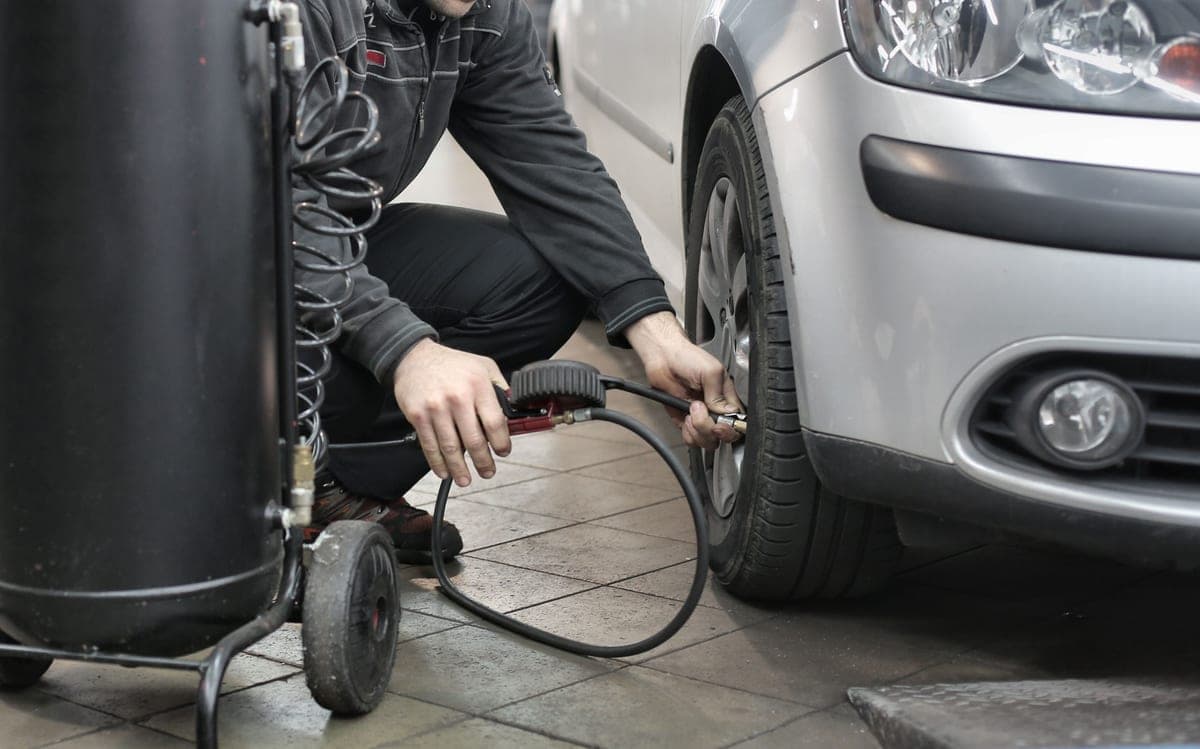
A tire being inflated through its valve stem with a hose and chuck

Some links on this page are affiliate links. If you buy through one, Magoo Media Group earns a commission from the retailer at no extra cost to you. It never changes which product we rank first - how this site is funded.

Read this first

The verdict, before the specs

For motorcycle tires, buy the VIAIR 88P. It publishes 120 PSI maximum working pressure and a 25-minute duty cycle at 30 PSI - which is the pressure range tires actually live at, rather than the free-flow number most inflators advertise. It weighs 4.75 lb, carries a 16 ft air hose and a 10 ft power cord, and it is also the cheapest machine on this page at the last price check, so the budget pick and the top pick are the same unit. For two tires you are topping up by a few PSI, nothing larger is doing anything a smaller tool cannot.

If the bike lives in a garage with a wall outlet and you want one machine that also runs a nailer and breaks a lug nut loose, the Porter-Cable C2002-WK publishes 2.6 CFM at 90 PSI with a 6-gallon tank at 150 PSI and arrives with two couplers. If the garage is attached to a house or shared, the Makita MAC100Q publishes 58 dBA - the lowest figure of any compressor we list - at 0.7 CFM, which is more air than tire work will ever ask for.

The single most useful thing on this page is not a compressor. It is the Milton S-693 dual-head air chuck, which seats on a valve stem that is pointing the wrong way. On a cast motorcycle wheel with a brake disc and a swingarm in the way, that is the entire problem, and a straight single-head chuck will not solve it however much you paid for the machine behind it.

Prices come live from our price layer in each buy button, each with the date it was checked.

Read the pressure off the bike, not the tire

The number molded into a tire sidewall is the maximum the carcass is rated for, not the pressure your bike wants. Use the placard on the swingarm, chain guard or frame, or the owner's manual - and set it cold, before you ride.

The spec that matters

Why this is the easiest air job on the site

Every other page in this section is an argument about CFM. This one is not, and pretending otherwise would be the overbuying this whole site exists to prevent. Both references we cite put tire inflation at about 2 CFM as an intermittent job, at 30 to 60 PSI at the tire. A motorcycle tire holds a small fraction of the air volume a car tire does, and you are usually adding a few PSI rather than filling from flat, so the demand on the machine is lower again.

That has a blunt consequence: the 0.7 CFM trim compressors we list - the ones we tell you cannot run a single automotive tool - inflate motorcycle tires perfectly well. So does a tankless 12V inflator with no CFM-at-90-PSI figure at all, because you are never asking it for 90 PSI. The flow spec that decides every other purchase on this site decides nothing here.

What does decide it is the pressure ceiling and the duty cycle, and those are the two figures inflator marketing is vaguest about. A unit quoting a big CFM number at zero PSI is quoting the figure it will never deliver at a valve stem. The VIAIR 88P publishes 1.97 CFM at 0 PSI, and separately a 25-minute duty at 30 PSI - the second figure is the useful one, and it comfortably covers two tires with the engine off.

The other real variable is the gauge. A small-volume tire responds fast: a one-second overshoot that would be invisible on a light-truck tire can put a bike tire several PSI over. That argues for a chuck or inflator you can feather, a gauge you can read at the wheel, and checking cold rather than chasing the needle after a ride.

The five, on published figures
Max PSIPublished duty cycleTankWeightPower
VIAIR 88P120 PSI25 min at 30 PSINone4.75 lb12V DC, 20 A
Makita MAC100Q135 PSINot published1 gal25.5 lb120V
Porter-Cable C2002-WK150 PSINot published6 galNot published120V
Milton S-693 air chuck150 PSINot applicableNot applicableNot publishedNot applicable
VIAIR 300P150 PSI33% at 100 PSINone8.7 lb12V DC, 30 A

Manufacturer-published figures, attributed in the sources block. For bike tires, read the max-PSI and duty columns and ignore the rest - no entry here is short of flow for the job.

Published air demand at 90 PSI
ToolCFM @ 90 PSIAt loadDutyWhat the number means
Tire inflation2-IntermittentBoth references agree on 2 CFM. Note the working pressure: you are filling to 35 PSI, not 90, so almost every compressor delivers more than it needs to. Tires are why so many people overbuy - the job is easy and the marketing is not.

Where two references publish different figures, both are shown rather than averaged into a number nobody published. Primary sources: Ingersoll Rand air consumption chart, Engineering ToolBox air tool consumption, and per-tool manufacturer specifications.

Ranked

The picks

Quick picks

#ProductBest forScorePrice
1
VIAIR 88P product photo
VIAIR 88PCFM not published / no tank / 120 PSI / 81 dBAA 12V tire inflator, not a compressor. 120 PSI max with a 25-minute duty at 30 PSI. Buy it for the car, not the garage.
Topping up and re-airing tires away from a wall outlet1.7/10★☆☆☆☆

#ad Disclosure - price as of November 28, 2026

2
Makita MAC100Q Quiet Series product photo
Makita MAC100Q Quiet Series0.7 CFM @ 90 / 1 gal / 135 PSI / 58 dBA58 dBA published - the quietest unit in this roster. Same 0.7 CFM as the Senco, with a roll cage and a higher ceiling.
Indoor finish work where noise decides the purchase3.1/10★★☆☆☆

#ad Disclosure - we do not publish prices we cannot verify

3
Porter-Cable C2002-WK product photo
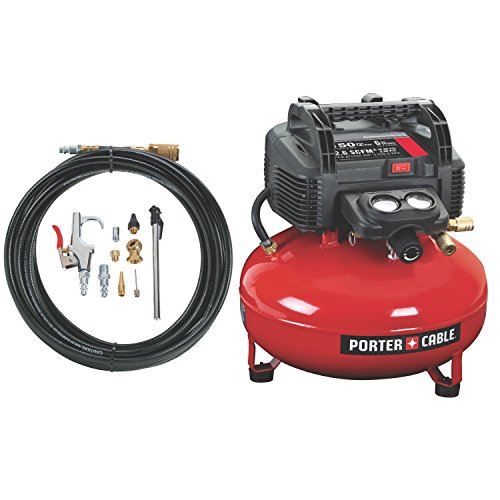
Porter-Cable C2002-WK2.6 CFM @ 90 / 6 gal / 150 PSIThe default 6-gallon pancake: 2.6 CFM, 150 PSI, the same machine for years, now sold as the C2002-WK with its accessory kit.
A first compressor for nailing, inflation and burst automotive work3.6/10★★☆☆☆

#ad Disclosure - price as of November 28, 2026

4
Milton S-693 straight-foot dual-head air chuck product photo
Milton S-693 straight-foot dual-head air chuck1/4" FNPT / Dual head, straight foot, closed / sealing / 150 PSIThe dual head seats on a valve stem pointing the wrong way, and unlike the S-690 it works on an inflator gauge too. 150 PSI.
Inflating anything whose valve stem is not conveniently square to you4.2/10★★☆☆☆

#ad Disclosure - price as of November 28, 2026

5
VIAIR 300P product photo
VIAIR 300PCFM not published / no tank / 150 PSI / 78 dBAThe cheapest 12V unit here that publishes a duty cycle tied to a pressure: 33% at 100 PSI. That one figure is what you are paying the step up for.
A 33-inch tire set that gets aired down and back up regularly1.9/10★☆☆☆☆

#ad Disclosure - price as of November 28, 2026

Scores are computed from manufacturer-published specs by the rubric on our methodology page. Nothing here has been bench-tested. Prices are Amazon's own, refreshed daily, and never shown when we cannot verify them.

Pick 1 - VIAIR 88P

1.7/10★☆☆☆☆

VIAIR 88P

Best for: Topping up and re-airing tires away from a wall outlet

Verdict

A 12V tire inflator, not a compressor. 120 PSI max with a 25-minute duty at 30 PSI. Buy it for the car, not the garage.

What it does well

  • 120 PSI max working pressure covers car, truck and trailer tires
  • 1.97 CFM at 0 PSI published, with a 25-minute duty at 30 PSI - the pressure tires live at
  • 4.75 lb with a 10 ft power cord and 16 ft air hose

What it will not do

  • No tank, so it cannot run any air tool at all - not one
  • 20 A draw and a published 25-minute duty at 30 PSI: four tires, then let it cool
How this 1.7 was calculated
MetricScoreWeightBasis
Air flow0.040%No CFM at 90 PSI published - scored zero rather than guessed
Stored air0.025%0 gal x 120 PSI = 0, on a 125-3,500 scale
Noise1.515%81 dBA, on a 58-85 dBA scale
Portability10.010%4.75 lb, on a 20-90 lb scale
Spec transparency5.010%3 of 6 useful figures published (CFM at 90, CFM at 40, dBA, duty cycle, recovery, weight)
VIAIR 88P product photo

Product image from the Amazon listing for this model

#ad Disclosure - price as of November 28, 2026

Published specs

VIAIR 88P published specifications
CFM @ 90 PSINot published
CFM @ 40 PSINot published
TankNone (direct drive)
Max pressure120 PSI
Noise81 dBA
Duty cycle25 min at 30 PSI (manufacturer-published)
RecoveryNot published
PumpOil-free
Motor12V DC, 20 A max draw
Weight4.75 lb
Power12V DC

Source: VIAIR 88P portable compressor - product specifications

Pick 2 - Makita MAC100Q

3.1/10★★☆☆☆

Makita MAC100Q Quiet Series

Best for: Indoor finish work where noise decides the purchase

Verdict

58 dBA published - the quietest unit in this roster. Same 0.7 CFM as the Senco, with a roll cage and a higher ceiling.

What it does well

  • 58 dBA is the lowest published figure of any compressor we list
  • 135 PSI max gives you more usable storage than the 125 PSI class
  • 1,750 RPM motor and roll-cage construction

What it will not do

  • 0.7 CFM at 90 PSI - nailers and inflation only
  • Costs meaningfully more than a 6-gallon pancake that moves four times the air
How this 3.1 was calculated
MetricScoreWeightBasis
Air flow0.040%0.7 CFM at 90 PSI, on a 0.7-6 CFM scale
Stored air0.025%1 gal x 135 PSI = 135, on a 125-3,500 scale
Noise10.015%58 dBA, on a 58-85 dBA scale
Portability9.210%25.5 lb, on a 20-90 lb scale
Spec transparency6.710%4 of 6 useful figures published (CFM at 90, CFM at 40, dBA, duty cycle, recovery, weight)
Makita MAC100Q Quiet Series product photo

Product image from the Amazon listing for this model

#ad Disclosure - we do not publish prices we cannot verify

Published specs

Makita MAC100Q Quiet Series published specifications
CFM @ 90 PSI0.7
CFM @ 40 PSI1.2
Tank1 gal
Max pressure135 PSI
Noise58 dBA
Duty cycleNot published
RecoveryNot published
PumpOil-free
Motor0.5
Weight25.5 lb
Power120V

Source: Makita MAC100Q - product specifications

Pick 3 - Porter-Cable C2002-WK

3.6/10★★☆☆☆

Porter-Cable C2002-WK

Best for: A first compressor for nailing, inflation and burst automotive work

Verdict

The default 6-gallon pancake: 2.6 CFM, 150 PSI, the same machine for years, now sold as the C2002-WK with its accessory kit.

What it does well

  • 2.6 CFM at 90 PSI and 3.7 at 40 - the most common spec in the budget class for a reason
  • 6-gallon tank at 150 PSI stores enough air for real bursts of impact work
  • Two couplers, so two people or two tools without swapping

What it will not do

  • Porter-Cable does not publish a noise figure for it; the class sits in the high 70s to low 80s dBA
  • 2.6 CFM will not run a ratchet, die grinder or sander continuously
How this 3.6 was calculated
MetricScoreWeightBasis
Air flow3.640%2.6 CFM at 90 PSI, on a 0.7-6 CFM scale
Stored air2.325%6 gal x 150 PSI = 900, on a 125-3,500 scale
Noise5.015%Manufacturer publishes no dBA figure - scored a neutral 5, not a guess
Portability5.010%No weight published - scored a neutral 5
Spec transparency3.310%2 of 6 useful figures published (CFM at 90, CFM at 40, dBA, duty cycle, recovery, weight)
Porter-Cable C2002-WK product photo

Product image from the Amazon listing for this model

#ad Disclosure - price as of November 28, 2026

Published specs

Porter-Cable C2002-WK published specifications
CFM @ 90 PSI2.6
CFM @ 40 PSI3.7
Tank6 gal
Max pressure150 PSI
NoiseNot published
Duty cycleNot published
RecoveryNot published
PumpOil-free
Motor0.8
WeightNot published
Power120V

Source: Porter-Cable C2002 - product specifications

Pick 4 - Milton S-693

4.2/10★★☆☆☆

Milton S-693 straight-foot dual-head air chuck

Best for: Inflating anything whose valve stem is not conveniently square to you

Verdict

The dual head seats on a valve stem pointing the wrong way, and unlike the S-690 it works on an inflator gauge too. 150 PSI.

What it does well

  • Dual head seats on a valve facing inward - the case that defeats every straight single-head chuck
  • Milton states it works on an airline OR with an inflator gauge, which the S-690 does not
  • 150 PSI maximum, covering every passenger, light-truck and trailer pressure you will meet

What it will not do

  • Closed/sealing type means it only passes air when seated, so you cannot use it as a quick deflator
  • A dual head is bulkier than a single head, and on a tight alloy wheel the bulk is what stops you seating it
How this 4.2 was calculated
MetricScoreWeightBasis
Pressure headroom1.440%150 PSI rating, on a 125-300 PSI scale
Flow capacity6.040%Flow not published for this class - scored a 6, which is what a correctly sized hose or fitting does not restrict
Spec transparency6.020%5 published specification figures
Milton S-693 straight-foot dual-head air chuck product photo

Product image from the Amazon listing for this model

#ad Disclosure - price as of November 28, 2026

Published specs

Milton S-693 straight-foot dual-head air chuck published specifications
Thread1/4" FNPT
TypeDual head, straight foot, closed / sealing
Max pressure150 PSI
Designed forInner dual tires, valve facing inward
Works withAirline or inflator gauge

Source: Milton S-693 straight-foot dual-head air chuck, 1/4 in FNPT - product page

Pick 5 - VIAIR 300P

1.9/10★☆☆☆☆

VIAIR 300P

Best for: A 33-inch tire set that gets aired down and back up regularly

Verdict

The cheapest 12V unit here that publishes a duty cycle tied to a pressure: 33% at 100 PSI. That one figure is what you are paying the step up for.

What it does well

  • 33% duty cycle at 100 PSI published - a real figure at a real pressure, not a free-flow number
  • 150 PSI max working pressure and 2.30 CFM at 0 PSI, with a 25 ft air hose in the kit
  • IP54 and a sand tray with vibration isolators: built to sit on a trail, not in a glovebox

What it will not do

  • 8.70 lb and a 30 A draw - this is a battery-clamp tool, and it is no longer pocketable
  • Still has no tank, so it runs no air tool regardless of the 150 PSI on the box
  • Costs roughly double an 88P to fill the same 33-inch tires, just faster and for longer
How this 1.9 was calculated
MetricScoreWeightBasis
Air flow0.040%No CFM at 90 PSI published - scored zero rather than guessed
Stored air0.025%0 gal x 150 PSI = 0, on a 125-3,500 scale
Noise2.615%78 dBA, on a 58-85 dBA scale
Portability10.010%8.7 lb, on a 20-90 lb scale
Spec transparency5.010%3 of 6 useful figures published (CFM at 90, CFM at 40, dBA, duty cycle, recovery, weight)
VIAIR 300P product photo

Product image from the Amazon listing for this model

#ad Disclosure - price as of November 28, 2026

Published specs

VIAIR 300P published specifications
CFM @ 90 PSINot published
CFM @ 40 PSINot published
TankNone (direct drive)
Max pressure150 PSI
Noise78 dBA
Duty cycle33% at 100 PSI (manufacturer-published)
RecoveryNot published
PumpOil-free
Motor12V DC, 30 A max draw
Weight8.7 lb
Power12V DC

Source: VIAIR 300P portable compressor (part 30033) - product specifications

What nobody mentions

The valve stem is the actual problem

On a car you walk up to a wheel, push a chuck straight onto a stem that is pointing at you, and the job is done. A motorcycle wheel is a worse case in three ways at once: the stem is often short and angled inward, there is a brake disc an inch away from it, and on the rear there is a swingarm, a chain or a belt and sometimes a hugger between your hand and the valve. A straight single-head chuck needs a clear run at the stem, and on plenty of bikes there is not one.

This is what the Milton S-693 is for. It is a dual-head, straight-foot, closed chuck rated to 150 PSI, and the dual head seats on a valve facing inward - the exact case that defeats a single head. Milton also states it works on an airline or with an inflator gauge, which the S-690 family does not, so it pairs with whatever you already own. It is the cheapest thing on this page and the one most likely to change whether you can do the job at all.

The closed, sealing design has one consequence worth knowing: it only passes air while it is seated, so you cannot use it to bleed pressure down. For setting a cold pressure that is fine. If you regularly air down on purpose, you want a separate deflator rather than a chuck that leaks by design.

A 90-degree chuck or a short extension hose is the other route to the same outcome, and the principle is the same either way: spend a few dollars on the end of the hose before you spend a few hundred on what is behind it. Our chuck and blow-gun roundup covers the whole shelf, and our fittings page explains which coupler style to standardize on so everything in the garage interchanges.

The real decision

12V inflator or a garage compressor?

If the only air job you have is bike tires, buy the inflator and stop. A 12V unit lives under the seat or in a pannier, it works at a campsite, a trailhead or a parking garage, and it costs a fraction of a tanked machine. The VIAIR 88P is rated to 120 PSI, which covers every motorcycle pressure you will meet, and its published 25-minute duty at 30 PSI is a real figure at a real pressure rather than a free-flow headline.

Step up to the VIAIR 300P only if you also air up something bigger. It publishes 33% duty cycle at 100 PSI, 150 PSI maximum and a 25 ft air hose, which matters for a truck, a trailer or a 33-inch tire set and does nothing extra for a bike. It costs meaningfully more than the 88P at the last check and weighs nearly twice as much at 8.7 lb. Buying it for motorcycle tires alone is paying for capability you will not use.

The case for a tanked garage compressor is everything else. If you also nail trim, blow down the bench, run a blow gun or break a wheel bolt loose, the Porter-Cable C2002-WK at 2.6 CFM and 150 PSI does all of that and treats tire work as a rounding error. That is a different purchase justified by different jobs, and the tires are the one job on its list that it is comically overqualified for.

Between those two sits the quiet-and-small option. The Makita MAC100Q publishes 58 dBA, 135 PSI and 0.7 CFM at 90 PSI in a 25.5 lb package. For someone whose garage is under a bedroom, who does finish nailing and tire pressure and nothing thirstier, it is a genuinely good buy. It is not a cheap one, and it will never run an impact wrench - we say that on every page it appears on.

Sizing for the next job

If you work on the bike as well as inflate it

Tire pressure is the job people buy a compressor for and almost never the only job it ends up doing. The moment you want to run an impact wrench on an axle nut, a blow gun to dry a chain after washing, or a touch-up gun on a painted panel, the sizing conversation changes completely and CFM at 90 PSI goes back to being the only number that counts.

The published demand figures are worth reading before you buy rather than after. A 1/2-inch impact wrench and a 3/8-inch ratchet both sit well above what any 12V inflator or 1-gallon trim unit can deliver, and no tank size rescues a pump that does not make the air. Our CFM chart lists every class with the figure and the source, and our sizing pillar turns that into a single number to shop against.

A bike-specific caution on the blow gun: compressed air will drive grit and water into a chain, a wheel bearing seal or a fork seal if you point it there, and it will push water past a seal that was keeping it out. Dry a chain from a distance, keep the nozzle off the seals, and never aim air at skin.

If painting is on the list at all, read our spray-gun pages before buying anything. A touch-up gun is within reach of a modest machine; a production gun is not, and a 6-gallon pancake cannot run one no matter how patient you are. Knowing which one you mean is the difference between a sensible purchase and an expensive mistake.

The basis

What we checked, and what we did not

Every figure on this page is manufacturer-published and attributed in the sources block below. We have not bench-tested any of these machines and nothing here implies we have. Where a manufacturer publishes no figure - Porter-Cable publishes no noise rating, Makita publishes no duty cycle - the table says so rather than filling the gap with an estimate.

We also have not measured fill times for a motorcycle tire, because that depends on the tire volume, the starting pressure and the hose, none of which we can hold constant for you. What we can tell you is which units publish a duty cycle tied to a stated pressure, and that is the figure we ranked on: the VIAIR 88P at 25 minutes at 30 PSI, and the 300P at 33% at 100 PSI.

Prices are Amazon's own, refreshed daily and shown inside each buy button with the date they were checked. We never print a number we cannot verify: where a listing has no buyable offer, the button reads check price on Amazon instead. Our methodology page sets out the full scoring formula for the compressor roundups on this site.

FAQ

Questions people actually ask

What size air compressor do I need for motorcycle tires?

Almost any. Both references we cite put tire inflation at about 2 CFM as an intermittent job at 30 to 60 PSI at the tire, and a motorcycle tire holds a fraction of a car tire's volume. A 0.7 CFM trim unit or a tankless 12V inflator rated above your bike's pressure does the job; CFM is not the deciding spec here.

Can a 12V tire inflator do motorcycle tires?

Yes, and for most riders it is the right tool. The VIAIR 88P publishes 120 PSI maximum working pressure and a 25-minute duty cycle at 30 PSI, weighs 4.75 lb and comes with a 16 ft hose. What it cannot do is run any air tool, because it has no tank at all.

Why can I not get the chuck onto my rear valve stem?

Because a motorcycle stem is often short and angled inward with a brake disc, swingarm or chain in the way, and a straight single-head chuck needs a clear run at it. A dual-head chuck such as the Milton S-693 seats on a valve facing inward, which is the case a single head cannot reach.

What pressure should motorcycle tires be?

Whatever the placard on the swingarm, chain guard or frame says, or the owner's manual - not the number molded into the tire sidewall, which is the carcass maximum rather than a recommendation. Set it cold, before you ride, because riding warms the air and raises the reading.

Should I buy a garage compressor instead of an inflator?

Only if you have other air jobs. A 6-gallon pancake at 2.6 CFM and 150 PSI also runs nailers, a blow gun and burst impact work, and treats tire inflation as trivial. If bike tires are genuinely the only job, a tanked machine is capability you are paying for and will not use.

Sources

Where these numbers come from

Accessed September 2026. If a figure on this page does not match the manufacturer's current sheet, tell us at contact@psiandhose.com and we will correct and date the change - see our editorial policy.

Read next